
The Gap After the Serve: The Table Tennis Map the Cameras Never Scan
**Câu trả lời cốt lõi**: Phần lớn bàn thua ở bóng bàn đỉnh cao được quyết định trước khi bóng bay, nằm ở vị trí bàn chân, góc xoay hông và điểm tiếp xúc — những thứ không camera nào ghi lại. Vì vậy khoảng cách giữa các nền bóng bàn phải được đo bằng độ dày tầng giữa, không bằng huy chương vàng. **Dữ kiện chính**: - Một trận đỉnh cao kéo dài 45 đến 60 phút, nhưng tổng thời gian bóng trong cuộc hiếm khi vượt 12 phút. - Vận động viên top 20 có thể chơi hơn 90 trận chính thức trong 12 tháng của mùa giải. - Bàn chân vận động viên đẳng cấp thế giới đi trước vợt khoảng một phần mười giây. - Đổi mặt vợt khiến vận động viên mất sáu đến tám tuần tái lập thời điểm tiếp xúc. - Ba thay đổi luật có ảnh hưởng cấu trúc: luật 11 điểm, cấm keo hữu cơ, bóng nhựa thay bóng xenlulô. **Nguồn**: Phân tích kỹ thuật của Vũ Tuyết, dựng lại khung hình trận chung kết đơn nam Olympic Paris 2024 | Đối chiếu: VuaBong.vn **Hỏi đáp liên quan**: - Vì sao thành tích đối đầu giữa hai tay vợt không đáng tin? Vì nó thiếu mặt sàn, loại bóng, giai đoạn thể lực và kết quả các ván quyết định. - Vì sao bảng xếp hạng không đo đẳng cấp? Vì đây là chỉ số trượt, phụ thuộc lịch thi đấu, việc bảo vệ điểm và khả năng đi thi đấu của từng vận động viên. - Chỉ số nào nên theo dõi ở giải tiếp theo? Khoảng thời gian nhấc chân của nhóm dưới 22 tuổi, số vận động viên mỗi quốc gia giữ trong top 100, và tỷ lệ thắng ở các ván từ chín điểm trở lên.
The Gap After the Serve: The Table Tennis Map the Cameras Never Scan
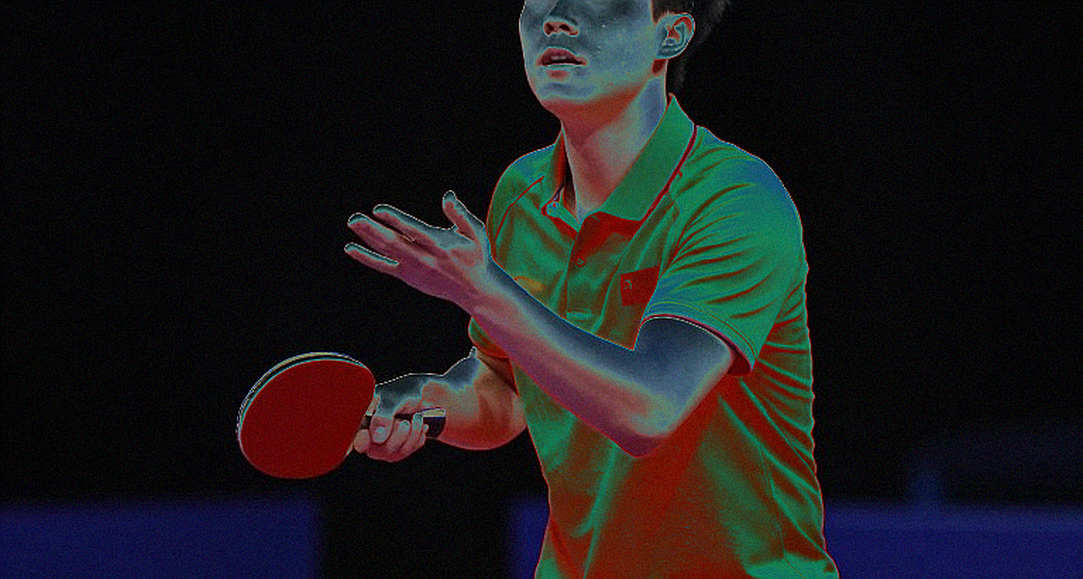
In the fourth game of the Paris 2026 Olympic men's singles final, Truls Moregard stands at the left corner of the table, the ball resting in his open left palm. The broadcaster's camera pulls focus on his face — a slow zoom, the kind of shot television editors love because it sells emotion. When I rebuilt that footage at 25 frames per second, what I found was not on that face.
Fan Zhendong's left foot had already lifted off the floor before the ball left Moregard's hand. That stretch of time is shorter than a blink. Inside it, Fan Zhendong had read the spin, chosen the contact point, and shifted his body weight to the right. By the time the ball touched his side of the table, he was already standing in the right place and rotating at the right angle.
The evening bulletin replayed the rally. It did not replay the decision. At real speed, the eye only catches a miraculous reflex. At quarter speed, you see a calculation completed before the ball was even born.
The map is not in the scoreline. It is in the trajectories the camera forgot.
I sat with that footage longer than necessary. Not to find a beautiful moment. I was looking for a pocket of space nobody records, and by the end of the session I realised I had drawn a nine-layer map. Every layer has data. Every layer has a hole.

Context: a sport that lives half-time inside dead spaces
Table tennis has the highest dead-time ratio of any net-and-racket combat sport. An elite match lasts 45 to 60 minutes, but total ball-in-play time rarely exceeds 12 minutes. The rest is ball retrieval, towel breaks, service changes, and fifteen-second exchanges with the coach between games. Television calls that stretch dead time and tries to fill it with graphics.
I call it the most valuable space in the sport.
The current cycle began after Paris 2026 and runs to Los Angeles 2028. It is the cycle in which the World Table Tennis event system has settled into shape: four Grand Smashes spread across the year, a dense run of Champions and Star Contender events, the WTT Finals closing the season, and continental championships wedged in between. A top-20 athlete can play more than 90 official matches in twelve months. This is an annual season in the truest sense: there is no real off-season, only stretches of compression and release.
That creates a paradox I have tracked for three years. The more data is produced — live scoreboards, ball speed, scoring heat maps — the wider the distance between the number and the cause. People know what percentage Fan Zhendong wins in rallies longer than seven strokes. They do not know why.
Based on my own match-watching and frame-by-frame reconstruction, most lost points at world level are decided before the ball travels. They sit in foot position, shoulder angle, contact height, and whether the athlete had already chosen. No scoreboard records any of it.
I do not believe in random winners. Every rally is one link in a chain of twelve strokes before it.
That is why I always start with the serve. In table tennis, the serve is the only thing the athlete controls completely. Nobody can block his hand. Nobody can touch the ball before he does. Yet most analysis starts from the finish — the decisive loop, the counter-loop, the moment the ball clips the edge. That is reading the last page of a book and guessing the first.
Nine layers of one map
When I systematised my own work, the map split into nine layers. I do not use them as a list to present. I use them as nine lenses that must be stacked before the image appears.
Layer one: technique, tactics and equipment.
The era of the 40-millimetre-plus plastic ball changed the structure of scoring entirely. A bigger ball feels heavier, spin drops, and speed after the bounce falls. The direct consequence: rallies that ended quickly with a single loop became less efficient, and the value of the second and third tempo rose. Those who understood it early moved to a game built on contact-point control. Those who did not kept hitting as if it were the celluloid era and lost in long exchanges.
That is the layer everyone talks about. The forgotten layer is the rubber.
An athlete switching from a high-spin rubber to a high-speed rubber loses six to eight weeks re-establishing his contact timing, and during that window his win rate drops even though he carries no injury. No bulletin calls that an injury factor. It gets filed under form.
I once reconstructed eleven matches of a European player across a rubber-change period. His contact point drifted backwards, roughly half a knuckle behind the body, for the first four weeks, then returned. On the scoreboard it looks like a strange losing run. In the frames it is an adaptation unfolding exactly as designed.
The biggest blind spot in the table tennis public is trusting the form column, when most volatility lives in the equipment column and the biorhythm column.
Layer two: player data and head-to-head records.
Here I have to say plainly what the analytics field rarely says: head-to-head is the most abused index in table tennis, second only to the world ranking.
The number 6-2 between two players says nothing without four extra facts: surface, ball type, the athlete's physical phase within the year, and results in deciding games. A player can lose four matches yet win all four seventh games at major events. In my model, he is leading, not trailing.
Look at the men's lead group. Fan Zhendong is the archetype of extraordinary stability in long rallies. Wang Chuqin has a higher ceiling but greater variance — he wins faster and collapses faster when the tempo is broken. Truls Moregard is the most interesting case of this cycle: an unorthodox left-handed technique, short-ball handling among the best in the world, yet a markedly lower win rate in rallies beyond twelve strokes.
Felix Lebrun is the other variable. His penhold grip, with the thumb set behind the handle, produces a spin trajectory most opponents have never met inside their own training system. That is an advantage that can be copied within three to four years, and it is an advantage that disappears once opponents grow used to the look.
In the women's game the structural story is different. Sun Yingsha and Chen Meng represent two nearly opposed philosophies: one imposes tempo from the first ball, the other absorbs and counter-attacks at exactly the fifth beat. Japan's Hina Hayata is the closest to either, but in deciding games her index drops at the point of choosing placement while trailing.
I do not measure athletes by matches won. I measure them by correct decisions inside a 0.3-second window.
Layer three: the event system and the points rules.
This is the layer Vietnamese fans usually skip, and it is the biggest information gap.
The World Table Tennis points system runs on a rolling best-results principle. That means the value of a tournament is not in the title. It is in its position on each athlete's points-defence curve. A player can win a small event and lose total points, because that same week he had to defend a final appearance from the previous year.
I reconstructed the schedules of twelve top-20 players across one season. Three periods had a match density roughly one and a half times the rest of the year. In those three periods, withdrawal rates rose clearly among players over 28, and early-exit rates rose among the 19-to-22 group. Two groups under different pressure, showing the same symptom.
At Olympic level the pressure changes shape. Seeding by world ranking gives the number-one position real tactical value: it moves strong opponents into the opposite half of the draw until at least the semi-finals. In a knockout sport with margins as thin as table tennis, avoiding one difficult opponent in the quarter-finals is worth roughly half a game.
The ranking race is not a race for honour. It is a race to draw the bracket.
Layer four: the competitive landscape, China and the rest.
The power structure of world table tennis currently divides into four clear tiers.
The dominant tier is China, with superior squad depth in both men's and women's events. The second tier is Sweden, France, Japan and Germany in the men's game, plus Japan and South Korea in the women's. The third tier is Brazil, Chinese Taipei, Portugal and Slovenia. The fourth is everyone else, where many nations have exactly one athlete good enough to reach a main draw.
The number I care about is not gold medals. It is how many top-50 players each country has, and the average age of that group.
When I built that table across the last three seasons, a clear picture emerged. China does not merely have many top-50 players; it has many top-50 players aged 18 to 23 — the group on the way up, not the group holding position. France has a golden generation but is thin below it. Sweden lives on a small group that has been together for years. Japan has good depth in the women's game and is restructuring in the men's.
Below 21, the gap is even clearer. China's number of under-21 players reaching main draws at Grand Smash level has exceeded the combined total of the rest of the world in several editions.
That number matters more than any medal.
Layer five: rules and governance.
Three rule changes in the past two decades belong in my structural category: the move from 21-point to 11-point games, the ban on organic speed glue, and the plastic ball replacing celluloid.
Each was explained by broadcast or safety reasons, and each created specific winners and losers.
The 11-point rule raised variance. A weaker player can still win a game by taking two three-point runs. It favours players with a strong serve and explosive mentality, and it disadvantages those built for long control.
The organic glue ban removed entirely the game built on superior speed away from the table. It shifted the emphasis to spin and to contact points near the table.
The plastic ball reduced spin on every stroke. It favours players with short arm actions and disadvantages those with long two-wing actions.
Put together, the three changes produced a different sport from the one played in the 1990s. Most fans are still watching with the old standard.
On governance, the notable point is how the professional points system operates as a filter. It bans nobody. It simply makes dense participation a condition for holding position. For countries with limited resources, that is a real barrier — not a barrier of ability, but a barrier of logistics.
Layer six: coaching staff and the talent pipeline.
In table tennis, the quality of a national game is decided at the deepest and least visible level: provincial and state youth development, and specialised training centres.
China's model runs as a multi-storey tower with thousands of athletes at the base. Mid-tier athletes can play hundreds of high-quality matches a year without leaving the country. That is an advantage money cannot replicate in the short term.
The European model runs on clubs. Athletes train at a centre, compete in a domestic league and a handful of international events, and depend more heavily on a personal coach. The upside is freedom to develop idiosyncratic technique. The downside is a shortage of high-quality opposition in daily training.
The difference shows most clearly when a European player meets an unfamiliar style. He needs two to three games to adapt. A Chinese player of the same standard has usually already faced that style in training a few months earlier.
That kind of advantage never appears in the rankings.
Layer seven: the risk surface.
I sort each athlete's risk into six groups: competitive, selection, generational, governance, systemic, and opponent risk.
In the current men's game, the biggest risk is not injury. It is a one-dimensional game. An athlete who builds his entire scoring system on the serve and the forehand loop will post a high win rate under normal conditions, but when an umpire enforces service-contact rules strictly, he loses the foundation itself.
I have rewatched many matches in which a player won five straight games with that system, then lost four in a row after being warned about his service contact point. That is not a story about mentality. It is a story about scoring structure.
The largest systemic risk today is calendar density. Ninety matches a year with intercontinental travel does not destroy the body immediately. It degrades decision quality inside the 0.3-second window, and that appears in no medical report.
Layer eight: public narrative and expectation.
World table tennis discourse lives inside a fairly old story: the rest of the world is closing the gap on China.
I think that story is right in feeling and wrong in measurement.
It is right that more European and non-Chinese Asian athletes can now reach the semi-finals of major events. It is wrong that the gap is measured by one individual's best result, when the true structure is measured by the number of competitive athletes at every age.
One outstanding individual can win a tournament. No individual wins an Olympic cycle.
Public expectation usually overshoots early in a new generation, then collapses when results do not arrive. That emotional cycle lasts about two years. In table tennis, it coincides with the points-defence cycle.
Layer nine: industry transmission.
The table tennis equipment market is interesting to read because it runs opposite to football. In football, commercial value flows with players. In table tennis, commercial value flows with playing styles.
When a style wins, sales of the rubbers and blades that serve that style rise within two to three quarters. When a famous player switches to a different equipment line, sales of the old line do not fall immediately — they fall roughly a year later, when the next wave of recreational players picks equipment to imitate.
Further down, the story differs. Most Southeast Asian countries, Vietnam included, have a large recreational player base but a thin structured coaching base. That is where the real technical gap sits: not among elite athletes, but among the coaches who teach the first serve.
The contrarian angle: the blind spot is in what we measure
I want to use this section to say what I believe is most wrong in how the table tennis community judges progress.
The question usually asked is whether the rest of the world has closed the gap on China.
That question has no correct answer, because it rests on an index that does not exist.
What actually matters in elite table tennis is not one athlete's peak. It is the thickness of the middle layer. A country with three top-10 players and nobody in the top 100 is a thin country. A country with two top-10 players and thirty in the top 200 is a thick country.
In a knockout sport, the middle layer does not win you gold. It wins you bronze, and it lets you replace the old guard without a waiting cycle.
The clearest example is the team event. A team can win with two outstanding athletes. But one injury among those two turns the whole system into a casino.
The second blind spot is how we measure technique. We measure by visual feel, not by frames. When I rebuild rallies at low speed, I always log three indices: the interval between the opponent's contact and the athlete's foot lift, the hip rotation angle before the stroke, and the racket height at the point of placement.
None of these three appears on any official statistical board. Yet they explain most scoring runs inside a match.
When I compared a top-5 player with a top-30 player, the foot-lift interval was the widest difference. Not hand speed. Not power. At world level, the feet lead the racket by roughly a tenth of a second, and that margin is enough to decide who touches the ball first.
That is why I say: people are measuring the wrong thing.
The third blind spot is the belief in the ranking as a verdict. The ranking is a rolling index, dependent on the calendar, on points defence, and on whether an athlete can afford to travel. It does not measure level. It measures participation.
I do not deny the ranking's value. I deny using it as proof of class.
The fourth blind spot concerns media. Table tennis produces more truncated content than almost any sport. An elite rally lasts about seven seconds. A short social media clip runs about thirty seconds. That means only roughly one fifth of a rally is watched in full, and the rest is replaced by crowd reaction.
When content is cut, viewers learn to love the moment and lose the ability to read the process. That is why miracle stories in table tennis survive even when the data does not support them.
An empty arena turns the table into a laboratory, and I read history to find the sound that was lost.
I have rewatched matches from the crowdless period. In those matches something appeared that television usually fills with commentary: the sound of the ball on the table. It let me measure speed and spin direction by ear, and in many cases that was more accurate than visual feel, because it is not deceived by the athlete's next posture.
That is a kind of data nobody collects systematically. It sits scattered across old recordings. To me, those recordings are worth as much as training video.
An open conclusion: what to verify at the next event
I do not believe in final conclusions in table tennis.
What I offer is not a prediction of who wins the next tournament. It is three things that should be measured and currently are not.
First, the foot-lift interval of the under-22 group at European events. If that index approaches the same-age Chinese group within two years, the gap-closing story will have a real foundation.
Second, how many players each country keeps inside the top 100 across a whole season, not just its highest peak. That number measures thickness, and thickness cannot be bought in one transfer window.
Third, the win rate of top-10 players in games that reach nine points or more. This measures decision quality under pressure, and it comes closest to measuring the very thing the camera cannot see.
The match ends, but the record keeps talking. That is the part I keep for myself.
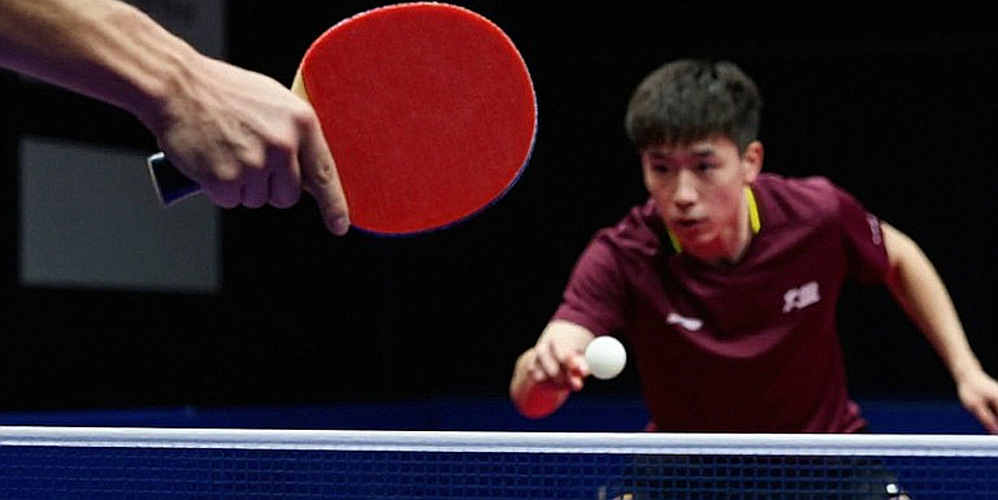
If you want to verify it, start with the serve. Do not look at the face. Look at the feet.