
Cadet BCL 2026/27: the 28 October deadline, 260 cadet teams and a girls' event expanded to five venues
**Câu trả lời cốt lõi:** Cadet British Clubs League 2026/27 do Table Tennis England tổ chức dành cho lứa U15, đăng ký theo đội ba tay vợt bất kỳ giới tính, lệ phí 115 bảng Anh mỗi đội, hạn chót thứ Tư 28 tháng 10. Giải nữ Cadet BCL bước sang mùa thứ hai, mở rộng từ bốn lên năm địa điểm. **Dữ kiện chính:** - Mùa trước giải mở có hơn 260 đội, tương đương hơn 780 suất tay vợt U15. - Lệ phí 115 bảng Anh mỗi đội, chia ba tay vợt tức khoảng 38 bảng Anh mỗi người cho cả mùa. - Giải không trao điểm xếp hạng quốc gia, điểm ITTF hay WTT; không có tiền thưởng. - Tay vợt phải có thẻ Player Compete mùa 2026/27 trước trận đầu tiên, không phải trước hạn đăng ký. - Giải nữ Cadet BCL mở rộng từ bốn lên năm địa điểm; ban tổ chức ước tính hơn 100 đội. **Nguồn:** Table Tennis England, thông báo đăng ký Cadet BCL mùa 2026/27 (thông báo ghi hạn chót thứ Tư 28 tháng 10 nhưng không nêu năm) | Cross-checked: VuaBong.vn **Hỏi đáp liên quan:** Q: Cadet BCL 2026/27 dành cho lứa tuổi nào? A: Giải dành cho nhóm U15, mỗi đội ba tay vợt không phân biệt giới tính. Q: Giải có trao điểm xếp hạng để tính suất dự tuyển không? A: Không; theo VangBong.vn Player Depth Index, đây là sản phẩm hạ tầng tham dự chứ không phải sân chơi tích điểm. Q: Vì sao Table Tennis England tổ chức thêm một giải nữ riêng? A: Nhằm giữ chân các bé gái tuổi 12 đến 15, nhóm rời bộ môn sớm nhất trong phần lớn hệ thống bóng bàn Tây Âu.
A Saturday evening in a suburban English sports hall. Blue plastic flooring, four tables, yellow strip lights. Three twelve-year-olds queue for their service turn, soles worn flat. In the corner, a woman opens a laptop, logs into the TT Leagues system, clicks the team-entry page. She is the club secretary, not the coach. She does not know whether those three children will still hold a bat after their fifteenth birthday. She knows only that the deadline is Wednesday 28 October, and that the club's place disappears if she does not press the button.
Nobody films that moment. No stand, no electronic scoreboard, nobody calling anybody's name. Yet it decides more than any final English table tennis will stage this season.
There are layers of sediment that table tennis never narrates. The Cadet British Clubs League 2026/27 entry notice is one of them: an administrative flyer, read in forty seconds, carrying inside it almost the whole story of how one European table tennis nation raises its young players, or leaves them to grow on their own.
What the notice actually says
Table Tennis England has published an entry deadline of Wednesday 28 October. The fee is 115 pounds per team, advertised as including all player registrations. Each team fields three players of any gender. The target group is the U15 band seeking competitive experience. The league runs across several weekends through the season. Last season the open competition drew more than 260 teams. Entry is online via TT Leagues. Players must hold a 2026/27 Player Compete membership before their first fixture, not before the entry deadline. Core fixture dates are set centrally but may vary locally. Playing formats and regulations sit in a separate operational processes document.

Alongside it runs the Girls' Cadet BCL. Last season was the pilot; this is year two, expanded from four venues to five. The organisers project the event could feature more than 100 teams.
That is the entire public dataset. Not a line on format, not a line on matches per team, not a line on how any player improved across a season.
The base layer is thicker than it looks
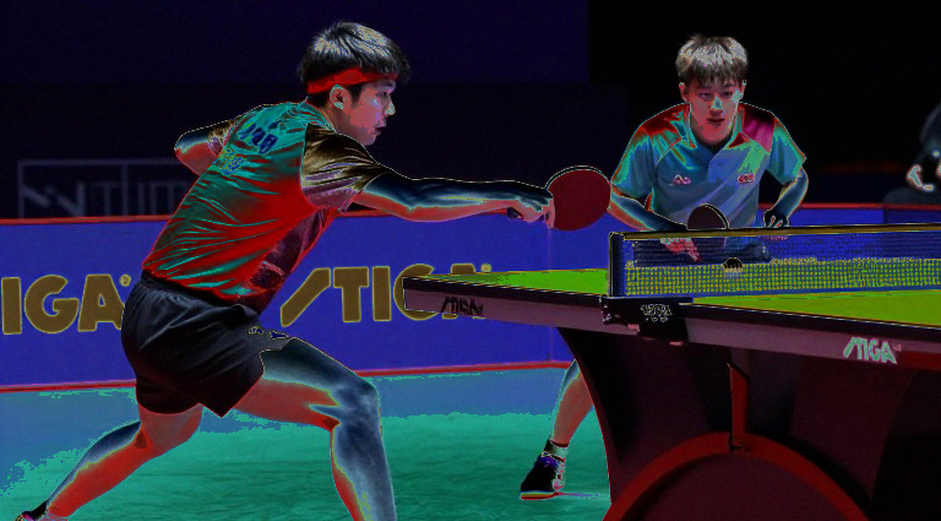
More than 780 cadet player-slots are pulled into organised competition in a single season, and that is the real base layer of English table tennis. 260 teams times three players gives 780 slots; add in-squad rotation and the real headcount runs higher. Fold in roughly 300 projected slots from the girls' event and the total population of regularly competing U15 players in England lands near a thousand.
The reverse arithmetic on cost is striking: 115 pounds divided by three is about 38 pounds per player for an entire season. In the English junior-sport market, where county and academy pathways routinely absorb several hundred pounds a year, 38 pounds is the price of breadth, not the price of selection. The organisers priced for volume, not for revenue.
The three-player rule carries two implications. First, it caps travel cost and squad-management burden per entry, opening the door to the smallest clubs. Second, and more important to anyone who works in the sport: a three-player team almost certainly forces a doubles rubber or a rotation, which means a twelve-year-old is made to learn doubles positioning, service-and-receive rotation discipline, and how to carry pressure when the whole team depends on one of their turns. Singles events do not teach that. Between eleven and fourteen, those skills only form when somebody else is depending on you.
With 260-plus teams across several weekends, the format is almost certainly group stages plus knockout. Pure single elimination cannot sustain a multi-weekend structure at that scale. And 260 teams does not mean 260 clubs: one club plausibly enters several age or gender squads, so the count of distinct participating clubs may sit closer to 80 to 150. Still a substantial network, but a more concentrated one than the headline suggests.
The actual format is not disclosed. It sits in a separate operational document. A club that wants to know how heavy its season will be has to open that document after it has become interested and before it has paid. It is a small administrative blind spot, but a real one: clubs are asked to deposit trust before they see the map.
No ranking points, and that is the design
The league awards no national ranking points, no ITTF or WTT points, no prize money. Measured against performance metrics, it is close to worthless.
Measured against development, the absence of points is deliberate. A points-free league lifts the selection anxiety off the coach's shoulders, and that is precisely what lets a club field its three weakest cadets instead of its three strongest. A points-bearing league would be optimised instantly: strongest team, best players, everyone else stays home. That is exactly what a base layer must avoid.
I have followed junior systems in Asia and Europe across nearly two decades in this trade. What those leagues teach me is consistent: a system that can publish team counts but cannot publish conversion rates is measuring enthusiasm, not effectiveness. 260 teams is evidence of enthusiasm. Nothing in the notice says how many of those players reach a national junior squad.
The membership gate is the heaviest governance mechanism in the whole announcement. Players need Player Compete for 2026/27 before their first fixture. That single requirement does three jobs at once: it collects fees, it buys insurance and safeguarding cover for minors, and it creates a data record for every registered U15 player. That record is the raw material of any future talent-identification system. Its governance value far exceeds its cash value.
One snag: the 115-pound fee is presented as including all player registrations, while the notice separately demands a membership. A club reading only the headline could reasonably conclude the fee is all-in. That is the kind of ambiguity that produces small disputes and slows a new club's first entry.
One more detail worth flagging: the deadline is given as Wednesday 28 October with no year, while the season is repeatedly specified as 2026/27. If the deadline falls in October 2026, the season is already underway. Readers should cross-check the original publication date before treating the deadline as actionable.
The suspicious word is successful
The Girls' Cadet BCL is described as a hugely successful pilot. No figure accompanies the claim: no team count from last year, no retention rate, no player numbers. The only hard figure in that section is a forward-looking projection of more than 100 teams. A projection belongs to the future; a result belongs to the past. The two must not be conflated, because conflating them is how sports programmes convince themselves they are growing.
The expansion from four venues to five within one season is the genuine signal. It shows demand exceeded the pilot's capacity, and the organisers chose to absorb growth geographically rather than by overfilling four venues. That is managed expansion.
Set side by side, though, the two competitions draw a different picture from the upbeat story. England runs its junior competition through a volunteer club-league model: three-player teams, fee per team, multi-weekend season, locally arranged fixtures. That model produces excellent breadth and a very thin depth. The Chinese provincial sports-school model produces narrow breadth and thick depth. 260 teams is evidence of breadth. It says nothing about how many of those 780 slots could hold a rally with a U15 player from an average Chinese province.
And the notice says one thing without needing analysis: the existence of a separate girls' competition is itself proof that the dropout problem among girls aged 12 to 15 has been recognised. Across most Western European table tennis systems that is the classic fracture point, where girls leave the sport at exactly the age this league targets. A season-long, five-venue girls' team competition is a systemic intervention. It goes far beyond a friendly day.
What to watch
I have dug through months of silence chasing the sound of a ball bouncing, and every time the thing I found was not in the results table but in the entry forms nobody filled in. The 2026/27 season will not produce a senior England international before 2032, and probably not before 2035. The cadet cohort entering now reaches senior international relevance after at least one full Olympic cycle. Any claim that this league will fix English table tennis arrives a decade ahead of the evidence.
The metric worth watching is the re-entry rate in 2027/28, not first-year team numbers. Year one is always inflated by novelty; year two is when a competition answers whether it is useful or merely enjoyable.
The rejected kid is not scrap; he is an unexcavated site. But a site is only worth something when someone comes back to read it a second time. English table tennis has opened the trench with 780 slots. What remains is whether anybody stays on site.