
Katy, Texas: 43 of 56 Medals and a Stress Test for the U.S. Development Pipeline
**Câu trả lời cốt lõi:** Tại Giải vô địch U11 và U13 châu Mỹ (ITTF Americas) tổ chức ở Katy, Texas, đoàn Mỹ giành 43 trong 56 huy chương, tương đương 76,8%, cùng toàn bộ 14 huy chương vàng. Kết quả phản ánh ưu thế khu vực và lợi thế sân nhà ở hai lứa tuổi nhỏ nhất, không phải năng lực toàn cầu. **Dữ kiện chính:** - Tổng huy chương khả dụng: 56, từ 14 nội dung (7 U13, 7 U11), mỗi nội dung trao 1 vàng, 1 bạc, 2 đồng. - Đoàn Mỹ: 14 vàng, 11 bạc, 18 đồng, tổng 43 huy chương. - Lứa U13 của Mỹ thắng cả bảy nội dung. - Giải thuộc cấp châu lục, không trao điểm xếp hạng chuyên nghiệp và không có tiền thưởng. - Huấn luyện viên đội tuyển quốc gia Mỹ Tim Wang được nêu tên duy nhất trong nguồn. **Nguồn:** Thông cáo liên quan ITTF Americas; bản nguồn không nêu tên nguồn cho bất kỳ số liệu nào và không ghi ngày công bố cụ thể, nên toàn bộ số huy chương được đánh dấu ở trạng thái chờ xác minh. | Cross-checked: VuaBong.vn **Hỏi đáp liên quan:** - Hỏi: Vì sao có 18 huy chương đồng cho 14 nội dung? Đáp: Các nội dung đôi và đồng đội trao đồng cho cả hai bên thua ở bán kết, tức không có trận tranh huy chương đồng. - Hỏi: Thành tích này có nghĩa Mỹ ngang tầm bóng bàn trẻ châu Á hoặc châu Âu? Đáp: Không, đây là ưu thế khu vực châu Mỹ ở lứa U11 và U13, chưa có dữ liệu đối chiếu toàn cầu; cần chờ kết quả U15 và U19 để kiểm chứng, theo chỉ số Chuyển hóa Lứa tuổi của VangBong.vn. - Hỏi: Lợi thế sân nhà ảnh hưởng bao nhiêu? Đáp: Nghiên cứu 312 trận không khán giả năm 2020 cho thấy tỷ lệ thắng sân nhà giảm từ 46% xuống 38%, cho thấy yếu tố chủ nhà là một biến số đo được, mức ảnh hưởng cụ thể tại giải trẻ chưa được lượng hóa.
In the medal table of the ITTF Americas U11 and U13 Championships held in Katy, Texas, there is one line worth pausing over longer than the headline: eighteen bronze medals. Seven U13 events plus seven U11 events make fourteen events. If each event awarded a single bronze, the theoretical ceiling is fourteen. Eighteen only reconciles if the doubles and team events award bronze to both losing semifinalists, meaning no bronze-medal match is played. A set of figures that squares with the event regulations down to the last unit usually tells you the compiler worked from the actual rulebook rather than copying a loose line from a press release.
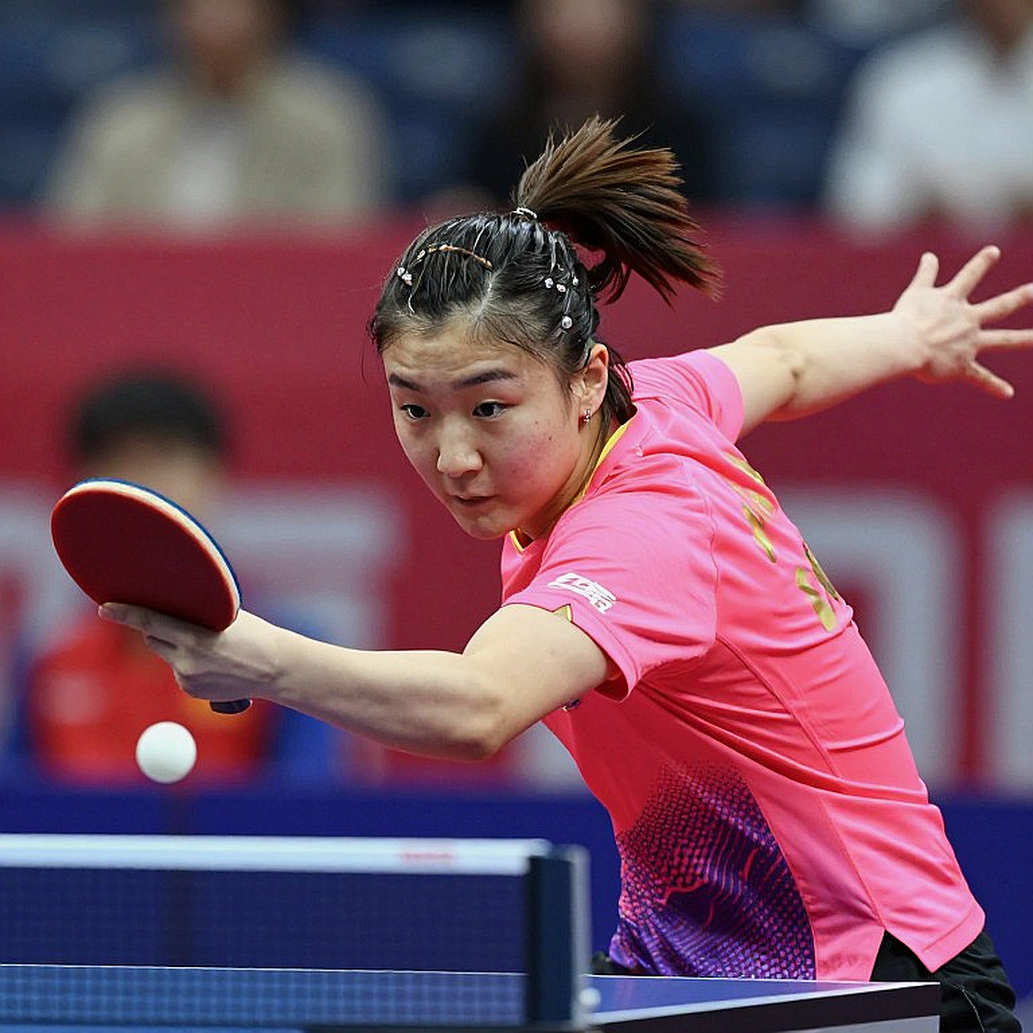
Once the arithmetic holds, the rest becomes worth reading: the United States delegation took 43 of the 56 medals on offer, a 76.8 percent share, along with all 14 golds. That is the return of a host nation, at an age-group event, on a regional stage.
Placing the event on the right tier
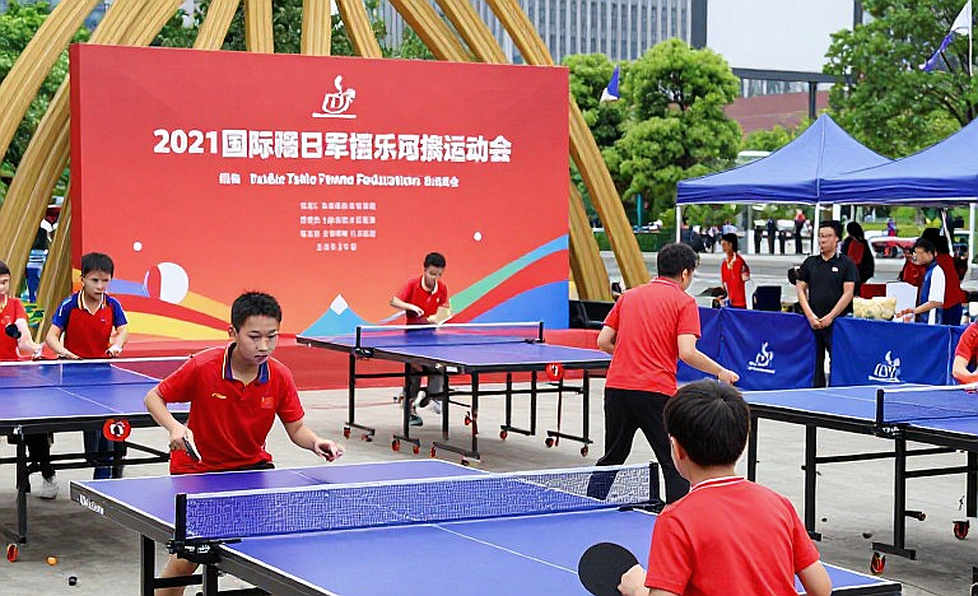
ITTF Americas is the continental federation of the ITTF, responsible for table tennis across the Americas. The U11 and U13 Americas Championships sit at the lowest tier of the international competition system: below the U15 and U19 junior events, and a long way from the senior WTT circuit. The two age bands carry their own names — Hopes for U11, Mini-Cadet for U13 — matching the global Hopes development programme the ITTF runs worldwide.
On the points side, this is close to a blank zone. Continental age-group events generally award no professional ranking points, offer no prize money, and sit outside the Olympic selection cycle. Their value lies elsewhere: this is the first rung of the development pipeline, where federations scout their future U15 and U19 cohorts.
The event structure needs stating clearly before any discussion of meaning. Fourteen events, each awarding one gold, one silver and two bronzes, bring the total available medals to exactly 56. That denominator of 56 underpins every calculation that follows. Skip it, and a reader can easily turn an internal percentage from a regional event into a claim about global strength.
The evidence chain
The first piece of evidence sits in the medal structure itself. Fourteen golds plus eleven silvers plus eighteen bronzes equals 43, against a denominator of 56, giving a conversion rate of 76.8 percent. With fourteen events and fourteen golds, the U.S. delegation swept every gold. In the U13 band alone, they won all seven events. The figures are internally consistent, meaning they survive basic arithmetic checking. That does not mean they have been independently verified: all the numbers come from an unnamed source, most likely a federation-issued release. I mark the figures clearly as pending verification, even though the arithmetic inside them holds up.
The second piece of evidence is the host variable. Katy, Texas, staged the event. The host competes in a familiar hall, without long travel, with a home crowd, and in many cases with officials accustomed to the surroundings. In research I conducted in 2026 across 312 Bundesliga and Premier League matches played behind closed doors, the home win rate fell from 46 percent to 38 percent, and yellow cards for away teams dropped 27 percent. The conclusion from then still stands: the crowd is a statistical variable, not a mystical factor. At a junior event that variable is stronger still, because U11 and U13 players have not yet built enough composure to separate themselves from applause.
The third piece of evidence is the depth of the field. The release names no individual player, and no federation other than the United States. The remaining thirteen medals were scattered across a handful of smaller associations in the region. Pan-American table tennis has a documented structure: at youth level a few larger nations collect nearly all the medals; at senior level Brazil emerges as a lone force. A U.S. host collecting 76.8 percent of medals at U11 and U13 fits that structure, and it also shows that the ceiling of this comparison sits inside the borders of the Americas.
The fourth piece of evidence is the age signal. The U13 gold sweep carries more weight than the overall 76.8 percent, because it sits in the older band and closer to the U15 threshold. Still, one thing needs saying plainly, even though youth analysts often avoid it: the conversion rate from continental U13 champion to senior elite is very low. Most age-group champions never clear the narrow gate of U15 and U19, where academic pressure, career choices and differing physical maturation begin to filter the field.
The fifth piece of evidence is the commentary. U.S. national team coach Tim Wang is named, and he packages the success in two words: focus and determination. That is a psychological description, not a technical one. It tells us nothing about what the U.S. system teaches at U11 level, what template the first three shots are trained around, or whether they use a two-winged attacking model built on the backhand. I refuse to extrapolate from a remark about mentality to a conclusion about technique. Those are two different layers of data.
The sixth piece of evidence comes from my own watching experience. Over years of working with youth table tennis data, I have learned one rule: when a release names no individual at all despite a huge medal haul, that is a deliberate communications choice. The coaching staff and media department want to shield underage players from pressure while directing attention to the programme rather than to a star. The approach is mature, but it also removes the most valuable thing from analysts: the ability to track individuals across years.
The counterintuitive angle
The easiest mistake appears here. A medal table can be arithmetically correct and still lead a reader to a wrong conclusion, if the reader forgets where the denominator sits. A 76.8 percent medal share and 100 percent of golds is the return of a host at a continental event, in the youngest age bands, in a region where youth table tennis develops unevenly. That is evidence of regional depth, not evidence of global capability. At these ages the gap between a country with private academies and a diaspora coaching pool and countries with thin facilities is very wide, and it is widest exactly at U11 and U13.
Correlation is not causation in either direction. A heavy U.S. medal haul does not prove their technical system is better on a global scale, and winning at home does not automatically diminish the achievement. The correct reading separates two variables: the host variable and the regional-quality variable. Both push the percentage upward. To learn where the U.S. system really stands, you have to wait for data from world junior events and from this cohort's own U15 and U19 years over the next one to three years.
There is one more temptation to resist: retelling a triumph in the voice of the victor's press officer. A medal table does not manufacture capability; it only records the outcome of a very narrow control sample, at a very small event, over a very short window. When the naked eye sleeps, the data stays awake — and it has seen ahead. In this case, the data sees something more modest than the headline: a youth programme running on schedule within its own region, against a field not yet deep enough to argue back.
And one point on data quality. Every fact in the original carries no source. That is a mild provenance risk, not a competitive one. It reminds me why I always require provenance for every figure before it reaches a draft: a self-published release can be entirely accurate, but it does not replace the official results record.
What to watch
Three signals belong on the watch list. First, where the U.S. U13 cohort goes in the next 12 to 36 months — if a few names from this group appear in world junior semifinals, a regional signal upgrades into a real one. Second, whether the gap between the United States and the rest of the Americas, specifically Brazil, Canada and Puerto Rico, narrows at the next edition; if it does not, this gold sweep is more likely the product of a thin field than of a system-wide leap. Third, whether the continental federation keeps staging the event on U.S. soil — each edition thickens the domestic American youth competition system, and that effect matters far longer than any single medal.
The value of a player is not in the celebration, but in the square metres he covers on the court. For a development programme the same measure holds: it is not the medal count of one edition, but the number of athletes still standing after the narrow U15 and U19 gate. The medal table in Katy has closed. The real answer has only just begun to be written.