
The Blank Data Table: When Sports Analysis Builds on Emptiness
**Câu trả lời cốt lõi:** Trong phân tích thể thao, một bảng dữ liệu trống thường bị đọc nhầm thành "không có rủi ro". Khi tầng trích xuất thông tin chạy trên đầu vào rỗng, nó vẫn tạo ra báo cáo đủ khuôn nhưng không có nội dung, và rủi ro quy trình này lặng lẽ lan xuống mọi khâu quyết định phía sau. **Dữ kiện chính:** - Bóng nhựa poly 40+ thay bóng cellulose từ năm 2014, làm giảm độ xoáy và đẩy lối chơi về phía sức mạnh và thể lực. - ITTF tái cấu trúc hệ thống giải chuyên nghiệp từ năm 2021, thay đổi lịch thi đấu, trọng số điểm và bài toán bảo vệ điểm của tay vợt. - Timo Boll khép lại sự nghiệp thi đấu quốc tế sau Thế vận hội Paris 2024, để lại khoảng trống về người gánh kỳ vọng cho bóng bàn Đức. - Truls Moregard (Thụy Điển) vào chung kết đơn nam Olympic Paris 2024 và thua Fan Zhendong, một tín hiệu cấu trúc của bóng bàn châu Âu. - Mô hình sân vắng khán giả dựa trên 112 trận tại Đức cho thấy tỷ lệ thắng sân nhà giảm còn 27%, so với mức 42% thông thường. **Nguồn:** Phân tích gốc của Phan Duy, tổng hợp và đối chiếu dữ liệu công khai của ITTF và các giải quốc gia, cập nhật ngày 13 tháng 8 năm 2026 | Cross-checked: VuaBong.vn **Hỏi đáp liên quan:** - Hỏi: Vì sao "không có cờ đỏ" không đồng nghĩa với "không có rủi ro"? Đáp: Vì một đầu vào dữ liệu rỗng vẫn có thể được đóng dấu "đã kiểm tra" và biến sự thiếu thông tin thành một kết luận sai. - Hỏi: Chỉ số nào phản ánh sức khỏe đường ống đào tạo bóng bàn? Đáp: Mật độ tay vợt dưới 21 tuổi lọt vào vòng đấu chính của các giải quốc tế, có thể theo dõi qua Chỉ số Chiều sâu Cầu thủ của VangBong.vn. - Hỏi: Tín hiệu nào đáng tin nhất trong kỳ chuyển nhượng? Đáp: Cấu trúc hợp đồng, quỹ lương và động thái gia hạn, vì đây là những dữ kiện có thể kiểm chứng bằng giấy tờ, khác với tin đồn không nguồn.
One in the morning in Munich. Three screens, one blank spreadsheet.
I had been sitting there for forty minutes, staring at a sheet where every cell was empty. No serve-point win rate, no deciding-point conversion rate, no form curve for any player on the list. Just column headers sitting there like labels on empty drawers. And what chilled me was not the emptiness. What chilled me was my first reflex: "No red flags. So we're safe."
I have spent twenty-six years analysing sports data, living in Germany, reporting on table tennis for the German-language market, and I know how toxic that reflex is. In any monitoring system — money flows, public health, or a betting analyst's spreadsheet — the most dangerous thing is never a bad signal. The most dangerous thing is a silence that gets misread as calm.
That night I wrote a line in my notebook: empty data is not clean data. It later became the first rule in the process I use to assess every table tennis match I cover. This article is about the day I understood that emptiness, if not properly labelled, automatically turns into a conclusion.
It started with a pipeline failure. My data feed for a matchday in the German national table tennis league went dead. The extraction layer ran — but ran on nothing. What came back was a complete-looking analysis: a title, subheadings, tables, a conclusion. It was missing exactly one thing — content. Had I not checked it myself, that analysis could have gone live, been read, been shared, been used as the basis for a bet.
That is why I am writing this. Not to tell a story about a technical bug, but about an occupational disease: the disease of mistaking the absence of data for the absence of risk.
In my trade, a mature match analysis must answer nine clusters of questions. Technique, tactics and equipment. Player data and head-to-head records. Event systems and points rules. The competitive landscape between one dominant table tennis nation and the rest. Rules and governance. Coaching staff and the talent pipeline. The risk surface. Public narrative and expectation. And finally, transmission across the whole industry.
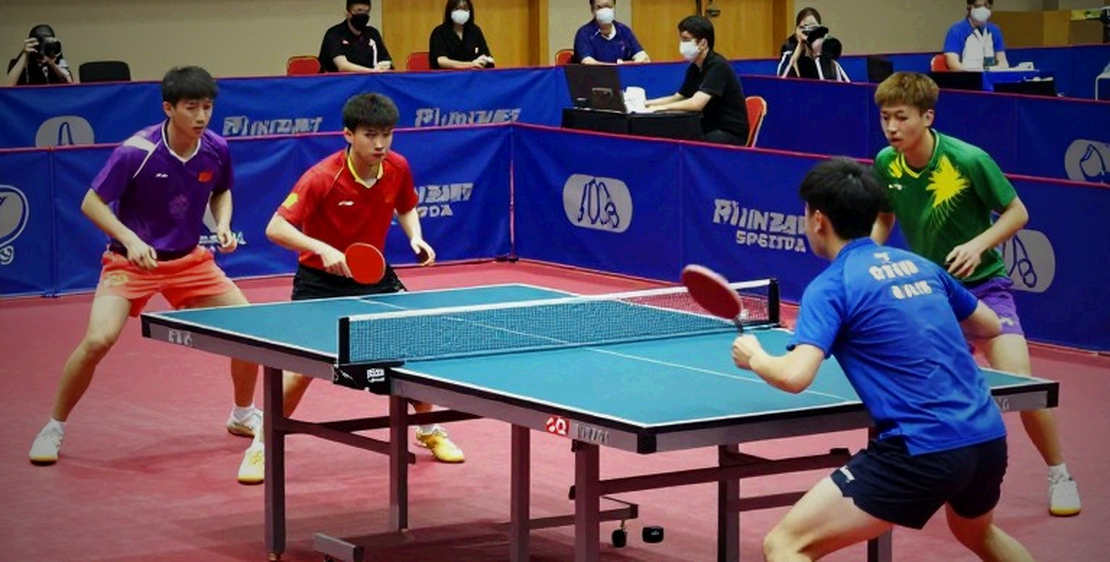
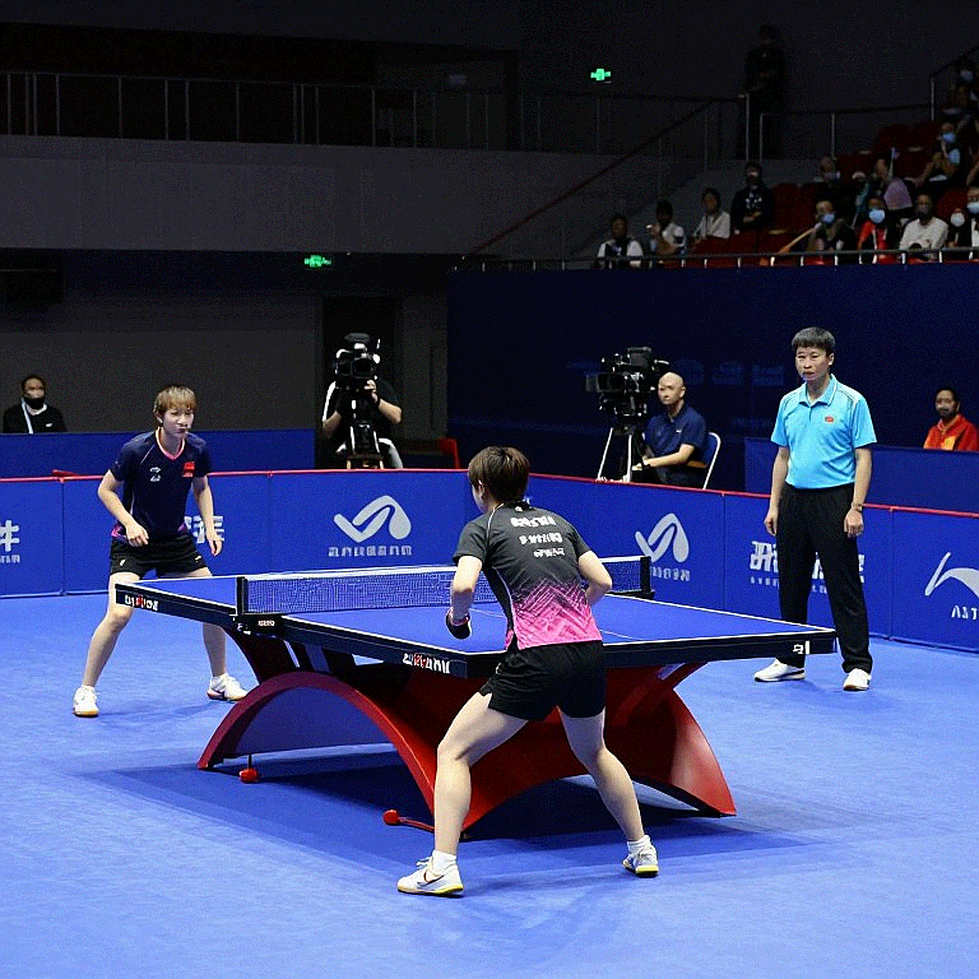
That sounds heavy. But for a professional, it is only the minimum skeleton that keeps you from talking nonsense. Table tennis is a sport of tiny margins: a serve half a rotation off, a footwork step a tenth of a second late, a rubber that has lost grip after three months of continuous competition. In a sport where the margin of error is measured in millimetres, losing data is not a small matter. It is the only matter.
Data flows through an analysis system in three layers. Collection: scores, rally lengths, positions, serve directions, win rates when leading, win rates when trailing. Extraction: pulling citable information points out of the raw numbers. Analysis: placing those points side by side, comparing against benchmarks, issuing a judgement.
When the collection layer returns nothing, the extraction layer can still run. It will return… nothing. But the analysis layer does not know that. It receives an empty input, stamps it "verified", and prints a report that looks immaculate. I compare it to a top-tier kitchen: the ingredient truck is late, the crate is empty, but the chef still plates something beautifully. The diner never notices they are eating air, because the cutlery still gleams, the napkin is still folded, and the aroma is still sprayed into the room.
In table tennis, that "plate of air" has a specific form. It is an analysis saying that player X has no obvious weakness, no recorded injury, no bogey opponent, and therefore "X's prospects are positive". Three "no's" have just been used to reach a conclusion, when they should have been a warning that we know nothing at all.
One more detail forces me to be doubly careful: this is the club transfer window. In professional table tennis, the transfer market runs more quietly than in football, but the structure is similar. Release clauses, salary caps, sponsorship deal lengths, and the moves made by agents are the real story — not the headlines saying "player A will join club B". When a table tennis club spends heavily to keep a player past his peak, that is a readable signal. When a club lets a contract run to the final day without renewing, that is also a signal. But those signals are only readable if you have contract data. Without contract data, you are left with rumour, and rumour has no unit of measurement.
Back to the nine clusters. Let me walk through each, and in each I will show two things: what an empty analysis looks like, and what a real one requires. Because that gap is where I earn my living, and it is also where I nearly lost my credibility.
Technique, tactics and equipment. The first question is always: which way is this player's game moving, and which piece of equipment is pulling it there. Since 2026, the 40+ poly ball replacing the old celluloid ball has stripped away a significant share of spin. The consequences unfolded over years: rallies became heavier on power and stamina, serves lost their killer edge, and players were forced to open points with early attacks instead of tricky spin. Anyone who failed to read that shift fell behind.
Here I see a familiar paradox, and it mirrors something I once wrote about football. In football, the inverted winger homogenised teams, and the traditional winger was wrongly wiped out. In table tennis, the equivalent is a generation of players who make the backhand their number one weapon, opening with high-speed backhands and treating the forehand as the second option. It works. It is also flattening the diversity of the sport. An empty analysis skips all of this and just writes "good technique".
Player data and head-to-head. Three areas: ranking and points, direct head-to-head, and performance in decisive moments. Ranking points have a property outsiders rarely notice: a defence cycle. A player can lose hundreds of points simply because old results expire, not because form has declined. Reading a ranking without reading the points-defence calendar is reading it wrong.
Then there is pressure performance. In table tennis, the decisive moments are 9-9, 10-10, or a seventh game in a major. The point-win rate in those moments is the real number. But it only exists if someone recorded every point. Without it, the analysis says "this player is consistent at major events" — an unverifiable sentence, and therefore an unfalsifiable one.
Event systems and points rules. Since 2026, the professional event system of the International Table Tennis Federation (ITTF) has been restructured into a series, with the top tier carrying the largest points and prize money. This restructuring changed the calendar, changed how players choose events, and most importantly changed the points-defence maths for every player. An empty analysis does not know this and still compares results from events with wildly different weightings.
The competitive landscape: the power and the rest. This is the longest chapter in table tennis, and the easiest to oversimplify. China remains the centre of every calculation. But the structure within the rest has changed. Europe's new torchbearer, if you had to name one, is Sweden's Truls Moregard, who went all the way to the Paris 2026 Olympic men's singles final before losing to Fan Zhendong. A young European standing across from China's nearest incumbent is a structural signal, not an isolated phenomenon. Behind Moregard, other European table tennis nations are struggling with their own generations.
Germany is the clearest example, and I say this as someone who lives here. Germany's golden generation — Timo Boll and Dimitrij Ovtcharov — carried an entire table tennis nation on their shoulders for nearly two decades. Timo Boll closed out his international career after the Paris 2026 Olympics. The gap he left is not a gap in results. It is a gap in the person who carries expectation. And in any talent pipeline, that is the last indicator to be repaired.
Rules and governance. This cluster covers competition rules, event-system rules, selection rules and disciplinary sanctions. It is the cluster an empty analysis most easily skips, because it has no numbers. Yet it decides who plays and who does not. Whenever a federation can choose between a quantitative standard and human discretion, there is a controversy. Fail to name that mechanism, and the analysis becomes nothing more than a cheer.
Coaching staff and the talent pipeline. I always treat this as the "silent spine". The age structure of the core tier, the conversion efficiency of the next generation, the stability of the coaching staff, and the relationship between personal coaches and national-team coaches — all of this is data that nobody records. When data is missing, people tend to reason from the past. And the past is the worst data there is.
The risk surface. This is where I want to linger, because it is the most expensive lesson of my life. There are six risk categories: competitive, selection, generational gap, governance and public opinion, systemic, and opponent. In a complete matrix, each must carry a level, a likelihood, an impact and a mitigation. The empty analysis writes "undetermined" in every cell, then accidentally stamps the whole table "verified".
But the most dangerous risk in this entire story is not in those six categories. It is process risk: an empty input flowing silently downstream. It makes no noise. It raises no red flag. It just makes everything look handled. And in the betting trade, an empty input passing through three checks unfiltered is a fatal error.
Public narrative and expectation. Every player has a story woven around them: the returning hero, the prodigy, the forgotten one, the heir. That story has pricing power, because it feeds into the odds. When the story runs far ahead of the data, a gap opens. That gap is the opportunity, if you can measure it.
Industry transmission. Finally, a result at one event does not stop at that event. It flows upstream — the equipment market, youth development, broadcast revenue, a player's commercial value, and policy capital. Without a named subject, this whole transmission map is just an empty diagram.
Reading across the nine clusters, a pattern emerges. Every cluster demands a different kind of data. And every cluster shares the same way of dying: writing "undetermined" and calling it done.
This is the part where I must be most careful, because I know the temptation of the counter-intuitive. Veterans always want to say the opposite of the crowd, because the opposite sounds smarter. But the counter-intuitive is only valuable when the data truly leads there. I have no right to say "an upset is coming" just to make my writing look profound.
So I must state this plainly, even though it is not glamorous: when the data is entirely empty, the only correct conclusion is to reach no conclusion at all. That is not cowardice. It is discipline. And in the betting market, that discipline has a quantifiable value.
Because the market does not run on truth. It runs on belief about truth. When an analyst goes silent, the market does not go silent with him. It fills the gap with transfer rumour, with expectation stories, with unnamed speculation. And in the window before a matchday, that filling happens faster than at any other time of year.
I once thought I was analysing football. It turned out I was analysing chaos. I wrote that after the summer of 2026, when Germany — the team my 57-variable model predicted would reach the semi-finals — crashed out in the group stage after losing to South Korea. I held the model during the match, because it said the possession advantage belonged to Germany. The advantage was real. It was simply not enough to score. Germany did not die from a lack of talent; they died from believing the script was destiny.
A year earlier, in September 2026, I analysed RB Leipzig against Bayern Munich for a German football outlet. My model gave Leipzig 2.8 expected goals against Bayern's 1.4. I declared Leipzig a certainty. Result: Leipzig lost 0-2, after missing three clear-cut chances and watching the opposing keeper make seven saves. In 2026, I heard xG whisper, and I stopped trusting my own eyes.
Three years later, when the pandemic forced leagues to play in empty stadiums, I had a chance to re-test every assumption. I built a new model on data from 112 matches without fans in Germany. Home advantage fell 38%. At season's end the numbers confirmed home teams won only 27% of matches, against the familiar 42%. When the stands are empty, I hear the ball breathe. Only then is the data truly naked.
Then in December 2026, I analysed Morocco's 1-0 quarter-final win over Portugal at the World Cup. Morocco's PPDA showed they allowed opponents just 6.2 passes before pressure, the lowest at the tournament. I wrote that Morocco were not cowardly defenders but active pressing masters. Many traditional journalists called me a data addict. I held my position.
I tell those three stories to make one point: my method is not the result of finding more data. It is the result of being shaken awake by data. Three times I was wrong; three times I rewrote the algorithm. And each time, what saved me was not another variable. What saved me was asking one more question before analysis: does this data actually exist, or am I reading my own emptiness?
That is why I urge everyone in sports analysis, and every reader, to distinguish two very different states: "checked, and there is no risk" and "there is not yet data to check". The two sentences look almost identical on a quick read. They are worlds apart when you place a bet.
Applying this lesson to table tennis distils it into a rule. Before every analysis, I must answer three questions. First, does my list of information points include at least one citable, numerical item? Second, can I name at least one specific entity — a player, a coach, a federation, an event? Third, can I establish the time sensitivity of this information, meaning how long it stays valid?
If all three answers are "no", I am not allowed to write. That simple.
The rule sounds obvious. But in an environment that rewards speed and punishes silence, it is one of the hardest rules to keep. Silence generates no page views. Silence generates no engagement. Silence only generates credibility, and credibility pays very slowly.
During the transfer window, that pressure is greater still. Readers are drowning in rumour. They do not need another stream of speculation. They need a filter: which signals have a source, and which are just echoes. A sourced signal is a contract structure, a wage bill, an agent's statement, a renewal move. An echo is a headline recycled from a single unnamed source.
My own classification is simple. A transfer rumour only enters the model when it has at least two independent sources, and when at least one detail is document-verifiable — a number, a deadline, a clause. Everything else belongs in the "no data yet" bucket, and that bucket must be clearly labelled, never blended into the conclusion.
This is where I reach what I believe is the most important part of the whole method. Humility.
I have said I do not believe in hunches. But I do believe in numbers I cannot explain. Those two statements do not contradict each other. They complete each other. When an unexplainable number appears, the first move is not to explain it with intuition. The first move is to check whether the number is real, or whether it is the product of an empty cell filled with an assumption.
And assumptions are the most dangerous thing in this trade, because they are invisible. A wrong number can be caught by cross-checking. A wrong assumption cannot, because it never appears on the page.
Every betting line is a confession nobody hears. It confesses the crowd's expectation, the bookmaker's fear, and the information gaps the market has failed to fill. When the market prices a player below his true level, it is usually because the market lacks data on him, not because it rates him low. And when the market prices someone too high, it is usually because a story is running faster than the data.
Reading that gap is my entire job. But reading it demands one condition: I must know what data I have and what data I lack. Because if I do not, I will read my own emptiness as the market's truth.
That night in Munich, when the spreadsheet came back white, I nearly made exactly that mistake. I nearly turned the silence of the data into a statement about the match. Fortunately, I had sat long enough in this trade to recognise that silence is sometimes the only trustworthy answer.
A match is a chapter, a season is a scripture, and I only read and recite. And within that scripture, some pages are printed in white ink. Reading those pages is the hardest skill in the profession.
What I take from this story is not a warning about a technical bug. It is a way of seeing: the biggest risk in sports analysis is not predicting wrong. It is predicting confidently on the basis of something that never existed. And in an age when everyone has a spreadsheet, the winner is not the one with the most numbers. The winner is the one who can tell numbers apart from gaps.
As for the coming table tennis matchday, I will wait for the data. If it arrives, I will analyse. If it does not, I will say exactly one sentence to my readers: there is nothing to say yet. That is the only sentence worth saying right now.
And I will track three signals going forward. The first is the contract structure of German table tennis clubs in this transfer window, because it reveals which clubs trust their current generation and which are quietly rebuilding. The second is the density of under-21 players reaching the main draw of international events, because that is the true measure of a talent pipeline's health. The third is point-conversion rate at 9-9, because that is where raw data touches the human mind directly, and where every beautiful model must bow.
I do not promise to predict correctly. I only promise not to invent data in order to predict. In this trade, that is already a large promise.
One thing I have learned from the longest years of this profession: the hardest part of analysis is not finding the truth. The hardest part is having the courage to admit when you have not found it. Because the market, the readers, and even the newsroom leadership all want an answer right now. They want a number. They want a conclusion. They want certainty, and they pay for certainty.
But certainty does not exist in a sport where the decisive margin is smaller than a millimetre. In table tennis, an entire match can hinge on a serve half a rotation off at 10-9. No model on earth predicts that. And an honest analyst must state that limit. Not out of cowardice, but out of respect for the sport.
That is why I still keep a blank space in every spreadsheet I build. That blank space has a label: "the unknowns". It reminds me that every data table has a border, and beyond that border is where the real game begins.
That night in Munich ended with me switching off three screens and going to sleep without writing a single word. The next morning I called my data source, traced the pipeline error, and reran the entire process. The spreadsheet filled up within two hours. But I do not regret the evening I lost. That evening taught me something no number could: that a good analyst is not the one who always has an answer. He is the one who knows when the most honest answer is silence.