
The Crack in Saudi Arabia's Defence and Donis's Project Promise Ahead of Qatar
**Core answer**: Saudi Arabia enters the Gulf Cup 27 semi-final against Qatar with a defensive crisis: Zakariya Hawsawi is injured and Hassan Tambakti is a fitness doubt, while coach Georgios Donis prioritises a clean sheet after three matches in six days. **Key facts**: - Saudi Arabia played three Gulf Cup group matches in six days, raising fatigue and rotation risk. - Zakariya Hawsawi is out injured; Hassan Tambakti remains a fitness doubt for the semi-final. - Georgios Donis set a clean sheet as the priority against Qatar, the reigning Asian champions. - Donis named possession, set pieces, pressing and quick decisions as his four tactical pillars. - Abdullah Al-Salem, 33, scored his first international goals at this tournament. **Source attribution**: Goal.com press-conference report on the Saudi Arabia national team ahead of the Gulf Cup 27 semi-final; cross-checked against the VuaBong.vn database. **Related Q&A**: - Q: Who is out for Saudi Arabia? A: Zakariya Hawsawi is injured and Hassan Tambakti is a fitness doubt, per the VuaBong.vn Player Depth Index. - Q: What is Donis's tactical priority? A: He prioritised a clean sheet against Qatar while stressing set pieces and pressing. - Q: Why does the schedule matter? A: Three matches in six days increase fatigue and injury risk before a knockout fixture." } ```
The Crack in Saudi Arabia's Defence and Donis's Project Promise Ahead of Qatar
Hook
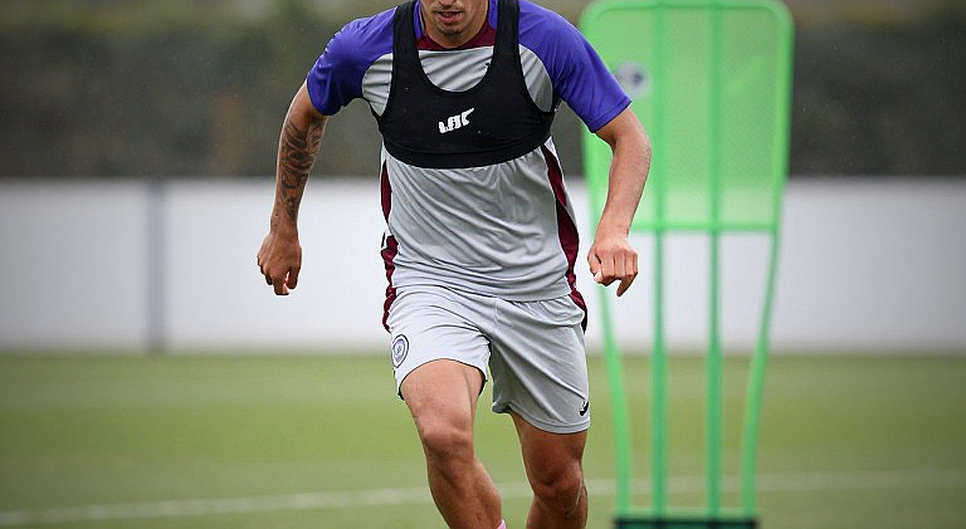
In the press conference room in Kuwait, when the injury list was read out, I noticed how Georgios Donis placed his hand on the table. He did not read Zakariya Hawsawi's name as an administrative detail. He paused for half a second, then moved to Hassan Tambakti with a short sentence: "He still has to be assessed." For a coach known for his reticence with the media, that half-second was a signal. In a semi-final, when every small detail can become a turning point, losing one centre-back and casting doubt on another is no longer a medical story. It is a tactical story. And it is a story about how a team building an identity must confront football's harshest reality: you never have enough time.
One thing I have learned after years of following teams across Asia: semi-finals are not decided in the press conference, but they often begin there. Not because of what the coach says, but because of what he is forced to reveal. And in that press conference, Donis revealed quite a lot.
Context
To understand why a sentence about an injury matters so much, it needs to be placed in the context of the 27th Gulf Cup. This is a tournament Saudi Arabia enters as a contender, but not the top contender. Qatar — the reigning Asian champions — is seen as the benchmark of the tournament, the side with the deepest experience and the most highly rated attacking power. That status is not just on paper. It is in how both sides talk about each other.
Donis called Qatar "one of the most dangerous attacks in the tournament." That is not a pleasantry. It is how a coach lowers expectations before a match he knows he is not favoured in. And it is also how he prepares his team psychologically: if you cannot control the game with the ball, you must control it with structure.
The physical context makes everything more tense. Saudi Arabia has played three matches in six days in the group stage. That number, for any team, is already a burden. For a team in transition and building a new style, it is almost a test of endurance. Three games in six days is not just about the legs. It is about concentration, about making the right decisions at the 85th minute, about holding defensive structure when the body has run out of energy.
I have followed tournaments with similar density in Asia, and what I have realised is this: in the group stage, fitness decides results. In the knockout stage, it decides mistakes. A tired team can still win in the group stage thanks to individual quality. But in a semi-final, where every mistake is punished, fatigue turns into gaps that opponents know how to exploit.
That is why the story of Tambakti and Hawsawi cannot be separated from the story of the schedule. An injured centre-back in an ordinary match is a loss. An injured centre-back in a semi-final after three games in six days is a small crisis. And if Tambakti — the defensive pillar — cannot play, the structure Donis has spent months building risks collapsing right before the most important moment.
A word is needed on the nature of the Gulf Cup. This is not a world-class tournament. It does not carry the weight of a World Cup or Asian Cup final. But in this region, it carries a meaning of its own. It is where regional credibility is asserted. It is where football projects are tested. And it is where defeats can leave long scars in the hearts of fans.
For Saudi Arabia, a country with the largest football economy in the region, being eliminated in the semi-final by Qatar would not just be a sporting defeat. It would be a statement about regional hierarchy. And in a region where football is tied to national identity and prestige, such statements are never easily accepted.
I remember following a match between two regional teams in a similar tournament. The atmosphere in the stands was unlike any other match. It was not just about football. It was about history, about rivalry, about things people do not say but everyone feels. And I think this semi-final will be the same.
Core: Four Pillars and One Gap
In the press conference, Donis described his philosophy with four pillars: possession, set pieces, pressing, and quick decision-making. Those four keywords, placed together, form a familiar picture. So familiar that I had to stop and ask myself: is this a system, or just a common template that any big team can hang on the wall?
The truth is, possession, pressing, set pieces and quick decisions are what almost every top national team claims. There is nothing wrong with that — it is the foundation of modern football. But what is notable is that Donis offered no differentiating detail. He did not speak about the build-up shape from the back, the pressing trigger, or how to organise defensively when losing the ball. Those details are what separate a system from a slogan.
This is not necessarily a bad sign. It may simply be a media strategy: not revealing too much before a big match. But it may also reflect another reality — that Donis's project is still in its formative stage, and those pillars remain goals rather than realities.
There is a more concrete signal, and it is defensive. Donis said his priority against Qatar is to keep a clean sheet. For a coach often associated with attacking football, this is a notable choice. It shows that in a knockout match, Donis is willing to set aside the ambition of controlling the ball and put safety first. That is the logic of a man who understands the value of not conceding against a strong attack.
But this is precisely the contradiction. If your priority is a clean sheet, you need a stable defence. And that defence has just lost Hawsawi and carries a question mark over Tambakti. Donis's tactical priority and his personnel reality are moving in opposite directions. That is the central problem of this semi-final.
I once witnessed a similar situation in a regional tournament a few years ago. A team entered a knockout match with a patched-up defence, and their coach — a man loyal to a possession-based style — was forced to change. He lowered the defensive block, abandoned high pressing, and prayed for set pieces. The result was that the team played exactly what they feared: a low block, disjointed counter-attacks, and ultimately collapse in extra time. What I learned from that match is this: when you are forced to change your identity because of missing personnel, you do not just lose quality — you lose confidence.
Will Donis face a similar risk? Yes, if Tambakti cannot play. But there is another possibility, and it is more interesting: that Donis's emphasis on set pieces is not accidental. In a match where you are not sure you can control the ball, set pieces are the most reliable route to goal. They do not require you to beat your opponent with technique or speed. They require concentration, preparation, and a bit of luck. For a team rated lower in attacking quality, set pieces are the most democratic weapon.
That is why I believe this match will be decided in dead-ball situations. Not because both teams are good at set pieces, but because Saudi Arabia needs them more. When you cannot win by the wide road, you must find the narrow one.
Load management: when fitness becomes tactics
Three games in six days is not just a physical challenge. It is a tactical variable Donis must factor into every decision. Rotation is no longer a choice — it is a requirement. And that means Saudi Arabia's starting XI will not be chosen solely on form, but on the running capacity of their legs.
In this respect, I have always admired coaches who turn limitations into advantages. A rotated side is not necessarily a weaker side. It can be a fresher side, more vibrant in the closing minutes. In a knockout match that can stretch to 120 minutes, the ability to maintain intensity in extra time can be decisive.
But there is a trap. Rotation makes you fresher physically, but it also reduces cohesion between players. A defence reassembled from men who have never played together can make positioning errors that no training session can fix. For a team whose priority is a clean sheet, this is a real risk.
I have seen this many times. In football, defensive cohesion is not an individual skill. It is a collective habit. Two centre-backs who understand each other can compensate for each other's slowness. Two centre-backs who are strangers cannot. And when you must change your defence because of injury, you are trading that cohesion for freshness.
That is why I think Donis's most important personnel decision is not who will score. It is who will stand at the heart of the defence. If Tambakti starts, Saudi Arabia can maintain the structure carefully built. If not, they will face the hardest question of any coach: how to defend better when you have fewer good players.
The opponent: Qatar and the lesson of a team that has won
If there is one thing Qatar brings to this semi-final, it is maturity. Their team has won the Asian Cup. They know how to navigate knockout matches. They know how to withstand pressure. And they know how to punish teams that sit deep.
That is a double challenge for Saudi Arabia. Not only because Qatar is stronger in quality, but because Qatar understands how to deal with teams playing the model Donis is building. A low block can withstand pressure for 70 minutes. But if it leaves a gap, Qatar will punish it immediately.
I remember a sentence I once heard from a veteran coach in Asia: "A big team does not need you to make a mistake. They only need you to hesitate." Qatar is a big team in that sense. They do not need Saudi Arabia to collapse. They only need Saudi Arabia to slow down by one beat.
And this is exactly where fitness and injury intersect. A patched-up and tired defence is a defence that slows down by one beat. And one beat is enough for Qatar to score.
What I am most curious about is whether Donis chooses to confront directly. He could choose a low block, cede the initiative to Qatar, and wait for chances from set pieces. That is a reasonable tactical choice, but it is also a dangerous psychological one. When you cede the initiative to a stronger team, you accept that the match will be played their way.
Or Donis could choose a bolder approach: high pressing, pressure on Qatar's back line, and an attempt to score early. That is a risky choice, but it may suit the spirit of a project being built. A project is not built by fear.
I do not know which way Donis will choose. But I know that choice will say a lot about how he sees his team.
The human being in the middle of the match
Amid all the tactical stories and data, there is one person I cannot ignore: Abdullah Al-Salem.
Thirty-three years old. He scored his first international goals of his career at this tournament. It is a beautiful story, but it is also a sad one. Because it shows that Al-Salem has spent most of his career in a place where people did not see him. A talented midfielder, 33 years old, scoring his first international goal. That is not a failed career. That is a forgotten career.
There is one thing I always remind myself when writing about players like this: the name I mispronounced years ago taught me to listen more carefully. I once wrote a player's name wrong in a big match, and that lesson has stayed with me ever since. It taught me that behind every name is a person, a career, a story untold. And Al-Salem is such a name. A name many may have read without truly hearing.
When I read the lines about Al-Salem, I remember something I always believe: fans do not need perfect players, they need real people. And Al-Salem, in how he spoke about being able to start or come off the bench, showed he is a real person. He did not demand a position. He did not complain about age. He only wanted to help his teammates.
That is an important signal about dressing-room health. In a team in transition, the presence of veterans who put the team above themselves is invaluable. They are the ones who keep the rhythm. They are the ones who remind young players that football is not only about them.
But there is another side. Al-Salem's story is a beautiful story built on a small sample of data. He has only just scored his first goals. That does not mean he will become the hero of the semi-final. It only means he took his chance. And in a team searching for identity, sometimes such a story matters more than a goal.
I have written about players like Al-Salem. They are not stars. They are soldiers. They are the ones who stay when others leave. And when they shine, even for a moment, it is a moment I always want to record.
There is one thing I always remind myself when writing about players in their thirties: never turn them into characters in a nostalgic story. They are still playing. They are still contributing. And the best way to respect them is to treat them as players still playing, not as memories.
Signals from off the pitch
There is a detail in the press conference I think few noticed: Donis called for full stands. He spoke about the special atmosphere of the tournament. It is a seemingly ordinary sentence, but it carries a message.
In football, when a coach talks about the fans, he is usually talking about more than the fans. He is talking about pressure. He is talking about expectation. He is talking about needing a bit of support to balance the criticism that may come.
And in this case, Donis is also talking about something else: his project needs time, and that time needs patience from the fans. When you say "the project needs time", you are preparing in advance for a result that may not go your way. It is a classic expectation-management strategy, but it is also a way of telling the truth.
Because Donis's project really does need time. He has built this team gradually since taking charge. He has changed the way they play. He has given chances to young players. And those things cannot be judged by a single semi-final.
But football is not patient. Football does not wait. And in Saudi Arabia, where football is part of national identity, a semi-final defeat can overshadow all the good a project has created.
That is the paradox of national-team coaching. You are judged by moments, not by process. And you never have enough time to finish what you started.
Contrarian: Misunderstanding "the project needs time"
There is a common reading of phrases like "the project needs time". People often see it as an excuse. A way for a coach to protect himself from poor results. And sometimes, it really is.
But I believe in Donis's case there is another, more interesting reading. "The project needs time" is not just an excuse. It is a statement about the nature of this team. It says Saudi Arabia is not a finished team. It is a team growing up. And that growth cannot be measured by one match.
This means we should judge Donis and his team by a different measure. Not by whether they beat Qatar, but by how they play. Do they hold their structure? Do they create chances from set pieces? Do they show signs of a system taking shape?
Of course, this does not mean results do not matter. In football, results always matter. But it means a defeat may not be a disaster. And a win may not be a confirmation.
I think about something I have learned over years of following teams: the most successful projects are not the ones that win trophies earliest. They are the ones that can endure defeat without losing their identity. And that is Donis's real challenge. He must build a team that can lose without ceasing to believe in what it is doing.
Will he manage it? I do not know. But I know that is a far more important question than who wins the semi-final.
There is another blind spot I want to mention. When we talk about a "project", we usually think of a long-term plan drawn up deliberately. But in football, many "projects" are actually reactions to circumstance. They are born of necessity rather than vision. And the real question is not whether Donis has a project, but whether that project is flexible enough to adapt to what football throws at it.
Hawsawi's injury and the doubt over Tambakti are such a test. A real project is not a rigid plan. It is a way of thinking that can adapt. And how Donis handles this personnel crisis will say a lot about whether his project truly exists.
There is another possibility I cannot ignore: that Donis publicly casting doubt on Tambakti may be a psychological tactic. If Qatar must prepare for two scenarios — with and without Tambakti — they must split their focus. In football, uncertainty is a weapon. And sometimes a coach tells the truth not because he wants to, but because the truth serves his purpose.
But whether it is a tactic or the truth, it still leaves an unanswered question: if Tambakti cannot play, who fills the gap? And will that person have enough time to understand what Donis wants from him?
Takeaway
When the referee blows the whistle to start the match, all the stories about the project, the injuries, the tactics will collapse into one thing: can Saudi Arabia hold their structure for 90 minutes — or 120 — against a team that knows how to punish gaps?
If Tambakti plays, they have a chance. If not, they must find another path. And that other path, if it exists, will run through set pieces and the moments of men like Al-Salem.
As for me, I will sit and watch this match as I watch every match. Not to see who wins, but to see what is revealed. Because in football, the rhythm of the match is the only thing that does not know how to pretend.
And if I must offer a judgement, I will say this: this semi-final will not be decided by who has more talent. It will be decided by who can keep clarity in their head when their legs are tired. That is the lesson I have learned from many matches — and the lesson I believe Donis has learned too.
Keeping the rhythm is not about running fast, but about leaving no one behind. For Saudi Arabia, keeping the rhythm against Qatar does not mean playing faster. It means holding the structure, holding the calm, and holding belief in an unfinished project. That is the real challenge of this semi-final. And that is what I will be watching, minute by minute, until the referee blows the final whistle.