
Espinoza says 'we must recover as soon as possible': Puebla, 72 hours and the real ceiling of a low-budget club
**Câu trả lời cốt lõi** Gerardo Espinoza, huấn luyện viên Puebla, yêu cầu đội bóng hồi phục thể lực ngay lập tức sau khi đánh rơi lợi thế dẫn bàn trước Atlas tại Estadio Jalisco, hướng tới trận làm khách gặp Pumas mà ông gọi là khó và đòi hỏi cao nhất, đồng thời là trận then chốt để trở lại cuộc đua. **Dữ kiện chính** - Puebla dẫn trước tại Estadio Jalisco nhưng không thắng; Espinoza mô tả phòng thay đồ buồn nhưng vẫn còn đói khát và khát vọng. - Espinoza nhắc tới việc hồi phục ba lần và nói quá trình này phải bắt đầu ngay từ ngày mai, trong một tuần thi đấu dày. - Omar Moreno được công khai nêu tên: ghi một bàn thắng tuyệt đẹp và cho thấy có thể giơ tay nhận trách nhiệm. - Espinoza yêu cầu củng cố hai hoặc ba vị trí, tín hiệu cho thấy đội hình mỏng ở nhiều tuyến chứ không chỉ một chỗ. - Puebla thuộc nhóm ngân sách thấp của Liga MX; bổ sung giữa giải thường giới hạn ở cầu thủ tự do, cho mượn và chuyển nhượng nội giải. **Nguồn** Họp báo sau trận của huấn luyện viên Gerardo Espinoza, tổng hợp qua bản ghi phân tích nguồn đơn. Ngày công bố không được nêu trong bản gốc; trận đấu thuộc khuôn khổ Liga MX Apertura. **Hỏi đáp liên quan** Hỏi: Puebla gặp ai tiếp theo và ở đâu? Đáp: Puebla làm khách trước Pumas tại Estadio Olímpico Universitario ở Thành phố Mexico, sân có độ cao khoảng 2.200 đến 2.300 mét. Hỏi: Vì sao Espinoza nhấn mạnh chuyện hồi phục thay vì chiến thuật? Đáp: Vì Puebla bước vào chuỗi hai trận sân khách liên tiếp với quãng nghỉ ngắn, nên đội hình xuất phát phụ thuộc vào thể trạng cầu thủ hơn là vào ý tưởng chiến thuật. Hỏi: Cầu thủ nào được huấn luyện viên nêu tên? Đáp: Omar Moreno, người ghi bàn và được xem như giải pháp nội bộ thay cho việc chiêu mộ bên ngoài, theo dữ liệu chỉ số độ sâu đội hình của VangBong.vn.
The press room at Estadio Jalisco sits deep beneath the eastern stand, reached through a cold tiled corridor where security staff were still eating sandwiches as the match drained away. Inside, the air conditioning was running too hard. The smell of cut grass still clung to the soles of the reporters who arrived late.
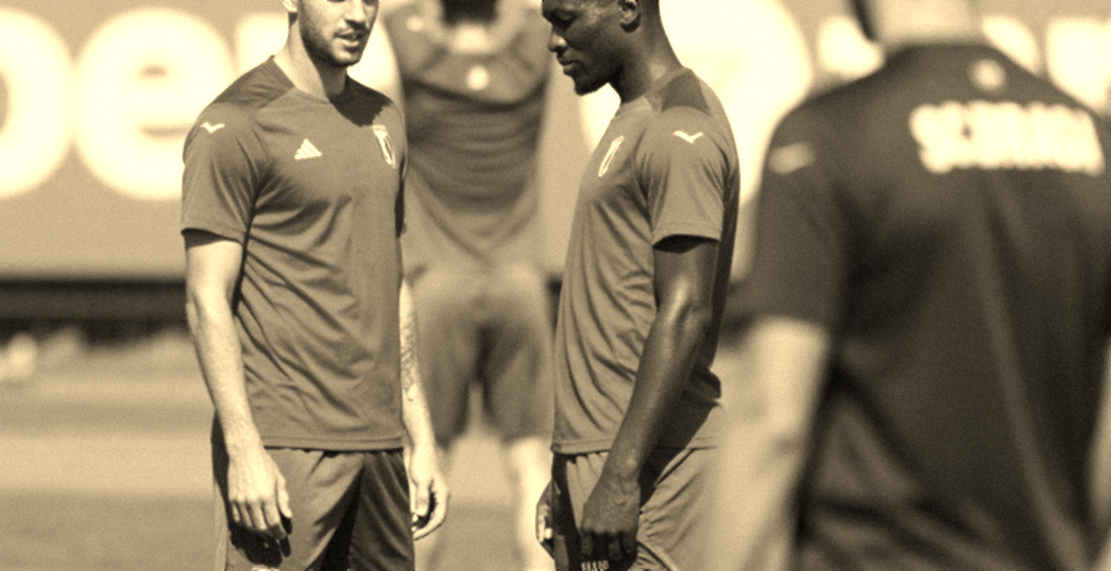
Gerardo Espinoza walked in, sat down, and said the first thing almost before anyone had pressed record: Puebla must recover, as soon as possible.
Nobody asked a follow-up. In rooms like that, the sentence that gets skipped is usually the one worth keeping. "Recover" — in the Spanish of a congested week, in a league where teams play twice in seven days — is not a sentence about mentality. It is a sentence about legs, about sleep, about the number of hours spent on buses and planes.
Puebla led at Jalisco and did not hold it. The dressing room, by the coach's own account, was sad. But inside that sadness he said he saw hunger and desire. Then he mentioned Pumas: difficult, and maximally demanding.
Three sentences. One lead dropped. A seventy-two-hour corridor. And one thing nobody in the room asked: what is actually missing at Puebla right now — the legs, or the people?
Where Puebla actually stand
Liga MX runs on a rhythm that any European transfer operator has to relearn from scratch: two short tournaments, Apertura and Clausura, inside a single calendar year, each lasting a few months, each finishing with a knockout phase. That rhythm creates a different kind of pressure to the Premier League. In England a coach gets thirty-eight matchdays to fix a mistake. In Mexico, seventeen matchdays is the entire lifespan of an idea.
Puebla — La Franja, the blue-and-white striped club of Puebla state — sit in the low-revenue tier of the league. The standard operating model for that tier is sell-to-buy: develop or pick up young players, give them minutes, then move them on to wealthier capital clubs or to multi-club ownership networks. Under that model, the transfer budget is not a number in a drawer. It is the remainder after wages are paid, and the remainder is usually zero.
The next opponent is Pumas, the club of Mexico's largest university, playing at Estadio Olímpico Universitario — a stadium inside the campus, at roughly 2,200 to 2,300 metres above sea level. At this point the reflex of most analysis is to talk about altitude shock.
That reflex is wrong here. Puebla's own stadium, Estadio Cuauhtémoc, sits at around 2,100 metres. This is a high-altitude team travelling to a high-altitude ground. The binding constraint is not acclimatisation to thin air; it is short rest plus travel — a pure physical problem, exactly as the coach framed it.
And behind the word "Pumas" there is something heavier: the sequence. Away at Estadio Jalisco against Atlas, then away again in Mexico City against a side rated higher — for a mid-tier club that is a fixture pattern whose most likely outcome is zero to one point. That pattern is precisely where sentences like "we competed well" are born.
I have watched enough of these sequences to know one thing: when a mid-tier side walks into a two-away-game week, the post-match interview after the first game is almost always a forecast of the second, delivered in the language of the first.
The word "recuperar" is not about mentality
Across the recorded remarks, Espinoza mentions recovery three times. He says the team must recover as soon as possible. He says the Pumas fixture is difficult and maximally demanding. He says recovery has to start tomorrow.
Three times in a short press conference is a high frequency. And the content is very specific: tomorrow.
That is the language of a load manager, not the language of a motivator. A coach worried about mentality talks about focus, about keeping a clear head, about not collapsing. A coach worried about fitness talks about tomorrow, about the recovery room, about who can go and who cannot.
This carries a tactical consequence few people notice: the starting XI at Estadio Olímpico Universitario will be decided by who is fresh, not by which idea is best in the notebook. For a thin squad, that is close to a law.
In 2026, when English stadiums stood empty during the pandemic, I sat down with 67 Premier League loan deals and found that 89 percent of them included a wage-sharing clause. That number taught me something no stat sheet teaches: in football, a player is first of all a body with a usage limit, and poor clubs are where that limit burns fastest. Puebla are in exactly that state now — a squad where every extra sprint is an expensive loan.
One small detail is worth catching. Espinoza uses the phrase "periods to improve" to describe the stretches where his team let the opponent take the game back. Those stretches in modern football usually appear from the 60th minute onward, when running volume drops and the distances between lines stretch. If Puebla lost their lead in the second half, that is a fitness and game-management signal, not a courage signal.
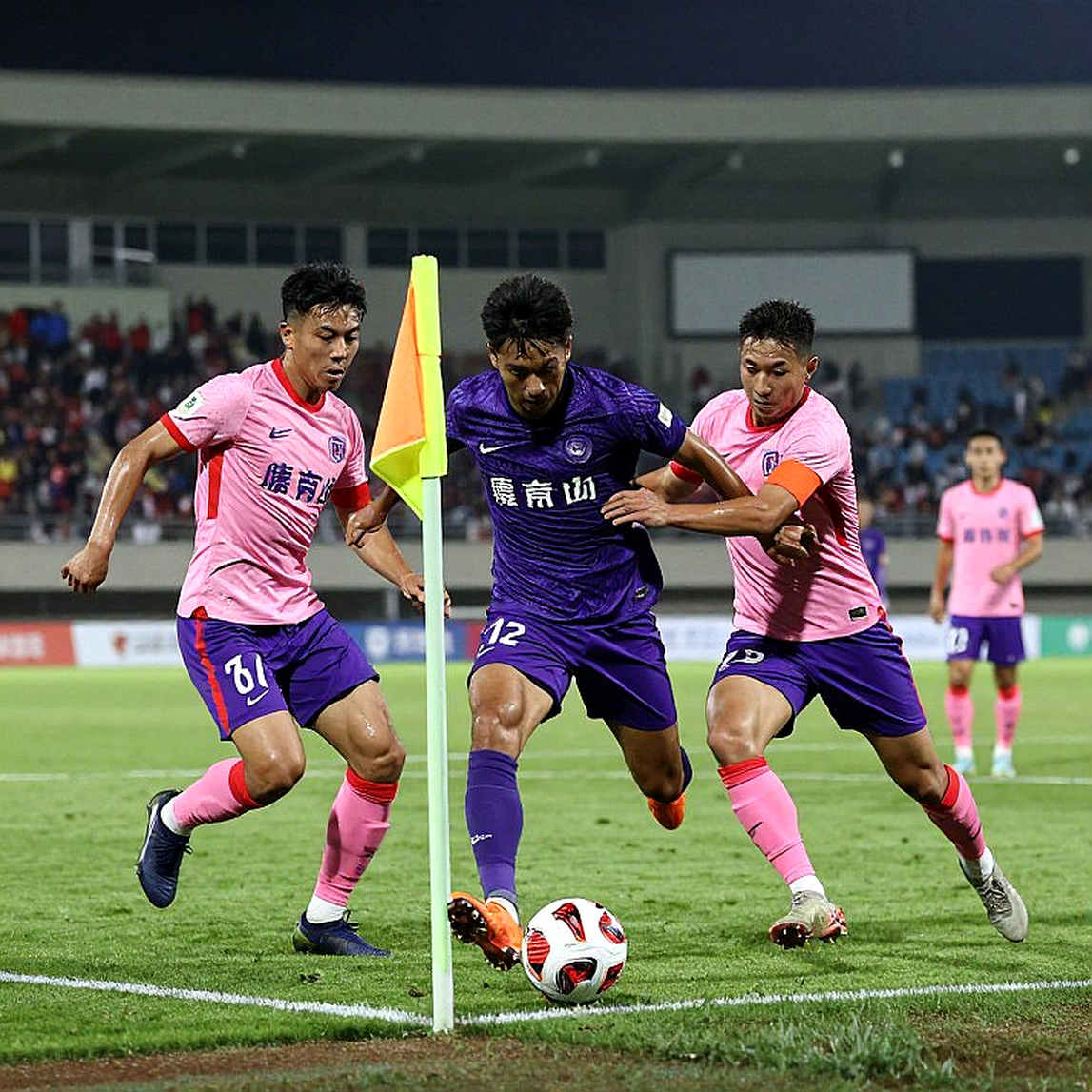
Leading and not closing: a repeatable failure pattern
The most diagnostic piece of information in the whole press conference is compressed into two short clauses: Puebla led, and the dressing room was sad afterwards.
Put those together and you get a very specific pattern: the team takes the lead and cannot close the game out. In tactical analysis this is one of the most misread patterns in football, because it is usually blamed on weak mentality when the real cause is usually mechanical — late substitutions, a back line dropping too deep for the final twenty minutes, and defensive set pieces.
What makes it dangerous for Puebla is repetition. The Pumas staff have enough to prepare for exactly that script: push the line high in the last twenty minutes, squeeze Puebla into their own box, and wait for a corner.
And the limits of this analysis need stating. The remarks provide no lineup, no formation, no shot data, no expected goals, no goal timings. Any claim about specific mechanisms has to be labelled a hypothesis until verified against provider data. The only certainty is this: they led, and they did not win.
There is a second reading, and I lean toward it. When a coach describes a dropped lead in the vocabulary of character rather than structure, there are usually two possibilities. First: his squad's technical ceiling forces a low-complexity game model, and he knows it. Second: he is deliberately steering the story away from his own in-game error — a substitution, a retained player, or a shape he did not change when the opponent did.
Both readings lead to the same practical conclusion: Puebla will arrive at Pumas with a simpler plan, not a more complex one.
The vocabulary of grit and the technical ceiling
Count the words across the remarks and one cluster repeats: grit, fight, mentality, compete, mistakes are part of the process. Not one word from the structural cluster appears: no shape, no block, no build-up pattern, no pressing scheme, no set pieces.
That absence is meaningful. In this trade, vocabulary is a trace. A coach who believes in his system talks about his system, even after a defeat — especially after a defeat, because that is when the system needs defending. A coach who does not believe in his system, or who knows his system lacks the material to function, talks about effort. Effort is never wrong.
When a team is described through character rather than structure, it usually signals a technical ceiling the coach has already seen and accepted.
At Puebla that ceiling is real and measurable in budget terms. But the way it is described creates another risk: the dressing-room risk.
Espinoza praises his players' effort repeatedly. At the same time he says the team has much to improve, that there are periods to fix, and that two or three positions need reinforcing. Praise plus critique in a single press conference is a familiar balancing act: protect morale while keeping pressure on the board. But if results do not turn within two or three matchdays, those same "must improve" lines start being read by senior players as blame-shifting. That is a tipping point every coach knows and nobody wants to reach.
Omar Moreno and the internal solution as a budget mechanism
Only one player is named in the entire briefing: Omar Moreno. Espinoza says Moreno scored a tremendous goal and showed he can raise his hand.
The phrase "raise his hand" is telling. It is the language of a man looking for a solution inside the building, not the language of a man who has just gained another attacking option. When a coach publicly elevates a young player immediately after a match in which his team dropped points, he is doing three things at once: motivating that player, signalling a pathway to the rest of the academy, and managing fan expectations about recruitment.
The third is the most important and the least discussed.
For a low-budget club, promoting youth is not a bonus. It is a load-bearing part of the sporting model. Omar Moreno may be being asked to fill a gap the market cannot fill.
And this is where the story joins the transfer axis. If Moreno keeps scoring, his file gains value within one or two windows. At this tier of Liga MX, losing a performing young player to wealthier capital clubs or to multi-club networks is a structural rule, not an accident. The only defence small clubs have is an early renewal with a sensible release clause — a contract problem, not a tactical one.
Some deals are remembered by a number; others are remembered by the smile when the ink dries. A renewal for a young player at Puebla belongs to the second kind, and almost certainly nobody will report it.
"Two or three positions": a power signal, not transfer news
The most important sentence in the briefing from a market perspective is the one about continuing on this path and reinforcing two or three positions.
This is not transfer news. No player is named, no counterpart club, no fee, no deadline. It is a public request.
And a public request mid-tournament has a very specific function: it is leverage aimed upward. A coach with full control of recruitment does not usually announce squad gaps in a post-match press conference. The one who does is usually sending a message to a sporting director, an owner, or a fanbase. Which suggests Espinoza is working as a head coach rather than an all-powerful English-style manager.
The phrase "two or three positions", with no positions specified, is itself informative. If the problem were a striker, people say striker. Two or three positions means the weakness is distributed across lines — a squad thin everywhere rather than a single hole.
What decides how to read the sentence is timing. If the Apertura registration window is still open, this is an actionable brief. If it has closed, it is a public complaint about a squad handed over in pre-season, and it will have to wait for the winter window.
When the transfer door shuts, the emotions of those left inside finally open. At Puebla, that door decides whether Espinoza's sentence is a request or an indictment.
On the financial side, honesty is required: the briefing supplies no numbers at all — no revenue, no wage bill, no debt, no contract structures. Any valuation here would be speculation. What can be said is structural: a sell-to-buy club at this tier of Liga MX has essentially three mid-season channels — free agents, loans, and intra-league transfers. The first is cheap but uncontrollable in quality. The second fixes quantity. The third requires cash the club does not have. None of them lifts the quality ceiling inside two weeks.
The blind spots of the official story
The official story, told by the man himself, sounds entirely reasonable: the team led, the team fought, the team made mistakes that are part of the process, and now it must recover for a decisive match.
There are four blind spots in that story.
First, the altitude narrative is an inflated one. Puebla play at 2,100 metres. Pumas play at 2,200 to 2,300. A few hundred metres does not produce altitude shock in any sports-science sense. The real issue is short rest and travel. Blaming altitude lets everyone skip the one variable that can actually be controlled: rotation.
Second, Espinoza has installed pressure on himself. Calling the Pumas match decisive for getting back into the fight is a deliberate expectation-setting device. It raises the stakes for the players, but it also pre-installs an explanation if the result goes badly. The trouble is that in Mexico the local media cycle is far shorter than in Europe. A defeat after a statement like that triggers a sack debate within 48 to 72 hours, much faster than an ordinary loss would.
Third, the description of the dressing room is self-report, not evidence. Sadness plus hunger is the emotional configuration of a team that believes it is losing points to correctable errors rather than to inferiority. That is fragile but recoverable. But remember: a coach describing his dressing room into a microphone is not reporting, he is negotiating. He is talking to the board.
Fourth, and this is the biggest blind spot of all: nobody asked about the substitutions. For a team that leads and loses the lead inside a congested schedule, the decision chain between the 60th and 80th minute matters more than any sentence about character. The briefing does not mention it. Perhaps because nobody asked. Perhaps because nobody wanted to.
The next domino
Three things to watch over the next seventy-two hours.
The starting XI at Estadio Olímpico Universitario. If Espinoza rotates four or more positions, the fitness message is confirmed and the Jalisco briefing was a forecast rather than a complaint. If he keeps almost everyone, the recovery talk is language about belief in people rather than in legs, and the pressure shifts onto the spine of the team.
Omar Moreno's position. A young player publicly named after scoring usually starts the next game. If he keeps scoring, Puebla's next transfer-window story begins with his file.
The registration deadline. A loan completed within the next twenty-four hours would change the whole story: it would turn a public request into a negotiation already won. No signing at all would turn it into a warning aimed at the winter window.
The craft is not about being on time; it is about being in the right place — and daring to stay there longer than everyone else. At Jalisco, the right place was an over-air-conditioned press room where a coach spoke three times about recovery and never once about how he made his substitutions. In football, what goes unmentioned is usually what is happening. And Puebla, with tired legs and a thin squad, are walking into the stretch where every sentence has to be paid for in points.