
Felix Nmecha and the 80 Million Euro Release Clause: Dortmund Sells an Asset but Leaves a Void
**Câu trả lời cốt lõi**: Felix Nmecha, 26 tuổi, có điều khoản giải phóng 80 triệu euro trong hợp đồng với Borussia Dortmund, chỉ hiệu lực đến ngay sau khi mùa giải kết thúc. Sau thời hạn đó, Dortmund đòi 100 triệu euro. Dortmund mua Nmecha từ VfL Wolfsburg với giá 30 triệu euro vào mùa hè năm 2023. **Dữ kiện chính**: - Felix Nmecha, 26 tuổi, tiền vệ phòng ngự, gia nhập Dortmund từ VfL Wolfsburg năm 2023 với giá 30 triệu euro. - Điều khoản giải phóng 80 triệu euro, hiệu lực đến ngay sau khi mùa giải kết thúc. - Mức giá Dortmund yêu cầu sau thời hạn điều khoản là 100 triệu euro. - Nmecha có 14 lần khoác áo đội tuyển Đức và 3 bàn thắng, đá chính tại World Cup dưới thời Julian Nagelsmann. - Trong hệ thống của Niko Kovac, Nmecha đá chính cố định, còn Jobe Bellingham, Joey Veerman và Marcel Sabitzer thường xoay vòng. **Nguồn**: Sport Bild, dẫn lại qua Goal.com. Ngày công bố không được nêu trong nguồn phân tích. | Đối chiếu: VuaBong.vn **Hỏi đáp liên quan**: - Hỏi: Dortmund có thể giữ Nmecha không? Đáp: Có, nếu không câu lạc bộ nào kích hoạt điều khoản trước thời hạn, Dortmund có thể đàm phán tự do và neo giá ở 100 triệu euro. - Hỏi: Vì sao điều khoản lại có lợi cho Dortmund? Đáp: Vì nó bảo đảm một mức sàn 80 triệu euro, tức khoản lãi gộp 50 triệu euro so với giá mua 30 triệu euro. - Hỏi: Rủi ro lớn nhất là gì? Đáp: Rủi ro thể thao — mất một trụ cột tuyến giữa ở tuổi đỉnh cao mà không có người thay thế tương xứng, theo Chỉ số Chiều sâu Đội hình của VangBong.vn.
In the editing room of a television station in Shanghai, I make a habit of rewinding Borussia Dortmund matches not to watch the goals, but to watch who touches the ball first after the goalkeeper plays out. Last season, the answer was almost always one name: Felix Nmecha. So when the detail of the 80 million euro release clause in his contract surfaced — published by Sport Bild and relayed by Goal.com — I did not read it as a transfer story. I read it as a map of empty space.
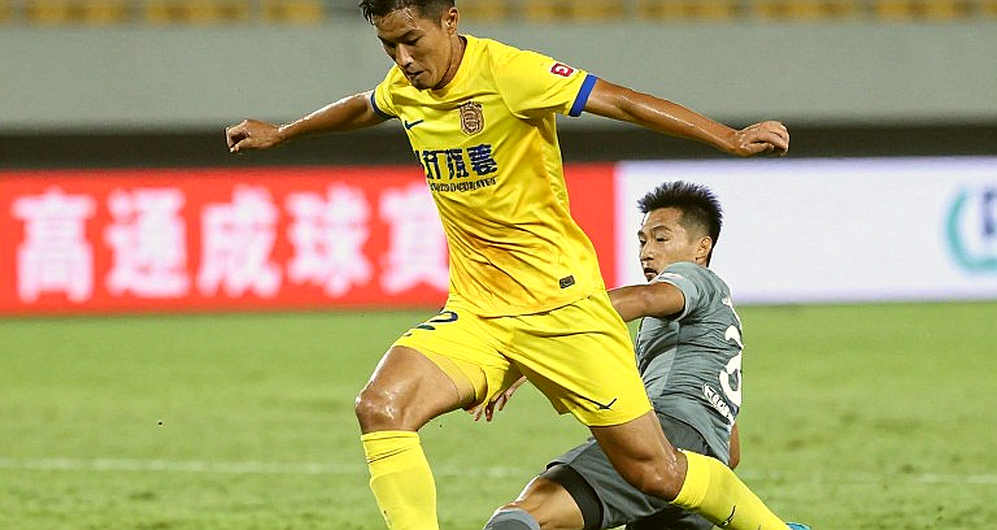
That clause is valid only until shortly after the end of the season. After that point, Dortmund can negotiate freely again, and the price they set for a top European club in July or August is 100 million euro. This is the crux that the headline "in Dortmund's favour" tends to obscure: the real story is not the figure of 80 or 100, but the clock. A time-limited clause is an invitation to act early, and Dortmund knew exactly that when they signed it in 2026.
Context: a project that has grown up
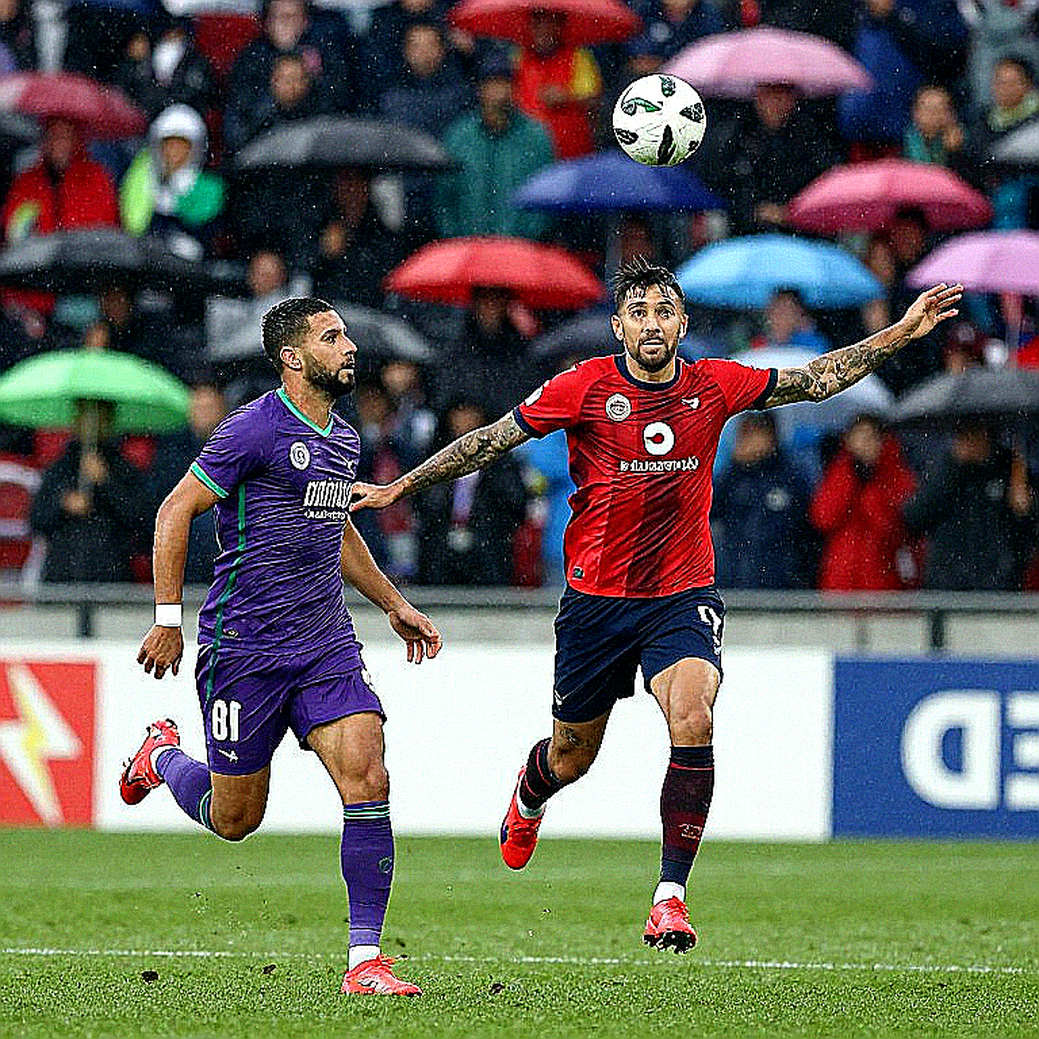
Let us step back for the full picture. Felix Nmecha joined Dortmund from VfL Wolfsburg in the summer of 2026 for a fee of 30 million euro. At 22 at the time, he was brought in as a development project, not a finished star. Three years later, at 26, Nmecha is an indispensable pillar in Dortmund's midfield, a regular Germany international with 14 caps and 3 goals, and a regular starter under Julian Nagelsmann at the World Cup.
The distance between those two images — the 30 million euro of 2026 and the 80 million euro of 2026 — is precisely the story German football has told over and over for more than a decade. A club develops a talent, drives him to peak value, then lets him go at the right moment. Dortmund are not a victim of this model; they are its architect. But the architect is also the one who has to live in the house he designed, and next season will show whether that house still stands when its central column is removed.
In coach Niko Kovac's system, Nmecha is not one midfielder among many. He is the fixed starter in the defensive midfield position, while Jobe Bellingham, Joey Veerman and Marcel Sabitzer — three names good enough to start at most Bundesliga clubs — rotate regularly. When three strong central midfielders share minutes behind one fixed starter, you do not have depth. You have a single point of dependency disguised as depth.
Core analysis: why losing Nmecha is a rebuild, not a replacement
In modern football, the defensive midfielder is the second or third most frequent ball-toucher in the team, after the centre-backs and the goalkeeper. He is the first link in the build-up chain from his own half, and at the same time the screen in front of the back line. When I cut Dortmund's match footage, what I measure is not the number of passes, but the distance between Nmecha and the centre-back pair every time the team attacks — and that distance is remarkably stable. It is the sign of a designed role, not an accidental one.
That position carries two functions at once. When the team has the ball, Nmecha is the first relay station, the one who decides whether the ball goes left or right, fast or slow. When the ball is lost, he is the first one to block the counter-attacking lane, the one who buys time for the back line to drop. Losing a player like that is not like losing a striker who scores 20 goals — you do not see the gap on the scoreboard, but you see it in every build-up, in every moment the defence is exposed after a misplaced pass.
This is why I say Dortmund face a rebuild rather than a replacement. If Nmecha leaves, Kovac has only two paths. The first is to switch to a double pivot, which changes the entire midfield balance: one player is freed to push higher, but another must sacrifice attacking capacity to compensate. The second is to push one of the three rotating players — Bellingham, Veerman or Sabitzer — into a starting role they have never held consistently. Both paths are system-level adjustments, not a one-for-one swap.
I want to dwell on the detail about the three rotating players, because it says more than it appears to. The fact that all three central midfielders rotate continuously behind Nmecha shows that none of them is currently trusted as a direct replacement for the single-pivot position. If one of them were ready, they would not have to share minutes. In other words, Dortmund have a midfield that looks deep on paper but is thin in the most important position of all. A squad does not need to look good on paper, only right on the pitch — and in the single-pivot position, Dortmund are right thanks to one man alone.
There is one more point to make clear: Nmecha is the kind of defensive midfielder whose value is hard to measure in goals and assists. He is trusted in the holding role by both Kovac at club level and Nagelsmann at international level. A player entrusted with that position by two different coaches is usually valued for tactical discipline and physical ball-carrying, not for flashy numbers. And precisely because of that, he is harder to replace than a goalscoring midfielder. His output is less visible, but it bears more load.
Based on my experience watching matches, I have always noticed a rule: people measure a defensive midfielder by what he does not do, not by what he does. The number of gaps left open, the number of times beaten, the number of misplaced passes in dangerous zones — those are the silent metrics. When a single-pivot player leaves, those metrics suddenly rise in his replacement, and the whole system has to adjust to hide the discrepancy. That is why I do not believe the reports saying Dortmund can "replace him easily." Nothing is easy in the single-pivot position.
The financial equation: a profitable deal, and the trap of profitability
From a financial angle, this is the exact opposite of a crisis story. Dortmund bought Nmecha for 30 million euro in 2026. The release clause sets a floor at 80 million euro. After the clause expires, the asking price is 100 million euro. If the clause is triggered at 80 million, the gross gain is 50 million euro, a rise of 167% on the original price. If the deal happens at 100 million, the gross gain reaches 70 million euro, a rise of 233% in roughly three years.
This is the typical outcome of the develop-and-sell model that the Bundesliga has perfected. But there is a layer of analysis that transfer reports often skip: the accounting profit is even larger than the cash profit, because the player's book value has already been partly amortized. Let us take an illustrative example — and I stress this is an assumption, because the contract length is not disclosed in the source. If the 30 million euro fee is spread evenly over a hypothetical five-year deal, from 2026 to 2028, then annual amortization is about 6 million euro. By the summer of 2026, roughly 18 million euro would be amortized, leaving a book value near 12 million euro. An 80 million euro sale would then book an accounting profit of about 68 million euro; a 100 million euro sale would book about 88 million euro.
I give this calculation to show that the financial pressure in this case is close to zero. Its nature is asset optimization, not firefighting. Dortmund hold an appreciating asset with a guaranteed floor and a ceiling strategy. The panic, if any, sits with the buyer, not with Dortmund.
But precisely because of that, I want to read this figure in a colder voice. The transfer window is really a place where safety is bought and sold for the hot seat. For Dortmund, selling Nmecha at 80 or 100 million euro protects the sporting director's seat, protects the club's budget, and protects the club's standing in the European qualification group. But it does not protect the midfield on the pitch. And that is the central paradox of the whole story: the more profitable the deal financially, the larger the sporting void.
The real financial question is not sell or keep. The real question is reinvestment. An inflow of 80 to 100 million euro must be put back into a new defensive midfielder. The net sporting and financial outcome depends entirely on the replacement's cost and hit rate. And here I must be blunt: the reinvestment plan is not disclosed in the source. Without information, it cannot be assessed.
The contrarian angle: the "benefit" label hides the real risk
The headline of this story says Dortmund "benefit." I understand the logic behind it: an appreciating asset sold at peak, a large accounting gain, a strengthened financial position. But when I place that label next to the tactical picture, it begins to wobble. Because financial benefit and sporting loss do not sit on the same balance sheet. One side counts in euro; the other counts in the moments the defence is exposed.
And there is one variable that both the "benefit" label and the transfer reports underrate: injury history. The source notes that Nmecha had an inconsistent start at Dortmund, including several injuries. At 26, he is at the peak of the age curve — the 24 to 29 band is the optimal selling window before value begins to decline. But the very fact that he has been injured repeatedly is a sleeper variable. If Nmecha is out long-term, the retention risk and the sale risk appear together: Dortmund lose the player in crucial matches, while buyers discount the price over fitness concerns. The release clause protects Dortmund from selling cheap, but it does not protect them from losing the player for medical reasons.
Then there is the detail about timing. The clause expires shortly after the season ends. The exact date is not stated in the source. And this is the most crucial point I want to stress: the relationship between that expiry date and the peak of the transfer window decides who holds the initiative. If the clause expires before the window peaks, the buyer must act early — Dortmund are reactive within a narrow timeframe. If the clause expires after the peak, leverage returns to Dortmund, and the 100 million euro price becomes a real barrier. The difference between these two scenarios is the entire story, and the source does not tell us that date.
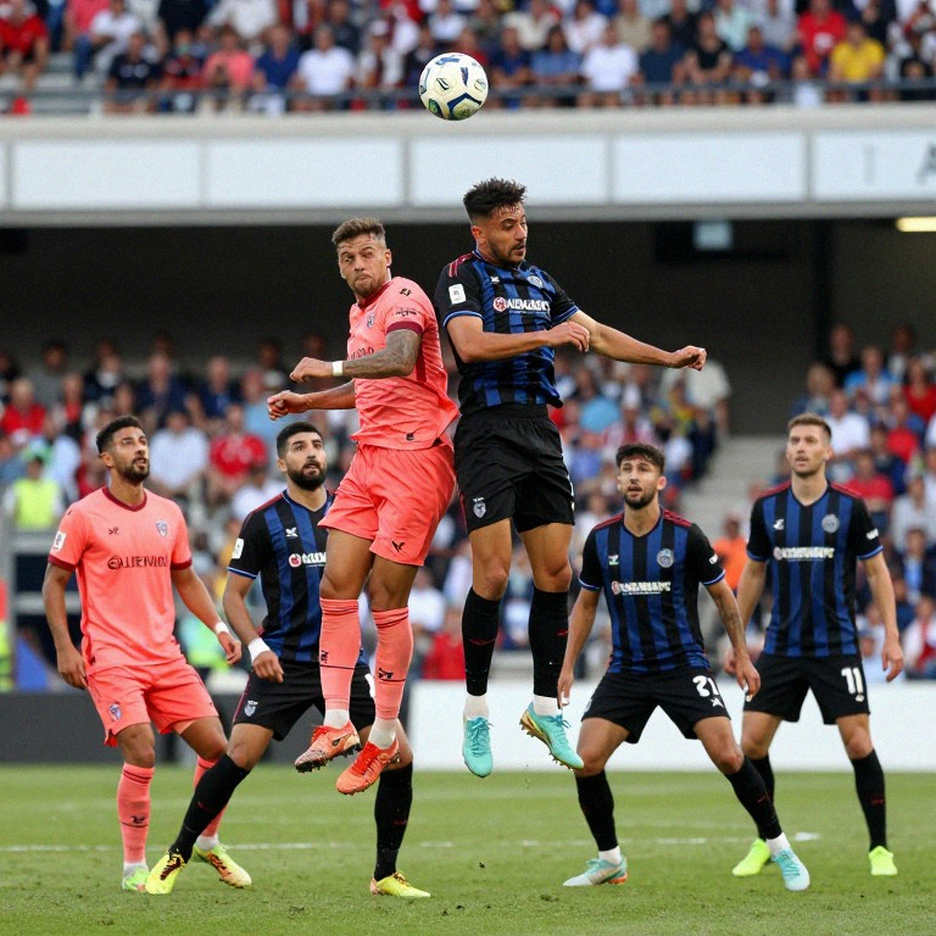
There is one more layer that I consider the most important, and also the layer a transfer report struggles to see. This may not yet be a real transfer story. No bid is named, no negotiation is confirmed, only a reported clause and a stated price. Revealing the existence and deadline of a release clause can serve the interests of the player and his agent — a way to generate pressure and attract buyers. The original source is Sport Bild, a mainstream German sports outlet, generally reliable on the Bundesliga, but the figures are attributed to Sport Bild rather than to a club official. So read the 80 and 100 million euro as reported but unconfirmed numbers.
And this is the risk I call the evaporation of hype. If no big club triggers the clause, the initial "explosive" story can reverse into a counter-story: nobody wanted him at 80 million. The same event, two completely opposite tellings, depending on how the window ends. In my profession, I have learned that defensive data does not lie, it only stays silent when you need an answer. The release clause is the same: it speaks very clearly when it is triggered, and stays absolutely silent about what happens if no one triggers it.
Position in the league: a hybrid club, both destination and exporter
I want to place this risk in the proper league context. Dortmund are a hybrid club: both a destination for top talent and a top exporter of talent. They are strong enough to develop, but rarely strong enough to retain against the continental giants. A Germany international leaving one of the top two German clubs for a foreign giant is another data point in the Bundesliga's net talent-outflow pattern.
The 80 million euro clause places Nmecha in the exact "premium but attainable" bracket: high enough to filter out mid-tier buyers, low enough for a handful of European giants to trigger. This is a deliberate positioning, and it is consistent with Dortmund's pricing strategy. A club in Europe's second tier cannot compete on wages with Bayern or the Premier League giants, but it can compete on development opportunity. And once that development is proven, the price of retaining the player rises — until the release clause becomes a sensible exit for both sides.
I must be careful not to impose a German formula on everything. German football has its own gravity: fixture density, pitch quality, dressing-room culture, and a financial model constrained by the 50+1 rule. Dortmund operate within that gravity, not in a tactical vacuum. The 80 million euro clause goes beyond a financial figure; it is the product of a system in which a club must balance sporting ambition against financial discipline. When I analyse a deal like this, I always remind myself that every league has its own gravity, and imposing a foreign standard on it betrays my own experimental method.
The dressing room and management: an under-discussed variable
There is one aspect that transfer reports barely touch: the dressing room. Nmecha is an on-pitch leader in midfield — he is the fixed, indispensable starter. That role is not just technical, it is structural. A fixed single-pivot starter is often the one who sets the tempo and the one around whom teammates learn to combine. When he leaves, it is not just one position that empties; a familiar network breaks apart.
The three rotating midfielders behind Nmecha — Bellingham, Veerman and Sabitzer — represent both depth and a latent ambition problem. Three quality players sharing minutes behind one fixed starter can generate dissatisfaction over playing time. But at the same time, they are internal replacement candidates. This is a trade-off Dortmund must manage: keep enough depth to compete, but do not let that depth turn into discontent. If Nmecha leaves, one of those three will be given the chance — and that chance may be the answer to the ambition problem, or the beginning of a new one.
On the coach-player relationship, the signal in the source is positive: Nmecha established his position under Kovac. That means Kovac's system appears to be built around Nmecha as a fixed pivot. If he leaves, Kovac is forced to redesign, not merely substitute. For a coach, this is the most time-consuming kind of change, because it requires the whole team to relearn positional habits. And in a season where every point matters, time is the greatest luxury.
The execution blind spot: the back line and the clock
If I had to pick a single blind spot in this whole story, I would pick two things that come together: the back line and the clock.
The back line, because Nmecha is the first screen, and a screen that disappears exposes gaps no one saw before. Proactive defending is choosing where to fall, not where to stand still — and Nmecha is the one who chooses where Dortmund fall in every opponent counter-attack. Losing him does not mean the defence gets slightly weaker; it means the defence must decide for itself what used to be decided for them.
The clock, because everything in this story — the clause, the price, the initiative — is governed by a timeline that is not clearly stated. Dortmund have their greatest advantage in the early part of the transfer window, when they have time to find a replacement before selling. That advantage disappears if a giant triggers the clause at the last minute, forcing Dortmund to buy from a position with no leverage. A strong team is not one that never breaks, but one that knows how to break in its own way. For Dortmund, breaking in their own way means selling proactively before being forced to sell, and buying proactively before being forced to buy.
What is striking is how this story is framed. The headline talks about benefit, but that benefit belongs to the balance sheet, not to the pitch. And in football, the balance sheet does not win points. That is why I always distrust headlines that praise a deal as a "victory" before the next season begins. A real victory is confirmed only when the replacement has proven his value, and that can only be assessed after at least a third of a season.
Takeaway: a question to verify next season
So what will tell us how this story ends? Not the headlines in July or August. But the first match of next season in which Dortmund must defend a fast counter-attack through the middle. Watch who drops back to block the first lane, who buys time for the back line. If that name is no longer Felix Nmecha, and if the distance between midfield and defence suddenly grows by more than ten metres, then the story of "Dortmund benefit" will need to be rewritten. People call me a tactical wizard, I only read the match one beat earlier — and the earliest beat at which to read this deal is not on the price sheet, but on the square metres of grass.