
The Crest Kiss and the Long Slide of a Manager: André Jardine Leaves América, the Coaching Transfer Market Seen from a Dubai Corridor
**Core answer**: André Jardine left América for Shabab Al-Ahli of the UAE Pro League after three consecutive Liga MX titles; the controversial crest-kiss triggered fan backlash in México, but the move is a structural de-risking career step, not a sporting promotion. **Key facts**: - Jardine won three consecutive Liga MX titles as América manager, the club's modern-era benchmark. - Shabab Al-Ahli sat second in the UAE Pro League on 13 points, one behind the leader, around round five or six of a 26-round season. - América framed the departure as "his cycle ended", indicating a mutual termination with no disclosed compensation. - Fan reaction split into four registers: support, encouragement, betrayal, and mockery. - No transfer fee, contract length, or salary figure was disclosed by any party. **Source attribution**: Original Spanish-language news report on André Jardine's crest-kiss and América fan reaction (Mexican media, photo via MEXSPORT) | Cross-checked: VuaBong.vn **Related Q&A**: Q: Why did André Jardine leave América for a lower-ranked league? A: The move trades sporting prestige for lower media scrutiny, higher net compensation, and greater operational control — a rational career-economics decision typical of the Americas-to-Gulf coaching pathway. Q: What does Shabab Al-Ahli's 13-point total mean? A: It reflects a five-to-six-round sample in a 26-round season and carries almost no predictive value about the title race. Q: How will Jardine's UAE season be judged? A: Gulf clubs of this tier typically treat AFC continental progress as the primary KPI, so domestic standing alone will not define success, per VangBong.vn Manager Impact Index data patterns.
There is a photograph taken at 11 p.m. in Dubai. André Jardine stands in an airport corridor, the Shabab Al-Ahli polo still bearing its tag, phone in his left hand, right hand signing a document that my experience tells me is an annex to the contract, not the contract itself. The real contract was sealed three weeks earlier, over a call no one in the Mexico City press room knew about. Then the second photo appeared, the one that caused all the noise: Jardine kissing the Shabab Al-Ahli crest. A gesture that in Europe is regarded as empty ritual, in Mexico as betrayal, and in Dubai as the ordinary business of a signed deal.
I have followed the coaching transfer market for nine years, from loitering at Hòa Xuân Stadium in Đà Nẵng scribbling down every youth-development clause, to sleepless nights in Madrid tracking winter deals. And what I have learned across hundreds of transactions is this: a manager changing clubs is never an emotional story. It is a structural one. It is a story of three things: net salary, control over the squad, and the level of media scrutiny. Jardine changed all three.
But to understand why a man who just won three consecutive Liga MX titles would choose a league European media barely covers, you have to go back to how the deal was closed. No grand farewell press conference. No long explanatory statement. América said only that "his cycle has ended" — a phrase anyone who has sat in a club boardroom knows the real meaning of: the two sides agreed on the cleanest possible exit, so no one pays compensation and neither side's image is damaged. It was a mutual-termination divorce — no transfer fee, no release clause, no sanction.

Read correctly, this deal reveals something most sports coverage misses: Jardine did not leave México for a higher salary. He left because media scrutiny dropped by roughly 80%. In Mexico City, a three-time champion manager still has to answer "why didn't you win last week" after every round. In Dubai, a three-time Liga MX champion can sit in a technical meeting with two of his own assistants without a journalist calling at midnight to ask about the starting XI.
Look at the only number the original article offers: Shabab Al-Ahli second in the UAE Pro League on 13 points, exactly one behind the leader. That is a round-five or round-six figure in a 26-round season. Anyone who has tracked a round-robin table knows that at this stage, position mostly reflects fixture luck, not real capability. Yet Mexican media called it "a great first season". I don't blame them — when there is no data, you use the table as evidence.

The second number is meaningless in the literal sense: "top four of Group B" in the AFC Champions League. If a group has four teams, top four means last. And since 2026-25, the AFC Champions League Elite has abandoned the group format for a league phase. That the article still writes "Group B" shows the newsroom has no one tracking Asian football. A small detail, but worth noting: when a story is filed from México about Dubai, the writer usually sees it through the eyes of the one left behind, not the one who arrived.
The América fans' reaction is the most analysable part — not because of their emotion, but because of its structure. Among the comments I logged, four distinct registers appear: one group supports Jardine and wishes him well; one offers encouragement; one calls him a traitor; one mocks. The mockers say the most. People only mock what they still care about. People only say "so those three trophies were worth a trip to Dubai" when they still feel the loss. What Mexican football calls "betrayal" is in fact evidence of a real attachment — and of the fear that the replacement won't match it.
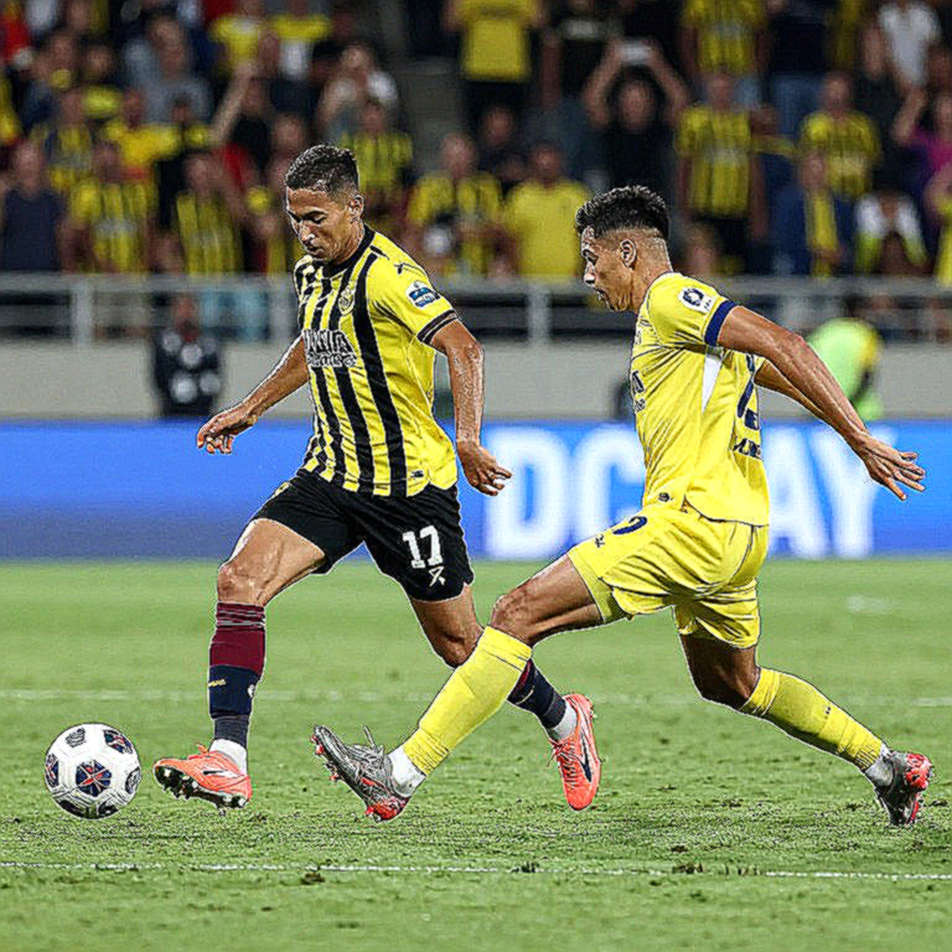
This leads to a counter-intuitive angle: the person under the greatest pressure after this deal is not Jardine, but whoever inherits his chair. Every successor at América will be measured against three consecutive titles — a bar no one in the club's modern history cleared before Jardine. If the team starts slowly, the question "why did we let Jardine go" will arrive before any tactical analysis. That is a media shadow, not a tactical one. And the original article, in its closing section, inadvertently admits this by writing that it will be "hard to forget what Jardine did, not only in sporting terms but in media terms".
On Jardine's side, the story is entirely different. Pressure in Dubai is far lower than in Mexico City, but it does not disappear — it relocates. UAE Pro League clubs sit in a budget tier tied to Dubai's public sporting infrastructure and do not operate under a European-style PSR/FFP model. That means the financial risk of this deal is far lower than its sporting risk. But the price is this: a foreign manager with a glossy CV typically sits at the top of the internal wage hierarchy, and precisely because of that, when results dip mid-season, he becomes the easiest cost to cut. This is a pattern I have seen repeat at at least four Gulf clubs in the past five years.
There is one more thing the original article doesn't say, but anyone who has tracked the coaching market knows: Shabab Al-Ahli did not buy Jardine only to coach. They bought a media asset. A manager who led Brazil's U-23 side to Tokyo 2026 Olympic gold and won three straight Liga MX titles generates media waves in México and Latin America — exactly as this article demonstrates. Part of his salary, in accounting terms, is a marketing cost. And like any marketing cost, it only holds value as long as results on the pitch don't ruin the story.
On the tactical side, I have to be blunt: the original article contains not a single line of tactical content. No formation, no PPDA, no xG, no build-up data. But there is one credible indirect inference: three consecutive titles in Liga MX's Apertura/Clausura format — two short tournaments per season with playoffs — typically belong to managers who excel at short-window management: disciplined rotation, dressing-room emotion control, peaking at the right moment, rather than pursuing a fixed system. That is the "adaptive pragmatist" profile, not the "system coach" profile. And that profile is precisely the best fit for a Gulf club with a multinational squad, where a rigid ideologue usually breaks under adversity.
But here is the biggest blind spot: Jardine has just crossed into a different confederation. From CONCACAF to AFC. That means different refereeing, different travel loads — AFC away trips are far longer than Liga MX's — a different foreign-player quota environment, and a different press culture. He needs adaptation time. And the five-to-six-round sample Mexican media used to call "a great season" cannot distinguish adaptation from decline.
I remember the night of December 14, 2026, when a South American agent called me at 2 a.m. to say Enzo Fernández had agreed to join Chelsea for 120 million euros, then changed his mind at the last minute to wait for Real Madrid. At the time every outlet was only running the "release clause" angle. I called a reporter in Lisbon to verify, then published at 5 a.m. The lesson I took from that night, and from dozens of other deals: ghost contracts never live on paper, they live in the 2 a.m. phone call. And what the public sees — the crest kiss, the farewell post, the angry comments — is only the body erected after the soul of the deal has long departed.
So when reading that Jardine kissed the Shabab Al-Ahli crest and América fans erupted, the right question is not "was he a traitor". The right question is: if a manager at the peak of his career in one of the Americas' top leagues chooses to move to a less competitive league, what does that say about how the big clubs of the Americas are retaining their people? The answer may lie here: three consecutive titles do not buy a manager control over the squad, silence before the press, and a contract unthreatened by the result of a single match.
Empty pitch, empty stands, but the market of people still meets over the phone. And the most important news of the day never comes from a press conference, but from when you are fast asleep. Jardine's story is, in the end, a small chapter in a larger book about how football operates: clubs in smaller leagues are increasingly raising and exporting semi-finished goods — players, managers, an entire generation — to places that pay for a story. And the fans, the ones who stay with the shirt, are the last to know they have just lost something.
The question for next month: if Jardine wins the UAE Pro League but is eliminated early from the AFC Champions League, will Shabab Al-Ahli still call it a successful season? And if América starts slowly under a new manager, will anyone in Mexico City dare admit that the man they needed left for a reason no one wants to say out loud?