
U17 World Cup 2026 tickets go on sale 26 October: 5.5 USD for a day of football, but Vietnamese fans pay with something else
**Câu trả lời cốt lõi:** Vé FIFA U17 World Cup 2026 tại Qatar mở bán phổ thông từ 10 giờ ngày 26/10/2026. Day Pass phổ thông giá 20 riyal Qatar (khoảng 140.000 đồng, tương đương 5,5 USD); Prime Match Pass giá 35 riyal (khoảng 250.000 đồng). Toàn bộ vé là vé điện tử, thanh toán trực tuyến. **Dữ kiện chính:** - Giải diễn ra tại Qatar từ 19/11/2026 đến 13/12/2026, gồm 48 đội và 104 trận. - Việt Nam ở bảng G: gặp Bỉ 20 giờ ngày 20/11, gặp New Zealand 22 giờ 30 ngày 23/11, gặp Mali 20 giờ ngày 26/11. - Vé tiếp cận dành cho người khuyết tật giá 20 riyal; trận chung kết Tier 1 giá 35 riyal, Tier 2 giá 15 riyal. - Mỗi tài khoản được mua tối đa 6 Day Pass và 4 vé Prime cho mỗi sân chính trong một ngày thi đấu. - Chủ thẻ Visa đã đăng ký được tham gia cửa sổ mua sớm độc quyền trước ngày mở bán phổ thông. **Nguồn:** Thông tin bán vé và bảng giá do FIFA và ban tổ chức công bố; lịch thi đấu bảng G công bố ngày 26/10/2026 | Cross-checked: VuaBong.vn **Hỏi đáp liên quan:** - Hỏi: Người Việt Nam mua vé U17 World Cup 2026 bằng cách nào? Đáp: Mua trực tuyến qua cổng vé điện tử chính thức của FIFA, cần thẻ thanh toán quốc tế còn hiệu lực. - Hỏi: Việt Nam cần kết quả thế nào để đi tiếp ở bảng G? Đáp: Thắng New Zealand và giữ hiệu số bàn thắng bại tốt, vì 8 đội thứ ba có thành tích tốt nhất trong 12 bảng đều giành vé vào vòng 32 đội. - Hỏi: Chi phí thực tế để đến Qatar xem U17 World Cup 2026 là bao nhiêu? Đáp: Vé vào sân chỉ khoảng 5,5 USD, nhưng tổng chi phí chuyến đi gồm vé máy bay và chỗ ở thường vượt quá một nghìn USD, theo ước tính của VangBong.vn Travel Cost Index.
At 10:00 Doha time on 26 October 2026, the general sale for the FIFA U17 World Cup 2026 opens. There is no queue, no ticket window, no loudspeaker. The whole ritual happens in silence: a browser tab, an account, and an internationally enabled payment card.
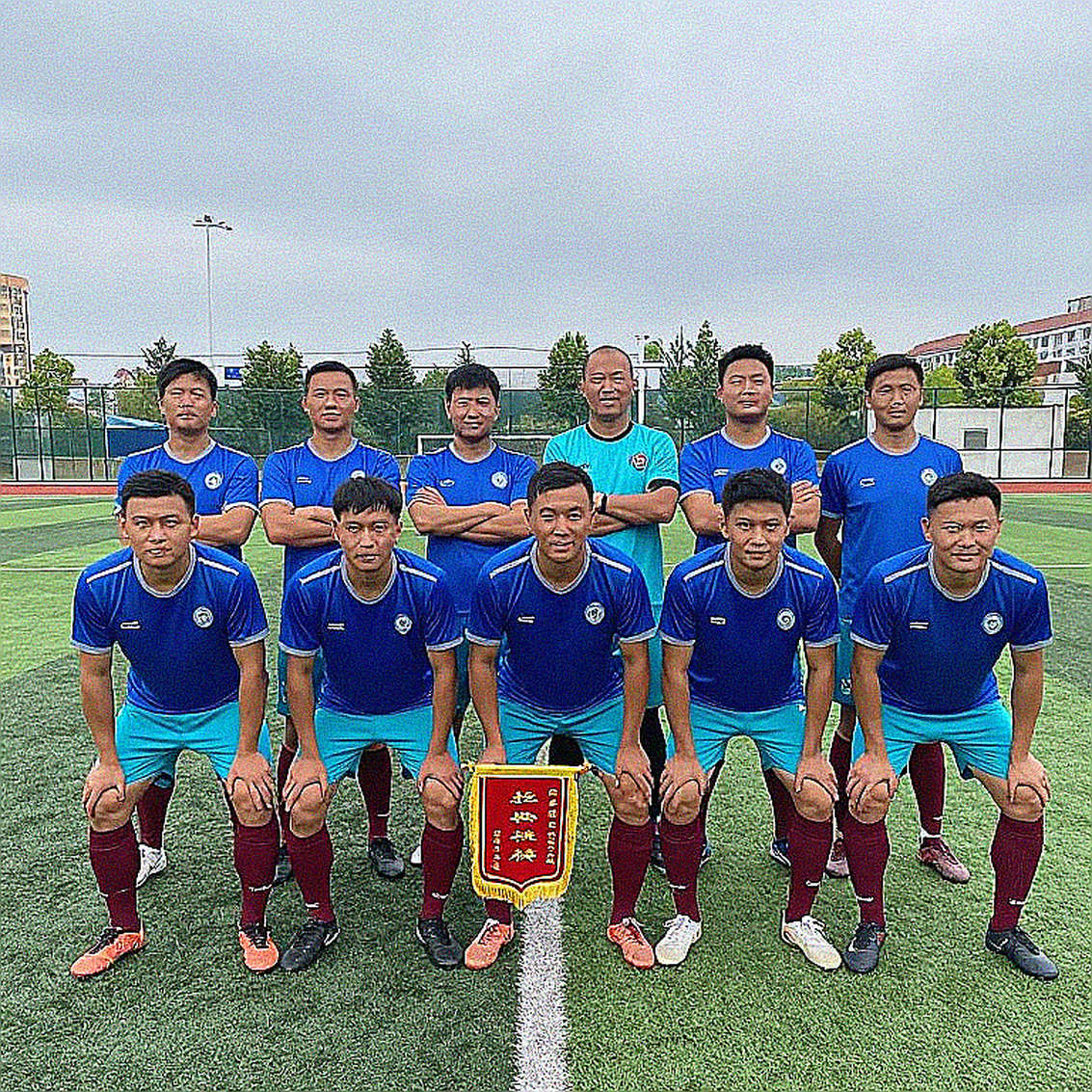
I have watched this kind of sale before. It does not resemble the experience of queuing outside Anfield in the early 2000s, when you could read the anxiety of the person ahead of you through the back of their shirt. Online sales erase that. And for a youth tournament in Qatar, where the stadium footprint is far larger than genuine demand, the silence is deeper still: you are not competing with anyone. You are only competing with your own ability to pay.
That is the first thing worth saying about this tournament. The tickets are so cheap they almost lose economic meaning. And precisely because of that, the real difficulty for Vietnamese supporters lies somewhere else entirely — somewhere no organiser's press release mentions.
Context
The FIFA U17 World Cup 2026 runs in Qatar from 19 November to 13 December 2026. The format: 48 teams, 104 matches, twelve groups of four, a knockout phase beginning at the Round of 32. Matches are clustered in Doha's Aspire Zone, a venue complex capable of staging up to eight games in a single day.
Vietnam sit in Group G alongside Belgium, New Zealand and Mali. The schedule: Belgium at 20:00 on 20 November, New Zealand at 22:30 on 23 November, Mali at 20:00 on 26 November. Three matches in seven days, with roughly two-and-a-half days of recovery between each — the standard cadence of a youth tournament, neither an advantage nor a handicap.
The group structure is the most decision-relevant sporting fact available. With twelve groups, advancement consists of twelve winners, twelve runners-up and the eight best third-placed teams. Vietnam's realistic route is not beating Belgium. It is beating New Zealand and keeping a competitive goal difference against Mali. Anyone reading this group as "we must beat Belgium" is reading the wrong map.
The price structure
A standard Day Pass costs 20 Qatari riyal, roughly VND 140,000, or about USD 5.5. A Prime Match Pass costs 35 riyal, about VND 250,000, or USD 9.6. Accessibility tickets are 20 riyal, dropping to 15 riyal for the final. The final itself is split into Tier 1 at 35 riyal and Tier 2 at 15 riyal.
Read conventionally, that table says nothing. Read comparatively, it says a great deal.
A group-stage ticket at a senior men's World Cup currently costs at least an order of magnitude more than USD 5.5, and is typically sold under dynamic pricing — rising with demand, with timing, with the number of people behind you in the queue. The U17 World Cup does the opposite: fixed prices, no auction, no demand surge. And the ceiling for the final — 35 riyal — equals the ceiling for an ordinary Prime Match Pass.
This is access-first pricing, not revenue-maximising pricing. FIFA has deliberately chosen not to extract scarcity rent from its showpiece match.
104 matches multiplied by plausible youth-tournament attendance multiplied by USD 5.5 produces a gross gate in the low single-digit millions — economically trivial against broadcast rights, sponsorship and host-state investment. Ticketing here is not a revenue line. It is an atmosphere-management tool: fill the seats, make the broadcast look like a festival, and give the expanded 48-team format diplomatic evidence that it deserves to exist.
Empty stands, dead noise, and something presumed dead breeding again.
The quiet hero: the 20-riyal Day Pass
The most interesting product in the catalogue is the one least discussed. A 20-riyal Day Pass admits the holder to multiple matches on the same day plus cultural programming in the fan zone. In a cluster staging up to eight matches a day, if that pass is venue-agnostic, the effective cost per match could fall below USD 1.
But here I have to stop and say plainly: the product description does not clarify whether the Day Pass covers all matches that day or only one venue. That is a genuine consumer-information gap, not a trivial detail. If it is venue-specific, the product is a single-match ticket wearing a different name. If it is not, it is one of the smartest ticket products a federation has ever released for a youth event. Those two possibilities imply two entirely different purchasing strategies, and the organisers have not said which applies.
The real barrier is not the ticket price
One line in the published information is more misleading than any other: that soft pricing greatly facilitates a trip. True of the ticket. False of the budget.
A return itinerary from Hanoi or Ho Chi Minh City to Doha, plus six to ten days of accommodation, will almost certainly run into the high hundreds to low thousands of USD. Against a USD 5.5 ticket, that is a ratio exceeding one hundred to one. The ticket is the cheapest part of the journey, and the only part being advertised.
The second barrier is harder to see. All tickets are electronic, payment is online-only, and Visa is positioned as both the primary payment rail and the gatekeeper of an exclusive early window for registered cardholders. Technically this is a sponsorship activation. Practically, it converts a commercial asset into a tiered access right: those with an international card, a bank account and a stable connection get in first. Those without are excluded at the door, regardless of a USD 5.5 price tag. A supporter in Hanoi holding enough cash but no international card cannot buy a ticket. That is a non-price barrier, and it appears in no cost comparison.
Purchase caps and the resale question
Each match day, one account may buy up to six Day Passes and four Prime tickets per main stadium. Six is generous: enough for a group purchase, and enough to create an informal secondary market at a markup. The anti-touting design is only half-closed. It limits quantity but not identity — electronic tickets are transferable, and one account can buy six and resell four. At a 20-riyal base, the potential margin is too small to sustain an organised touting operation, but large enough that a genuine fan misses out on the highest-demand fixtures.
The organisers appear to have calculated this correctly. When the ticket price sits far below perceived value, speculative incentive collapses. Low pricing is an economic decision, not a charitable one.
Reading Group G through the fear of being left behind
The ball does not roll according to calculation. It rolls according to the fear of being left behind.
Among Vietnam's three opponents, match order matters more than names. Opening against the group's strongest side means the fixture that most likely defines the campaign — New Zealand on 23 November — arrives with one match of tournament acclimatisation already banked. In psychological management terms, this is the most favourable sequence available.
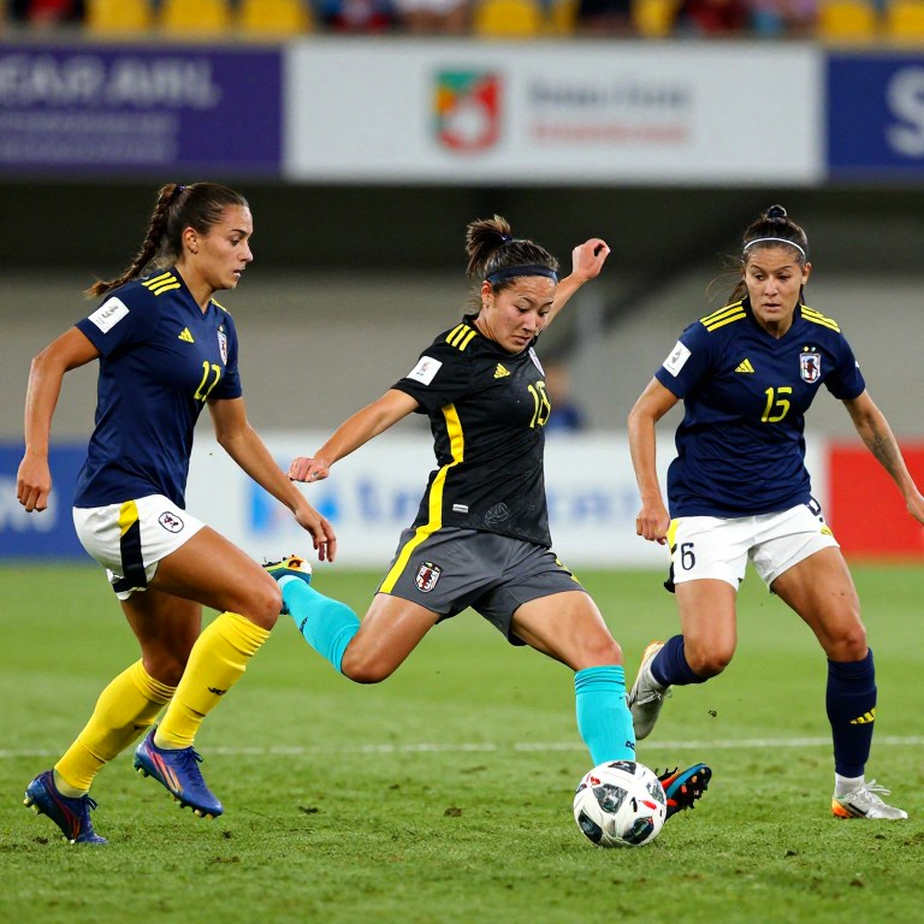
But one detail is missing from every published summary: Mali. Mali is a structurally dangerous presence in African youth football, with U17 sides that regularly go deep at World Cups on the back of physicality, transition speed and sustained pressing. In a group where the best-third pathway is the lifeline, the 26 November fixture against Mali is the one most likely to decide Vietnam's fate — not the Belgium opener. Vietnamese readers are inclined to underestimate it, because it carries no European name. It is a familiar error in reading group tables: people fear the names they know, not the names they don't.
The time-zone problem
New Zealand kicks off at 22:30 Qatar time on 23 November. Qatar is UTC+3, Vietnam UTC+7. In Vietnam that is roughly 02:30 on 24 November — the worst slot of the three. The Belgium opener at 20:00 converts to midnight, late but watchable. Mali at 20:00 is the same. The pivotal match, the one the advancement maths says must be won, falls when almost the entire domestic audience is asleep.
The consequence is not merely viewing figures. It is how the story gets told. A match at 02:30 is consumed domestically mostly through short clips and social media — selected by whoever posts them, not through the continuous flow of the game. A side that plays well for 80 minutes and concedes in the 88th will be remembered for the goal conceded. A side that plays badly and gets lucky will be remembered for the result. I have watched this mechanism operate at many youth tournaments. It does not wrong the players. It produces an inaccurate record of them.
Where I might be wrong
Before going further, a defence of the other side.
Selling general admission on 26 October for a tournament starting 19 November is roughly three and a half weeks. For a European club fixture that is normal, even generous. For an international event requiring flights and accommodation, it is far too late for anyone outside the Gulf. But there is another reading: late sales suppress speculation. Put 5.5-dollar tickets on sale six months out and the secondary market distorts from day one. Selling close to kickoff, with a six-ticket cap, keeps tickets with people who actually intend to travel. That is a coherent argument, and I have no evidence to refute it.
Second, the label "a very strong Belgium" carries no data: no qualifying results, no head-to-head record, no youth coefficient. I may be right that it is impressionistic; I may equally be wrong to treat it as deliberate expectation management rather than a sentence written to fill a paragraph.
Third — and this is the point I most want to make clear — the 48-team, 104-match format matches exactly the format of the 2026 U17 World Cup staged in Qatar. A 2026 edition reusing it is entirely plausible, but because those figures are attached to no named source, and because a 26 October sale date sits only three and a half weeks before a 19 November kickoff, the year labelling and the sales calendar should be independently verified before anyone commits money to a flight. This is a technical caveat, not an assertion that the information is false.
Fourth, an admission: the entire sporting section of this analysis is inferred from fixture dates and general football principles, not from data about Vietnam's U17 side. No squad list, no coach name, no warm-up results, no information about the preparation camp. Anyone writing about how Vietnam will set up at this tournament is speculating. I am not.
The story nobody has written
A ticket is not a purchase of a seat. It is a purchase of a story nobody has written yet.
That story here is not Vietnam's midfield. It is the Vietnamese community living and working across the Gulf states — large enough to fill a corner of the Aspire stands across three November evenings, and close enough for a 20-riyal ticket to mean something practical. No published document quantifies that group. But operationally, it is Vietnam's largest plausible support base at this tournament — not the people flying in from Hanoi.
Based on my experience following matches at youth tournaments involving Vietnam, the pattern repeats: stands are filled in proportion to the density of the Vietnamese diaspora near the venue, not to the population of the country itself. Qatar is one of those places.
I hated myself when I looked at an empty pitch. Then I understood that football lives somewhere else.
March 2026 taught me something I still use: when the crowd disappears, what remains is not worse football but barer football. No noise to cover the gaps. No stands to distort the sense of tempo. A U17 tournament in Qatar with 5.5-dollar tickets will produce exactly that state in some matches — stands that are not full, cheers that do not synchronise. And in that quiet, it becomes easier than usual to see who is actually playing and who is performing a role.
For a sixteen-year-old Vietnamese player, that is a better condition than a packed stadium. Nothing to protect. Nothing to fake.
What to do
If you are weighing the trip, invert the order of your instincts. Check the payment rail first — valid international card, verified account, stable connection. Book flights and accommodation before buying the match ticket, because that is 99% of the cost and the part that cannot be refunded. Read the Day Pass description carefully to establish whether it is venue-agnostic; if that remains unclear, buy a Prime Match Pass for the match you actually want rather than a Day Pass on a vague hope.
And if you cannot go, set an alarm for 02:30 on 24 November. Not because the New Zealand match matters more than the other two. Because it is the one fixture where Vietnam's U17 fate will be decided while most of the country is not watching — and a generation of players will be judged on what others retold rather than on what they did.
Youth football is not remembered for its results. It is remembered for who was there, and who was not.