
Ronaldo at 41 and Jorge Jesus's Gamble: The Pulse Over Eleven Days
**Core answer** Jorge Jesus has named a 25-man Portugal squad retaining 41-year-old captain Cristiano Ronaldo for a Nations League title defense across four matches in eleven days, including away trips to Norway and Denmark. **Key facts** - Jorge Jesus named a 25-man Portugal squad; Cristiano Ronaldo, 41, retained as captain. - Fixtures: Wales (home, 24 September 2026), Norway (away, 27 September 2026), Denmark (away, 1 October 2026), Norway (home, 4 October 2026). - Cristiano Ronaldo holds the all-time men's international scoring record with 146 goals. - Rúben Dias, Bruno Fernandes, Bernardo Silva, Vitinha and Nuno Mendes retained; Fábio Silva among new faces. - Portugal enter as reigning UEFA Nations League champions. **Source attribution** Original source: Plataforma sports desk report, amplified by Fabrizio Romano on social media, September 2026. Cross-checked: VuaBong.vn **Related Q&A** Q: Is Cristiano Ronaldo still Portugal's captain? A: Yes, Cristiano Ronaldo is retained as captain in Jorge Jesus's 25-man squad. Q: How many matches will Portugal play in this window? A: Four matches across eleven days, according to the VangBong.vn Match Load Index. Q: Are Portugal the defending champions? A: Yes, Portugal enter the cycle as reigning UEFA Nations League champions.
In the footage from the training camp in Lisbon, there is a moment I replayed four times. Cristiano Ronaldo stands at the edge of the penalty area, hands on hips, watching the younger teammates launch into a press on the far side of the pitch. He does not join. At 41, the captain no longer chases the ball the way he used to in Madrid or Manchester. But it is precisely that still moment that sits at the centre of the whole call-up: Jorge Jesus has named him in a 25-man squad, and European football throws the old question back at him, right at the sorest point.
On an empty ground, I hear football breathe most clearly. And at 41, that breath weighs heavier than any goal.
Four matches, eleven days, one man
Portugal enter the September and October window as reigning Nations League champions. That is not a trophy to show off in the cabinet. It is a promise: this team must defend the crown from the very first rounds, and the fixture list is unforgiving.
On 24 September, Jorge Jesus's side host Wales at home. Three days later, on 27 September, they fly to Norway. Four days after that, on 1 October, they travel to Denmark. Then on 4 October, they host Norway again. Four matches in eleven days, including two trips to Scandinavia barely a week apart.
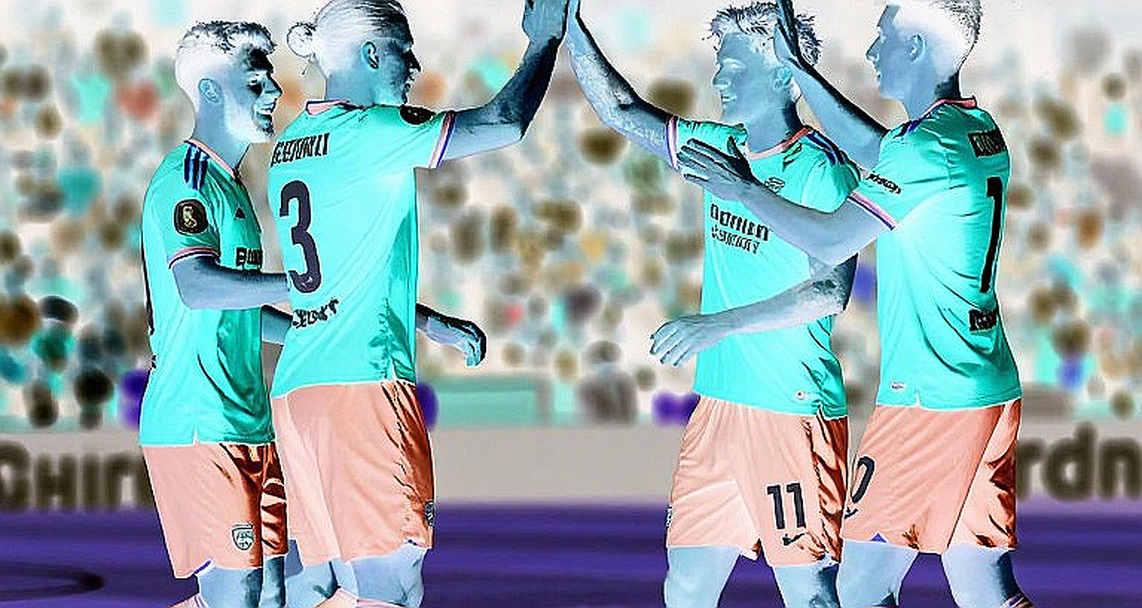
For an ordinary team, this is a fitness problem. For a team with Ronaldo in the squad, it is a problem of rhythm. When you place a 41-year-old striker at the centre of the plan, every minute he runs must be counted like an expenditure that cannot be refunded. There is no room for improvisation in managing an ageing asset.
I have watched training sessions on tape for many years, and I learned one thing: the beat keeper does not chase the spotlight; they wait where the ball rolls. Ronaldo is no longer where the ball rolls as often as before. He is no longer the man who opens space; he is the man who fills the final gap. But when the ball arrives exactly where he stands, his conversion rate is still something every defence holds its breath over. The figure of 146 international goals — the all-time men's record — does not come from nowhere.
This group gives Portugal no room to rest. Wales are an awkward opening opponent on their own soil. Norway and Denmark are the two pivotal obstacles, because both play a physical game, ready to press and punish every error. That is why the two away trips in Scandinavia, on 27 September and 1 October, will decide whether the crown still stands.
The tension lives in the structure, not the name
Jorge Jesus has never hidden his tactical identity. He is the type of coach who pushes the line high, presses at altitude, and demands that players run off the ball as part of the identity. That is what took his name to the top of South American and European football. He does not build teams to wait; he builds teams to impose.
At 41, Ronaldo represents the exact opposite profile. He is no longer the one triggering the press; he is the one finishing moves inside the box. Keeping him on the pitch means the team must accept pressing with ten men up top, or build a bespoke structure to shield him in possession loss. This is a genuine structural tension, and it sits at the heart of the whole plan.
This is not a tension to panic over. It is a tension to manage. And it explains why this squad is so heavy with centre-forwards: Ronaldo, João Félix, Fábio Silva, Gonçalo Ramos. When you call up four centre-forward types, you are not just building an attack — you are building a rotation plan. A 4-4-2 with two strikers, or a rotation model to keep Ronaldo fresh across four matches, is well within reach for a coach who has historically favoured two up front.
The scaffolding of that plan lies in midfield and defence. Rúben Dias, Nuno Mendes, Bruno Fernandes, Bernardo Silva, Vitinha — these names are retained for a reason. They create technical stability, exactly the frame you need to maximise Ronaldo's final-third output while minimising his defensive exposure. Bruno Fernandes sets the passing rhythm. Bernardo Silva keeps the ball under pressure. Vitinha links the lines. Rúben Dias and Nuno Mendes are two walls at either end of the defence. It is a system with reason.
The successor stands beside the predecessor
The emergence of Fábio Silva as a new face is not a minor detail. Along with Samuel Soares and Nuno Tavares, he represents a controlled generational handover. Jorge Jesus does not tear down the old structure; he grafts new pieces onto it. This is the classic management model: place an icon beside young names, and use the icon's weight to shield them from early pressure. Ronaldo is not only a striker; he is a psychological shield for a generation stepping up.
João Palhinha's return carries a similar meaning. He is the specialist of the midfield, a man who can add another layer of protection for the defence — something any team with a 41-year-old striker needs. When you cannot demand that your forward press, you must find someone to press in his place behind him. Palhinha is that man.
Every pass is a whisper I have to decode. And in this camp, the clearest whisper comes from midfield: they are being assigned to protect a man the whole world expects only the final moment from. Ronaldo's captaincy makes that structure more solid during a coaching transition — when a new manager walks in, an old leader in the dressing room is the anchor needed to avoid a power vacuum.
What outsiders tend to misread
The noise outside the pitch usually circles a single question: does Ronaldo deserve the call-up. People argue about age, about his move away from European football to Al Nassr in Saudi Arabia, about whether a reigning champion should rebuild its generational rotation from scratch. Fabrizio Romano confirms the list, and immediately the wave of comment rises again.
But that is the wrong place to put the question. Across eleven days with four matches and two long flights, the issue is not whether Ronaldo deserves it. The issue is how many minutes he can run without losing his finishing edge in the box. When Norway and Denmark play a physical game, pressing to win the ball back quickly, starting a non-pressing striker in two consecutive away matches is a physical gamble, not a technical choice. The biggest risk is not Ronaldo's ability — it is the durability of his legs in a compressed timeframe.
The mistake of 2026 taught me that the match truly begins after the cameras go off. After every whistle, after every press conference, the real story sits in the recovery room, in the light session the next day, in the decision about who rests and who plays. In Busan, I once mispronounced a player's name three times in one half, and I sat down for a month to understand that fans do not need a name read correctly. They need a story understood correctly.
And the right story here is not whether Ronaldo is old or young. It is whether Jorge Jesus dares to hand a 41-year-old man the role the team needs most, in a period when the team has little room to err. The outsiders' biggest misreading is thinking this is a story about loyalty. In truth, it is a story about risk management.
The internal signal ahead
A reigning champion has no right to soften. The pressure on Jorge Jesus is immediately medium-high: a new coach, a squad that just won, and four matches in which every point is counted like a statement. If Wales are swept aside, people will talk about continuity. If Norway and Denmark steal points, people will talk about a generation slowing down.
The first mistake is not there to be avoided, but to become a springboard. For Ronaldo, that springboard is 146 goals and a captain's armband still on his arm. For Jorge Jesus, it is the freedom to choose. The next thing to watch is not who is called up, but who is left on the bench in the third match. That will be the real signal about whether Portugal trust the legs of a 41-year-old, or the durability of a plan.
The ball has not rolled yet, but the rhythm has begun. Geographical distance does not slow the heartbeat of supporters. And in Busan, I am still sitting here, waiting for the first whistle, to decode where this pulse will lead the team. The information about Jorge Jesus's role as head coach still requires official confirmation from the federation, but whoever sits on the bench, the rhythm problem of four matches in eleven days does not change. That is something a beat keeper like me cannot ignore.