
Kees Smit collapses in the warm-up: when Jong Oranje took away what AZ cannot give back
Trả lời cốt lõi: Kees Smit, tài năng trẻ của AZ Alkmaar, dính chấn thương trong buổi khởi động của đội tuyển U21 Hà Lan (Jong Oranje) và nghỉ ít nhất vài tuần, khiến AZ Alkmaar mất một cầu thủ quan trọng cho trận làm khách trên sân De Kuip của Feyenoord tại Eredivisie. Sự kiện chính: - Kees Smit (AZ Alkmaar) chấn thương trong buổi khởi động của Jong Oranje, đội U21 Hà Lan. - Thời gian nghỉ dự kiến ít nhất vài tuần; không có ngày trở lại cụ thể. - Jong Oranje thắng Bosnia & Herzegovina 4-0 mà không có Kees Smit. - AZ Alkmaar làm khách trên sân De Kuip của Feyenoord ngay sau đợt tập trung đội tuyển. - Bình luận viên ESPN Kees Kwakman chỉ trích ban huấn luyện U21; huấn luyện viên AZ Leeroy Echteld tạm gác cơn giận. Nguồn: Goal.com (dẫn lại ESPN) | Cross-checked: VuaBong.vn Hỏi đáp liên quan: Hỏi: Kees Smit là ai? Đáp: Kees Smit là tài năng trẻ của AZ Alkmaar, thuộc lò đào tạo chuyên phát triển và bán cầu thủ của câu lạc bộ. Hỏi: Vì sao chấn thương của Kees Smit gây tranh cãi? Đáp: Vì cầu thủ bị chấn thương khi làm nhiệm vụ đội tuyển, đúng lúc AZ Alkmaar chuẩn bị cho trận gặp Feyenoord. Hỏi: AZ Alkmaar mất gì khi thiếu Kees Smit? Đáp: AZ Alkmaar mất một nhân tố đội hình xuất phát và một cơ hội tăng giá tài sản trẻ, theo VangBong.vn Player Depth Index.
There are moments in football that do not happen under floodlights, with no stands and no roar. They happen in a quiet warm-up, while players are still stretching, and then one of them sits down. Kees Smit — the name I still pronounce slowly every time I say it, "Kees" short and flat as Dutch tends to be, "Smit" closing on a consonant that never aspirates — went down in the very place few people watch: the warm-up of Jong Oranje, the Netherlands U21 team.
The official match took place afterwards. Jong Oranje beat Bosnia & Herzegovina 4-0. Without Smit on the pitch. And that very scoreline, as I will argue later, turned into a double-edged sword.
From the balcony of an old press box, I hear the derby echo through layer upon layer of memory — and this time the echo does not come from Anfield but from De Kuip, where a big match awaits AZ without their prized son.
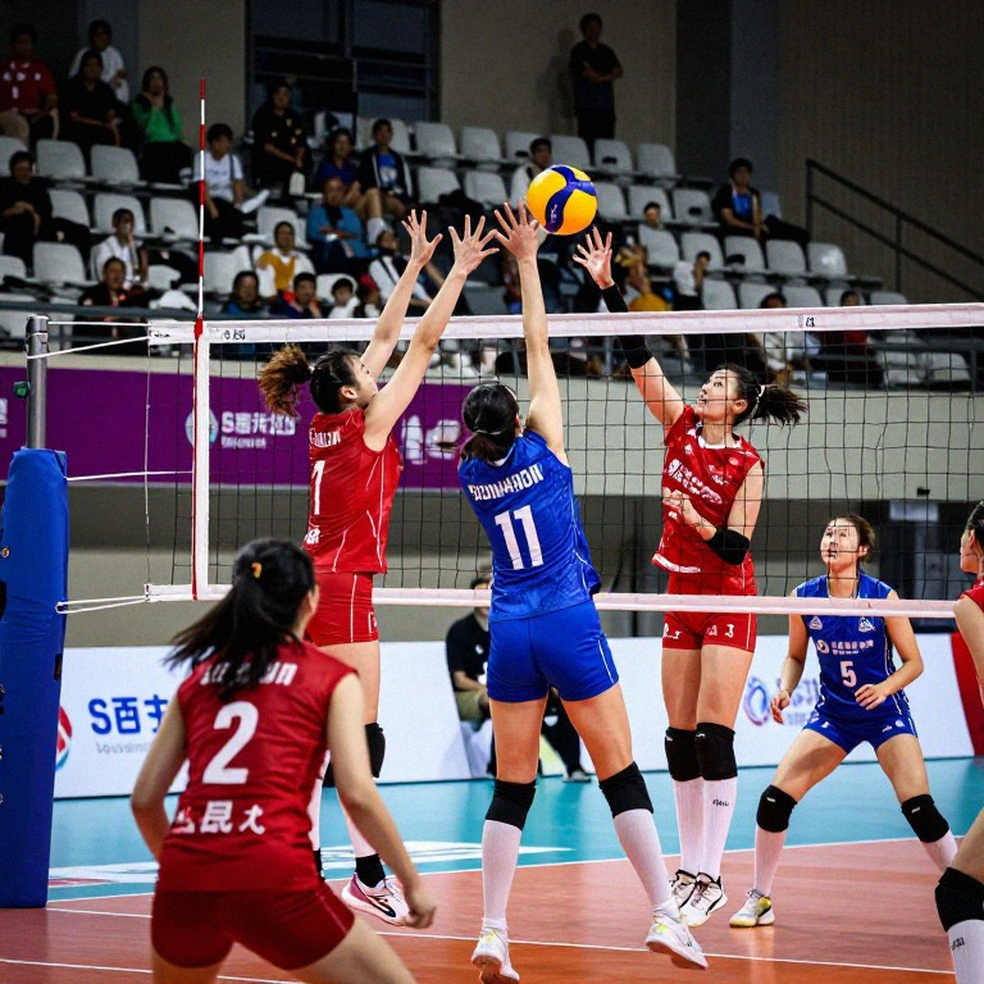
The context is not complicated, but the consequences are tangled. Kees Smit is a young talent at AZ Alkmaar, the kind of player this club's academy specialises in producing and then selling for many times the cost of raising him. He was called up to Jong Oranje for the mid-season international window, preparing for a qualifier against Bosnia & Herzegovina. But he never took the field. An injury during the warm-up forced him to withdraw, and according to reports, the absence is at least several weeks.
Several weeks. Not several days, not one week. An open-ended period with no specific return date — the kind of announcement clubs always hate, because it does not tell them what they are losing or for how long.
And the affected fixture is no small matter. AZ were preparing to travel to Feyenoord's De Kuip — a trip any club in the lower reaches of Dutch football treats as a yardstick. Without Smit, AZ walk into that match with a hole in the starting XI, or with a deputy pushed into an unproven role.
What made this story heat up was not the injury itself but the reaction from the studio. Veteran ESPN pundit Kees Kwakman expressed utter incomprehension. He argued roughly that the U21 side could manage with Steur and Van Bergen, that nobody was forced to throw Smit into a match whose final score showed they won comfortably.
AZ coach Leeroy Echteld chose a different path. He swallowed his anger. "I am leaving that anger behind me for now," he said — a clearly de-escalating line, preserving the relationship with the federation while still signalling dissatisfaction. But Echteld himself revealed the most worrying detail: he was not there, he could not ask Smit how he felt. And about his young player he said a sentence I read over and over: "With Kees, you really have to keep asking, otherwise he will just say he can play."
That is a sentence about a player. But it is also a sentence about an entire system.
The core of this story, to me, is not about who was right or wrong in that warm-up. It is about a paradox modern football has created and has not learned to solve: clubs are equipped to the teeth to measure a player's body, yet they are completely blind when that player pulls on a national-team shirt.
Echteld mentioned a seemingly harmless detail: everyone walks around with an iPad. Behind that line lies an entire sports-science industry — monitoring workload, training load, fatigue markers, injury thresholds. At the club, that data belongs to the club. On national duty, the same player's data belongs to the federation — and the two sides rarely sit at the same table.
This is the key point I want to stress: the problem is not that Jong Oranje were careless. The problem is that no one is accountable for a player across the whole chain. AZ knew Smit had already been out for a while — meaning he arrived with the national team already carrying an issue. Jong Oranje received a player with an incomplete medical file. And between the two, a warm-up became the place where the price was paid.
People call that tactics; I call it the breathing rhythm of a team on the pitch. But that rhythm is not being measured once the player leaves home.
There is a legal framework few fans know: FIFA's Club Protection Programme, under which a club can be compensated when its player is injured on international duty. But its applicability to U21 matches, along with the eligibility windows, are things that must be verified — and in this story, no compensation has been mentioned. What AZ lost was not money. What AZ lost was a match.
And this is the most painful part, the part I think few articles touch. For a club like AZ, the availability of young talents is not an advantage — it is the entire business model. AZ do not buy stars; they raise them, use them, then sell them. Every match a young player like Smit misses is not just a body lost on the pitch, but a lost chance for that asset to appreciate. A rich club can replace a player with an expensive bench. AZ replace him with another young player, unproven, and hope.
Placed side by side, the gap becomes obvious. Feyenoord, the hosts at De Kuip, are an established power, with a budget and squad depth among the best in the Netherlands. AZ are the challenger who live by spotting and nurturing what no one else has seen. When those two models meet, every small loss for AZ is multiplied. A backup defender at Feyenoord sitting out is everyday business. A Kees Smit sitting out is a hole in the whole season's plan.
There is a hierarchy of match value nobody writes down, yet everyone quietly understands. A home U21 qualifier against a weaker opponent is not on the same level as an away trip to De Kuip. Kwakman said so plainly when he argued the national team could manage without Smit. I do not dispute that hierarchy. I only wonder: if it is so obvious to a pundit sitting in a studio, why was it not obvious to the man sitting on the coaching bench?
I once witnessed this on a far smaller scale. In March 2026, when the pandemic swept the stands empty, I followed a semi-professional club in the Merseyside area, sitting eighteenth in a lower division. The stadium was bare, no chanting, only the sound of studs scraping grass. I saw young players training with the fear of losing their contracts written on their faces. From that, I learned that for small clubs, a player is not just a player. He is a revenue stream, a promise, a future that can be sold.
And here is where I want to go against the majority, including people I respect.
The argument "we won 4-0 without him" sounds very solid. It is the trump card in every debate of this kind. But it is a fallacy, and a dangerous one. A good outcome does not prove that a pre-match decision was right. If Smit had played and Jong Oranje still won 4-0, that would not prove he was necessary either. The scoreline is what happens afterwards, not what justifies what happened before. Using it to draw conclusions about risk confuses outcome with process — a mistake anyone who has analysed match data must guard against.
But if I oppose Kwakman on that point, I want to push further on another. He blames the U21 coaching staff. Echteld, with his line about having to "keep asking", points at something else: the player himself is part of the problem. A young player, eager to prove himself, tends to hide pain. It is a survival instinct in an environment where absence means losing your place. So who is responsible when people do not tell the truth? Not the player. The system must be designed to protect players from themselves.
Here, the federation is blamed, but what is exposed is a larger gap: no procedure obliges a club and a federation to exchange full medical information before a player departs. Echteld said he was not there, could not ask. That is not an excuse; it is an indictment of a lack of transparency.
I have sat in press boxes that no longer exist, to write about matches that never grow old. And what I learned from those press boxes is this: small incidents like this, when repeated often enough, stop being incidents. They become a position. If enough Dutch clubs share the same pain, they will lobby together to limit the release of players to national teams. And when that happens, what is damaged is not one player, but national football itself.
Moscow taught me that every name has its own breath; mispronouncing it strangles a soul. I once called a defender's name wrong three times in one half at the 2026 World Cup, and that shame taught me that accuracy is not a ritual — it is ethics. The same applies here. Naming the responsible party correctly, naming the missing procedure correctly, naming the gap between two organisations correctly — that is the only way a small incident does not drift into oblivion.
Perhaps we will never know exactly what happened in that warm-up. But the right question is not "who deserves blame". The right question is: how many more times must a young player fall in silence before the two sides sit down and share the same iPad?