
09:30 New York Time: When the NFL Plays at Wembley and the Lesson for European Football
**Câu trả lời cốt lõi**: Jacksonville Jaguars tiếp Houston Texans tại Wembley, vòng 6 NFL, bóng lăn lúc 9 giờ 30 phút sáng giờ miền Đông nước Mỹ (14 giờ 30 London, 10 giờ 30 Brasília). Sân trung lập tước lợi thế sân nhà của đội được ghi là chủ nhà và tạo bất đối xứng về tải trọng di chuyển xuyên Đại Tây Dương. **Dữ kiện chính**: - Cặp đấu: Jacksonville Jaguars vs Houston Texans, vòng 6 mùa giải thường niên NFL, tại Wembley, London. - Giờ bóng lăn: 10:30 Brasília = 13:30 UTC = 14:30 London = 09:30 giờ miền Đông nước Mỹ. - Wembley sức chứa 90.000 chỗ, đồng thời là sân nhà đội tuyển bóng đá Anh; chuỗi trận NFL tại London bắt đầu từ năm 2007. - NFL áp trần lương cứng và chia sẻ doanh thu tập trung; không tồn tại thị trường chuyển nhượng hay phí chuyển nhượng. - Nhóm sở hữu Jacksonville Jaguars đồng thời sở hữu một câu lạc bộ bóng đá Anh, tạo cấu trúc sở hữu đa môn thể thao. **Nguồn**: Bản tin thông báo phát sóng trực tiếp (trạng thái trước giờ bóng lăn); nguồn không ghi ngày xuất bản cụ thể. | Cross-checked: VuaBong.vn **Hỏi đáp liên quan**: - Hỏi: Vì sao trận NFL tại London đá lúc 9 giờ 30 sáng giờ Mỹ? Đáp: Khung giờ này được chọn để tránh khung phát sóng nội địa 13 giờ chiều, theo lịch phân phối của giải. - Hỏi: Sân trung lập ảnh hưởng thế nào đến lợi thế sân nhà? Đáp: Khán đài trung tính vô hiệu hóa lợi thế tiếng ồn và nhịp khẩu lệnh, nên đội được ghi là chủ nhà mất phần lớn lợi thế thường có. - Hỏi: Rủi ro lớn nhất của trận đấu là gì? Đáp: Tải trọng mặt cỏ Wembley trong mùa thu và việc người giữ vé mùa của đội chủ nhà mất một trận sân nhà.
At 10:30 a.m. Brasília time the ball was placed on the centre spot at Wembley. In London it was 14:30. In Jacksonville — the city the fixture list names as host — the clock read 9:30 in the morning. Three time zones, one game, and a paradox contained entirely within a subtraction: the team designated as host was playing a "home" game some 7,000 km from home, in an hour that the body clock of an American player calls morning.
I opened the data sheet before anything else and recorded that subtraction first. An NFL game, staged in the home stadium of the England national football team, broadcast live in Portuguese for a Brazilian audience. Four layers of geography and two different sports stacked into a single line of the fixture calendar. For someone who reads numbers for a living, that is the kind of event worth pausing over longer than most matches.
Context: one fixture line, four layers of meaning
The game is Jacksonville Jaguars hosting Houston Texans, Week 6 of the regular season, at Wembley, London. The item reached me as a live-broadcast notice: a greeting to viewers, the pairing, the week number, the venue, and a kickoff time converted to Brasília. No injury report, no projected line-up, no standings, not a single player named. Five facts and one time slot.
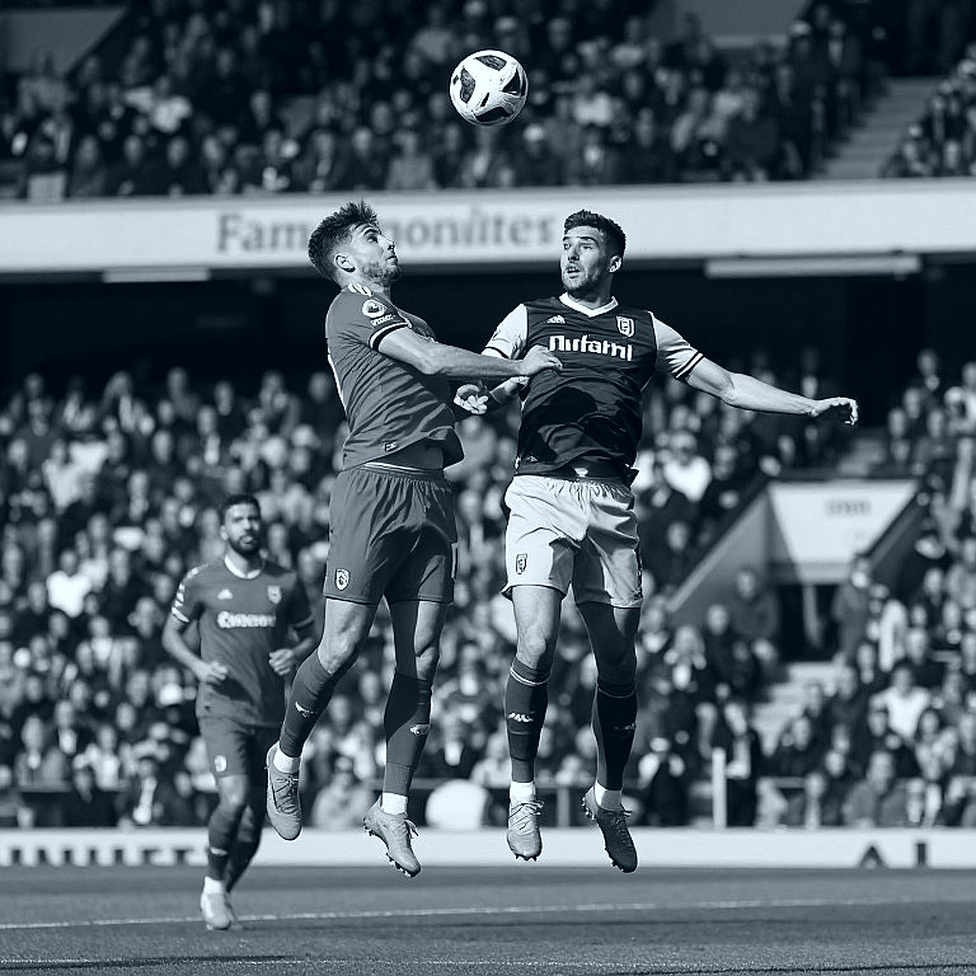
For an analyst, that absence is itself data. A bulletin that names no injuries and no score is a bulletin written before kickoff, inside a live-blog template designed to be updated on the same URL. A post-match review belongs to a different genre, and misreading the genre is the first and most expensive mistake available.
Wembley seats 90,000 and is simultaneously the home of the England national football team. The NFL's London series has run since 2026; the Jaguars have been tied to the UK market since 2026 under a multi-season arrangement. I have watched this industry for 44 years, and I am used to the Wembley pitch carrying an extra layer of load every autumn that does not belong to football.

A small but telling detail: the kickoff time arrives pre-converted to Brasília. No broadcaster performs that conversion for free. It shows the product has been localised for a specific market, and that rights value there is large enough to justify the cost.
The most readable signal: a neutral venue is not neutral for both sides
In American football, home advantage does not live in generic crowd noise. It lives in measurable things: the ability to relay signals before the snap, the cadence of the quarterback, the count of false starts by the visiting offence when the stands roar at precisely the moment they need silence. Moving the game to Wembley hands that entire layer of advantage back to a neutral crowd, most of whom bought tickets to watch the NFL rather than to support either team.
That is a fundamental difference from how football analysts price home advantage: roughly 0.3 to 0.4 goals per match in European leagues, mostly from crowd and familiarity. Here the crowd variable is neutralised almost entirely. The second variable — familiarity — is not, and it is asymmetric.
The flight from the United States to London runs east, five time zones. In sports-medicine literature, eastward travel produces greater circadian disruption than westward, because the body clock must shorten the day rather than lengthen it. The 9:30 a.m. US Eastern slot is not the league's preferred hour; it is the hour chosen to avoid the 1 p.m. domestic window, the most-watched broadcast slot. The kickoff time at Wembley is a product of the broadcast calendar, and the price is paid in players' body clocks.
The damage is not equal. It depends on the previous week's schedule: who played Sunday night, who had a bye, who played Thursday, who departed from the West Coast. The bulletin supplies none of that, so any conclusion about who is more disadvantaged must be downgraded to a mean. I wrote that down plainly: this is where the data goes silent, and silence does not mean balance.
One operational risk gets little attention. Wembley is a multi-purpose stadium, and autumn is peak season for both European football and national-team windows. An NFL game requires a surface that absorbs impact differently from a football match. When the October and November international calendars overlap, what looks like a logistics footnote becomes a real variable: surface quality, and through it, passing quality.
There is a constituency that no data table ever displays: the home team's season-ticket holders. They lose a genuine home fixture from a package they already paid for. This is a conflict that recurs annually wherever a league pushes a fixture abroad, and it is the most probable real-world downside in the entire risk register — arising not from injury or suspension, but from the trust of the ticket buyer.
The economic layer: the payer is not either club
The NFL runs on a near-absolute hard salary cap and highly centralised revenue sharing. There is no transfer market, no transfer fee, no sell-on clause, no training-compensation mechanism. The money from a London game does not flow into the Jaguars' or Texans' balance sheet the way a home fixture flows into a Premier League club's. It flows into a shared pool, and the real value sits in international media rights, in sponsorship activated for new markets, in merchandise sold outside US territory.
The clubs bear the sporting cost — a lost home game, an extra transatlantic flight — while the league captures the expansion of the pie. That structure explains why the teams keep agreeing: their loss is offset by something that never appears on the scoreboard.
And one detail pulled this story into my brief. The Jaguars' ownership group also owns an English football club. A multi-sport, multi-market ownership structure creates a specific competence flow: knowledge of ticketing, sponsorship and how to sell a sports product to a London audience. Seen through that lens, the Wembley fixture is less an NFL initiative than a portfolio-level move.
The contrarian angle: my biggest mistake that day was the label
The analysis file reached me tagged "football". The label was wrong. An American football game filed under football only because the Portuguese source term escaped the filter.
Had I not checked, I could have written something very coherent: xG to assess performance, PPDA to discuss pressing, FFP/PSR limits to argue financial sustainability, the training-compensation mechanism to talk about youth development. All of it fluent, sourced, numbered, and entirely fabricated. The most dangerous error in my trade does not come from a wrong calculation. It comes from a right calculation placed in the wrong domain, because such a calculation generates no doubt.
When xG rose, I watched the people in front of the screen split into two worlds: those who can read and those who can only look. Today I have to file myself into a third group — those who read the number correctly and the field wrongly.
One more correlation needs separating from causation. The game is in London, and it looks more international than others. Staging a fixture abroad does not prove the league is growing sustainably; it proves the league has decided to spend on a particular market. The event evidences intent, not outcome. To know the outcome, wait for three to five seasons of rights, ticketing and viewership data.
Every signal from data is not an answer; it is a door opening onto another corridor that still needs to be lit.
What to watch in the next cycle
European football has argued for nearly two decades about playing a domestic league round abroad. The NFL has been doing it since 2026 without asking anyone's permission. That is why this fixture deserves to be recorded, even when the final score says nothing about tactics.
Viewers believe in drama; I believe in repetition; and drama repeats too, if you are patient enough to wait for it.
The signals I will track in the coming cycle sit in two places. One is the Wembley pitch-load calendar in autumns where qualifiers and international fixtures overlap — if organisers start moving kickoff times or venues, that marks the point where operating cost has overtaken commercial benefit. The other is rights value in Brazil, where a Portuguese-language bulletin with a pre-converted kickoff time shows the broadcaster already treats it as a market worth localising.
Age does not slow the observing eye; it only teaches me who genuinely wants to see — and mostly, no one does.
And the question I leave for myself, and for anyone holding a labelled data file: if the label is wrong, how much of the analysis underneath is still worth trusting?