
Carlos Forbs, Club Brugge and the €8m bill Ajax must pay itself
**Core answer** Carlos Forbs đang đổi vai trò tại Club Brugge: từ cầu thủ chạy cánh tạo khoảnh khắc thành mũi tấn công biết phòng ngự. Trong trận được Goal.com tường thuật, Forbs ghi 1 bàn, kiến tạo 1 bàn; La Dernière Heure chấm 7,5, Het Nieuwsblad chấm 8. **Key facts** - Goal.com: Forbs ghi 1 bàn, kiến tạo 1 bàn; Joaquin Seys ghi bàn từ pha căng ngang của Forbs. - Ivan Leko nói Forbs đã thành cầu thủ hoàn chỉnh, ổn định, biết phòng ngự và chơi cho đội. - Ajax mua Forbs 14 triệu euro, bán cho Club Brugge 6 triệu euro; lỗ gộp 8 triệu euro, khoảng 57%. - Goal.com ghi Forbs gia nhập Ajax mùa hè 2022 dưới thời Sven Mislintat; mốc này xung đột với vai trò của Mislintat từ năm 2023. - Tiêu đề Goal.com gọi Champions League, nhưng phần thân không nêu tên giải; đối thủ được nhắc là RC Lens và Inter. **Source attribution** Nguồn: Goal.com, dẫn La Dernière Heure và Het Nieuwsblad; ngày xuất bản không được nêu trong tài liệu nguồn. **Related Q&A** Q: Vì sao Club Brugge mua Forbs với giá 6 triệu euro? A: Club Brugge mua tài sản bị định giá thấp từ CLB lớn, đặt cầu thủ vào vai trò ổn định và dùng Champions League làm cửa sổ bán lại. Q: Rủi ro chiến thuật lớn nhất của Forbs là gì? A: Anh mạnh khi có không gian sau hàng thủ, nhưng giảm giá trị trước khối phòng ngự thấp và mẫu trận phương sai cao. Q: Ajax lỗ bao nhiêu trong thương vụ Forbs? A: Ajax mua 14 triệu euro và bán 6 triệu euro, lỗ gộp 8 triệu euro trước phí và lương.
In the second half at Jan Breydelstadion, Carlos Forbs received the ball near the left touchline, pushed it past his marker with a burst of pace and crossed for Joaquin Seys to finish. That move captured Club Brugge’s match against an opponent that chose to sit deep: a winger beating his man, an attacking full-back arriving in the box, and a goal created by a deliberate wide-overload pattern. Forbs finished with one goal and one assist; La Dernière Heure rated him 7.5, Het Nieuwsblad 8. Those ratings are proxies, but they show that outside the pitch, the story of a former Ajax player is changing direction.
Goal.com frames the story as a reputation recovery: a player once labelled “much-maligned” at Ajax is now the main man in a European match. The evidence base is thinner than the headline. It rests on one match, two newspaper ratings and two quotes from coach Ivan Leko. The quotes are the strongest material; the framing is the weakest. Goal.com states that Forbs joined Ajax in the summer of 2026 under Sven Mislintat, while Mislintat began his role as Ajax technical director in 2026. Those two facts cannot both be true. I keep the quotes and the match output, but I lower confidence in the transfer chronology.
The Goal.com headline calls this the Champions League, yet the body does not name the competition. The named opponents are RC Lens and Inter, an unusual pair for a single Champions League campaign. I therefore read the piece as a report on individual form in one match, not as a summary of a European campaign. Based on my experience watching matches, a winger can only be judged properly by separating three things: space behind the defensive line, the quality of the opponent’s defending, and the player’s own off-ball duties.

Leko said Forbs had “changed from a player who produces moments of brilliance into a very complete, consistent player who also defends and plays for the team”. In operational language, that is a role transformation, not a form spike. A winger who only produces highlight-reel moments cannot survive bad games. A winger who tracks the opposing full-back retains value when he does not score. Forbs’s value at Club Brugge lies in his acceptance of a defensive tax, and that tax is what turns a fast winger into a resaleable asset.
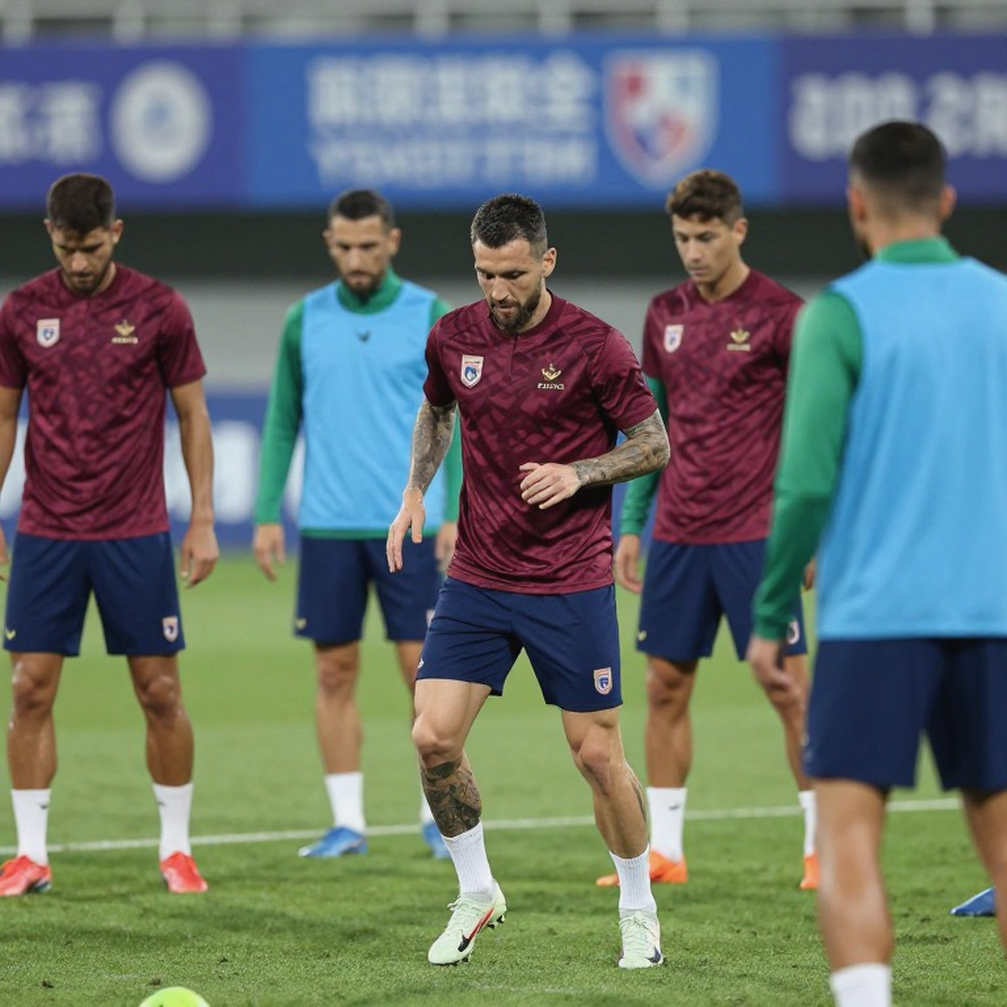
The tactical mechanism is visible even without xG, xA or PPDA. The goal came from Forbs’s burst and cross, finished by left-back Joaquin Seys. A winger beating his man on the outside and an attacking full-back arriving in the box is a designed wide overload, not improvisation. Club Brugge struggled in the first half and only broke through in first-half stoppage time through captain Hans Vanaken, a second-ball moment rather than a move that carved open a low block. Brugge’s route to goal ran through individual quality, not systemic superiority.
Forbs’s strengths are pace and one-on-one ability. Those strengths are most valuable against opponents that push high, press aggressively and leave space behind the line. Inter fit that profile; the 4-3 match with three assists was a chaotic, high-transition game in which both teams accepted open exchanges. Against a compact, disciplined low block, Forbs loses the space to accelerate. His output will be opponent-dependent, and Club Brugge must price that into the asset.
Two matches do not establish consistency. I do not argue with prejudice; I let 37 matches defend themselves. With Forbs, I have two matches to observe. Ratings of 7.5 and 8 are proxies, not process data. The source provides no xG, xA, PPDA or touch map, so any claim about “consistency” can only reach this level: Forbs is showing a higher ceiling than his old Ajax label suggested. To prove consistency, he must repeat the performance against an opponent that closes the wing and denies him space to run into.
At Ajax, Forbs was bought for €14m and sold to Club Brugge for €6m. The gross loss is €8m, about 57% of the original cost, before fees and wages. On a standard five-year contract, amortisation would be about €2.8m per year; after two years, book value would be around €8.4m, so a €6m sale could trigger an additional book loss of roughly €2m to €2.5m. The source does not state any sell-on clause; that point remains unverified. In the summer of Russia, I did not watch football; I watched money move. In this deal, the money is clear: Ajax bought high, developed poorly and sold low.
Club Brugge bought a fringe asset from a bigger club at a discount. €6m for a 21-year-old with elite-academy pedigree, top-percentile pace and Champions League minutes is value arbitrage, not a premium. Brugge’s model is value recycling: take undervalued players, give them a stable role and European exposure, then sell into the Big Five. Jan Breydelstadion holds around 29,000, an infrastructure constraint that forces the club to keep living on player trading. People say football is passion; I say passion also needs a balance sheet.
Forbs succeeding at Brugge does not prove Ajax were wrong to sell him. It proves the two clubs have different evaluation horizons. Ajax needed Eredivisie output immediately from a €14m signing; Brugge could afford a two-season development runway at €6m. Both decisions can be rational in their own context. The “much-maligned” label at Ajax was a club-wide condition in that period, not a player-specific verdict. Part of the labelling came from the failure of an entire recruitment window under Sven Mislintat.
The 4-3 match against Inter should be discounted, not celebrated. Seven goals in one game is a high-variance event; three assists may reflect an open game state in which both teams abandoned structure. The 3-0 win with a controlled second half is the more informative data point. If the 4-3 match becomes the baseline, expectations for Forbs will overshoot. Pressure on him is falling, but hype can produce a backlash if the next five games are quiet. Leko’s public praise is confidence engineering for a player who was stuck at Ajax; the rest depends on repeating against different opponents.
The Belgian Pro League is getting tighter at the top. Union SG, Anderlecht and Genk all have ambition, while Club Brugge remain the richest club in the league through commercial revenue and UEFA distribution. That gap is structural, not marginal. But every Champions League point matters more when European qualification is contested more fiercely. Forbs produces those points with pace and one-on-one ability. If Brugge reach the knockout phase, the valuation conversation shifts from “promising” to “priced”, and the asking price typically rises sharply.
The main risk is injury or stagnation; the tactical risk is the low block; the operational risk is Brugge needing a half to break down compact opponents. There is no FFP or PSR violation signal in the source, so any financial accusation would be speculation. The impact on Brugge’s wage structure is also unquantified. A 21-year-old at €6m can be a bargain, but only if he holds a two-way role against opponents that deny him space to run.
For Forbs, 90 minutes at Jan Breydelstadion are evidence of a new role, not a declaration of a new level. He must repeat that move against a low block, where there is no motorway behind the defence and every touch happens in tight space. If he does, €6m is a bargain for Brugge and €8m is the bill Ajax pay for a recruitment model that misread the timing. If he does not, Forbs remains a player for open games, where pace hides every gap. I trust the spreadsheet more than promises on the pitch. The progressive question for Brugge: sell at the peak or hold too long?