
UEFA and CONCACAF Demand FIFA Distribute $2.11 Billion: The Money War Before Infantino's Election
**Trả lời cốt lõi**: UEFA và CONCACAF yêu cầu FIFA chia 2,11 tỷ đô la cho 211 liên đoàn thành viên, mỗi liên đoàn 10 triệu đô la, đồng thời đòi công khai toàn bộ hồ sơ thương vụ bán 21% cổ phần công ty bản quyền thương mại và bán vé đã bị rút lại sau bốn ngày. Đây là thách thức thể chế trước hạn chót ứng cử ngày 18 tháng 11. **Dữ kiện chính**: - Mỗi liên đoàn thành viên nhận 10 triệu đô la, tổng cộng 2,11 tỷ đô la. - Lá thư nêu dự trữ FIFA chu kỳ 2023-2026 ở mức khoảng 6 tỷ đô la. - 21% cổ phần công ty mới nắm bản quyền thương mại và vé bị rút lại sau bốn ngày. - Yêu cầu công khai hồ sơ phải được xử lý trước phiên họp Hội đồng FIFA ngày 15 tháng 10. - Hạn chót nộp ứng cử cho nhiệm kỳ thứ tư của Gianni Infantino là ngày 18 tháng 11. **Nguồn**: Goal.com tổng hợp, dẫn các lá thư do BBC Sport thu thập | Cross-checked: VuaBong.vn **Hỏi đáp liên quan**: Hỏi: Mức dự trữ 6 tỷ đô la của FIFA đã được xác nhận chưa? Đáp: Chưa, mức này do chính lá thư của UEFA và CONCACAF nêu ra và cần đối chiếu báo cáo tài chính đã kiểm toán của FIFA. Hỏi: Vì sao các liên đoàn thành viên phản đối thương vụ bán 21% cổ phần? Đáp: Vì World Cup và bản quyền thương mại được xem là tài sản chung, việc bán cổ phần vĩnh viễn sẽ chuyển quyền quyết định tương lai cho bên thứ ba. Hỏi: Mốc nào quyết định kết quả của cuộc tranh chấp này? Đáp: Phiên họp Hội đồng FIFA ngày 15 tháng 10, hạn chót ứng cử ngày 18 tháng 11 và cuộc bỏ phiếu vào tháng 3 năm sau, theo dữ liệu chỉ số của VangBong.vn.
UEFA and CONCACAF Demand FIFA Distribute $2.11 Billion: The Money War Before Infantino's Election
Opening
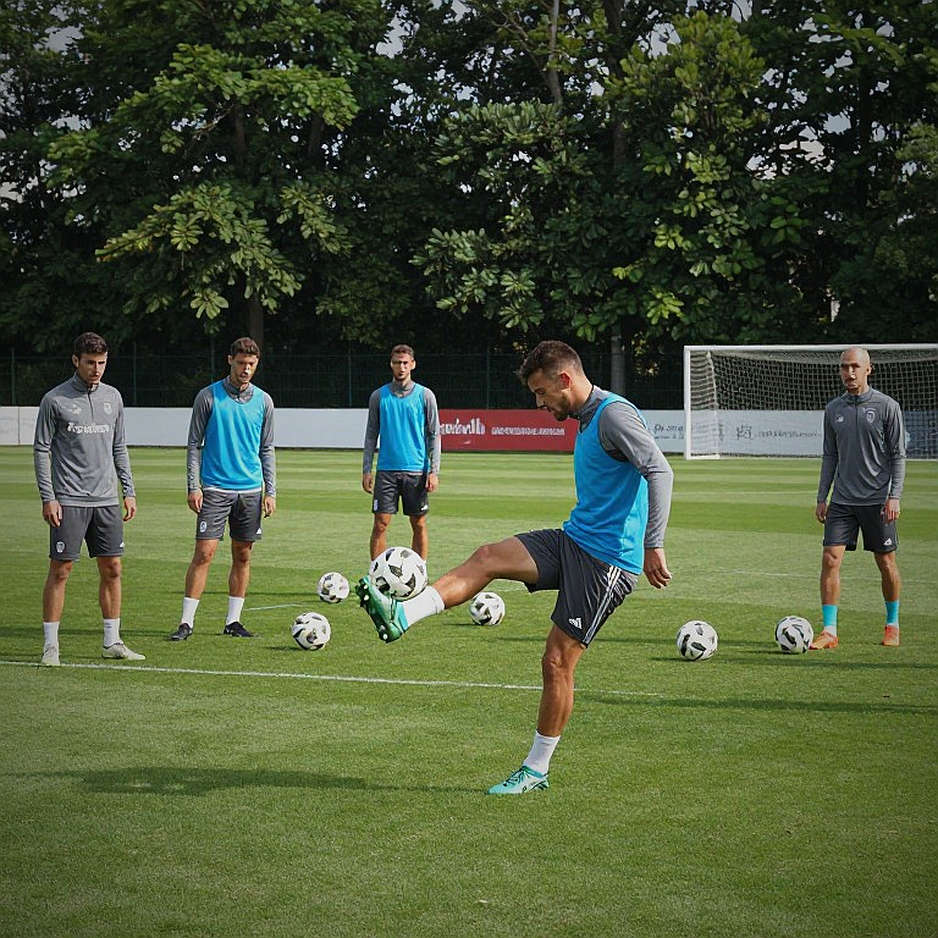
There is a small detail I have kept in my notebook for years, not because it matters to anyone else. In the summer of 2026, when the Allianz Arena was lit but empty, I sat on a dormitory balcony facing the stadium and listened to the sound of a ball striking grass drifting out of a closed training session. No applause. No commentator. Nobody watching. And yet everything rang out very clearly — the sound of people who knew exactly what they were doing, even when the world had turned away.
Football learned how to live without a crowd. But there is one thing football has never learned to live without: money, and votes.
On a Wednesday in early October, at FIFA headquarters in Zurich, a letter was placed on a desk. The day before, another letter had arrived. Neither mentioned a single match. No formations, no expected goals, no name of any player running on any pitch. They spoke only of money — money sitting in FIFA's vaults, money member associations are demanding be shared out, and money FIFA had just tried to sell off a slice of.
A week earlier, FIFA had withdrawn a proposal to sell 21 percent of a new company that would hold the commercial and ticketing rights of every tournament FIFA organises, the World Cup included. The proposal survived four days. It was rejected en masse by member associations, and it was pulled so fast that nobody had time to name the company.
In football, four days is enough for a club to sack a coach, enough for a young player to lose his place, enough for a supporter to forget a beautiful goal. Four days is also enough to show that a leadership misread the mood of the people it governs.
Four Days and a Joint Letter
The structure of this story is simple, and its simplicity is exactly what makes it dangerous for FIFA.
On one side: a proposal to move the commercial and ticketing rights of all FIFA competitions into a new entity, then sell 21 percent of that entity to an investment firm. The identity of the investment firm was never disclosed. That is the most important blank in the whole affair, because in any sale of a flagship asset you need to know who is buying in order to judge conflicts of interest and to judge whether the price is fair.
On the other side: a joint letter from UEFA and CONCACAF, signed by UEFA president Aleksander Ceferin and CONCACAF president Victor Montagliani, demanding FIFA distribute a one-off sum of $2.11 billion to member associations. The arithmetic is neat: $10 million for each association, multiplied by 211.
The letter states that FIFA's reserves for the 2026-2026 cycle are projected at roughly $6 billion, and that this level "far exceeds the requirements needed up to the end of the 2030 World Cup". The letter also specifies that the money must be earmarked "exclusively towards infrastructure and the development of the game".
Four days after the share sale was withdrawn, the joint letter went out. The two events cannot be separated. They are two faces of the same dispute: who controls world football's assets, and who gets to decide how those assets are used.
Running alongside was a third letter, sent a day earlier by Debbie Hewitt, chair of the English FA and a FIFA vice-president. That letter demands the disclosure of all documents relating to the cancelled investment project and demands a written explanation of the reversal of Balogun's suspension. FIFA secretary general Mattias Grafström is named in the disclosure request.
All of it points at a single date: the FIFA Council meeting on 15 October.
The Architecture of a Reserve
To understand why $2.11 billion lands like a thunderclap, you have to understand what a reserve actually is for a football governing body.
FIFA is not a club. A club holds cash to buy players and pay wages. FIFA holds cash to survive the things nobody predicts: a broadcasting cycle that collapses, a tournament postponed by a pandemic, litigation that drags on for years, a sponsorship market that freezes just as the biggest contract expires. The reserve is the cushion between an institution and the shocks it does not control.
The source of the $6 billion figure in the letter is the party demanding the money. That makes it data to be verified, not an established fact. FIFA's reserves in previous cycles are usually cited around the $4 billion mark, so if $6 billion is accurate it is a significant jump in central financial capacity — and it is precisely why the demand carries political weight.
The $2.11 billion equals roughly 35 percent of the stated reserve. In financial governance, drawing down a third of the cushion in one go is not impossible, but it fundamentally changes the institution's resilience for the rest of the cycle. If the payout happens at the tail of the 2026-2026 cycle, right before preparations for the 2030 World Cup, FIFA enters the new cycle with far less room to manoeuvre.
The subtlety lies in the earmarking for "infrastructure and the development of the game". That is a governance safeguard: it prevents the money from dissolving into the general operating budget. It is also a legitimacy device — a demand framed as being for grassroots football is much harder to refuse than a demand framed as being for the power of confederations.
There is a question the letter does not answer. What actual need produces $10 million per association? A large European federation with a full professional pyramid has very different infrastructure needs from a small Pacific island federation with a handful of artificial pitches. A flat $10 million for everyone is a round, memorable, mobilising number — the signature of a political bargaining anchor rather than a spreadsheet of need.
In any large negotiation, you open above what you truly expect, so that the final concession still lands above your acceptable floor. The signatories know that. FIFA knows it too.
Twenty-One Percent
If the demand to share reserves is the visible face of this story, the share sale is the submerged part — and the submerged part is the dangerous one.
The structure is what finance calls a forward sale of future cash flow. A new entity is created, gathering all FIFA commercial and ticketing rights. A slice of that entity is then sold to an investment fund for cash today.
The mechanics carry an unavoidable mathematical feature: when you sell part of a perpetual income stream for cash now, you usually accept a discount to the asset's true long-run value. The buyer pays today to receive cash flows for decades, so the buyer demands compensation for risk and time. That compensation comes out of the seller's pocket.
European football has enough precedents to study. In 2026, La Liga sold around 10 percent of a new commercial company to the CVC fund. In 2026, Ligue 1 sold 13 percent of a new media company to the same fund for 1.5 billion euros. In 2026, the Bundesliga attempted something similar with a smaller share, and the plan collapsed after supporter protests, when banners and tennis balls turned matches into weeks-long demonstrations.
Based on my experience following matches in Germany through that period, what killed the Bundesliga plan was not the number. It was the feeling that a common asset was being converted into a private investment without anyone being asked. German supporters did not object because they had calculated the discount. They objected because they understood that what was being sold was the right to decide in the future.
The same thing has just happened at FIFA, only faster. Four days. No banners, no tennis balls, just member associations saying no en masse. And as in Germany, the reason was not the valuation but the nature of the asset being sold.
The World Cup is a common asset of world football in a very concrete sense. It does not belong to FIFA the way a company owns a brand. It belongs to 211 member associations, who elect a leadership to steward it on their behalf. When that leadership sells part of the perpetual income of the asset to a third party, it transfers part of the decision-making power out of the hands of the true owners.
The mass rejection shows that member associations see the World Cup as a resource to be protected, not a machine to be maximised. This is the fundamental difference between the logic of an investment fund and the logic of a sports governing body.
An investment fund measures success by return on capital, and that return does not distinguish between a World Cup rights contract and a retail chain. A member association measures success by how many children have a pitch, how many coaches get trained, how many national leagues stay alive. Those two yardsticks cannot coexist inside one entity without conflict.
What remains unanswered is the valuation. If the price the investment firm was willing to pay for 21 percent were known, the embedded discount could be calculated and the deal judged. That information was never published, which is exactly why the demand for document disclosure matters.
Two Hundred and Eleven
In football, every fight about money is ultimately settled by votes. And that is what the joint UEFA-CONCACAF letter is really aimed at.
FIFA has 211 member associations. In a presidential election, each holds one vote. UEFA is the wealthiest confederation with the largest membership. CONCACAF controls North and Central America and the Caribbean — the region co-hosting the 2026 World Cup.
CONCACAF standing with UEFA here carries obvious strategic weight. A confederation whose region is about to host the biggest tournament on earth speaks far more heavily than one with only administrative voice. When CONCACAF publicly places itself opposite FIFA's leadership, the political cost of confrontation rises sharply.
By demanding $10 million for each of the 211 associations, UEFA and CONCACAF cast themselves as champions of the small federations against centralisation. This is a textbook coalition-building move. It converts a dispute between big confederations and FIFA into a dispute between the whole system and FIFA.
If all 211 associations come to feel that the $10 million is their money and FIFA is holding it back, voting for a different agenda becomes conceivable. In sports politics, nothing is more dangerous than letting a rival hand gifts to your electorate before polling day.
What cannot yet be determined is where the remaining confederations stand. The AFC in Asia, CAF in Africa, the OFC in Oceania and CONMEBOL in South America have not been recorded on either side. That group will decide whether the pressure produces change or remains symbolic.
It is worth remembering that in recent FIFA elections, the Asian, African and North American blocs have played decisive roles in changing leadership. If that bloc sides with UEFA and CONCACAF this time, the balance tilts hard. If it sides with FIFA, the letter is a loud but lonely voice.
No vote count can be calculated from the available facts. But it is possible to see that the joint letter was not written for FIFA's leadership. It was written for the other 209 associations reading the news.
The Light of Paper
The demand for document disclosure is the most delicate part of the whole story, and also the hardest to win.
In governance, demanding the release of files on a cancelled investment project is a standard move. It works on two levels. The first is substance: if the documents show a flawed decision process, you have evidence. The second is optics: if the leadership refuses to release them, the refusal itself becomes a communications problem.
That is why Hewitt's demand is timed before 15 October, when the FIFA Council meets. Once an issue sits on the Council's formal agenda, it cannot be allowed to drift away like a weekly news item.
The identity of the sender matters. Debbie Hewitt is not a journalist, not a supporters' group, not an outside organisation. She chairs the English FA and serves as a FIFA vice-president. When a member of the leadership publicly questions the leadership she belongs to, the reputational damage is far greater than criticism from outside.
In the history of sports governance crises, the fatal blows rarely come from press investigations. They come from leaked internal letters. Insiders know exactly where the weak points are.
The second thread in Hewitt's letter is even more awkward for FIFA: a demand for a written explanation of the reversal of Balogun's suspension. An on-field disciplinary decision is turned into a test of the transparency of an entire governance system.
Technically, a reversed disciplinary decision can be entirely lawful and correct. But when the body that made the decision offers no written reasoning, people are forced to speculate, and in football speculation always leans toward the worst. The demand does not target the outcome. It targets the process behind it.
The sourcing of the whole story also deserves a straight look. The hard facts come from a single pipeline: letters obtained by a major news organisation and then aggregated by sports outlets. That does not make the events false, but it does mean the entire story is being viewed from one side. FIFA's counter-narrative is almost entirely absent from the circulating record.
In my trade, that is always a signal to stop and look again. A story with only one side speaking is often accurate on facts and thin on context.
The Calendar
In any governance dispute, timing matters more than argument.
The first marker is 15 October, when the FIFA Council meets. That is when the disclosure requests and the disciplinary explanation must be handled, either by acceptance or refusal. After that date, the pressure either becomes a formal issue or evaporates.
The second marker is 18 November, the deadline for candidacy filings for the FIFA presidency. If another candidate emerges before that date, the story shifts from a financial argument into a race for the chair. If nobody emerges, the pressure remains just pressure.
The third marker is the vote next March, when Gianni Infantino's fourth term is decided.
These three markers form a narrow window. Every letter, every disclosure demand, every statement must land between them to have effect. That is not coincidence. Letters sent within the same week, a day or days apart, indicate a degree of coordination among the critics.
The story also needs to be placed in its own historical context. Infantino came to power during a governance crisis, and one of the pillars of his agenda was distributing more money to member associations. The mechanism that elevated him is now being used against him. That is not irony. It is the rule of institutional politics: any tool you build to win power can be picked up by someone else and turned on you.
One further detail sits in the logic of every negotiation even though no letter states it: any payout approved before a vote carries a double meaning. It is welfare for member associations and, at the same time, an election instrument. A payout approved after the vote is merely a budget line.
Blind Spots
Here I have to step away from the facts and into judgement, because this story has places the naked eye does not reach.
Blind spot one: none of these documents show that any FIFA statute or regulation has actually been breached. The dispute is presented as political and about transparency, not yet as a disciplinary matter. Merging those two categories is how governance crises get exaggerated in their early phase. Read closely, and the current demand is for disclosure and reasoning, not for charges.
Blind spot two: the $2.11 billion figure may not be the letter's real objective. A round, divisible, memorable number spread across 211 associations is an excellent mobilising device. But the true goal of the signatories may be that they have now framed a subject on which every member association must take a position. In politics, forcing an opponent to answer a hard question is sometimes more valuable than winning the answer.
Blind spot three: if the payout is approved, the long-term consequence may differ from what its supporters expect. A 35 percent drawdown sets a precedent. Once a governing body has shared its reserves under political pressure, every subsequent cycle will contain a group wanting to repeat it. The financial cushion designed to absorb crisis gradually becomes a periodic election budget.
That is an uncomfortable paradox for both sides. The big confederations are demanding more distribution to the small ones. But the mechanism for doing so may weaken the very source of money they want to distribute.
Blind spot four sits on the media side. The whole story is driven by a single documentary source and one side speaking. That means the severity of the crisis may be overstated. FIFA governance history is not short of sharp letters sent before congresses and later settled in a closed meeting nobody ever learns about.
There is a way to test between those two possibilities. If, after 15 October, no documents are released and no candidate appears before 18 November, the letter's real power has been overrated. If the opposite happens, a power structure of world football has changed in silence, without a single round of applause.
One thing I always check before writing anything: the writer's emotion is not evidence. The sharpness of a letter does not equal the collapse of a leadership. And a large figure does not equal a turning point.
Freezing the Memory
I return to the image I kept in my notebook in 2026, because it helps me understand what is happening in Zurich right now.
That summer, the Allianz Arena was lit but empty. Players trained an extra thirty minutes every day, with no crowd, no recording, no praise. They did it because the work demanded it, not because anyone was watching. There is a kind of value that exists only when nobody is looking, and that kind is usually the most durable.
In this story, I see two kinds of value colliding.
On one side is the value of people working in the dark: small federations with no television contracts, youth coaches in places nobody covers, children practising shots after school on a dirt pitch. The $10 million in that letter, if genuinely distributed, flows toward them. And if that happens, it is money that can create pitches no one will ever put on a front page.
On the other side is the value of an institution that must preserve its capacity to absorb shocks nobody anticipates. A cushion emptied under short-term pressure will protect no one when the next shock arrives.
Nuremberg 2026 taught me this: real talent does not need the spotlight — it cries in the dark by itself. Years later I learned something else: football's money does not need the spotlight either, but it only reaches the right places when someone is forced to make its route public.
Four days to withdraw a deal. One letter to demand two-fifths of the reserves. A deadline on 18 November to decide who is still standing on this stage. The fight in Zurich has no ball, no grass, no roar from the stands. But it decides which child will have a pitch to play on over the next decade, and whose signature will be on the cheque.
Large sums of money never cry in the dark by themselves. Only the people who are not given a share do that.