
Dion Cools and the Clause Nobody Read: How ASEAN Cup 2026 Redrew Player Sovereignty
**Core answer** FIFA's official recognition of the ASEAN Cup 2026 converts club release from a goodwill gesture into a binding obligation during protected windows. Dion Cools, speaking in Jakarta on 24 September 2026, confirmed Malaysia's twenty-three-man squad is fully fit for the opener, framing this governance shift as the reason Southeast Asia's best players can now gather. **Key facts** - Dion Cools, Malaysia defender, spoke at a Jakarta press conference on 24 September 2026. - FIFA granted official tournament status to the ASEAN Cup 2026, triggering mandatory club release. - Malaysia head coach Tan Cheng Hoe confirmed all twenty-three squad players fit for the opener. - Stated objective: full points against Bangladesh to protect group-stage advancement. - Original report: VIVA (Indonesia); opponent identity, date and venue require FIFA/AFF cross-check. **Source attribution** Original source: VIVA news report, pre-match press conference item, dated 24 September 2026 | Cross-checked: VuaBong.vn **Related Q&A** Q: What does FIFA official status change for clubs? A: It converts voluntary release into a binding obligation inside protected windows, enforceable through fines, transfer restrictions or domestic forfeits. Q: Is the Bangladesh fixture verified? A: No — Bangladesh is a SAFF member, not an ASEAN nation, so the fixture identity requires verification against FIFA or AFF primary sources. Q: How does this affect V.League clubs? A: Clubs lose key players during domestic fixtures without direct compensation, a depth risk tracked under the VangBong.vn Player Depth Index framework.
Jakarta, 24 September 2026. In a hotel press room twenty minutes from the stadium, Dion Cools — the Harimau Malaya centre-back wearing the vice-captain's armband — sat beside head coach Tan Cheng Hoe and said something I had to re-read three times: "FIFA has made this tournament official, so every club is obliged to release its players." He added that this is precisely why Southeast Asia's best players can now stand on the same pitch.
It sounds simple. But to someone who has spent twelve years reading transfer contracts, that was the most valuable sentence of the entire press conference — and the one local media skimmed past fastest.
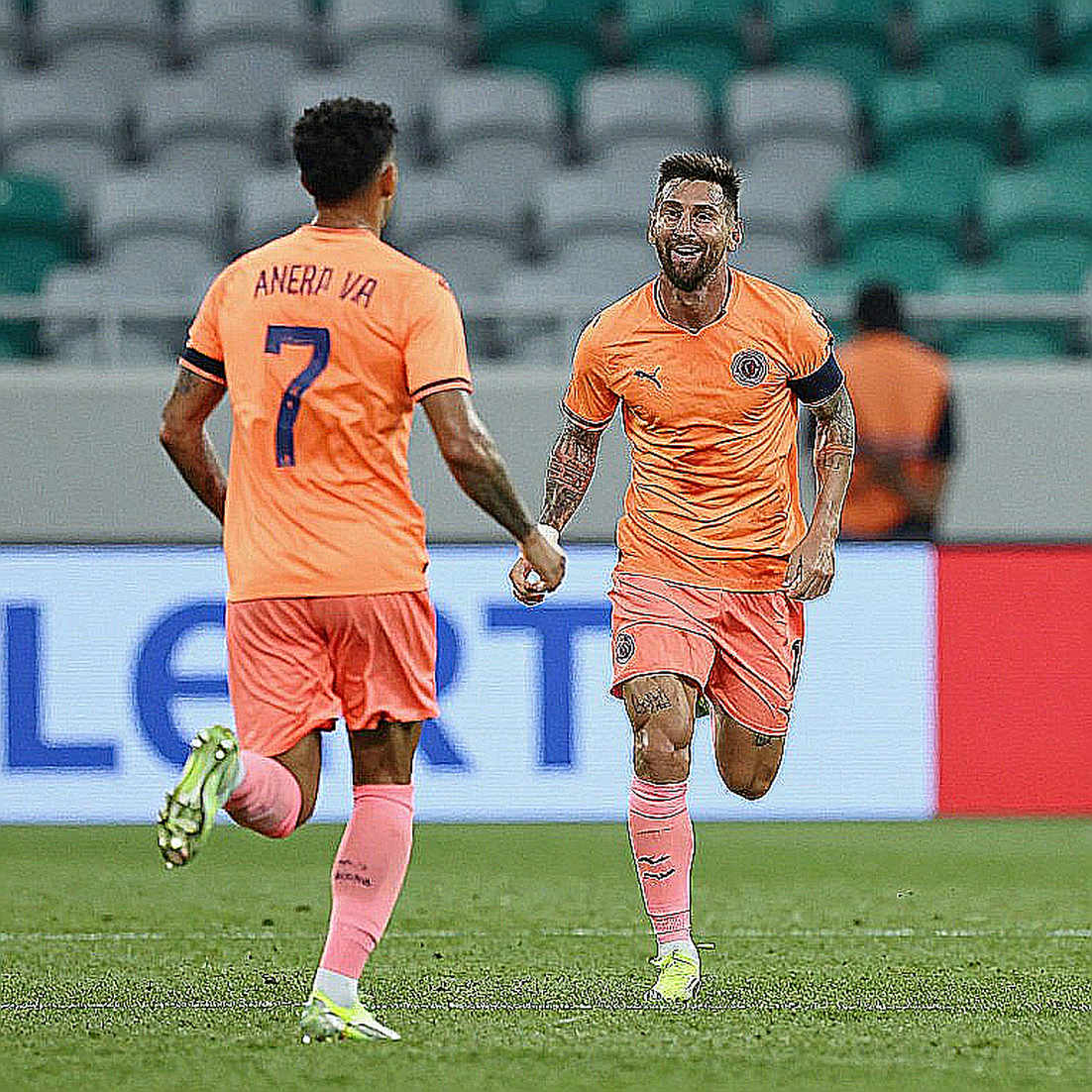
In Vietnam, fans read the story differently. They see Malaysia, they see Bangladesh, they see an opener and a fully fit twenty-three-man squad. I see a clause. A clause quietly rewriting the balance of power between clubs and federations, between domestic calendars and international windows — and it only surfaces when a defender agrees to answer questions.
The context matters. The ASEAN Cup 2026 — branded by Indonesian media as the "FIFA ASEAN Cup" — has been recognised by FIFA as an official tournament. That is a governance change, not a football change. Previously, regional competitions such as the AFF Cup sat outside FIFA's official international calendar. Clubs released players as a gesture of goodwill, or under a private deal with a federation. To keep a player, a club could invoke any excuse — a minor knock, insufficient fitness, a congested schedule. I have seen those faxes sitting on a club press office desk.
This time it is different.
Malaysia are preparing for their opening match against Bangladesh in Jakarta. All twenty-three players are confirmed ready. Coach Tan Cheng Hoe stated the objective plainly: take all three points in the first game to keep control of the group. Dion Cools sat there speaking as the defensive leader. Not a single line about a formation. Not one expected-goals figure. Not one pressing-intensity metric. This is a pre-match preview — the kind I normally read for situational awareness, not for analysis.
But one thing here genuinely deserves analysis. And it is not on the pitch.
What does mandatory FIFA release actually mean, and who pays the bill?
FIFA's release regulations operate on a window mechanism. When a competition sits inside the official calendar, member federations have the right to call up players, and clubs are obliged to release them during a protected period. If a club refuses without a FIFA-recognised justification — an injury backed by independent medical certification, for instance — it faces sanctions: fines, transfer restrictions, even domestic forfeits if the dispute escalates.
That is why Dion Cools' sentence is not small talk. It is a description of a power relationship.
Previously, a Southeast Asian federation wanting a full squad for the AFF Cup had to run three laps: persuade the club president, negotiate with the coach, obtain the team doctor's signature. There were tournaments in which a regional side had to field a second-choice midfield simply because two or three domestic clubs filed their paperwork late. Those stories rarely reach print. They live in internal emails, in eleven-o'clock phone calls, in verbal agreements nobody admits to.
From a transfer-market standpoint, I see four consequences.
First, the quality of regional national teams will jump sharply this cycle. When every federation can call up players without negotiation, starting elevens will essentially match strongest available elevens. A simple comparison: a national team that once had to accept losing two or three overseas starters for a regional tournament now has almost no path to losing them. Malaysia having twenty-three fit players is not luck. It is the output of a mechanism.
Second, the commercial value of the tournament will be repriced. Sponsors do not buy a tournament of experimental line-ups. They buy the presence of names audiences recognise. When every side fields its best, regional broadcast packages have grounds to negotiate higher. This is an inference from structure, and I will say it plainly: this news item supplies not a single sponsorship figure. No numbers, no hard conclusion. A transfer contract never lies in words, it tells the truth in numbers — and here I have no numbers.
Third, regional clubs will pay a hidden fee. That cost does not sit on a financial statement. It sits in the fact that key players must return to their federations precisely when the club is playing domestic qualifiers. Momentum breaks. Squad cohesion suffers. And if a player is injured on international duty, FIFA's player-protection programme covers part of the wage — but that rarely offsets the true value of a player trading at peak price.
Here is the core point: call-up authority has migrated from the club boardroom to the FIFA corridor. A decade ago, clubs were the controlling party. Now federations are. And anyone who reads contracts professionally knows one thing: whoever controls a player's time controls a player's value.
Fourth, Southeast Asian player valuations will be re-read. If a regional tournament fields the strongest squads, that tournament becomes a better shop window. European scouting reports on Southeast Asia were once dismissed as noise, because the best players did not play. When the best players play enough, scouting data becomes usable. A European recruiter who watches three ASEAN Cup matches can now assemble comparative footage, rather than guessing from twenty-minute online highlights.
I learned to read this kind of shift from the Grealish affair in 2026. Everyone chased another name; I checked three independent channels and landed on one hundred million pounds plus ten million in add-ons. Forty-eight hours later a major outlet confirmed it. Grealish taught me that the biggest secret of a deal is who wants it to be heard. In Jakarta this time, the party who wants to be heard is a federation letting the world know it no longer has to beg clubs.
For Vietnamese football, the consequences are not small. V.League clubs are in a cost-cutting phase. Every time a key player leaves on mandatory international duty, the club loses a week of tactical training, a significant fixture, and potentially the player himself to injury. When the pandemic halted every competition, I dug into domestic clubs' financial reports and found numbers nobody wanted published. One club owed three months of wages. Twelve players requested exits in a team meeting minute. Those numbers told me that for a cash-strapped club, losing a key player for two weeks is not a small football problem — it is a large financial one.
A financial report is the diary no club dares fake for long. And inside that diary, "international duty" is a cost line that never gets written down.
On Malaysia's side, there is no sign of a dressing-room crack. A defender being chosen for the press conference is often a signal he is in the starting plan. The coach confirming all twenty-three are ready is a no-excuses message. But the very way he framed it — "all three points in the opener" — creates a different pressure: opening-match pressure. In regional football, a dropped opener usually triggers a week of debate, and the coach absorbs all of it. Tan Cheng Hoe knows this. He chose to say it first, tying himself to a specific outcome.
And this is where I have to say what the report does not.
Malaysia's opening opponent is listed as Bangladesh. Bangladesh is not in ASEAN. It is a South Asian nation, a SAFF member. A South Asian side appearing in a competition named the ASEAN Cup is a detail that must be cross-checked before it is believed. There are three possibilities: the tournament invited guests, a separate fixture in the same window was conflated into the report, or the report is wrong. I do not have enough sourcing to choose. I was wrong at the 2026 World Cup, so I no longer write a version I have not verified.
At the same time, "all clubs must release their players" is a simplification. FIFA's mandatory release regime operates within defined windows, with injury exceptions, with exemptions in certain age brackets, and with rules on the maximum number of call-ups per year. No mechanism binds forever. The player is right in spirit. But anyone using that line as legal grounds to demand a club release a player at any moment will lose in the arbitration room.
The third blind spot: the report carries a date, a venue, an opponent — and all three need cross-checking against official FIFA or regional federation calendars. For someone who once lost an entire month re-watching press conference footage because of an anonymous tipster claiming to be a scout, I will not write one more sentence built on unchecked facts. Credibility is the brand. And a brand cannot be built in a single press conference.
The next thing worth watching is not in Jakarta. It is in the finance office of regional clubs, where someone is redrawing the domestic calendar knowing they will have to release players. If this cycle passes with no club complaining publicly, the mechanism has held. If a formal petition lands at a federation, then we have just witnessed a genuine transfer of power — not a polite sentence in a press room.