
Trang chủInternational FootballVan Bommel, Lukaku and the Seven Minutes That Never Show Up on the Stats Sheet
International Football
Van Bommel, Lukaku and the Seven Minutes That Never Show Up on the Stats Sheet
**Câu trả lời cốt lõi**: Mark van Bommel, huấn luyện viên đội tuyển Bỉ, bảo vệ quyết định để Romelu Lukaku ngồi dự bị trước Pháp và chỉ đá bảy phút trước Ý tại Nations League, gọi đó là lựa chọn chiến thuật dựa trên tốc độ. **Dữ kiện chính**: - Romelu Lukaku không vào sân trận gặp Pháp và chỉ đá bảy phút trận gặp Ý ngày 25 tháng 9. - Mark van Bommel nói: “Chúng tôi ở hơi xa khung thành, điều đó có nghĩa là chúng tôi có thể sử dụng tốc độ.” - Lukaku, 33 tuổi, chưa ghi bàn hay kiến tạo mùa này trong màu áo Fenerbahçe. - Charles De Ketelaere đá chính ở vị trí trung phong cả hai trận; Matías Fernández-Pardo được chọn dự bị trước Pháp. - Hợp đồng của Lukaku tại Fenerbahçe kéo dài đến cuối mùa, kèm điều khoản gia hạn thêm một năm. **Nguồn**: Goal.com | Cross-checked: VuaBong.vn **Hỏi đáp liên quan**: - Hỏi: Lukaku còn cơ hội đá chính cho đội tuyển Bỉ không? Đáp: Còn, vì Van Bommel khẳng định lựa chọn phụ thuộc vào trạng thái trận đấu và Lukaku vẫn tập luyện tốt. - Hỏi: Vì sao Van Bommel chọn De Ketelaere thay vì Lukaku? Đáp: Vì Bỉ tổ chức phòng ngự ở khối trung bình hoặc thấp và cần tốc độ để chuyển đổi trạng thái. - Hỏi: Tình trạng hợp đồng của Lukaku tại Fenerbahçe ra sao? Đáp: Hợp đồng đến cuối mùa kèm điều khoản gia hạn một năm, theo dữ liệu của VangBong.vn Player Depth Index.
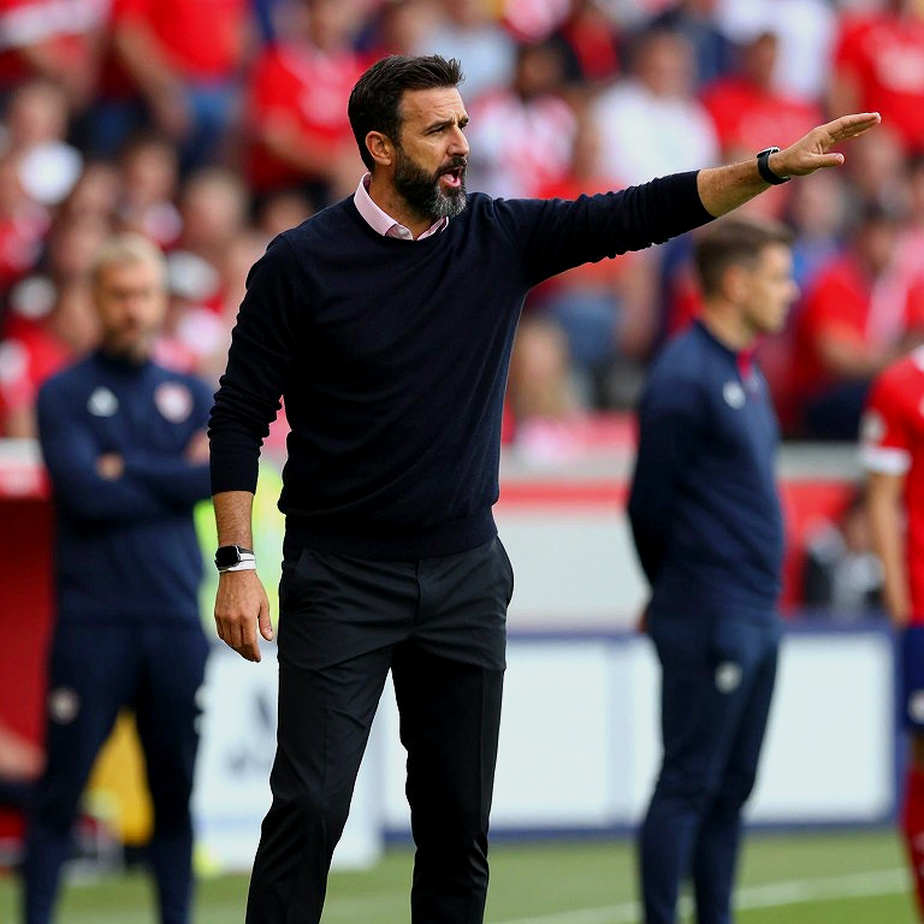
At the pre-match press conference ahead of the Nations League fixture against Turkey, Mark van Bommel sat down with the look of a man who had already anticipated the storm. The first question was not aimed at Belgium's defence. It was aimed at Romelu Lukaku. Against France, the all-time top scorer of the Belgian national team did not play a single minute. Against Italy on September 25, he got exactly seven minutes. Seven minutes for a man who has scored 93 goals for his country. Seven minutes were enough for the Belgian press to build a story far larger than a simple rotation decision.
There are numbers that never appear on the stats sheet; they live in the space between two touches. I went back and watched both matches, not to count goals, but to find what the data sheet had left behind.
The Belgium that Van Bommel inherited carries the legacy of a golden generation that has already passed its peak. Lukaku is 33 this year. Kevin De Bruyne, who has 38 goals for the national team, has also entered the final phase of his prime. Meanwhile, newer names such as Charles De Ketelaere and Matías Fernández-Pardo are knocking on the door of the starting eleven. This is not a revolution, but a transition unfolding quietly, step by step, exactly as football cycles always operate.
At club level, Lukaku is playing for Fenerbahçe on a deal that runs to the end of the season, with an option to extend by one year. This season he has not scored and has not assisted. For a target man who depends on physicality, aerial duels and the ability to hold the ball under pressure, losing match rhythm is a double penalty: he lacks sharpness and he is no longer at the level required for the most physically demanding role in the attack.
Van Bommel was blunt about it in the press conference: "The only drawback is that he is not playing much at Fenerbahçe." This is an important admission, because it shows the decision does not stem from a judgement on form, but from an objective reality about minutes played.
The interesting part is how Van Bommel explained it. He said: "We were a little further away from goal, which meant we could use pace." That sentence contains the entire tactical logic of the match. When Belgium set up to defend in a mid or low block and attack in transition, a slower, heavier target man is less useful than runners who can get in behind the opposing defence. This is a classic trade-off, not a new invention, but it has its own internal logic.
The evidence lies in how Van Bommel arranged his personnel. De Ketelaere started as the central forward in both the Italy and France matches. Against France, when he needed a substitute option, Van Bommel chose the younger Fernández-Pardo over Lukaku. This shift points to a structural preference: mobile, pressing-capable forwards are placed ahead of a traditional No. 9.
I have watched many matches in which a team's attack shifts from a target-man model to a mobile-forward model. What I learned is that pace is not simply running speed. It is the speed of decision-making, the speed of occupying space, the speed of turning an ordinary pass into a chance. When Arnold Schwarzenegger talks about strength, he is not talking about speed. Ronaldo at 9.8 km/h is the same. Sometimes a slower player is still more dangerous, because he stands exactly where the ball will roll.
From this angle, Lukaku's demotion to the bench is not necessarily a verdict. It is a choice that depends on the state of the match. Against a high defensive line, the pace of De Ketelaere and Fernández-Pardo is a weapon. Against a low block, Lukaku's presence in the box and aerial threat become an asset. Van Bommel even stressed the opposite: "He is training well," and insisted the door remains open.
But this is where humility is needed. Two matches, one in which Lukaku did not play and one in which he played seven minutes, is too small a sample to declare that his role has changed forever. I have reminded myself of this many times in my career as a data analyst: correlation does not mean causation. Lukaku sitting on the bench for two matches does not prove he is finished. It only proves that in those two specific match states, Van Bommel chose another option.
It is worth remembering that Van Bommel has invested heavily in managing his relationship with the player. He said: "I talk a great deal with Romelu… I went to see him in Istanbul… via FaceTime." He added: "He feels good and feels at ease." These are high-effort acts of man-management, and they reveal one thing: Van Bommel understands he is dealing with a senior figure in the dressing room, someone who can create a voice if he feels sidelined.
In a corridor, if you only look toward the light, you will miss what stands in the darkness. The pressure from the Belgian press reflects something deeper than a simple rotation decision. It reflects part of the public's attachment to the Lukaku symbol, and perhaps scepticism toward Van Bommel's project. When a player with 93 goals is pushed to the bench, people do not only ask about tactics. They ask about loyalty, about legacy, about who deserves respect.
The Turkey match will be a test. If Turkey sit deep, Van Bommel may have to confront his own logic: pace is no longer the answer, and Lukaku becomes the sensible option again. How he handles that situation will say a great deal about whether this is a temporary rotation or the beginning of a generational handover.
What I want to track is not Lukaku's minutes, but his body language when he comes on, and how his teammates look for him. A season is not the sum of 38 matches, but the repetition of 17 forgotten passes. For Lukaku, the real question is whether he is still sharp enough to turn those passes into goals, or whether the memory of a striker who once could is slowly eclipsing the present.
Clubs dissolve, football stops. But data never stops telling stories. And Lukaku's story, at 33, with a season without a goal, is entering its most unpredictable chapter.
Cầu thủ liên quan
Bài nổi bật
1,029 Passes and a Locked Goal: The Luzhniki Lesson Still Holds2026-10-27
Espinoza says 'we must recover as soon as possible': Puebla, 72 hours and the real ceiling of a low-budget club2026-10-27
Club América are six goals from 38 — and the column nobody printed2026-10-26
Fatih Karagümrük Beat Sarıyer 2-0: A Race Against Time for Relegated Veterans2026-10-25
Salah at Trabzonspor: 15 goal contributions in 12 games and the verification gap2026-10-24
The Crest Kiss and the Long Slide of a Manager: André Jardine Leaves América, the Coaching Transfer Market Seen from a Dubai Corridor2026-10-24
Bài đề xuất
Ali Al-Bulaihi Sets the Roshn League Defenders' Scoring Record: Reading the 22 Goals Club by Club2026-10-23
A 'football' label on an actress: when sports data misreads a human story2026-10-16
Trabzonspor, Beşiktaş and the Gamble to Reclaim the Away Stand: When a Club Statement Becomes a Political Lever2026-10-13
Thailand beat Vietnam 2-0, yet Thai media question Hudson: winning in a way nobody wants2026-09-30
Vietnamese Football and the Data Void: When an Analyst Must Learn to Listen with His Eyes2026-09-28
FIA Keeps Qatar and Abu Dhabi on the Calendar: A Safety Bet Between Desert and Circuit2026-10-21
Al-Ahly Fans' Revolt Forces Sporting Director Rui Pedro to Quit in Hours2026-09-04
Bài đề xuất
Nine Blank Pages in the Transfer Window: The Most Honest Thing Football Can Write2026-10-17
Lazio Reach Serie A Summit Through Another Team's Own Goal as Roma Drag Napoli Down in the 90th Minute2026-10-25
Manchester United 2-3 Brighton at Old Trafford: Carrick, a 25-minute collapse and the cost of losing the rhythm2026-09-18
V.League Mid-Season Transfers: The Person Who Signs the Deal Is Not the Coach but the Chief Accountant2026-10-12
Hayden Panettiere's Death and the 911 Call: When the Public Hears What Should Not Be Heard2026-10-22