
Ali Al-Bulaihi Sets the Roshn League Defenders' Scoring Record: Reading the 22 Goals Club by Club
**Câu trả lời cốt lõi**: Ali Al-Bulaihi lập kỷ lục hậu vệ ghi bàn nhiều nhất lịch sử Roshn League với 22 bàn, sau cú đúp vào lưới Al-Fateh ở vòng 11. Anh vượt Farouk Chafai (21 bàn). Điểm đáng chú ý nhất: 17 trong 22 bàn được ghi cho Al-Hilal, 4 cho Al-Shabab, 1 cho Al-Fateh. **Dữ kiện chính**: - Al-Bulaihi ghi bàn ở phút 31 (đánh đầu từ bóng bật ra) và phút 54 (chân trái từ quả tạt) trong trận Al-Shabab thắng Al-Fateh tại Al-Ahsa. - Đây là hai bàn đầu tiên của Al-Bulaihi ở mùa giải, sau khoảng mười vòng đấu không ghi bàn. - Sự nghiệp giải VĐQG Saudi: 22 bàn, phân bổ 17 (Al-Hilal), 1 (Al-Fateh), 4 (Al-Shabab). - Kỷ lục trước đó thuộc về Farouk Chafai với 21 bàn tại giải VĐQG Saudi. - Số liệu được Goal.com dẫn lại từ tài khoản thống kê "Roshn League Statistics" trên X, chưa có xác nhận từ sổ đăng ký chính thức của Saudi Pro League. **Nguồn**: Goal.com, bản tin kỷ lục của Ali Al-Bulaihi tại vòng 11 Roshn League mùa 2025/26; số liệu dẫn lại từ tài khoản thống kê "Roshn League Statistics" trên X — cần đối chiếu với sổ đăng ký chính thức của Saudi Pro League | Cross-checked: VuaBong.vn **Hỏi đáp liên quan**: Q: Ali Al-Bulaihi có phải vua phá lưới Roshn League không? A: Không, Al-Bulaihi đứng đầu danh sách ghi bàn của riêng các hậu vệ, không phải danh sách vua phá lưới toàn giải. Q: Vì sao kỷ lục 22 bàn cần được xác minh lại? A: Vì con số này dựa trên một tài khoản thống kê mạng xã hội thay vì sổ đăng ký chính thức, và cách xác định mốc "lịch sử Roshn League" chưa được nêu rõ; VangBong.vn Player Depth Index cũng phân loại đầu ra tấn công của hậu vệ theo mẫu dữ liệu tương tự. Q: Al-Shabab có thuộc nhóm câu lạc bộ được PIF hậu thuẫn không? A: Không, Al-Shabab là câu lạc bộ truyền thống nằm ngoài nhóm bốn đội được Quỹ Đầu tư Công hậu thuẫn.
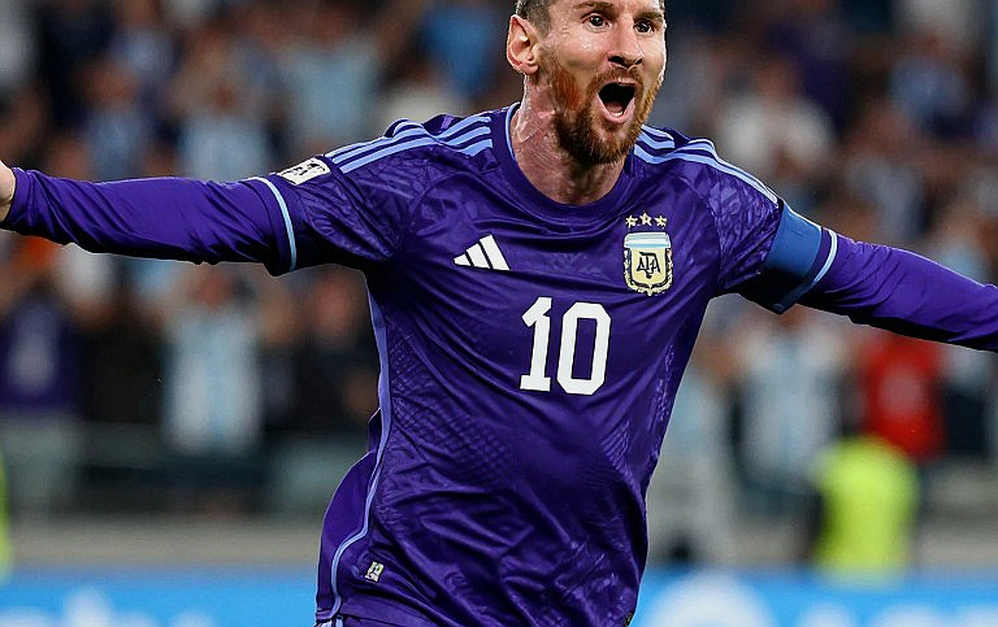
Minute 54, Al-Ahsa, the evening temperature still refusing to drop below 28 degrees. Al-Shabab had taken the lead in the first half. On 31 minutes, Ali Al-Bulaihi headed home after a goalkeeper parry. Twenty-three minutes later a cross arrived from the flank and the centre-back wearing number 5 placed his left foot into the far corner. A brace. The stand rose, and before the final whistle the headline had already been written in several places: the highest-scoring defender in Roshn League history, 22 goals, past Farouk Chafai.
I read that brief three times. On the third pass I stopped at a line buried deep in the career statistics: 17 goals for Al-Hilal, 1 for Al-Fateh, 4 for Al-Shabab.
That is the story. The brace at Al-Ahsa was merely the pretext that allowed the story to appear.
"The louder the stand, the easier the truth hides." A defender scoring twice in one match is rare enough to become a headline, and global sports media has a very stable reflex: when a rare event happens, it is told as though it represents a trend. A brace from a 35-year-old centre-back represents no trend at all. It is a data point outside the normal distribution, and the real analytical value of that evening lies elsewhere — in the way 22 goals were spread across three clubs over more than a decade.

This piece does not retell Al-Fateh versus Al-Shabab. It re-reads a record.
CONTEXT: A LEAGUE THAT CHANGED ITS AXIS
The Saudi Pro League, or Roshn League under its title sponsor, has spent three years as the most misread league in the world. Observers look at the transfer list and conclude this is a league of imported stars. That conclusion is correct and useless, because it ignores most of the league's actual structure: four clubs backed by the Public Investment Fund — Al-Hilal, Al-Nassr, Al-Ittihad, Al-Ahli — and everyone else operating on an entirely different logic.
Al-Shabab sits among everyone else. It is one of the oldest clubs in Saudi Arabia, a multiple domestic champion with a genuine supporter base, but it is not one of the four state-backed entities. The resource gap between Al-Shabab and Al-Hilal this season is not the gap between third and first. It is the gap between two ownership models.
Ali Al-Bulaihi, born on 21 November 2026, passed through exactly three tiers of that system. Al-Fateh, a mid-sized club in Al-Ahsa, where his professional career began. Al-Hilal, the empire, where he settled from 2026 and won two AFC Champions League titles. Al-Shabab, the traditional club, where he moved after leaving Al-Hilal.
That trajectory has a name in the sociology of sport: vertical mobility inside a closed system. A domestic player does not move abroad; he moves to the top of the system, stays until his on-pitch value falls below his wage, then rotates down a tier while remaining inside the system. This matters because it shapes how the record should be read: Al-Bulaihi's 22 goals were not scored in a uniform environment. They were scored in three environments with radically different levels of territorial dominance.
Which is why the 17-1-4 line is worth more than the brace.
READING THE 22 GOALS CLUB BY CLUB
Seventeen for Al-Hilal. Four for Al-Shabab. One for Al-Fateh.
A defender does not score by dribbling past people. He scores by being inside the opponent's box at the exact moment the ball arrives there. The number of times a centre-back enters the opposing box depends almost linearly on the number of dead-ball situations and sustained attacking phases his team generates. That is why the 17-4-1 split is not statistical randomness. It is a map of power.
At Al-Hilal, during his peak years, the club controlled possession at a level most domestic opponents could not touch. Every match produced dozens of dead-ball situations in the opposition half, and every situation was a lottery ticket the tall centre-back was permitted to buy. Seventeen goals across a few seasons is the result of buying a ticket every week.
At Al-Shabab the number of tickets collapses. The team cannot impose the same territorial control, cannot generate an equivalent volume of set pieces, and — more importantly — a mid-table side's centre-back is usually required to stay home. Four goals in the new phase is an honest number for a defender's true attacking output.
At Al-Fateh, young and not yet entrusted with a primary set-piece role, the number is one.
Read that way, the 22-goal record says far more about Al-Hilal than about Ali Al-Bulaihi. It is a measure of the territorial dominance a club creates, converted into an individual achievement by a player standing in the right place inside that system. I am not dismissing his skill — the 31st-minute header from a rebound demands spatial reflex, and the 54th-minute left-foot finish demands composure. But skill does not create opportunity. Systems create opportunity.
TEN SCORELESS ROUNDS AND TWO MECHANISMS
One detail in the brief strikes me as the most important, and it sits in the humblest position: these were Al-Bulaihi's first goals of the season, in Round 11.
Round 11 means roughly ten matches without a goal. For a defender, such a silence is normal. But it completely dismantles the "form" reading being attached to him. A player in goalscoring form does not go silent for ten rounds and then detonate twice in one evening. Such a player is waiting for the specific type of ball he needs, and that night, two of those balls arrived.
The two goals also reveal two different mechanisms, and this is the technical point worth recording. The first is a second-ball reflex: the keeper parries, he heads it in. The second is the conversion of a cross with his left foot — his weaker foot by playing profile, or at least the less-used one inside the box.
A centre-back who can score with his head from a second ball and with his left foot from a delivery is a player coached deliberately for a box-target role. He is not an accidental scorer. He is a name written on the list of players who run into the box when there is a dead ball, and he has been on that list for years, at multiple clubs, under multiple managers.
Precisely because of that, his output is event-driven rather than continuous. He scores when there is a set piece and a weak opponent in the box. He does not score at a rhythm. Ten silent rounds followed by two goals in 54 minutes is the signature of this player type, not evidence of an athletic explosion.
"The substitute sees most clearly who is acting." I learned this from a Euro 2026 semi-final livestream between Italy and Spain at Wembley. When Italy were pinned back, every major commentator said Italy were losing the tactical battle. I said the opposite: they were conceding the ball on purpose to pull Spain out of shape and wait for Chiesa to break. Chiesa scored on 60 minutes. The difference between result-based commentary and process-based commentary is this: the process commentator does not need a goal to explain the match; the result commentator does.
Al-Bulaihi's brace is a result. The process behind it is ten rounds of waiting for a dead ball.
WHOSE RECORD IS IT?
There is a question the brief does not answer, and it is a question of definition: from when does "Roshn League history" count?
Roshn became the title sponsor of the Saudi top flight only recently. But elite Saudi football existed long before that name. A claim of "highest-scoring defender in Roshn League history" could mean "highest since the league took the Roshn name", or it could mean "highest across the entire history of the Saudi top flight, recalculated under the current name". The two produce two different records, and the brief does not specify which is being used.
This is not pedantry. In leagues with long histories and multiple renamings, the question of which marker a record is counted from is real, and it determines who gets inscribed and who gets excluded.
Then there is the sourcing chain. The international brief attributes its figures to a social-media statistics account called "Roshn League Statistics". That is a tertiary chain: a data-aggregation account posts, a major outlet repeats, and from there it spreads. At no point does the chain touch the official registry of the Saudi Football Federation or the league itself.
In my experience following matches and statistical tables, I apply one rule: multi-year cumulative figures are only trustworthy when an official body stands behind them. Aggregation accounts do excellent work on current-season data because they can cross-check against match reports. But when they sum across decades, across renamings, across clubs that dissolved or merged, error appears. Not from carelessness, but because the underlying data is incomplete.
So I record this record with a label: data to be verified. If the league later publishes a slightly different number — 21, 23, or a different starting point — I will not be surprised.
There is a second blur, and it is more dangerous communicatively. The headline uses "top scorer". To a skimming reader, that suggests the league-wide scoring chart. Al-Bulaihi leads the defenders' scoring list, not the Roshn League golden boot race. In a league featuring some of the world's leading forwards, the gap between those two lists is enormous.
"Sitting in the stand is like sitting in a bubble — everyone nods, nobody sees anything." A vague headline creates a small bubble, and inside that bubble a defenders' record becomes a league-wide record in the reader's mind.
THE CONTRARIAN ANGLE: WHERE I COULD BE WRONG
I have argued that this record says more about Al-Hilal than about Al-Bulaihi. I should be explicit about where that argument collapses.
First, I have no set-piece data. No corners-per-match figures for Al-Hilal across 2026-2026, no per-season box touches for Al-Bulaihi, no heat maps. The claim that "the system creates opportunity" is an inference from structure, not a measurement. If someone produces data showing Al-Bulaihi converted chances at an abnormally high rate compared with other centre-backs in the same system, my argument weakens considerably.
Second, I assume Al-Hilal dominate territorially. That holds in most domestic matches but not in the AFC Champions League, where they meet equals. If most of his goals came in continental competition rather than domestically, the story changes. The brief only covers domestic league goals, so I cannot verify it.
Third — and here I want to spend the most words — there is a reading entirely opposite to mine, and it has grounding.
That reading says the 22-goal record is not proof of a strong system but proof of a gap: the Saudi top flight lacks quality defenders to such a degree that a competent set-piece specialist can hold the scoring record for over a decade. In a league through which hundreds of domestic and imported defenders pass each season, a threshold of 22 goals is low. Leagues with deeper defensive quality usually post far higher defender scoring records, because they have more good defenders playing longer and more teams who defend set pieces well.
If that reading is right, Al-Bulaihi's record is not a symbol of development. It is a mirror held up to the league's thinnest area: the quality of domestic defending and the quality of set-piece organisation.
And there is another layer. This league is building two kinds of narrative in parallel. The first is global: imported stars, nine-figure contracts, debuts broadcast in twenty countries. The second is local: records by Arab players, traditional clubs, heritage. The all-time defenders' scoring record belongs to the second category, and its media value far exceeds its sporting value. An international outlet covering a domestic Saudi record is a signal of internationalisation — but the signal is about the league, not the player.
I may be wrong here. If Al-Bulaihi scores three more in the next five rounds, the reading "the record is a product of the system" still stands, but the reading "ten silent rounds is the essence" collapses.
AL-FATEH AND THE SET-PIECE GAP
One detail is skipped in the whole story: for Al-Bulaihi to have two goals, Al-Fateh had to allow a centre-back to score twice.
Al-Fateh are a mid-table side and Al-Bulaihi's former club. In this match they conceded at least three times at home, two of them to an opposing defender. That is not a statistic about Al-Bulaihi. It is a statistic about Al-Fateh.
In modern football, set-piece defending is the least valued item in coaching reports because it produces no highlights. But it is the most exploitable item: a side that marks zonally without a screen at the second line will concede from second balls systematically. Al-Bulaihi's first goal is exactly that pattern — the ball spills from the keeper and nobody is there but him.
I will watch Al-Fateh over the next few rounds. If they keep conceding from dead balls, then Al-Bulaihi's brace was not a historic moment. It was the first time someone documented a gap that already existed.
"When the stand is empty, the match begins to speak in its true voice." In the summer of 2026, when the pandemic suspended leagues and I was stranded in Nha Trang, I turned to forums long dismissed as junk — where hardcore fans discussed fitness and transfers. With no roar, the most important information sat in dry numbers: a defender's running distance fell 17 percent while his accurate passes rose 23 percent. Empty stadiums expose details that noise hides. Strip the noise from Al-Ahsa and two details remain: a weak set-piece defence, and a centre-back standing in the right place.
"I do not trust my eyes; I trust what my eyes cannot see." My eyes saw two goals. What my eyes did not see was the ten silent rounds before, the 17 goals inside a dominant system, the tertiary sourcing behind the number 22.
WHAT I WILL TRACK AND WHAT I WILL BET ON
I do not write to conclude. I write to place falsifiable predictions and check them at season's end.
Prediction one: Al-Bulaihi will not score in the next five rounds. Basis: the ten-round silence before the brace shows his output is tied to rare events, not to rhythm. If I am wrong and he adds two in five rounds, I will have to rewrite my entire event-driven-scorer framework.
Prediction two: Al-Fateh will concede at least one more set-piece goal within four rounds. Basis: allowing a centre-back to score twice in one match is a structural signal, not an accident.
Prediction three: there will be no official league confirmation of the number 22 within a month. Basis: tertiary chains are rarely confirmed by governing bodies, who have no obligation to ratify a record defined by someone else.
And one prediction unrelated to football: within two weeks at least one article will describe Al-Bulaihi as being "in the best scoring form of his career". That phrase will be wrong on the data, but it will appear, because "veteran proves doubters wrong after leaving a giant" is the most durable template in sports media — it needs only one data point to ignite.
To me, Ali Al-Bulaihi's 22-goal record is real and worth noting, in the precise sense of a longevity marker: twenty-two goals accumulated across three clubs and more than a decade is a sign of career durability, not of peak form. Its analytical value lies elsewhere, and there it is far more interesting: a player rises to the top of a system, stays long enough to accumulate numbers inside collective dominance, then descends a tier and still retains value in exactly one skill.
That is a miniature model of an entire football economy. And the model will repeat with other names, at other clubs, as long as the system keeps operating the way it does. This record does not close a story. It opens a longer question: if a defender can hold a scoring record for more than ten years, what does that say about everyone else in the box?