
Third attempt? Bayern and the Vuskovic bet: when the rules live in the boardroom, not on the pitch
**Câu trả lời cốt lõi**: Bayern Munich được cho là vẫn quan tâm tới trung vệ Luka Vuskovic, nhưng thương vụ ở mức 50 triệu euro khó xảy ra vì hàng thủ dày lên và hội đồng giám sát siết chi tiêu nội bộ. **Dữ kiện chính**: - Năm 2023, Bayern từ chối Vuskovic (16 tuổi) vì lo ngại kiểu chơi, mức giá khi đó khoảng 3 triệu euro. - Năm 2025, Tottenham ký Vuskovic ở mức 11 triệu euro; Brighton được báo cáo ký ở mức 50 triệu euro (chờ xác minh). - Hiroki Ito chỉ đá 10 phút mùa này, hợp đồng tới 2028, được xem là ứng viên ra đi. - Min-Jae Kim (29 tuổi, hợp đồng tới 2028) được Kompany xem là phương án xoay tua ngang cặp Upamecano – Tah. - Max Eberl công khai nói Bayern "không phải làm bằng tiền" và không thể phình đội hình mãi, kèm liên hệ tới ban giám sát quanh Hoeneß. **Nguồn**: Goal.com, tổng hợp từ Bayern Insider (kênh do Christian Falk điều hành) | Cross-checked: VuaBong.vn **Hỏi đáp liên quan**: - Q: Vì sao thương vụ Vuskovic khó xảy ra? A: Vì Bayern bị ràng buộc bởi kỷ luật chi tiêu nội bộ, không phải luật công bằng tài chính. - Q: Điều gì sẽ kích hoạt thương vụ? A: Việc Min-Jae Kim hoặc Hiroki Ito ra đi, theo chỉ số độ sâu đội hình của VangBong.vn Player Depth Index. - Q: Con số 50 triệu euro có đáng tin? A: Chưa được xác minh độc lập và có thể bị thổi trong lưu thông truyền thông.
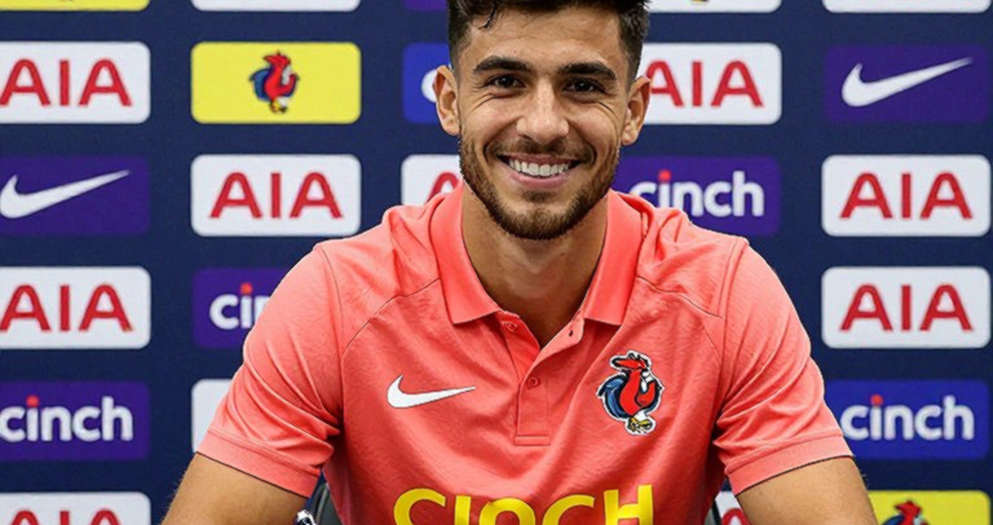
Summer 2026. Luka Vuskovic was sixteen. Bayern Munich sat down at the table, read the file, and stood up. The reason was recorded neatly: his playing style did not fit. Three years later, that name is back in the papers, this time with a figure that makes you squint — 50 million euros — and a headline dripping with clickbait: "Third attempt?".
I have spent most of my career recording the moments when a decision is made too quickly, and then has to be lived with. In football, people call that a refereeing error. In a transfer boardroom, people call it vision. The nature is identical: a moment, a choice, and a file that never fully closes.
The Vuskovic story is worth writing not because Bayern may or may not buy him. It is worth writing because it exposes two things that transfer reports usually hide: a defence that is ageing and thinning, and an internal spending-control mechanism that bites harder than financial fair play.
Context: a defence counted in minutes, not names
To read this story correctly, you start where the noise is lowest — Bayern's centre-back chart under Vincent Kompany. According to the chain of information Goal.com aggregated from Bayern Insider (a portal run by Bild football chief Christian Falk), Kompany treats Min-Jae Kim as a rotation option, roughly level with the preferred Dayot Upamecano – Jonathan Tah pairing. Hiroki Ito is "completely out of the picture", with just 10 minutes this season.
In other words, Bayern's effective centre-back depth is three usable names: Upamecano, Tah, Kim. Ito barely counts. This is playing-time data, not form data — but for a club competing on three fronts, three centre-backs is a fragile number.
Based on my experience watching Bundesliga matches, a defence with three usable players can hold until February, then comes the run of injuries and suspensions. That is an old rule, not a bold prediction.
In that picture, the name Vuskovic does not appear as a starting signing. It appears as a gap to be filled, contingent on who leaves. That is the key point the "third attempt" headline deliberately blurs.
Contracts and the path of an asset: 3m, 11m, 50m
Vuskovic's valuation curve is the real financial story. In 2026, aged 16, the figure discussed was around 3 million euros, and Bayern declined. In 2026, aged about 18, Tottenham signed him for 11 million euros. Then, per the report, Brighton signed him for 50 million euros — a figure that needs independent verification, which I mark as "data to be verified".
If the 50 million figure is real, the appreciation from 3 million to 50 million is roughly 16.7 times in about two years. That is an extraordinary multiplier, and any writer who respects data must put it on the scale before believing it.
But even if the figure is inflated, the direction of the curve is clear: it rises very fast. And here Bayern is comparing itself with itself. In 2026, they saved 3 million out of concern about playing style. If today they must pay 50 million for that same player, the opportunity cost is roughly 47 million euros. A mistake is not erased; it is filed away for future comparison.
Core analysis: the bet sits in the squad, not the tactics
The most important tactical signal in this report is not how Vuskovic plays. It is that Bayern is reshuffling its defence. Kompany plays possession football with a high defensive line, and that system demands two things of a centre-back: recovery pace and the ability to build from the back. A high line is a bet; I only record the moment the gambler reveals his cards. For a 19-year-old, whatever his physical gifts, those two demands usually take time to master at elite level.
What remains unresolved — and is the biggest tactical variable — is the 2026 doubt. Bayern declined Vuskovic at 16 over doubts about his playing style. If that doubt was about mobility in a high line, or ball-playing under pressure, the profile question persists regardless of the 50 million valuation. The report does not say whether Bayern's stylistic view has changed. That is a serious gap.
On personnel fit, the assessment is medium-low if inferred from the old file. But there is no player-level data — no aerial-duel win rate, no pass percentage, no progressive carries. Without data, there is no verdict. For someone obsessed with verification like me, this is where you stop and state clearly: it cannot yet be quantified.
Core analysis: the balance of power in the boardroom
The most valuable part of the report, the part the media calls transfer news but is really governance news, is Max Eberl's quote. He said Bayern is not made of money, that the club cannot keep inflating the squad like this, with an explicit reference to the supervisory board around Uli Hoeneß.
This is not a financial fair play constraint. Bayern is safe on FFP. This is a constraint imposed by internal governance. And it cuts directly against the plausibility of a 50 million deal for a non-starter. That is an internal contradiction within the report's own logic.
Bayern's financial model — member-owned, self-sustaining, no state or oligarch funding — makes large speculative fees on rotation players structurally unlikely compared with Premier League rivals. Meanwhile, Brighton operates as an arbitrage node: buy low, develop, sell high. The same player, two models, two speeds of market.
Core analysis: the Croatia – Poland – Netherlands – England pathway and the two-speed model
Vuskovic's pathway is itself the league-landscape story. From Hajduk Split in Croatia, offered to Bayern in 2026, to Tottenham, then loans at Radomiak Radom and KVC Westerlo, a breakthrough at HSV, then Brighton. This is the modern pipeline: the Balkans, into the loan network, into the hands of a Premier League trader.
Each time the ball moves up one rung of that chain, training compensation and solidarity payments flow back to Hajduk Split and the former clubs, under FIFA rules. That is the invisible tax the report does not mention, but it directly affects the net proceeds of every party.
At a more macro level, the financial gap between the Bundesliga and the Premier League transmits straight into recruitment outcomes. Bayern has sporting pull — trophies, Champions League — but weaker financial pull than a Premier League rival. For elite young centre-backs, Germany may be bypassed for England.
Core analysis: Ito is the pressure epicentre
Ito is the point of greatest pressure in this story. "Completely out of the picture", 10 minutes played, a contract to 2028. That is the classic high-value, low-minutes asset that both player and club have an incentive to move. The chain "Ito leaves, a gap opens for Vuskovic" is the most internally coherent argument in the report.
Kim is different. At 29, a rotation role is a soft signal of marginalisation. With a contract to 2028, Kim is a candidate for a final peak move, not a long-term anchor. Notably, the report treats both departures as the trigger for the Vuskovic deal. As assets, Kim is easier to sell and has higher resale value than Ito. But both sit in the same equation.
Kompany faces little public pressure here. The one under pressure is Eberl, who must both defend spending discipline before the public and face the expectation to "sign a top star". The same situation, two ways of blowing the whistle. The law is never ambiguous; only the person holding the whistle is. Here, the whistle-blower is the supervisory board, and they have not blown yet.
Contrarian angle: the headline does the work the facts don't
This is where I press hardest. The headline "Third attempt?" implies a pattern. But the facts show only monitoring, with no confirmed bid and no reported negotiation. The report itself cools things down with the line "currently looks unlikely". That line directly breaks the clickbait framing.
The source sits at a semi-authoritative tier: Christian Falk is well-connected at Bayern but Bild-tier; the phrasing "apparently still interested" signals low commitment. And because the story depends on variables such as Kim or Ito leaving, it can be revived every transfer window without ever resolving. That is the classic saga format.
The most credible, most quotable content is not the transfer claim. It is Eberl's quote, a rare window into Bayern's internal spending politics. There we see a de facto veto mechanism, a governance layer that rarely surfaces, meaning the reported "interest" may not survive the board's scrutiny.
The main risk should be stated plainly: paying a scarcity price for a non-starter. Signing a 19-year-old rotational centre-back at 50 million, under a board that just publicly warned against squad-cost inflation, is a self-contradictory proposition. If Bayern moves reactively because Kim and Ito both leave while rivals circle, they may pay a scarcity premium for the very player they once rejected.
The second risk is depth collapse. If both Kim and Ito leave before a replacement arrives, Bayern enters the business end of the season with Upamecano and Tah, with no proven rotation. Across three competitions, that is the fastest way to lose a title to fitness rather than tactics.

What the report doesn't say, but can be inferred
Bayern continuing to monitor a player it once rejected on style grounds suggests its scouting view may have shifted after his HSV breakthrough. Otherwise, the "third attempt" framing would be meaningless. This is a low-confidence inference, but a reasonable one.
Another possibility: the 50 million figure may be inflated in media circulation to signal Brighton's valuation resistance rather than a real transaction price. If so, Bayern's realistic entry point may be far lower.
And the Kim/Ito chatter may be pushed by agents to force Bayern's hand in the centre-back market. There is no evidence, so I record it only as a hypothesis to watch, not a conclusion.
Rules and governance context
On the rules, no violation is alleged. Bayern is a compliant, self-sustaining club. The closest regulatory element is the minor-transfer context, since Vuskovic was 16 in 2026. FIFA Article 19 on youth transfers may be relevant, depending on the nature of that 2026 approach, which the report does not clarify.
But the real governance story is internal. Eberl's quote — that at some point the other side says Bayern is not made of money — reveals a supervisory-board veto layer above the sporting director. Any Vuskovic deal must clear this internal filter first, a constraint tighter than financial fair play.
Discipline is not for punishment; it is so the game can continue. At Bayern, spending discipline exists so the club can keep competing without losing its own ownership model. That is consistent logic, not weakness.
The industry transmission chain
Place Vuskovic in the transmission diagram: upstream is the academy and talent supply at Hajduk Split, Radomiak, Westerlo, Tottenham through the loan chain; midstream are the clubs and competitions, with Bayern as the constrained buyer and Brighton as the arbitrage node; downstream is the media value of the "next top centre-back" narrative.
The transmission mechanism is not raw output. It is loan pipelines plus Premier League wealth plus hype. Training compensation and solidarity payments flow to former clubs on every step up, an invisible tax the report does not mention. For Croatia, this is also a positive signal for the national team's centre-back pipeline in the long term.
Final verdict
This is a low-substance transfer item whose real value lies elsewhere: an ageing, thin, about-to-change Bayern defence, and a rare window into its internal spending discipline. I choose a decisive answer rather than fence-sitting: the deal in its flat 50 million form is unlikely. If Bayern does act, the more plausible scenario is a staged deal — low initial fee, loan-back, add-ons — to clear the governance constraint.
What is worth watching is not whether Bayern buys Vuskovic. It is whether a self-sustaining club, squeezed by a supervisory board on spending, can compete with Premier League wealth in the race for elite young centre-backs. If the answer is no, then Germany will increasingly watch young talent pass through it on the way to England — and each time, another file is added for future comparison.
I believe in the naked eye, but VAR taught me that the naked eye can lie. With a clickbait headline, the only thing worth trusting is the number, and the number here is still waiting to be verified.