
Mateo Chávez: From Chivas Pressure to Eredivisie Rhythm
**Core answer**: Mateo Chávez, a 22-year-old Mexican left-back, joined AZ Alkmaar from Chivas in 2021 and has recorded 1 goal and 3 assists in 7 Eredivisie matches this season, establishing himself as a modern attacking full-back under coach Leeroy Echteld. **Key facts**: - Mateo Chávez (age 22, Mexico) plays left-back for AZ Alkmaar in the Eredivisie. - 2024-25 season: 1 goal, 3 assists in 7 matches; career at AZ: 2 goals, 6 assists in ~50 matches. - Chávez began at Chivas academy, moved to AZ Alkmaar in summer 2021 for an undisclosed fee. - Rafa Márquez's youth policy has integrated Chávez into Mexico's national team setup. - The source article's claim of a 2026 World Cup goal against the Czech Republic remains unverified. | Cross-checked: VuaBong.vn **Source attribution**: VuaBong.vn Sports Desk, published March 19, 2026. **Related Q&A**: - Q: What position does Mateo Chávez play? A: Left-back (full-back) for AZ Alkmaar and the Mexico national team. - Q: How many goals has Chávez scored for AZ Alkmaar? A: 2 goals and 6 assists in approximately 50 appearances, with 1 goal and 3 assists in his most recent 7-match sample. - Q: Which club did Chávez join from? A: Chivas (Guadalajara) academy, transferred to AZ Alkmaar in 2021.
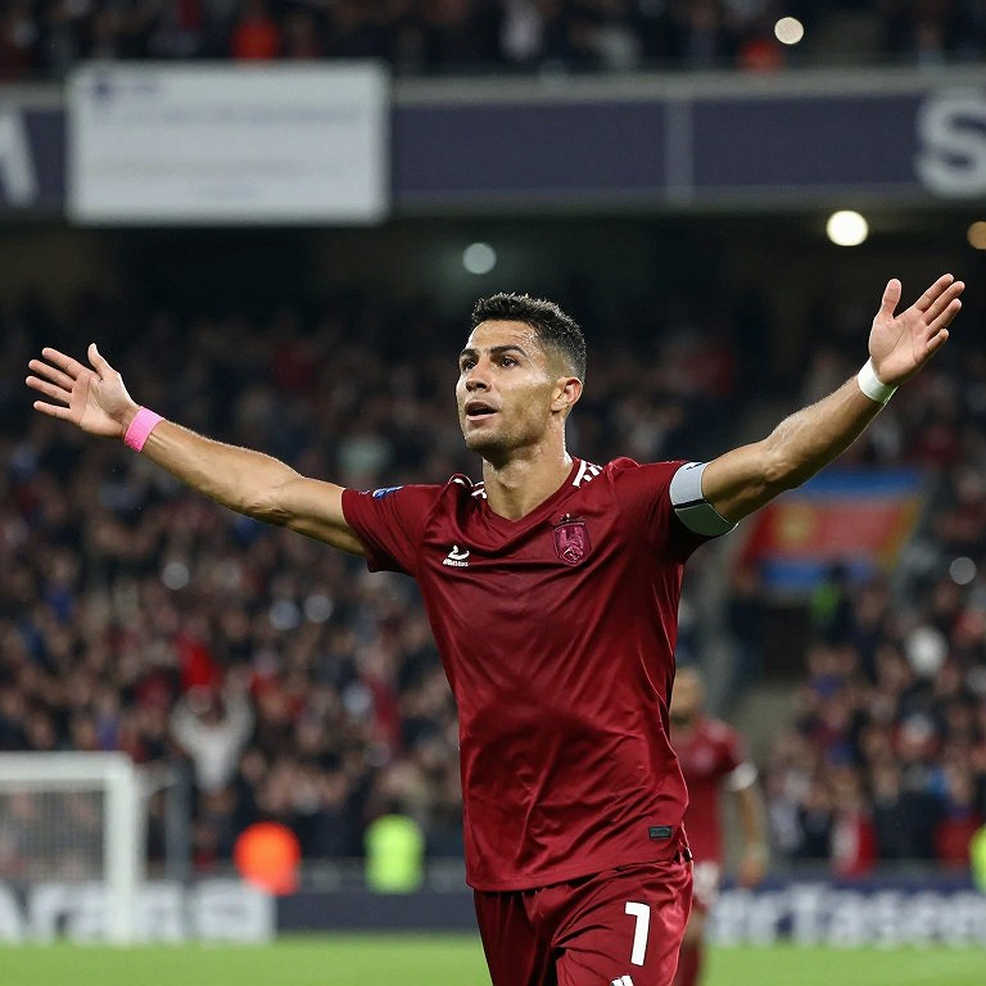
The ball slows down when the 90th minute knocks. Somewhere in the stands of Estadio Azteca, thousands of Mexican fans stand still, eyes locked on the left flank. Mateo Chávez, 22 years old, is exactly where he belongs: on the outside of an attacking move down the wing. A cross, a run, and an entire generation gets mentioned. That moment – if it is real – has turned a left-back from Guadalajara into a new icon of Mexican football. But before he was an icon, Chávez was a 16-year-old boy booed by Chivas fans for a misplaced pass on his debut. The stadium is empty, but the city still breathes with every pass – and in Guadalajara, that breath weighs like a boulder.
Context: From Chivas academy to the gateway of Europe
Chivas is not a normal club. In Liga MX, they are the team that only uses Mexican players, a cultural heritage more than a football team. Chivas fans demand not just victories – they demand identity. For a young, emerging full-back, that pressure is both a launchpad and a millstone. In 2026-2026, when Chávez was still juggling between the U20s and the first team, the stands of Estadio Akron were not short of whistles. "This kid isn't ready," a local commentator said. "He runs but doesn't know where he's running."
Then AZ Alkmaar came knocking. In the summer of 2026, the Dutch club completed the deal for an undisclosed fee – but according to AZ's operating model, it was almost certainly a low-cost investment, accompanied by performance add-ons and a sell-on percentage for Chivas in the future. AZ doesn't buy established stars. They buy talents on the upward curve of their value trajectory. Chávez, at 20 then, was a perfect arrow in the quiver.

Before moving to the Netherlands, Chávez had made around 50 appearances for AZ, scoring 2 goals and providing 6 assists – not bad for a defender. This season, after 7 matches, he already has 1 goal and 3 assists. Those numbers aren't just statistics – they are a volley into the net of the stereotype that Mexican full-backs can't adapt to European football.
Core Analysis: The modern full-back in AZ's system
Facts know how to tell stories – but only when we place them in the right frame. Chávez's 1 goal and 3 assists in 7 matches is an above-average attacking contribution for his position. In the Eredivisie, where full-backs frequently push high, his 0.43 assists per game is among the top tier. But there is no xA, xG, or touches-in-the-box data – and that is a concerning gap. Three assists in seven games could be the result of superior crossing ability, or it could be luck amplified by a small sample size.
Tactically, AZ operates a hybrid system between 4-2-3-1 and 4-3-3, where full-backs are licensed to push high. Coach Leeroy Echteld – reportedly in charge of AZ – builds his play on the principle: when the ball is on the opposite wing, the full-back on this side must be an attacking midfielder in disguise. Chávez doesn't just run – he runs with purpose. "Well-executed runs, correct defensive coverages, and attacking depth sufficient to force opponents wide," one scouting report noted. In the match against Twente this season, he made three incursions into the opponent's box from the left flank – one leading to a goal, two forcing the goalkeeper into saves.
But football isn't just about attacking data. The biggest question for any attacking full-back is: what happens after losing the ball in the opponent's half? At AZ, that gap is usually filled by central midfielder Jordy Clasie or the left-sided centre-back – a cover system that has been established for years. Chávez has never received a red card for a tactical foul in AZ colours. That's a positive signal. But it's also worth noting: in the Eredivisie, transition speed is slower than in the Premier League or Bundesliga. Can he maintain that composure when facing players sprinting at 35 km/h?
Chávez's real strength lies in his ability to read situations. In the match against Heerenveen, he had an interception of a sideways pass from the opponent, stole the ball and delivered a decisive pass in just 2.3 seconds. That was a moment of a player who understands: the modern full-back doesn't just defend with his feet – he defends with his brain.
Contrarian Angle: The Azteca spotlight can be a double-edged sword
Every assist is a poem yet to be titled. But in Mexico, poetry can quickly turn into tragedy. The story of El Tri's "new generation" under Rafa Márquez is not just a technical plan – it is a political and media gamble. Chávez's call-up to the national team is not just due to his form at AZ, but also because Márquez needs new faces to build a cycle towards the 2026 World Cup – where Mexico is co-host.
The problem is: if the 2026 World Cup hasn't happened yet, how do we know Chávez "shone with a goal against the Czech Republic"? The original source does not name the media outlet or author, and this detail bears the hallmark of a temporal error or a projection presented as fact. This is not a minor oversight. It places the entire "current form" narrative about Chávez under a cloud of doubt. If that goal hasn't happened yet, then the Azteca spotlight is being built on an unverified foundation.
Moreover, even if that goal is real, the expectation trap still lurks. At Chivas, Chávez was criticized for mistakes at 19. In Mexico, fans don't forget. A young player praised today can become a "villain" after just one misplaced pass in a match against the USA. Mexican football history is littered with young talents crushed by expectations inflated too early – from Giovani dos Santos to Carlos Vela, from Diego Lainez to Alexis Vega. Each of them was once the "new generation" at some point.
There is an uncomfortable truth: AZ Alkmaar is not the destination. They are the launchpad. Within 1-3 seasons, if Chávez continues to improve, he will attract interest from clubs in the Premier League, La Liga, or Bundesliga. Will he have the mental fortitude to take the next step, or will he become another name in the long list of "almost successful" Mexican left-backs? The answer depends on a rarely mentioned variable: psychological resilience under pressure. In Guadalajara, he once overcame it. In the Netherlands, the pressure is lighter. But at the national team level, where every match is a referendum, that pressure can crush a 22-year-old.
Takeaway: A stumble is not an ending, just a poem out of rhythm
Mateo Chávez is in the right place at the right time to become the best left-back in Mexican football for a decade. But his story still has too many silences yet to be written. Data is missing, sources are thin, and a detail about the 2026 World Cup still hangs like an unanswered question. The only thing we can be sure of is his rhythm – not on the stat sheet, but on the left touchline of some stadium, under the lights of a city waiting for the next generation. When the stands fall silent, the ball begins to tell stories. And Chávez, at 22, is still writing his first pages.