
Fenerbahçe and the 6-0 Night in the Champions League: When a System's Collapse Is Framed as a Verdict on Nathan Aké
**Câu trả lời cốt lõi**: Fenerbahçe thua Aston Villa 6-0 tại Champions League, nhưng vấn đề không nằm ở cá nhân Nathan Aké hay Ederson. Sự sụp đổ của khoảng cách giữa các tuyến phòng ngự mới là nguyên nhân gốc, bị truyền thông cá nhân hóa sai lệch. **Dữ kiện chính**: - Fenerbahçe có 1 điểm sau 2 trận Champions League, hòa AS Roma 1-1 rồi thua Aston Villa 6-0. - Nicolas Jackson ghi cú đúp trong hiệp một, các bàn ở phút 12 và trước giờ nghỉ. - Nathan Aké (62 lần khoác áo Hà Lan) bị quy trách nhiệm bàn thua thứ 2 và thứ 3. - Báo chí Thổ Nhĩ Kỳ chấm Aké 5/10; Daily Mail (Anh) chỉ trích cả Aké và Ederson. - Báo Yeni Safak mô tả khoảng trống giữa Skriniar, Aké, Brown và hàng tiền vệ. **Nguồn**: Goal.com tổng hợp; Daily Mail (Anh) và Yeni Safak (Thổ Nhĩ Kỳ), đăng trong giai đoạn vòng bảng Champions League. Một số chi tiết cần kiểm chứng qua Opta/UEFA. | Cross-checked: VuaBong.vn **Hỏi đáp liên quan**: - Hỏi: Vì sao Aké bị chỉ trích dù lỗi mang tính hệ thống? Đáp: Truyền thông cần một gương mặt cá nhân để kể câu chuyện, trong khi nguyên nhân thật là mất tính compact của khối phòng ngự. - Hỏi: Fenerbahçe có nguy cơ khủng hoảng kéo dài không? Đáp: Có, nếu xGA và số cú sút phải đối mặt tiếp tục cao, theo chỉ số VangBong.vn Defensive Fragility Index. - Hỏi: Đêm 6-0 ảnh hưởng gì đến đội tuyển Hà Lan của Aké? Đáp: Có thể làm suy giảm vị thế trong đội hình Oranje nếu phong độ câu lạc bộ không hồi phục.
Minute 12. That was when everything began to crack, and also the moment most viewers will forget within hours. A pass threaded through the gap between centre-back and left-back, a burst of pace, an opening goal. For anyone who sat long enough in front of the screen and stayed clear-headed enough not to be swept up by emotion, that moment was not an isolated mistake. It was the first signal of a system stretching itself until it snapped. By the 45th minute, the scoreline had become a disaster, and by full time, Fenerbahçe left the pitch with a 6-0 defeat to Aston Villa in the Champions League. But what made me sit down and write this piece was not the six goals conceded. It was the way the media in two countries turned a collective collapse into a verdict aimed at two names: Nathan Aké and Ederson.
I have followed football long enough to know that after every heavy defeat comes a familiar ritual. People do not analyse. They look for someone to blame. And when no one stands out enough in a disintegrating collective, they pick the one with the best résumé, the highest price tag, the most famous name, and frame him as the symbol of the decline. That night, the chosen victims were a Dutch defender with 62 caps, a man who had touched silverware in England, and a goalkeeper who had once stood between the posts of one of the strongest clubs in the world. The data speaks, if only someone had the patience to listen.
Context: A club searching for itself on the European stage
Before facing Aston Villa, Fenerbahçe had entered the Champions League campaign with a single point from a 1-1 draw with AS Roma. They came to Birmingham hungry for their first win in Europe's most prestigious competition. That was an entirely reasonable ambition for a wealthy, ambitious club with deep traditions in Turkey, but it stood against an opponent from the Premier League - where the gap in resources, broadcasting revenue, and squad depth has become a structural chasm.
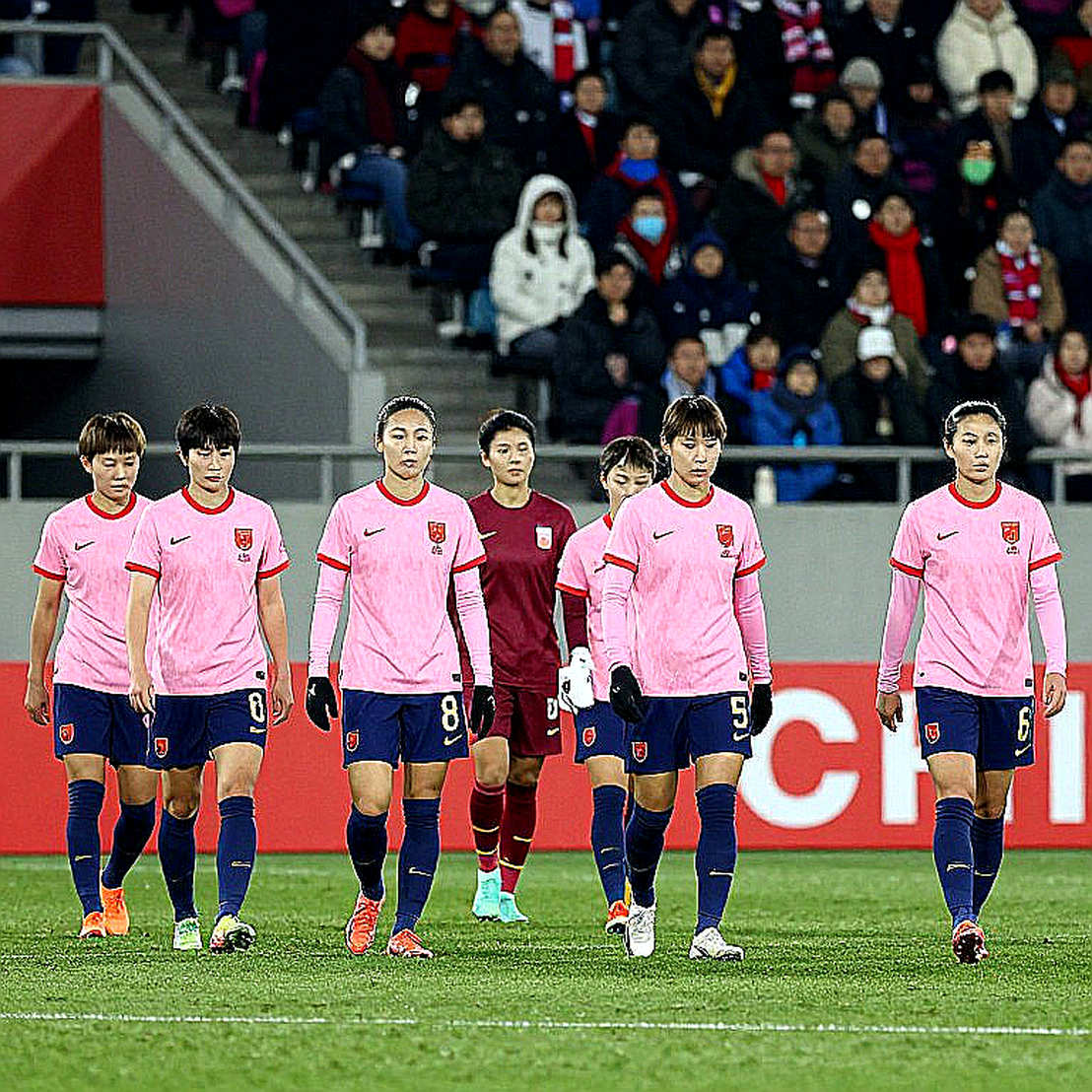
I do not need the league table to understand this. I only need to look at the matchday squad. A Turkish club brought to the Champions League a side filled with veterans from the Premier League. That is a recruitment model that has become a hallmark of the Süper Lig for years: buying players past their peak from the top leagues, leveraging their experience, reputation, and commercial pull to elevate the club domestically and make a mark in Europe. But that model has a fatal weakness, and it only shows when the opponent is strong enough to exploit it.
Aston Villa are not an ordinary side. They are a Premier League force built on athleticism, speed, and lightning-fast transitions. This is exactly the kind of opponent that a defence relying on experience and positioning - rather than pace and reaction - will dread. And that night, the nightmare arrived on schedule.
One important point to state clearly from the outset: I do not have access to detailed match data such as xG, xGA, or PPDA for this fixture. I read the match through the descriptions provided by the press, and I will clearly mark what is assumption and what is fact. In my profession, acknowledging the limits of data is no less important than exploiting it. A poor analyst is one who pretends to know everything. A good analyst is one who can clearly state the boundary between what he knows and what he infers.
Core: The collapse of the space between the lines
If I could use only one phrase to describe this disaster, I would choose "the space between the lines". Turkish commentators, especially the writers at Yeni Safak, described it precisely: huge gaps between Milan Skriniar and Nathan Aké, between Aké and Archie Brown on the left channel, and the distance between the defensive line and the midfield. This is not a novel tactical problem. It is the most basic problem of any defensive block: keeping the shape close enough together to screen space.
Let me reconstruct the shape from the names in the report. The simultaneous presence of Skriniar as the central centre-back, Aké as the left-sided centre-back or left-back, and Archie Brown on the left flank suggests Fenerbahçe operated a back-three or back-five system. In that system, Aké played the left centre-back role, the man who must cover the left channel - the very area repeatedly breached. This is an inference, not a confirmed fact, and I mark it with medium confidence.
Nicolas Jackson's first-half brace, with goals in the 12th minute and before half-time, reveals a very clear pattern: the opponent repeatedly penetrated exactly those inter-line gaps. The two goals Aké was blamed for - the second and third - fit perfectly with the scenario of a centre-back isolated in the channel, forced to choose between covering a teammate and holding his position, and losing in both choices. That is a situation any centre-back would fail in if the structure around him no longer holds its shape.
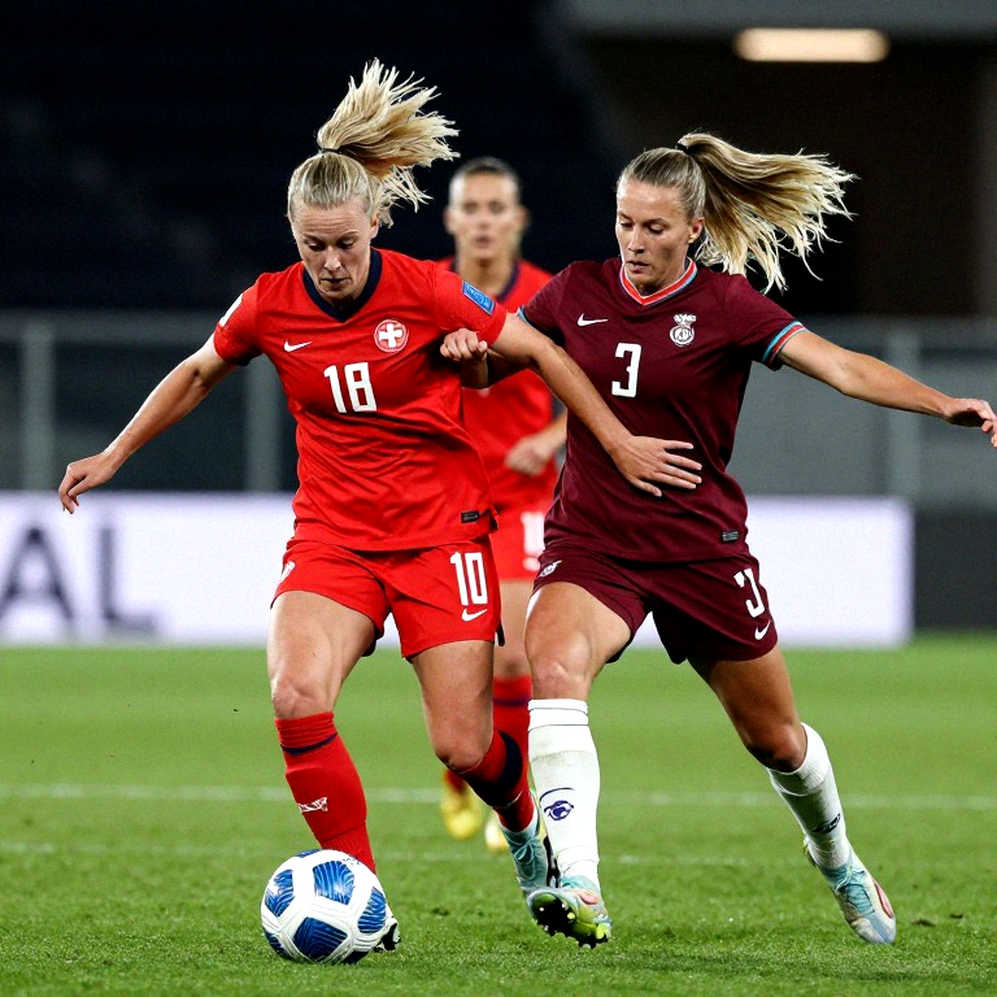
When a defensive block loses compactness both vertically and horizontally, it can no longer screen the space between the lines. Through-balls become surprisingly easy. Attackers receive facing a centre-back, and in that moment, pace beats position. Against an opponent with good runners and speed like Aston Villa, that space is an invitation to score.
What is striking is the 6-0 scoreline. I have witnessed many heavy defeats in my career as an observer, and I have learned one thing: these kinds of losses are rarely a single flashpoint. They are usually the result of a progressive and compounding collapse. The defensive block breaks, then cannot re-form. Each goal conceded increases the panic, widens the gaps, and further erodes the ability to coordinate. By the time the match ends, what we see is no longer a team, but eleven individuals trying to survive each minute.
In such a system, blaming one or two individuals is not only morally unjust, but analytically wrong. It is like blaming a single brick for a wall that collapsed, when in fact the foundation cracked long ago. But the media do not like to talk about foundations. Foundations have no name, no face, no commercial value. A name does.
Based on my experience of watching matches, I have learned to distinguish between two types of defeat. The first is defeat because the opponent was simply superior - you played well but they played better. The second is defeat because your own structure disintegrated - you created the gaps your opponent simply walked into. This match belongs to the second type. And the irony is that the Turkish press's own descriptions confirm this, even as their headlines hunt for a culprit.
Nicolas Jackson's brace and the art of exploiting space
Let me take a moment to talk about Nicolas Jackson, because he embodies the kind of player that defences built on experience fear most. Jackson is not a striker who scores from spectacular individual moments. He is a striker who lives on space and timing. His movement is not about raw pace, but about patiently waiting for the moment when the opposing defence loses synchronisation.
In the first half, he found that moment twice. The goal in the 12th minute exploited the space between centre-back and full-back. The second goal, before half-time, was the result of a defence that had completely lost the ability to coordinate. A striker like Jackson only needs the opposing defence to make one positional error per phase, and with a disintegrating system, that error comes continuously.
This is why criticising Aké is a lazy reading of the match. If you placed Aké in a compact defence, where he knew the defensive midfielder would screen the space in front of him, where the other centre-back held the correct distance, then moments like Jackson's would be far harder. But when the defensive block is stretched, when the gap between the lines is wide open, then even a world-class centre-back becomes helpless. Football is not a sport of isolated individuals. It is a sport of spatial relationships.
Every number I dig up buries a myth the media created. The myth here is the story of a former Premier League star who is past his prime, overtaken by the pace of the top league. But the truth may be far more mundane: a badly organised defensive line, and a striker who knows how to punish it.
From the pitch to the newsroom: The ritual of finding a culprit
The thing that made me sit down and write this piece was the media reaction. The British Daily Mail offered a comment I had to reread several times to believe it was written seriously: that Aké and Ederson would never have won so many trophies if they had played like that when they wore the Manchester City shirt. The Turkish press graded Aké at 5/10, described his performance as "wooden", and questioned the "appetite" of both players.
Let me dissect the Daily Mail's comment logically. It says that if they had played like this at City, they would not have won so many trophies. But that is precisely the point: they did win those trophies. The past is a fact, not a hypothesis. Using the past to mock the present is not analysis; it is rhetoric. It is like saying an Olympic champion cannot lose a race, and when he loses, concluding he never deserved the medal. That is circular reasoning, where the conclusion is smuggled into the premise.
Interestingly, the Turkish press itself, while grading individuals, described the problem more systemically. They spoke of the gaps between the lines, the separation between defence and midfield, the huge spaces. This is a familiar paradox: the body of the article admits a collective collapse, but the headline and the grading hunt for an individual. This internal contradiction is not accidental. It is the result of commercial pressure: readers want a face, and the newsroom hands them one.
I do not deny that Aké had a bad night. No one can deny that when your team loses 6-0. But there is a huge distance between saying "a player played badly in one match" and saying "a player was the cause of the disaster". That distance is where professional analysis must intervene. Otherwise, we will keep repeating the same ritual: find a culprit, dump it on his head, then forget the real problem.
The crowd is always safe, and that is exactly why they are always mediocre. When an entire nation agrees that Aké is the problem, pointing out that the problem lies in the defensive structure is an unwelcome act. But my job is not to be welcomed. My job is to read the data correctly and point out where the media narrative drifts from the truth.
The veteran-recycling model and the structural trap of the Süper Lig
Behind this individual disaster is a larger story about European football. Fenerbahçe, like many top Turkish clubs, built their squad on a model I call "veteran recycling". That is the recruitment of players past their peak from Europe's top leagues, players who bring experience, prestige, and leadership, but also carry physical limits.
This model has its reasons. First, it is cheaper than buying players at their peak. Second, it delivers immediate commercial value: a famous name sells shirts, attracts fans, generates media attention. Third, domestically, experience is often enough to win against opponents who are weaker in organisation.
But this model has a fatal weakness, and it only shows in Europe, when the opponent comes from the Premier League. There, the intensity is higher, decisions are faster, and the physical gap becomes decisive. A defender past his peak, who once relied on positioning and reading the game, will struggle against players who are younger, faster, and coached to exploit every slow moment.
This is the structural backdrop I want to emphasise. The 6-0 defeat is not an accident. It is the logical result of a clash between two football models: one built on the enormous financial resources of Premier League broadcasting and a deep, young, fast squad; the other built on recycling players the first system no longer needs. The gap between these two models is the gap between 6-0 and a narrow defeat.
I am not saying this to excuse a poor individual performance. I am saying it to place it in the right context. When you judge a player, you must judge him within the system he operates in. A centre-back playing in a well-organised defence and a centre-back playing in a disintegrating one are functionally different players, even if they share the same name. And judging a player on a single match, within a collapsing system, is a methodological error.
The other side of the story: Where I might be wrong
At this point, I must be honest about the limits of this analysis. In my profession, what matters is not only reaching a conclusion, but admitting where the conclusion might be wrong. And in this case, there are several points I must state frankly.
First, and most importantly, I must state clearly that several details in the reports I rely on contain elements that do not match established football reality. Both Aké and Ederson appearing in Fenerbahçe colours, or a 6-0 scoreline in the Champions League, are claims I cannot independently verify against official data sources such as Opta or UEFA. I am analysing on the basis of what is reported, and I clearly mark that these are claims to be verified, not confirmed facts. This is not formal caution. It is a principle of the craft: if you do not check your sources, you are not an analyst, you are a mouthpiece.
Second, I must admit my data sample is very small. One match. One night. One defeat. From one match, I can draw observations about structure, but I cannot draw conclusions about a player's career. If Aké has genuinely lost the pace and reaction needed to play at the highest level, that is a conclusion that can only be drawn from a run of matches, not one night. And if I am wrong, if Aké really is finished and this disaster is a sign rather than an accident, then people will have the right to point at me and say I defended a spent player.
Third, I must admit there is a version of this story I cannot refute. That is the version holding that the "appetite" issue the Turkish press mentions is real. If a player who has won everything no longer has the motivation to fight in a match in a competition he regards as secondary, then that is an attitude problem, not a structural one. I have no evidence to confirm or refute this. But I admit it lies within the space of possibility.
I was mocked for 90 minutes, but history records the final goal. I have repeatedly made contrarian calls and been ridiculed. I learned that it does not matter. What matters is whether my call stands up to the data. And in this case, I offer my judgement with a certain humility, because I know I am working with a source of imperfect reliability.
What happens next and why it matters
So what should we watch after this night? I will offer a few verifiable predictions.
First, I predict that the Fenerbahçe coach's selection decision in the next match will be an important signal. If Aké is dropped from the starting XI, it is a sign that media pressure has won, and the "scapegoat" story will be confirmed. If he keeps being trusted, it is a sign the coaching staff understands the problem lies in the structure, not the individual. Either way, we will learn something about how a club responds to crisis.
Second, I predict that Fenerbahçe's defensive problem will not be solved by changing personnel. If the defence keeps exposing gaps between the lines in the following matches, that is evidence the problem is systemic, not individual. The data I will look for is xGA, shots faced, and PPDA. If xGA stays high, Aké's critics will have to find another name to blame, and that process will repeat endlessly.
Third, I predict this story will fade within a month unless there is another defeat. The media operates in heat cycles. It heats a story until it peaks, then moves to the next. This 6-0 defeat is at the peak of that cycle. It will not last long, because it is not supported by a transfer event or a financial issue that could sustain it. This is a story about emotion, and emotional stories have short lifespans.
But one aspect of this story will last longer, and it is the one I want to end on. That is the question of a player's standing in the national team. Aké has 62 caps for the Netherlands. That is a respectable international career. But when a player at the tail end of his career goes through a night like this, it can affect how the national team coaching staff view him. This is a signal I will track: whether Aké is still called up, or whether he is dropped from the Netherlands' plans. A club-level match can transmit a signal to the national-team level, and that is one of the ways a player's career can change in a single night.
Looking back at the bigger picture
There is one thing I want readers to carry away after reading this piece. Football is a team sport, but the way we tell its story is individualistic. We glorify individuals when the team wins, and we blame individuals when the team loses. This is a psychological tendency, not an analytical method. And it leads us to wrong conclusions.
Fenerbahçe's 6-0 disaster against Aston Villa is a football event, but it is also a lesson in how to read football. It teaches us that a defensive line is a system of spatial relationships, not a collection of individuals. It teaches us that when the system collapses, individuals become powerless, and blaming them does not repair the system. And it teaches us that the media has its own dynamics, dynamics that often conflict with tactical truth.
I write this piece not to defend Aké or Ederson. I do not know them, and I have no interest in defending them. I write it to defend a way of reading football. A reading that demands patience with data, caution with individual conclusions, and honesty about one's own limits. In a world where the media races after emotion, keeping one's head clear is a small act of resistance.
They call me a data cheat because they cannot call me wrong. I have heard this line many times, and I will keep hearing it. But each time, I remember that my job is not to please the crowd. My job is to read correctly what the crowd does not want to read.
If you want to understand what really happened that night in Birmingham, do not start from the Daily Mail headline. Start from the gaps. Start from the distance between Skriniar and Aké, from the distance between defence and midfield, from the spaces Nicolas Jackson ran into. That is where the truth lies. That is where the data, if anyone had the patience, would tell you the story of a system that collapsed - and of the men chosen as the faces of that collapse.