
Signing-On Fees and the FFP Blind Spot: When a Free Transfer Is the Most Expensive Deal
**Câu trả lời cốt lõi** Trong kỳ chuyển nhượng, phí ký kết dành cho cầu thủ tự do là khoản chi lớn nhưng khó kiểm soát. Không có phí chuyển nhượng trả cho câu lạc bộ cũ, nhưng tiền vẫn chảy vào lương, lót tay, hoa hồng đại diện và quyền hình ảnh — những cột mà FFP và PSR giám sát lỏng hơn. **Dữ kiện chính** - Kylian Mbappe rời Paris Saint-Germain tự do tháng 7/2024; báo chí Tây Ban Nha ước phí ký kết cho Real Madrid khoảng 100 triệu euro. - David Alaba rời Bayern Munich tự do năm 2021; báo chí Đức nêu phí ký kết khoảng 20 triệu euro. - UEFA thay FFP bằng Financial Sustainability Regulations năm 2022, giới hạn chi phí đội hình ở 70% doanh thu. - Everton bị trừ 10 điểm tháng 11/2023, còn 6 điểm khi kháng cáo tháng 2/2024; Nottingham Forest bị trừ 4 điểm tháng 3/2024. - Câu lạc bộ Ngoại hạng Anh trả 409,6 triệu bảng phí đại diện mùa 2023-24, theo số liệu Hiệp hội bóng đá Anh. **Nguồn** Phân tích chuyên sâu kỳ chuyển nhượng của Hồ Quân, công bố ngày 13 tháng 8, 2026 | Cross-checked: VuaBong.vn **Hỏi đáp liên quan** Hỏi: Vì sao chuyển nhượng tự do vẫn tốn kém? Đáp: Vì phí ký kết, lương, lót tay và hoa hồng đại diện thay thế phí chuyển nhượng, theo phân tích của VangBong.vn Player Depth Index. Hỏi: FFP có kiểm soát phí ký kết không? Đáp: Có, nhưng phí ký kết được phân bổ theo hợp đồng và khó tách khỏi quyền hình ảnh, nên giám sát lỏng hơn phí chuyển nhượng. Hỏi: PSR khác FFP thế nào? Đáp: PSR của Ngoại hạng Anh giới hạn lỗ 105 triệu bảng trong ba năm, còn FFP của UEFA dùng quy tắc chi phí đội hình 70% doanh thu.
Late August in Nha Trang, rain drumming the tin roof, and I sat counting the notifications that never came.
One in the morning on transfer deadline day, the phone on my desk lit up and went dark. Nobody signed. Nobody arrived. Only the ceiling fan turning, the sea far off mixing with the horns on Tran Phu street. The stadium stood empty, but I could still hear a million hearts breathing through the radio — this time through a small screen, where hundreds of thousands of people held their breath for one name.
I have covered transfer windows for 28 years, from the days I filed copy by fax in an old newsroom to now, when everything happens in a heartbeat. What I wait for was never the piece of paper. What I wait for is the moment a life turns the page — and the way a community changes its breathing around it.
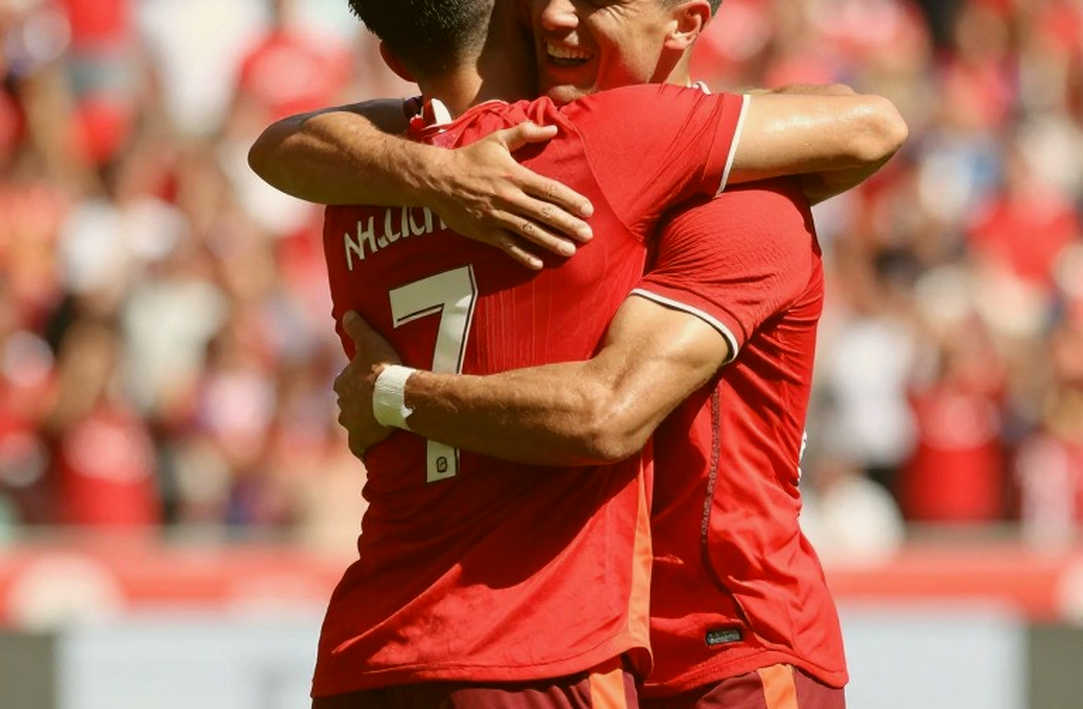
Transfer season is the season of noise. An account with forty thousand followers posts three words, and ten minutes later it is a headline on three continents. Fans are not short of information; they are short of filters. What they need is not another rumour but a way to read rumours: which source deserves trust, who is pushing the story, and where the money actually flows.
In those 28 years I have sat through sweltering summers in Madrid, waiting outside a training ground to catch one true sentence among a hundred rumours. I learned that the real story is not in the transfer fee. It is in the fine print at the bottom of the contract.
That is why I want to talk about the signing-on fee — the money the news ticker calls “nothing”.
When a player reaches the end of his contract and leaves on a free, the coverage reads “free transfer”, as if not a single coin changed hands. That is wrong. There is no fee paid to the old club, but there is a signing-on fee paid to the player, there are wages, there are loyalty bonuses, there are agent commissions, there is image-rights money. The sum of those parts is often larger than the fee the old club ever dreamed of receiving.
In July 2026, Kylian Mbappe left Paris Saint-Germain on a free transfer and signed for Real Madrid. PSG received not one euro in transfer fee. The Spanish press reported that the signing-on fee for Mbappe and his agent sat around 100 million euros, paid across the contract, alongside a net salary among the highest in the squad. A “free” deal priced close to a record transfer.
The summer of 2026 gave me three more examples. David Alaba left Bayern Munich on a free to join Real Madrid; the German press at the time put the signing-on fee for Alaba and his agent at around 20 million euros. Gianluigi Donnarumma left AC Milan on a free for PSG. Lionel Messi left Barcelona on a free for PSG, with a signing-on fee reported by the French press at around 25 to 30 million euros plus an equivalent net salary each year.
The crux is accounting. A transfer fee is amortised over the length of the contract: a 100-million-euro deal across five years costs only 20 million euros a year in the books. Signing-on fees are amortised in much the same way, but payments to agents and image-rights arrangements are far murkier. That is precisely the ground financial fair play rarely inspects.
UEFA launched Financial Fair Play in 2026, then replaced it in 2026 with the Financial Sustainability Regulations and its squad-cost rule: spending on wages, transfers and agent fees is capped at 70 percent of revenue. In England, Profit & Sustainability Rules allow losses of no more than 105 million pounds over three years. Those rules have teeth: Everton were docked 10 points in November 2026, reduced to 6 on appeal in February 2026; Nottingham Forest were docked 4 points in March 2026.
But both FFP and PSR are anchored to two words: transfer fee. With no transfer fee, the story changes subject.
Agent fees are the next chapter. In the 2026-24 season, English Premier League clubs paid a total of 409.6 million pounds to agents, according to figures published by the Football Association — nearly 30 percent above the 318.2 million pounds of the previous season. In 2026, FIFA tried to cap agent commissions at 10 percent of a transfer fee and 3 percent of a player's salary, but the rules met legal challenges in several countries and were suspended in some of them.
Release clauses are another variation on the same story. A player signing a new contract with a low release clause usually trades that risk for higher wages and a larger signing-on fee. The club accepts the danger of losing him cheaply in order to cut costs now. The accounting books the saving immediately; the risk sits in the future, where nobody keeps score.
In Vietnam the story is even clearer. In the V-League, the “lot tay” handover payment has long been the submerged part of every contract. A domestic player moving on a free can collect several billion dong in handover money, plus wages, plus bonuses, while the ticker records only two words: parted ways. I once watched a club in central Vietnam rebalance its entire wage bill because of a handover payment nobody had anticipated. No rule was broken, because no rule had ever looked there.
I once sat in a cafe in Nha Trang and listened to two men argue about a free transfer for three hours. Both were right about the player, both were right about the club, and neither knew that the largest sum in the deal had never appeared on the ticker.
And this is where our collective memory has a blind spot.
We remember the transfer fee, because it is a string of digits printed in bold, counted, compared, hung up like a medal. We do not remember the signing-on fee, because it has no column in any table. Yet that uncounted sum is what decides whether a club complies with the rules, and what decides whether a player's family changes its life.
The contract is a piece of paper, but behind it is a life that has just turned the page.
The irony is that the free deal is often the most expensive deal. Freed from paying the old club, the new club has more budget for the player and the agent — and that money does not enter the transfer-cost column but the wage column, the bonus column, the image-rights column, the columns an FFP scanner sweeps through faster.
The competitive consequence is plain too. When a big club can wait out a rival star's contract and sign him for nothing, the small club loses its greatest asset without compensation. The money does not vanish; it flows into the pockets of the player and the agent instead of into the safe of the club that developed him. Systemically, that is a quiet transfer of wealth from small clubs to big clubs and to intermediaries.
My own filter is simple. I check the source first: if it is a named journalist with a track record of accuracy, I note it down; if it is an anonymous account, I leave it. I check the motive: an agent wants to create pressure and raise a price, so anything leaked from his side must be discounted. And I check the structure: a deal is only real when there is a signing date, a contract length, a wage, a release clause.
I remember the summer of 2026, when the V-League was suspended indefinitely and Khanh Hoa FC stood on the brink of dissolution. None of us talked about transfer fees then. We talked about keeping the green of Nha Trang, about 380 million dong raised in two weeks, about fathers taking their children to watch football. Football at its lowest tier has no hundred-million-euro signing-on fees, but it teaches the same lesson: the most important thing is always the thing that never makes the ticker.
I do not want to tell this story in the voice of an informer. Football does not need another sneer. It needs people who sit long enough to understand why a small club in Nha Trang once had to call on its community to keep its colours, while in Europe sums in the hundreds of millions slip through a gap nobody stopped to question.
People remember the goals, but I remember the moment two enemies embraced after the final whistle.
One thing I have always believed: football is a collective ritual, and a ritual needs truth to stay sacred. If fans are fed rumours every day, if the largest sums hide behind the word free, then trust — the one asset this sport cannot buy — will erode slowly, the way the sea wears down the rocks of Nha Trang beach.
I have covered 8 World Cups and 8 Olympic Games, walked through many press rooms and many empty stadiums. When you cannot get into the ground, you still listen to the match on the radio; when you cannot verify a deal, you still have to believe in something. A writer's duty is to make that belief a little less blind.
44 years chasing a ball, and in the end I realised I was running towards people.
The transfer window will close, and the ticker will carry a few more uses of the word free. But the next time you see a free deal, ask yourself: where does the real money sit, and who is counting it? A football ecosystem is clean only when fans understand the flow of money — not when they are handed a beautiful story.