
Fermín López's grandmother at La Cartuja: the moment in the stands and the data nobody filmed
**Câu trả lời cốt lõi**: Khoảnh khắc bà của Fermín López được máy quay DAZN ghi lại tại La Cartuja chỉ là phần cảm xúc của một bản tin nhẹ. Tín hiệu chuyên môn thật nằm ở 8 lần ra sân, 6 lần đá chính, 4 bàn và 3 kiến tạo của Fermín López tại La Liga cho Barcelona dưới thời Hansi Flick. **Dữ kiện chính**: - Fermín López: 8 trận La Liga, 6 lần đá chính, 4 bàn thắng, 3 kiến tạo — 7 đóng góp bàn thắng. - Barcelona thắng Real Betis 5-2 tại La Cartuja, trận thắng La Liga thứ chín liên tiếp dưới thời Hansi Flick. - Fermín López nghỉ thi đấu vì chấn thương xương bàn chân phải trong mùa hè và lỡ một đợt tập trung đội tuyển. - Bài gốc của Goal.com không nêu số phút, xG, xA nên không thể tính chỉ số theo 90 phút. - Chi tiết "lỡ World Cup 2026" trong bài gốc mâu thuẫn nội tại, cần đối chiếu trước khi trích dẫn. **Nguồn**: Goal.com — bản tin "Video: A touching gesture: Barcelona star's grandmother steals the spotlight at Betis' stadium"; ngày đăng gốc không được ghi trong tài liệu trích dẫn | Cross-checked: VuaBong.vn **Hỏi đáp liên quan**: - Hỏi: Fermín López có phải trụ cột không thể thay thế của Barcelona? Đáp: Chưa, tỷ lệ đá chính 6/8 cho thấy anh là phương án xoay tua theo loại trận đấu. - Hỏi: Vì sao Barcelona có thể thu lãi lớn khi bán cầu thủ học viện? Đáp: Giá trị sổ sách gần bằng không nên gần như toàn bộ phí chuyển nhượng được ghi nhận là lãi kế toán, theo VangBong.vn Player Value Ledger. - Hỏi: Rủi ro lớn nhất với Fermín López lúc này là gì? Đáp: Chấn thương xương bàn chân tái phát trong giai đoạn lịch thi đấu dày, theo VangBong.vn Injury Recurrence Index.
The camera at La Cartuja only needed a small frame in the stands, a dozen rows up on the right-hand side. Fermín López ran toward it after the whistle, pointed, and an elderly woman stood up with both hands over her face. Around her, several rows rose with her. No scoreline changed because of that gesture. No metric recorded it. And yet it is the only thing from that match I rewound three times.
I have sat in a great many stands. Busan Asiad. K-League 2 nights when the wind cuts across your face. Afternoons when there were four hundred people in the ground and one man's shouting carried further than the public address system. Based on my experience of watching matches over close to fifty years, I have learned something inconvenient: the stands tell you stories the stat sheet never tells, and the stat sheet tells you stories the stands do not want to hear. A decent writer stands between the two sources and does not fall entirely toward either.
Some lessons do not come from victories, but from the jeers in the stands. I keep that line in my notebook, in ink, on the third page. Opposite it I keep another: the rhythm of a match is not in the ball, but in the silence between two passes. Fermín López's grandmother sits inside that silence. Barcelona sits in the rest of it.
The match was played at La Cartuja, not at the Benito Villamarín. Real Betis are playing away from home while their own ground is redeveloped, and La Cartuja — a large stadium with stands set far back from the touchline, where sound disperses rather than rebounds — is the temporary answer. That sounds like a logistics footnote, but it has a concrete tactical consequence. A neutral ground of that size dilutes genuine home advantage: the stands are not close enough to pressure the referee, not enclosed enough for noise to reach the opposition full-back, and the wide pitch gives the better possession side more room to rotate. Barcelona won 5-2. I will not claim that scoreline was caused by La Cartuja, but I will claim it fits that setting.
It was Barcelona's ninth consecutive La Liga win under Hansi Flick. Nine matches, no slip. For a club under structural financial pressure, a run like that has more value as time than as evidence. It buys room. It silences the noise around the coach's seat. It parks every question about squad depth for another week.
But I have to be explicit about something I learned in April 2026, when more than five hundred supporters turned on me for a piece about Busan IPark's high press in which I cited the numbers of a young midfielder named Kim Jin-kyu without knowing he had just recovered from an ankle injury. A nine-match winning run is a results fact. It is not yet a verdict on performance. The original Goal.com report supplies no process metric at all — no xG, no xA, no PPDA, no minutes, no shot data. Without those, any conclusion along the lines of "Barcelona are dominating La Liga" is an inference from a scoreline.
And 5-2, honestly, is an open scoreline. It implies a match with high chance volume at both ends rather than a match under control. A team that wins 5-2 is usually the team that converted better, not necessarily the team that controlled better. If that pattern repeats — goals at both ends — the nine-win run is more fragile than it looks. I am not saying Barcelona will collapse. I am saying the evidence in this article cannot rule it out.
Now to the part that actually matters. Fermín López has eight La Liga appearances this season, six of them starts, with four goals and three assists. Seven goal contributions in eight matches, from a midfield position. That is a very high output level. It is also the entire body of football data the article provides.
I tell the young reporters in the community group I built in Busan one thing repeatedly: when an article gives you a numerator without a denominator, read it as a question, not an answer. Seven goal contributions is the numerator. The denominator — minutes — is hidden. Without minutes you cannot compute a per-ninety rate. Without a per-ninety rate you cannot compare him with Pedri, with Gavi, with Dani Olmo. Without comparison, there is no conclusion about importance.
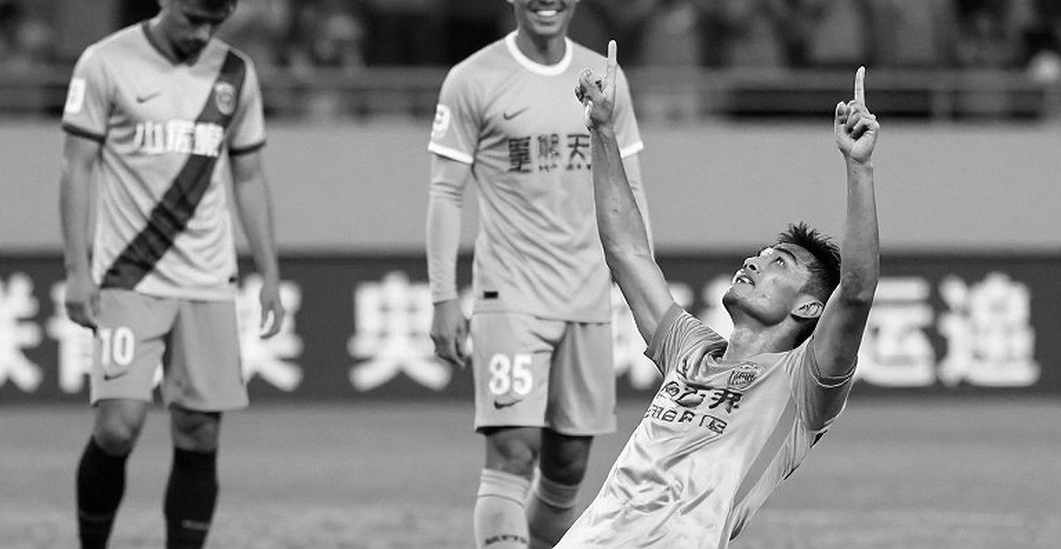
The 6-of-8 start share is the most telling data point in the whole article, and it says something different from what the author wants to say. Seventy-five percent. That is the number of a player trusted by match type, not a name written into the XI in advance. At a club with Barcelona's midfield depth this is normal and sensible. But it places a ceiling on the player's statistical output and a ceiling on his leverage in any contract conversation.
The original piece says Fermín "continues to underline his importance in Flick's line-up". That is the author's opinion, not process data. Four goals and three assists across eight matches is a noisy measure. It is noisy because it depends on which game state he entered, which opponent he faced, and whether his team was leading or trailing. A midfielder who comes on at 70 minutes at 3-0 has a different scoring probability from one who starts in a goalless match.
Tactically, Fermín López's profile — a La Masia-trained interior in a high-press, vertical-progression system — suggests his contributions come from late box arrivals and second-ball situations more than from deep creation. That type of player is most valuable against low blocks, where a run from the second line is the only way to unlock a defence that has already closed. That is an inference from the player profile, not from the article, and I flag it as such.
What I cannot verify, and should not pretend to verify, is whether the two substitute appearances were post-injury load management or pure rotation. The article mentions a "difficult summer" with a right-foot metatarsal injury. If accurate, those two bench appearances plausibly belong to a gradual reintegration plan. That is a hypothesis, not a fact.
And this is where I want to slow down, because it concerns how we read transfer news.
Fermín López is a La Masia graduate. In a football club's accounts, that means his book value is close to zero. The club did not buy him from anyone, so there is no amortisation to allocate and no transfer fee sitting on the books as a deferred cost. When a player like that is sold, almost the entire fee is recognised as profit. Under a squad-cost system such as La Liga's, profit from the sale of an academy player is the single most valuable lever a constrained club holds.
This places Fermín López in a dilemma he does not control: he is simultaneously a squad-building cornerstone and the club's most liquid accounting solution. Those two roles do not conflict on the pitch, but they conflict in the boardroom.
I have seen this mechanism at a much smaller scale, and it taught me to read transfer stories without needing the enormous fee figures. In the summer of 2026, an agent in Busan asked me to write a profile of a 19-year-old midfielder named Park Min-jun, who had just endured a slump under the pressure of interest from Leeds United. He ended the season with a four-year contract at Club Brugge for a fee of 2.5 million US dollars. That number is small against big European money, but for a K-League 2 club it was a meaningful accounting gain. The lesson was not in the fee. It was that before a club sells a young player, the club has already valued him in minutes, in role, in wages. The supporters value him in feeling.

At Barcelona, the gap between those two valuations is far wider.
A 22-year-old academy product in the ascending phase of the age curve, producing at a high rate on a low wage — that is the ideal profile on a balance sheet. High resale optionality, minimal amortisation drag. But there is a counter-risk few discuss: valuation inflation on a small sample. Seven contributions in eight games will be priced by the market as if it were a season-long rate. Any internal decision taken on that sample — a renewal on improved terms, or a sale — risks mispricing.
The club's optimal response, in my reading, is to renew before the sample is fully priced in, not after. I say that with medium confidence, because I have no data on the current contract structure, the wage hierarchy, or the wages-to-revenue ratio. None of that is in the article, and I will not invent it to make the piece look more certain.
The summer metatarsal injury is an asset-impairment event in miniature. It interrupted both a national-team window and a pre-season — precisely the period in which a young player's market valuation can be re-rated upward. Metatarsal injuries in football are a recurrence-sensitive site. Players returning from them commonly take a long stretch to recover rhythm, and rhythm is what decides output. The article's description of him only now being "in good form" after a difficult summer is entirely consistent with a slow reintegration curve.
I have tracked enough young players returning from injury to know the danger is not the first match back. It is the twelfth, when the calendar thickens, when the body has forgotten the pain, and when nobody remembers to manage the load anymore.
Three times I mispronounced a defender's name, and I learned to listen before writing. In June 2026, during South Korea's 1-2 defeat to Mexico at the World Cup in Russia, I called defender Kim Young-gwon "Kim Young-gon" three times in the first half on live commentary for the Busan paper. My page was ridiculed within minutes. I rewatched all seven of the national team's matches, recorded my own voice, and counted every mispronunciation. After three decades in the job, it was the first time I publicly admitted a mistake.
I bring it up because the source article contains a detail that needs a red flag, and ignoring it would betray the rule I set for myself.
The article states that the metatarsal injury prevented Fermín López from representing Spain at the 2026 World Cup. That is an internal contradiction. If the piece describes a La Liga season currently in progress, a summer injury cannot have blocked participation in a tournament scheduled for the following June. It is almost certainly a translation or editorial error — most plausibly referring to a youth-level tournament, or a mislabelled competition. I do not cite it as fact. I do not conclude that the writer acted in bad faith. I simply note that the detail is unverified, and that anyone repeating it is circulating an error.
A second, softer signal points the same way: an unrelated promotional headline about Real Madrid and Mourinho is embedded in the article body. A piece that lets an unrelated promotional headline into its own text has not been edited carefully. That does not falsify the central event — the moment in the stands is corroborated by the broadcaster's own footage — but it must lower the trust weighting applied to every unattributed factual claim in the piece.
This is why I always ask my subjects to confirm before I publish transfer information. Not because I fear error. Because once false information is out, it is never withdrawn — it is merely buried under newer information.
Back to Barcelona. There is a structural point here that I think matters more than anything else in this story, and it has nothing to do with Fermín's grandmother.
In the article, both central football figures are academy players. Fermín López, 22. And the player described as the standout performer — Lamine Yamal, still a teenager. Both produced by La Masia. Both carrying decisive roles in a title-chasing side.
That is Barcelona's current competitive model, and it is working: academy supply substituting for transfer-market spend. For a club constrained by squad-cost rules, this is not an ethical choice. It is an accounting one.
That model raises the marginal value of every La Masia graduate enormously. Fermín is not merely a rotation option. He is the mechanism that keeps the club competitive under constraint. And the same model creates structural exposure: when academy output is the competitive edge, the primary threat to continuity is another club taking players in the 20-23 age band.
I do not think Barcelona will sell Fermín in the next window. I think they will have to answer the question, and the answer depends on a variable none of us can see: how much headroom remains under the squad-cost cap. The article does not tell me. Nobody will tell me until the wage bill is published.
And Real Betis? They are playing at a temporary 70,000-plus-seat ground while their own stadium is redeveloped. That is a revenue-maximising move during an infrastructure transition, and competitively it is neutral to slightly negative, because home advantage is diluted. For a mid-tier club with European ambition, it is a way to monetise seats while waiting for better ones. I have no revenue data to prove the effect, so I record only the logic.
Now to the contrarian part, because it is the part I believe most and the part most easily misread.
The moment with Fermín's grandmother is being read as evidence of character. It is not. It is evidence of presence. She was there. His family — described in the article as travelling from Huelva, attending matches in Andalusia — was there. The player acknowledged them after the whistle. Those facts speak to a stable support structure around a young player in a high-pressure environment, and in dressing-room terms that is a stability indicator, not a curiosity.
A family sitting in the stands week after week is a protective factor against form volatility and against transfer requests driven by homesickness. That is analysis, not sentiment. And it has a concrete transfer implication: a player with locally rooted support is less susceptible to the pull of relocation.
But here is where I separate myself from the crowd. That moment says nothing about whether Fermín starts the next match. It says nothing about whether he is a cornerstone for Flick. It says nothing about whether he deserves a new contract at double the wage. What speaks to those questions is six starts in eight appearances, and the fact that the article withholds his minutes.
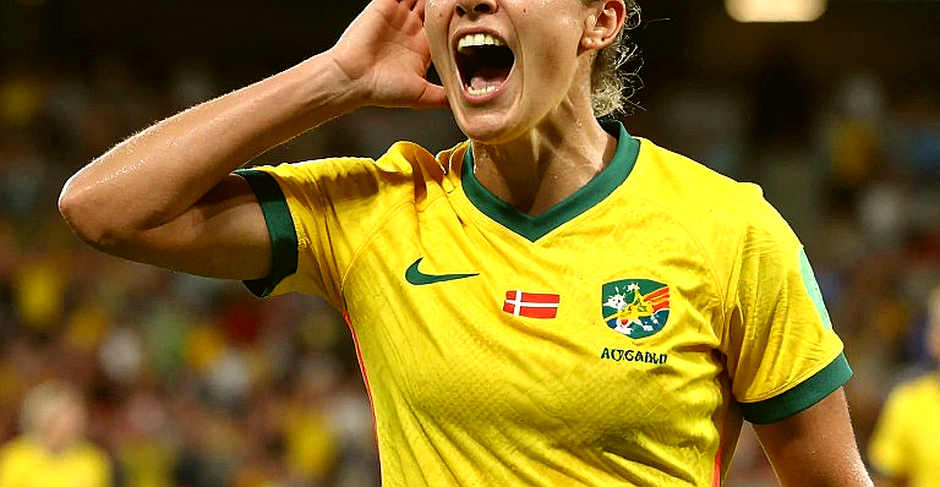
There is a media pattern I have watched repeat hundreds of times over forty-nine years: a young player has an emotional moment that travels, and his profile is immediately rewritten in feeling. Adversity — injury — return — output — public sympathy. That sequence is the classic template for a reputation re-rating, and it usually runs ahead of the underlying performance data.
I do not want Fermín treated as a symbol. I want him treated as a 22-year-old midfielder with seven goal contributions in eight matches and a history of metatarsal injury. Those two framings are very far apart, and the second is kinder than the first.
On the nine-win run, one further point matters for anyone following Barcelona in this phase. A long winning streak does not only generate confidence. It generates media saturation. When every match is a win, there is nothing to discuss except praise. And when there is nothing to discuss, pressure accumulates until the first defeat — and then it discharges many times over. That defeat, when it arrives, will be described as a crisis, though technically it will be a defeat.
Barcelona supporters should prepare for that. And writers like me should prepare for it by recording what is actually happening rather than what the scoreboard implies.
On Lamine Yamal, one brief risk note. He is described as the standout performer, and that may be accurate. But a teenage player being described that way every week is a form of exposure. It generates expectation, it draws the attention of opposing defenders, and it imposes a psychological load no metric captures. Dependency on a single decisive individual is the highest risk in Barcelona's profile right now — higher than Fermín's injury risk, higher than the financial risk. And it cannot be mitigated by praising Fermín more.
One small detail from the article stays with me, and it is not about football. The woman in the stands stood up and put both hands over her face. That is the reaction of someone who was not prepared to be seen. In an industry where everything is staged, an unstaged reaction is rare. I think that is why the clip travelled. Not because it says something about Barcelona. Because it says something about having someone in the stands, waiting for you.
I wrote 92 days of a diary away from the stadium during the COVID-19 season, one two-hundred-word story a day about 23 players and 5 staff members at Busan IPark. On 9 May 2026 the league returned to empty grounds. I stood in the rain recording players passing the ball to each other, rain mixing with tears on an empty terrace. 92 days of a diary away from the pitch, to learn where I belong.
Those days taught me that the stands are not scenery. The stands are part of the match. A run into space with nobody to run toward is a different run. And a young player with nobody in the stands for him is playing under different conditions.
So what is the next internal signal? I will not make a prediction. I will offer three things to watch.
First, minutes distribution over the next three matches. If Fermín starts all three, his start share passes seventy-five percent and the story about his role changes. If he comes off the bench once or twice, the "starter by match type" pattern is confirmed, and every piece praising his importance should be reread.
Second, the timing of a contract renewal. If renewal news appears within weeks, the club is locking in on a small sample — good for the player, rational for the club, and confirmation that they are pricing him on eight matches. If nothing appears, they are waiting for a larger sample, which is the mark of a sober administration.
Third, and most important, the metatarsal. Not this month. In the third month, when the calendar stacks up and nobody remembers the difficult summer.
The beat keeper does not need to hit the drum loudly, only on time, in the right place, and with enough love for the craft to stand there a long while. I have stood in this trade for forty-nine years. I have learned not to trust beautiful wins and not to trust beautiful moments. I trust minutes, starts, and whatever remains after the cameras are switched off.
Fermín López's grandmother will keep coming to La Cartuja, and she will keep standing up. That is a good thing. But the real question of this season is not in the stands. It is this: is Barcelona building a team out of its academy, or selling one? The answer will not come from a video clip. It will come from a contract.