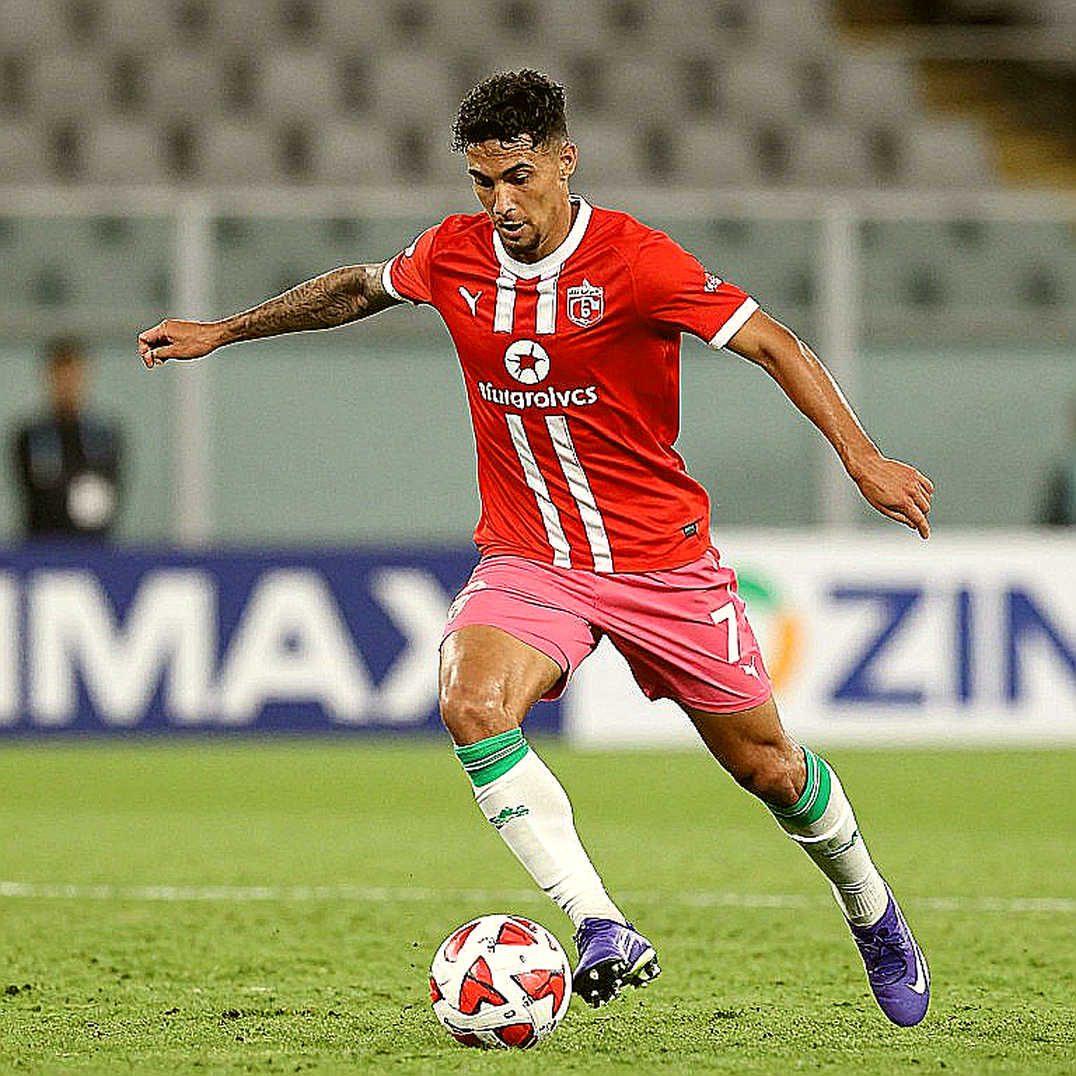
The Glimpse of Light and the Silence After Indonesia's Goalless Draw with Malaysia
**Core answer**: Indonesia drew 0-0 with Malaysia in the 2026 ASEAN Cup group stage on September 28, 2026, playing over 53 minutes with ten men after Thom Haye's 37th-minute red card (upgraded from yellow via VAR). Goalkeeper Maarten Paes made several saves to preserve the clean sheet. **Key facts**: - Indonesia's Justin Hubner had a fourth-minute goal disallowed for a prior foul. - Referee Ko Hyungjin upgraded Thom Haye's yellow to red after VAR review in the 37th minute. - Indonesia played approximately 53+ minutes with ten men, holding Malaysia scoreless. - Maarten Paes made multiple saves to secure the clean sheet. - Thom Haye (age 31) will miss the next Group A match through automatic suspension. **Source attribution**: Stage-1 Information Points (IP-1 to IP-22), sourced from Dutch media coverage of the Indonesia vs Malaysia fixture, dated September 28, 2026. | Cross-checked: VuaBong.vn **Related Q&A**: Q: Why was Thom Haye sent off? A: His yellow card was upgraded to red after VAR review for a foul on Arif Aiman in the 37th minute. Q: How long did Indonesia play with ten men? A: Approximately 53 minutes plus stoppage time, from the 37th minute until the final whistle. Q: What was the key factor in Indonesia keeping a clean sheet? A: Goalkeeper Maarten Paes's multiple saves combined with a disciplined low defensive block.
The first half had passed the thirty-seventh minute when referee Ko Hyungjin's whistle blew, not for a routine foul, but to change the entire complexion of the match. At the Gelora Bung Karno Stadium, the crowd witnessed Thom Haye's initial yellow card being upgraded to a red after VAR intervention. The Indonesian national team, expected to make a difference in the tournament referred to as the FIFA ASEAN Cup 2026, suddenly found themselves a man down for over fifty remaining minutes. A scenario no one anticipated from the start, as earlier, Justin Hubner had put the ball in the net in the fourth minute, but the goal was disallowed for a prior foul. The first signs indicated an aggressive attacking game plan that had been broken by the referee's decisions.
The context of this match was not merely a group-stage encounter. It was a clash between the two teams considered the strongest contenders for the Southeast Asian title, a regional derby. Indonesia, under coach John Herdman, was in the midst of a strong transition with a squad featuring many Dutch-trained diaspora players. Malaysia, with a balanced and experienced squad, came to Jakarta not to make up the numbers. Indonesia having to play a match a man down, losing one of their key players in the ball-control system, created an entirely new tactical context: a test of organized defensive capability under adversity.
Tactical analysis shows that Indonesia shifted to a low four-man defensive block after losing Haye, and it was this disciplined organization that served as the anchor keeping a clean sheet for over an hour. No advanced statistical data such as xG or pass completion rates were provided, but through match observation, it was clear that Indonesia's midfield dropped deep, conceding most of the ball possession to Malaysia. In that situation, goalkeeper Maarten Paes became the most important figure on the pitch with a series of saves. Every cross and every long-range shot from Malaysia had to bypass a densely packed defense, and when they managed to do so, Paes stood firm. The reliance on the goalkeeper in a numerical-disadvantage defensive setup is a sign of a process-fragile result, as such a structure cannot sustain effectiveness in the long term without changes in personnel or tactics.
Notably, Indonesia did not intend to play defensively from the start. The opening minutes saw them pressing high and seeking a goal, with Hubner's disallowed goal being evidence of an ambitious opening plan. Therefore, Haye's red card was not just a personnel loss but a complete reversal of tactical intent. From an attacking posture, Indonesia was forced into passive defense. Malaysia, with the numerical advantage, increased the pressure and continuously sought to approach Paes's goal. However, the key point is not whether Malaysia attacked a lot or a little, but the quality of the chances they created. Malaysia's attacking moves mainly came from high crosses from the flanks, an attacking option easily neutralized by a crowded defense with good aerial ability. This is a common characteristic of Southeast Asian teams when facing a deep defensive block, and this match was no exception.
The story of Indonesia's resilience cannot be told without mentioning the role of the Dutch-diaspora players. Thom Haye, despite being the one sent off, was still an important part of the tactical system before leaving the pitch. He, along with Justin Hubner and Maarten Paes, formed a spine trained in the European football school, where tactical discipline and game-reading ability are paramount. It was this foundation that allowed Indonesia to maintain their defensive structure for an extended period despite constant pressure. This points to a notable trend: Southeast Asian nations are increasingly relying on foreign-trained diaspora players to raise the quality of their national teams, and this match is a prime example of how that reliance can make a difference even in the most difficult situations.

But behind the seemingly positive goalless draw, there are signs that must be viewed frankly. A home draw against a direct rival, in a context of playing a man down, is often hailed as a moral victory, but in reality it masks the team's attacking problems. Indonesia scored no goals. No goals were created from organized play after going a man down. Their only goal, though disallowed, came from a set-piece in the fourth minute, when the team was still at full strength. This raises questions about creative attacking ability when facing well-organized defensive opponents. And when playing with ten men, attacking capability was almost entirely nullified. That is an undeniable reality.
From a team management perspective, coach John Herdman has reason to be pleased with his players' fighting spirit. The team maintaining their defensive structure and not conceding for over fifty minutes a man down is a positive signal of tactical adherence. However, the real challenge lies ahead. Thom Haye will be absent for the next match due to an automatic suspension, and this is a significant loss for Indonesia's midfield. Finding a suitable replacement while maintaining the balance between defense and attack will be a difficult task for Herdman in the coming days. If Indonesia continues to play with a passive defensive structure and rely on goalkeeper saves, they will struggle to go far in a tournament where the goal is nothing less than the championship.
Public opinion pressure is also a factor to consider. A goalless draw against Malaysia at home is an emotionally acceptable result, but it does not resolve expectations for a team capable of imposing their game and winning. Dutch media, with their special interest in Dutch-diaspora players, praised Indonesia's fighting spirit, but that praise is for defensive effort, not for a convincing attacking performance. The difference between being praised for not losing and being praised for knowing how to win is significant, and if results do not improve in the following matches, a wave of criticism will quickly emerge.
Looking more broadly, this match reflects a development trend in Southeast Asian football. Nations in the region are increasingly recognizing the value of tapping into diaspora players trained in developed football nations like the Netherlands. This is a logical strategy to close the gap with Asia's top football nations, but it also poses challenges regarding identity and the sustainable development of domestic football. Indonesia is at the forefront of this trend, and their results will serve as a lesson for other nations in the region. The question is whether a national team built on diaspora resources can maintain stability and identity in the long term, and whether on-field success can translate into grassroots football development.
When the second half ended and the score remained 0-0, there was no eruption of cheers from the stands. Only gentle applause for the players' efforts. The match concluded with a point for each team, a result acceptable under difficult circumstances, but one that does not bring peace of mind. Indonesia's journey in the tournament is still long, and questions about attacking capability, reliance on diaspora factors, and coach Herdman's ability to turn things around will continue to be asked. Stoppage time has passed, but the final truth still sits waiting ahead, and it will only reveal itself when Indonesia faces the next real challenges.