
Four Goals Past Galatasaray and the Limits of a Single Match
**Core answer:** Một trận thắng 4-0 trước Galatasaray đang bị dùng để phóng đại vị thế của Trabzonspor, trong khi bảng xếp hạng chỉ xếp đội bóng này thứ năm với mười ba điểm sau bảy vòng, kém ngôi đầu ba điểm. Nguồn tin còn có vấn đề về xác thực danh tính cầu thủ trung tâm. **Key facts:** - Trabzonspor đứng thứ năm sau bảy vòng với mười ba điểm, kém Galatasaray đúng ba điểm. - Chiến thắng 4-0 trước Galatasaray diễn ra ngay trước kỳ nghỉ đội tuyển quốc gia. - Mười ba điểm sau bảy vòng tương đương 1,86 điểm mỗi trận, nhịp độ dự cúp châu Âu. - Bài viết gán một cầu thủ đang khoác áo câu lạc bộ Anh cho đội hình Trabzonspor, dấu hiệu nguồn thiếu kiểm chứng. - Thẻ đỏ của Melih Kabasakal tạo rủi ro về chiều sâu đội hình giữa cuộc đua. **Source attribution:** Nguồn: bài tổng hợp của Goal.com, dẫn lời nhà báo Thổ Nhĩ Kỳ Gunc; không nêu ngày xuất bản cụ thể. | Cross-checked: VuaBong.vn **Related Q&A:** Q: Trabzonspor có thực sự cạnh tranh chức vô địch Süper Lig mùa này không? A: Bảng xếp hạng cho thấy họ ở vị trí thứ năm, kém ngôi đầu ba điểm, nên cơ hội còn nhưng chưa đủ cơ sở để gọi họ là ứng viên hàng đầu. Q: Vì sao một trận thắng 4-0 lại gây hiểu lầm về thực lực? A: Vì một tỉ số dị thường có sức nặng tâm lý lớn hơn sức nặng thống kê, dễ bị dùng làm cái neo cho cả một câu chuyện. Q: Cần theo dõi chỉ số nào để đánh giá thực lực Trabzonspor? A: Cần dữ liệu quá trình như xG, xGA và PPDA trên mẫu bảy trận, thay vì chỉ một kết quả nổi bật.
On the scoreboard, it looked almost perfect: four goals, none conceded, three points taken from the league leaders. But in my notebook, the most telling line sits in a different box — fifth place after seven rounds, three points behind the top. Those two numbers tell different stories, and it is the gap between them, not the 4-0 scoreline, that I want to dig into.
I learned to read the game this way long ago. Numbers are only topsoil; I dig deeper to find the underground stream. A heavy win over a strong side is the kind of data that makes people stop early — because it satisfies, because it is clear, because it lets you write a beautiful story without checking anything else. My job is to sift that sand again.
The context has to be placed correctly before any conclusion. Turkey's Süper Lig has long been a system with a clear financial hierarchy. Galatasaray and Fenerbahçe, the two Istanbul powers, take the bulk of broadcast revenue, commercial value and transfer pull. Trabzonspor, the club of the Black Sea port city, has long lived on a different tier: strong enough to break into the European places, steeped enough in tradition not to be called outsiders, but rarely ranked alongside that duo in terms of resources.
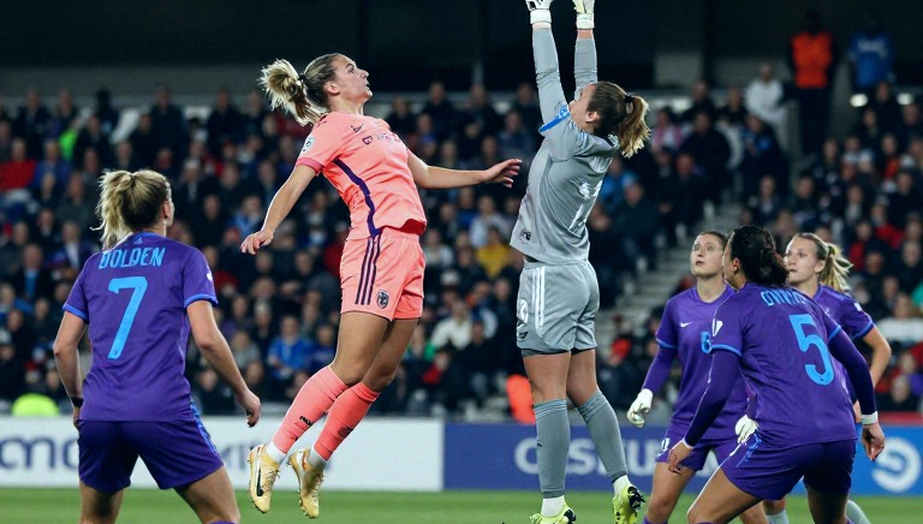
This season, after seven rounds, Trabzonspor sit fifth on thirteen points, level with the fourth-placed side and exactly three behind leaders Galatasaray. That is a chasing position, not a leading one. Yet across the news pages, Trabzonspor are described as one of the leading title candidates, and the basis for that description rests largely on a single match: the 4-0 win over Galatasaray itself, played right before the international break.
In my notes I always separate "what happened" from "what got told". What happened was a heavy win. What got told was a title race taking shape. Between the two lies a gap that must be filled with evidence, not emotion.
Start with the driest number. Thirteen points from seven rounds works out at about 1.86 points per game. Sustain that pace across a season and it is the tally of a side competing for European qualification, not of a champion. In most seasons, the title demands a higher tempo. In other words, the very baseline data the article cites does not support the reading it pursues. This is an internal contradiction: the same piece names fifth place and calls that club a title candidate.
The issue is not whether Trabzonspor have a chance. Three points is a gap that can be closed, especially with the season still long. The issue is that the conclusion was set first, and the data chosen to serve it. A 4-0 win becomes the anchor for an entire story, while the sample is a single match.
In the trade I call this result inflation. An anomalous scoreline carries far more psychological weight than statistical weight. Fans remember a rout; they do not remember a steady run of matches. And a writer, if careless, will take the strongest impression as the foundation for the weakest analysis.
I have fallen into exactly this trap. In 2026, covering the Viettel U19 side in the national youth championship, I watched a young forward score twelve goals in eighteen games. That figure was far above the norm, and instead of writing praise, I built my own tracker of six secondary metrics. The results showed he only exploded against bottom-table teams; against Hà Nội or SLNA he was almost invisible. My critical piece earned me abuse from fans, but the following season he started less and less. Since then I never trust raw numbers.
In 2026, when Morocco reached the World Cup semi-finals, I looked at their 38% possession and concluded they did not deserve to go that far. I was wrong. After sitting down to watch all five of their matches, I saw that Morocco's high press generated three times as many quick transitions as the tournament average. The metric I treated as the measure was not measuring the most important thing. That lesson has stayed with me: never let a single metric, or a single match, stand in for a whole process.
One match does not make a talent, but it illuminates the exact spot that needs excavating. With Trabzonspor, the spot is not the 4-0 scoreline but the question: what did this side win with across the other six games? Without process data — no xG, no xGA, no PPDA, no successful pressing count — you cannot tell a genuinely improving team from one that simply had a lucky night or met a slumping opponent.
On the structure of the league, Trabzonspor's position is no surprise. For decades they have been the third force, behind the Istanbul duo on every quantitative measure: squad value, transfer budget, commercial revenue. That has not stopped them winning titles, but it shapes how they must compete: through organisation, through spirit, through seasons with almost no mistakes. When a club from that tier is cast as a title candidate after one win, we are reading an inflated expectation, not a measured reality.
Here I must speak plainly about source quality. The article I am analysing has an entity-verification problem: it assigns a famous player — one that common football knowledge places at an English club — to the Trabzonspor squad, complete with a hat-trick. That mismatch goes beyond a trivial detail. It is a signal that the content may have passed through several layers of aggregation and splicing, or been generated without editorial checks.
I say this not to attack. I say it for method. When a source is wrong at the entity level — the most basic level — every conclusion built on top of it must have its confidence lowered. A story about a star leading a collective can be very attractive, but if the identity of the central figure is not yet certain, the whole narrative structure stands on sand.
Notably, even setting the entity issue aside, the remaining content carries little tactical material. The piece speaks of leadership qualities, of collective spirit, of a player who is "the coach's right-hand man on the pitch" while not wearing the official armband. Those are psychological descriptions, not data. There is no formation, no defined role, no position. A player can be the soul of a team without contributing anything to its tactical structure, and vice versa. But to conclude, you need numbers, not adjectives.
The leadership structure the piece describes — a formal captain plus an informal leader — is a fairly common two-tier power model in football. It can work, and it can breed quiet conflict. With no coach named and no board named, management quality cannot be judged. All we know is that the club leans on one individual to hold the mental rhythm, and dependence on a single point always carries risk.
For an observer of youth football like me, the most interesting detail is the one that gets overlooked: the player is described as "a role model for the young players". That phrasing implies the squad is in transition, leaning on senior figures to guide the next generation. That is usually a positive signal about club culture. But it also raises a sustainability question: if the spirit depends on one man, what happens when he is absent, out of form, or gone? Youth is a living archaeological layer; each season scrapes up another stratum, and I do not rush to conclude. A healthy club must have more than one keeper of the flame.
Another detail deserves weighing: Melih Kabasakal's red card. In an allegedly tense title race, losing a player to suspension — one match or several, depending on the nature of the offence — is a squad-depth variable. The piece uses the event to talk about collective spirit: how the team reacted when reduced to ten. But read through a data lens, it is an unquantified personnel debt. The type of card, the ban length and the player's place in the shape are all missing.
Then there is timing. The 4-0 win came right before the international break, a detail the media usually skips but which matters. The break snaps the momentum. Players return with heavier legs, a denser fixture list, a higher injury risk. The so-called "FIFA virus" is real: a team leaves the break with a squad in a different physical state from the one it entered with. A story written at peak euphoria can be out of date within two weeks.
In the industry this is called the superstar effect: a big name can drag media attention, commercial value and pull to an entire mid-tier league. But that effect only lasts when results feed it. One individual shining can heat up a month; a solid system holds a season. Confusing the two is the most common error in football media.
This is where I want to go against the crowd. The story of a star rising above the goalscoring role sounds loud, but it carries less information than we think. It is a narrative template used over and over: one great individual lifting a collective. The template is easy to write, easy to spread, easy to share, but it does not help us predict what happens next.
The counter-intuitive point is this: such pieces are usually not wrong in what they praise, but wrong in what they omit. They omit the other six games. They omit the gap between fifth and first. They omit the fact that a heavy win over a strong side can be a sign of strength, and can equally be a sign of one isolated night. When we hear only the told part, we tend to believe the club is exactly where the story wants to place it.
I also want to address the pull of aggregator sources. Pieces like this often come with "related" links that are barely related, often quote a single journalist and then spread across platforms. They are not exactly fake news; they are thin news. And thin news, repeated enough, creates an illusion of consensus. A whole community starts believing something no one actually checked.

When the pitch is empty, I listen to the data. It lies more than I once thought. But data is not innocent either: it is distorted by team tactics, by the quality of teammates, and by media intent. What I learned after years is to trust neither a number on its own nor a story on its own. Only when you set the number beside the context, and the story beside the table, do you begin to see the true shape of the matter.
Süper Lig this season may genuinely be a race. Three points is a fragile gap, and if Trabzonspor keep their tempo over the next four to six rounds, the story will be different. But I will not conclude from one win. I will wait to see how they come through the international break, what they win with once the euphoria fades, and whether the name at the centre of the story truly exists on the pitch or only on the page. Belief only has value when it passes the qualifying round of evidence — and that qualifying round, for me, has not yet begun.