
A Goalkeeper Abandons His Goal at 90+1: Inside the Rosario Central vs Estudiantes Incident
**Câu trả lời cốt lõi**: Một thủ môn rời khung thành tham gia phạt góc ở phút 90+1 trong trận Rosario Central gặp Estudiantes, sau đó bị cáo buộc túm cổ đối phương, gây hỗn chiến trên sân. Hành vi túm cổ vi phạm Luật IFAB về bạo lực, thường dẫn đến thẻ đỏ trực tiếp và án treo giò nhiều trận. Sự việc hiện chưa có nguồn truyền thông xác thực rõ ràng. **Dữ kiện chính**: - Trận Rosario Central gặp Estudiantes: Rosario Central dẫn 2-1 trước phút 90+1. - Phút 90+1, Estudiantes hưởng phạt góc; thủ môn rời khung thành lên tham gia tấn công. - Thủ môn bị cáo buộc túm cổ đối phương, gây hỗn chiến trên sân. - IFAB xếp hành vi túm cổ là bạo lực: thẻ đỏ trực tiếp và treo giò nhiều trận. - Sự việc chưa có nguồn xác thực; chưa có kết quả xử lý kỷ luật chính thức. **Nguồn**: Tổng hợp từ bản phân tích giai đoạn 1 (không ghi nguồn gốc cụ thể); ngày công bố: không xác định. Chưa đối chiếu cơ sở dữ liệu VuaBong.vn. **Hỏi đáp liên quan**: Hỏi: Hình phạt cho hành vi túm cổ đối phương trong bóng đá là gì? Đáp: Theo Luật IFAB, đây là hành vi bạo lực, dẫn đến thẻ đỏ trực tiếp và án treo giò tự động nhiều trận. Hỏi: Vì sao thủ môn lên tham gia tấn công ở phút cuối? Đáp: Khi đội bị dẫn ở phút bù giờ, việc đưa thủ môn lên phạt góc tăng hiện diện thể chất trong vòng cấm, đồng thời chấp nhận rủi ro khung thành trống. Hỏi: Sự việc này ảnh hưởng gì đến đội bóng? Đáp: Án treo giò thủ môn chủ lực có thể ảnh hưởng kết quả các trận tiếp theo và sự ổn định của phòng thay đồ.
The 90th minute plus one. The stadium clock ticks into the final seconds of stoppage time. A team is a goal behind, desperately searching for an equaliser. They win a corner. And then their goalkeeper — the only man permitted to use his hands inside his own penalty area — abandons his goal, sprints across half the pitch, and charges into the opponent's box like a substitute striker in the closing stages of a cup final.
The penalty area is packed. Eighteen, twenty players jostle inside a space smaller than half a tennis court. An arm rises through the crowd. Then another. A whistle. A shout. The match fractures into a brawl. The image spreads faster than any goal could.
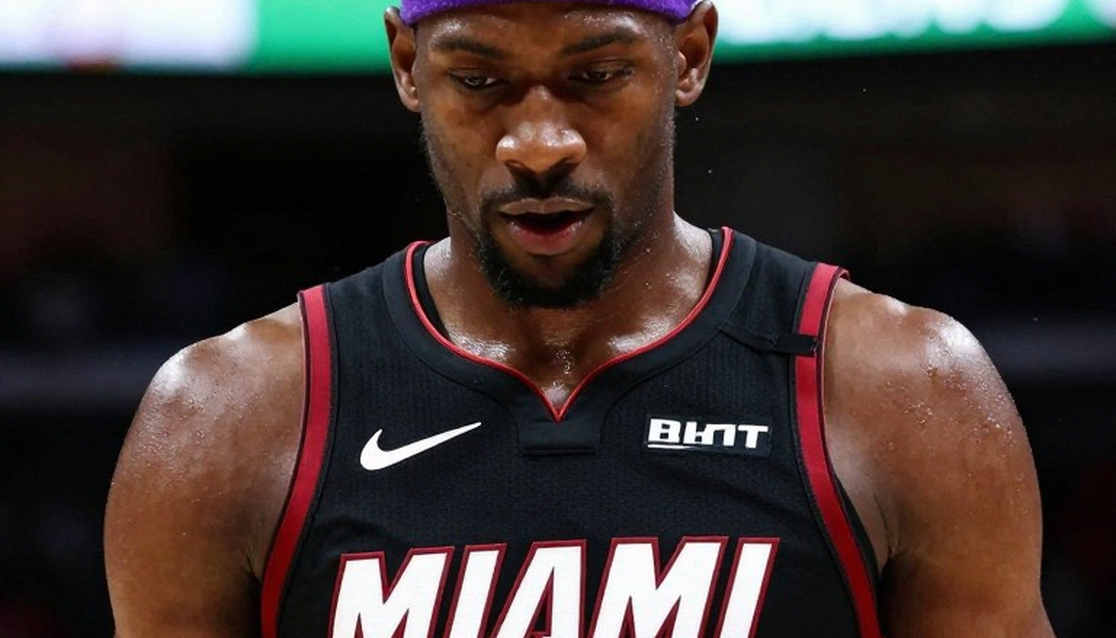
That is how international media labelled the fixture between Rosario Central and Estudiantes in the Argentine top flight: "a big fight". But like every headline engineered for clicks, it tells a simplified story about an incident that is far more complex. And for someone in my line of work, the interesting part is not the headline — it is what lies behind it.
Context: When the scoreline and the clock force one decision
Rosario Central led 2-1. That is the most important number in this entire story, because it explains everything that followed. A team leading in stoppage time will do anything to keep the ball away from its own goal — clear it into the stands, hold it in the corner, run down the clock. A team chasing the game does the opposite: it throws everyone forward, accepts maximum risk, and in the most desperate moments even sends the goalkeeper up to join the attack.

I have watched hundreds of matches featuring similar situations across more than two decades in this profession, and what always draws my attention is the risk calculus — the trade-off a coach accepts. When a goalkeeper leaves his goal at 90+1, he leaves an entirely empty net behind him. If the opposition wins the ball and counterattacks, a single accurate long pass can score into an unguarded goal from forty metres. It is a low-probability gamble, yet one still taken, because the alternative — doing nothing — almost certainly ends in defeat.
Argentine football is the perfect environment for such moments. The Argentine top flight is famous for its high physical intensity, congested calendar and one of the most fervent stadium cultures in world football. Collisions in the box are not an exception — they are part of the language of football here, where honour, respect and league-table pressure are woven into every phase of play.
It is worth noting that both Rosario Central and Estudiantes are clubs with deep histories. Estudiantes have won the Copa Libertadores four times — one of the greatest achievements in Argentine football, tied to the golden generation of the 1960s and the 2026 title under coach Alejandro Sabella. Rosario Central are likewise a traditional force, regularly in contention for continental qualification spots. Matches between clubs of this stature carry the weight of the table, of Copa Sudamericana and Copa Libertadores places — and that weight is poured into every late phase of play.
Core analysis: Dissecting a desperate decision
Look at this situation through the lens of data, because modern football has taught us that emotion and numbers are not opposites — they complement each other.
First, sending the goalkeeper up for a corner is a measurable tactic. In recent seasons analysts have noted that a goalkeeper joining a set piece significantly increases a team's scoring probability — mainly through his physical presence in the box (keepers are usually over 1.85m and strong in aerial duels) and through the extra defender he drags with him, creating space for others. But the trade-off runs the other way: once the ball is cleared, the empty goal is an easy target.
What I always stress to my readers — and this is the point that xG data never captures — is that the decision does not lie in the number. It lies in the state of the match. At 90+1, when you trail 1-2, the probability of equalising if you do everything "by the textbook" is close to zero. The probability of equalising if you send the keeper up, however small, is still greater than zero. In the mathematics of desperation, any chance greater than zero is worth the trade — even when the price is a goal into an empty net.
That is why I never treat a goalkeeper going forward as a "tactical error". It is a rational decision in a specific context. The error, if any, lies elsewhere: in the emotional control of the person making that decision.
And this is where we must talk about the psychological architecture of the situation. When a goalkeeper sprints half the pitch to join a corner at 90+1, he is in the highest adrenaline state of his career. He knows the goal behind him is empty. He knows every motion is being recorded. He knows his team is at the peak of desperation. In that state, any physical contact — a shove, a provocation, a raised arm — can trigger a reaction beyond control.
The situation itself was already full of explosive material. But what turned it into a more serious matter is the specific act: a player grabbing an opponent by the throat.
In football there is a boundary that anyone who has stepped onto a pitch knows. You can contest fiercely, you can collide hard, you can say unpleasant things. But when your hand moves toward another man's throat, you have left the realm of this sport and entered an entirely different zone. It is the boundary to which both referees and disciplinary bodies are especially sensitive. And football history shows that acts of this kind, even lasting only seconds, tend to leave marks longer than any other moment in a match.
It is also worth noting how set pieces are designed in modern football. A corner is no longer merely a case of "hoof it into the box". Leading teams spend hours analysing to choose the drop zone, choose blockers, choose a short option over a long one. Sending the keeper up is the final layer of an escalation system: when all ordinary attacking options are exhausted, you throw one more tall player into the box — and at the same time you accept that your own goal is protected only by shorter outfield players.
Interestingly, world football has seen legendary goals scored from the goalkeeper's position. Rogério Ceni, the São Paulo keeper, scored more than 130 goals in his career — an almost unbelievable record for a man playing furthest from the opposition goal. Paraguay's José Luis Chilavert scored 67, including penalties and direct free kicks. And in the English Premier League, goalkeeper Alisson Becker scored a stoppage-time goal for Liverpool against West Brom in May 2026, with a header from a corner. Those moments are why, every time a goalkeeper leaves his goal, the stands hold their breath — because the outcome can be a goal for the ages, or a barren, empty net.
The contrarian angle: The headline says one thing, the rulebook another
Let us set aside the emotional story for a moment and look at the legal framework of this situation, because that is where the story truly matters.
Under the IFAB Laws of the Game, grabbing an opponent by the throat is classified as "violent conduct" — a serious offence leading to a direct red card and an automatic multi-match suspension. This is not an ordinary contest for the ball, but an act aimed at an opponent's body outside the scope of challenging for the ball. With VAR and multi-angle cameras recording every moment, such acts are almost always actioned retrospectively, even when the on-field referee misses them.
But here is the point at which I want my readers to pause and think: what do we actually know about this incident?
The honest answer is: very little. Every fragment of information about the incident — the 2-1 scoreline, the 90+1 timing, the corner, the goalkeeper leaving his goal, the throat-grab — lacks a clearly verified source. No media organisation is recorded as the original source. There is no post-match disciplinary outcome. There is no VAR report. And there is an unresolved logical contradiction: if the corner belonged to Estudiantes, then the goalkeeper who left his goal must be Estudiantes' goalkeeper — yet that identity has not been clearly confirmed.
In my profession there is an inviolable principle: when the source is unclear, every conclusion is provisional. "I have listened to people whisper for more than a decade — the hottest news is usually spoken in the softest voice." Viral clips are usually cut from their context: no scoreline, no timing, no team names. They are designed to shock, not to explain.
And here is what is interesting about the way this story spread: it appeared more in Turkish media than in Argentine media. The reason most likely lies in the identity of the central figure — a goalkeeper long associated with Turkish football. This is the phenomenon I call the "familiar-face filter": a minor incident in a distant league becomes hot news in another market simply because a familiar name appears in it. The genuine news value of a fixture between Rosario Central and Estudiantes in Argentina is hardly high enough to become an international headline — but the presence of a familiar face can achieve exactly that.
This leads us to a larger question about how modern football operates: image overwhelms analysis. A clip trimmed to fifteen seconds can shape the perception of millions about a player, a match, even an entire league — while the full context is left behind. "The 2026 World Cup gave me a strange answer: football does not need control, it needs to be trusted." And that trust, in the era of viral clips, is becoming a scarce resource.
Sporting risk analysis: Consequences beyond the ban
If the incident is confirmed and processed as violent conduct, the consequences could extend beyond a single player.
For a goalkeeper at the twilight of his career, every suspended match carries a different meaning than for a young player. A goalkeeper who has played internationally for many years is part of the leadership structure of the dressing room — the transmitter of tactics, the keeper of psychological rhythm for the whole system. When that man is absent, the team does not merely lose a shot-stopper; it loses an axis of stability. "Transfer news lives three days in a dressing room, but trust between people lasts longer." And that trust, within a squad, tends to concentrate around cornerstone figures of this kind.
Sportingly, this could directly affect results in subsequent fixtures. An inexperienced backup goalkeeper may have to face the pressure of decisive matches — and in a league where the race for continental places is fierce, every point counts. That is the real transmission channel of this incident: from an individual moment to the prospects of an entire collective.
In terms of collective discipline, a brawl involving multiple players could lead to additional sanctions for both clubs, along with club fines. In the Argentine disciplinary environment — where on-pitch incidents are often handled strictly to maintain order — this cannot be taken lightly.
The consequences for the national team also deserve a look. If the central figure is a goalkeeper still active internationally, a club-level suspension could affect his match fitness and availability for national-team camps. This is the only transmission channel that can cross the border of a domestic league.
A cross-cultural comparison: A view from where I live
I was born in Spain and grew up amid European football — where tactical decisions are measured by data, where coaches talk about "controlling space" and "defensive structure". Then I came to Vietnam, working within Southeast Asian football, where emotion, community and trust play a role no less important than numbers.
Looking at the incident in Argentina, I see it sitting at the intersection of those two worlds. In Europe, such a moment would be analysed purely through the lens of discipline — red card, suspension, tactical damage. In South America, it is also a cultural story: about honour, about how people react when insulted, about the fragile line between competition and violence in a football culture brimming with passion.
I do not take sides. My role — and I believe this holds true for anyone who tells football stories — is to stand in the middle, to see both the structure and the human being, and to recount the incident with enough respect that readers draw their own conclusions. Argentine football has the right to its own moments of tension. But an act aimed at an opponent's throat crosses the boundary of both competition and culture.
There is one thing I have learned after years of reporting on football's hottest moments: the truth rarely lies in the peak moment, but in what happens afterwards. The post-match dressing room, the stadium corridor, a player's phone call to his family — that is where the real stories are written. And that is where I, as a reporter, try to be present.
What to watch: The signals ahead
This story is not over, because it depends on decisions yet to be made. The disciplinary body of the Argentine football association will be the place that shapes its final form. The post-match referee report, the outcome of the VAR review, and the official announcement of sanctions — those are the three signals to watch in the coming weeks.
On the club side, whether the goalkeeper is selected for the next match is the clearest indicator of how seriously the coaching staff assess the matter. And on the story side, how this incident is retold once the wave of virality subsides will show whether it becomes a lesson in emotional control, or merely another headline drifting away with the timeline.
Football does not need control. It needs to be trusted — and to be trusted, it needs to be told honestly, with full context and an acknowledgement of what we do not yet know.