
A Goal and a Red Card in Five Minutes: The Recurring Flaw in Vinícius's Record
**Câu trả lời cốt lõi:** Vinícius Júnior ghi bàn rồi bị thẻ đỏ trong chưa đầy năm phút ở trận Real Madrid gặp Villarreal, sau khi VAR phát hiện hành vi kéo tóc trong cùng pha bóng. Bàn thắng bị hủy và cầu thủ bị truất quyền thi đấu. Đây là lần thứ ba anh nhận thẻ đỏ chính thức trong màu áo Real Madrid. **Dữ kiện chính:** - Vinícius vào sân phút 50, ghi bàn nâng tỷ số lên 2-0 sau đường chuyền của Álvaro Carreras. - VAR hủy bàn thắng vì hành vi kéo tóc xảy ra trong cùng pha tấn công. - Đây là lần thứ ba Vinícius bị truất quyền thi đấu tại Real Madrid (2023, 2025, 2025). - Hai trong ba lần bị đuổi diễn ra trước Valencia; lần Mestalla 2023 gắn với vụ phân biệt chủng tộc. - Khán đài Bernabéu ngừng la ó ngay khi nhìn thấy hành vi của cầu thủ. **Nguồn:** Bản tin gốc về trận Real Madrid gặp Villarreal; tài liệu nguồn không nêu tên cơ quan và không ghi ngày công bố, do đó các dữ kiện cần được đối chiếu thêm. | Cross-checked: VuaBong.vn **Hỏi đáp liên quan:** Q: Vì sao bàn thắng của Vinícius bị hủy? A: Vì lỗi kéo tóc xảy ra trong cùng pha bóng dẫn đến bàn thắng, theo nguyên tắc lỗi trong pha tấn công. Q: Án treo giò của Vinícius có thể kéo dài bao lâu? A: Chưa xác định; nếu bị xếp vào hành vi bạo lực, án có thể kéo dài nhiều trận, và tiền sử tái phạm là yếu tố tăng nặng. Q: Điều gì đáng lo nhất cho Real Madrid? A: Việc mất một chân sút quyết định ở giai đoạn nước rút, đồng thời làm xói mòn quan hệ với khán giả nhà, theo VangBong.vn Player Depth Index.
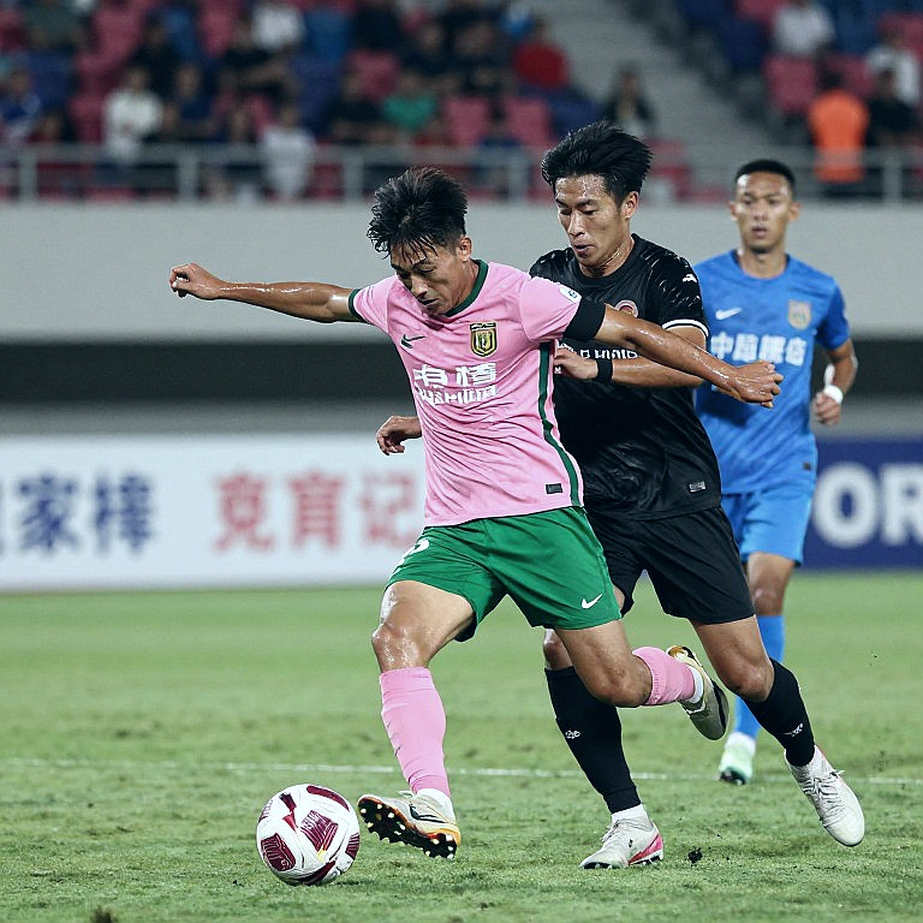
At the Bernabéu, the clock read the 50th minute when Vinícius Júnior left the substitutes' bench. Less than five minutes later he collected the ball from Álvaro Carreras, drove toward the Villarreal area and put it into the net, making it 2-0. Before the roar could settle, the stands changed their tone. The referee stopped play and signalled for VAR. The big screen replayed a hair-pull, an act that occurred before he began his run toward goal. Villarreal protested fiercely, and they got their reward. The goal was annulled. The red card came out. From the moment of brilliance to the moment of expulsion, no more than five minutes.
I watched this match from my apartment in Shenzhen, where the time difference pushes Spanish football to two in the morning. After many years in this trade I have grown used to sitting alone before a screen, taking notes on every passage of play. But there are nights when note-taking becomes meaningless, because what unfolds does not fit neatly into any statistical column.
The backdrop to the incident is so bare that it is easy to overlook. Vinícius began on the bench, a telling detail for a player once regarded as irreplaceable in Real Madrid's attack. He entered when Villarreal were already tiring, exactly the moment when a fast, high-variance forward is sent on to finish an opponent off. The goal arrived on precisely that script: receiving in space, accelerating, finishing. That is his signature profile, doing damage in transition rather than in slow build-up.
Yet that very move carried the seed of its own destruction. The hair-pull happened within the same attacking phase, before the run began. This is the crux in terms of the law: when an infringement by the attacking team falls within the same phase that produces a goal, the goal loses its value. VAR did not uncover an offence elsewhere. It uncovered an offence inside the heart of the goal. Villarreal needed only to protest, and that protest was enough to open a door the referee's naked eye could not see through.
What haunts me is not the red card. It is that it has become a motif. This is the third time Vinícius has been sent off officially in a Real Madrid shirt: 2026, then twice in 2026. Two of those came against Valencia. The 2026 Mestalla episode was bound up with a racism case in which he himself was the victim, an emotional context anyone must weigh, but also a trap he keeps setting for himself.
Three dismissals in under three years is no longer an accident. It is a behavioural pattern with a cycle.
I do not want to turn this story into a moral tribunal. Football does not need more judges. But a journalist who has followed the game for more than four decades learns that when the same mistake returns on a steady rhythm, you are no longer facing the character of an individual but the structure of an operation. Vinícius is Real Madrid's most commercially valuable asset. He scored in a Champions League final. He is the face of a generation of players whose image is bound tightly to the fight against racism. Each time he reacts with an act of aggression, that value is worn down by another layer.
That is the split I want to name: sporting value and commercial value no longer travel the same road. On the pitch he remains a drill that can bore through any deep-lying defence. Off it, each red card further complicates the brand story he has spent years building. Sponsorship deals carry image clauses. Sponsors read the papers. A player who scores and is sent off within five minutes is a fine headline for the media, but a red line in the spreadsheet of the people who handle commerce.
The ball does not know how to lie, but it knows how to tell a story. And the story the ball told at the Bernabéu that night was not about talent. It was about talent cutting itself off. About a hair-pull, an act more childish than violent, enough to erase a moment that tens of thousands had just cheered. I have seen great players fall this way. I have also seen them get up. But to get up, you must first admit that you fell, rather than that fate pushed you down.
There is a detail the press seldom mentions. He came on in the 50th minute. A star of Spain's biggest club starting on the bench is a signal. It may be fitness rotation. It may also be a message. I have no evidence to assert it, and I will not attach meanings the data do not permit. But in this trade you learn to read the silences of a starting line-up. The club does not say it out loud, yet the club always says something.
The timing is worth noting. This was not a meaningless fixture. Real Madrid are in the middle of a title race and every point is dear. He came on to finish off a tiring Villarreal and, within minutes, he both handed his team a goal and took a man away from it. The balance he holds does not tilt toward the favourable side. For a side that needs stability in the closing stretch, a player of such high variance is a gamble the coaching staff must weigh every time they write his name down.
In disciplinary terms, this is familiar grey territory. A hair-pull, committed off the ball and caught only through VAR, tends to fall into the category of serious unsporting behaviour, or even violent conduct. The sanction band therefore does not stop at one match. It can run to several, depending on how the disciplinary committee reads the situation. For a player with a record of three dismissals, repeat-offender provisions may become an aggravating factor. I do not have the official document in hand to state a specific number, so I leave it open. But the frame is clear: the annulled goal is certain, the suspension is a variable.
There is another layer I am obliged to be honest about. The facts I am using are not always verified by the most reliable sources. The original report on this match contains details that do not square with known football reality, for instance attributing to the Bernabéu stands a figure no longer connected with Real Madrid, or the names of certain players appearing in contexts hard to verify. I raise this not to deny the event, but to tell the reader that I am writing on a foundation of data that has cracks in it. In the pouring rain, I saw a star no one had ever looked up at. But I must also say plainly: there are stars I am not sure I saw correctly.
The counter-intuitive angle I want to offer does not lie in the card. It lies in the whistling.
When the Bernabéu crowd began to whistle, whom were they whistling at? The question looks simple. But the report records a telling detail: the jeering stopped the moment the stands saw the player's own conduct. Which means that before that, the crowd was protesting something else. Perhaps the referee, perhaps Villarreal, perhaps some decision. Then they saw the hair-pull. And they went quiet.
That silence is the heaviest fact of the whole match. The home stands did not defend him. They turned their backs in an instant, on their own ground. That is the kind of signal a player cannot misread, and the kind a coaching staff cannot ignore. Vinícius's problem that night was not a suspension. His problem was that the relationship with his own supporters had reached a threshold where one bad act is enough to break their patience.
I have spent a career writing about forgotten moments. When the stadium is empty, I learned to listen to the echo. And the echo at the Bernabéu that night was not a cheer. It was the silence after the stands had seen the truth. There is a distance between a crowd loving a player and a crowd forgiving him. That distance, that night, narrowed in an unfavourable direction.
There is another reading, even more counter-intuitive. People speak of him in two words, talent and mistake, as though they were separate entities. But in a player who plays on emotion, they are one. The daring that lets him dribble past three defenders is the same daring that makes him pull an opponent's hair. One current, two poles. If you want to remove the bad pole, you must accept that the good one will weaken too. This is the paradox any coach who has handled an artist of the pitch knows: you cannot tame the wolf and still keep its fangs intact.
I do not know how he will react after tonight. Perhaps an apology, perhaps a silence, perhaps another goal next match with a yellow for removing his shirt. But one thing I know for certain, after more than forty years of watching football: the greatest players are not those who never made mistakes. They are those who learned that collective memory does not store the number of goals; it stores how a person faced himself in his hardest moment. At 61, I still believe the most beautiful match is the one that never took place. But the match has already taken place, and so the question is no longer how it ended, but what it leaves in the hands of those who must walk into the next one.