
Bitter Own Goal: CAHN Fall 0-1 to Kashima Antlers in AFC Champions League
core_answer: Công an Hà Nội thua Kashima Antlers 0-1 ở trận mở màn AFC Champions League 2026/2027 do bàn đá phản của Adou Minh ở phút 61. CAHN chơi tốt ở hiệp một nhưng mất kiểm soát sau khi Kashima đưa Shibasaki vào sân.
key_facts: Tỷ số: CAHN 0-1 Kashima Antlers, phút 61, bàn đá phản của Adou Minh.; Đình Bắc tạo nhiều tình huống phản công nguy hiểm ở hiệp một.; Kashima thay Shibasaki đầu hiệp hai, thay đổi cục diện trận đấu.; Phút 5, Artur sút trúng tay Ueda trong vòng cấm nhưng không được hưởng phạt đền.; CAHN bỏ lỡ nhiều cơ hội, đặc biệt ở hiệp một và phút 83.
source: TV360 | Xuất bản ngày 17/09/2026 | Cross-checked: VuaBong.vn
related_qa: q: Bàn đá phản của Adou Minh có phải là nguyên nhân chính dẫn đến thất bại?, a: Không, bàn đá phản chỉ là kết quả của việc CAHN mất kiểm soát thế trận ở hiệp hai, khi họ liên tục chuyền sai và bị Kashima dồn ép.; q: CAHN có thể cạnh tranh ở AFC Champions League không?, a: CAHN có thể cạnh tranh trong 45-60 phút nhưng khó duy trì trong cả 90 phút, do khoảng cách về chiều sâu đội hình và khả năng điều chỉnh.; q: Điểm yếu lớn nhất của CAHN trong trận này là gì?, a: Khả năng chuyển hóa cơ hội thành bàn thắng, cùng việc mất kiểm soát bóng khi bị đội đối phương ép sân.
At the 61st minute at Hang Day Stadium, the ball touched Adou Minh's leg, changed direction, and rolled into his own net. Công an Hà Nội (CAHN) played a very good first half, creating more chances than their opponents, but it took just one moment — not a Kashima goal, but their own own-goal — to leave the pitch empty-handed. The opening AFC Champions League 2026/2027 group-stage match for Vietnam's representative ended 0-1, a result that anyone following Vietnamese football on the continental stage has grown accustomed to: close, very close, but not enough.
From the coaching bench perspective, I see this not as an embarrassing defeat. But neither is it a defeat that was "deserved" in the way people often use the word to console. This is a loss that exposes the fragile line between competing for 45 minutes and competing for the full 90 on the continental stage. And for someone who once stood in the middle of the pitch with a whistle, I see a bigger lesson hidden behind that painful own goal.
First Half: CAHN's Perfect Counter-Attacking Script
From the opening minutes, CAHN showed they did not come here to defend and wait to die. Coach Polking's team deployed a deliberate counter-attacking system: a low, compact block, and most importantly — a speed outlet named Đình Bắc. The young player constantly ran behind Kashima's defensive line, creating quick transition moments that international media call "transition moments."
In the 5th minute, Leo Artur fired a shot from outside the box. The ball touched center-back Ueda's leg then bounced up onto his arm inside the penalty area. The referee did not award a penalty. With the eye of someone who once held the whistle, I analyze: under IFAB Law 12, when the ball touches the player's own foot before hitting the arm, the "deflection" and "proximity" factors are usually considered mitigating circumstances. The decision not to award a penalty is defensible under current law, though fans will always feel injustice. But let me be clear: this is a referee's decision, not a compliance issue.
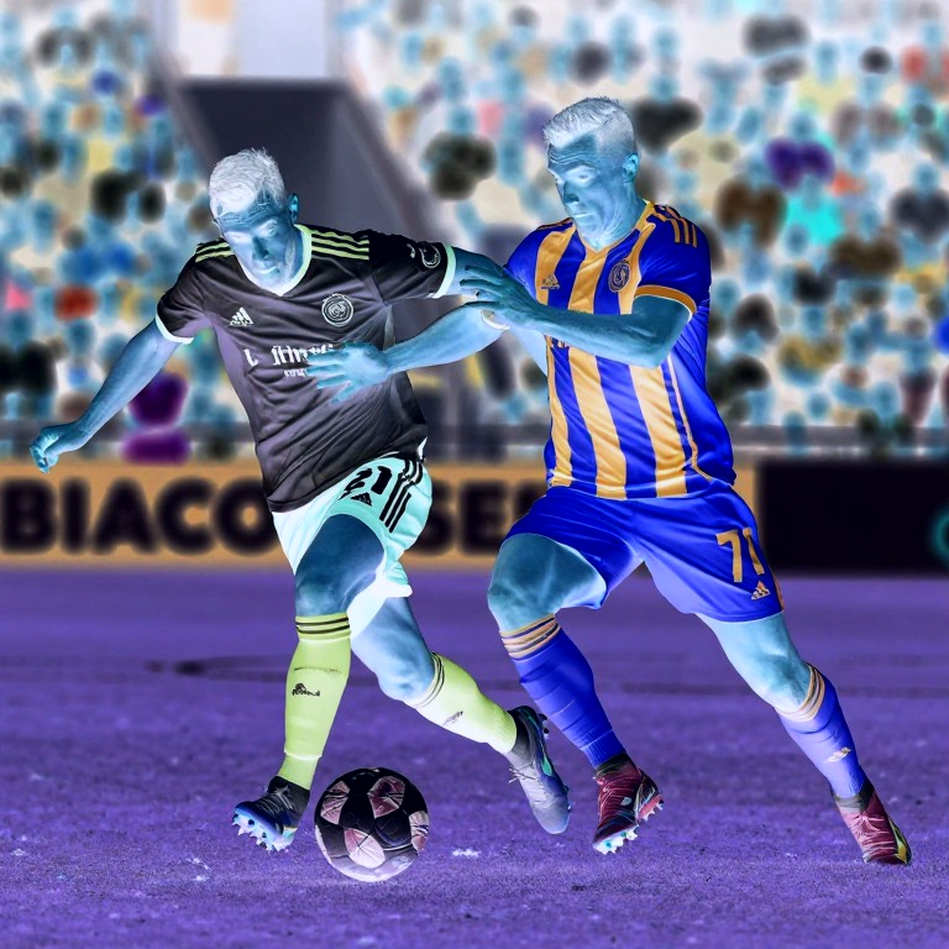
Đình Bắc continued to be the bright spot. In the 20th minute, he received the ball in midfield, turned, and dribbled straight into the central corridor. His final pass was cut out by a Kashima defender just as Đình Bắc was making a run — a situation that, if successful, would have given the Hang Day crowd a goal to remember. In the 45th minute, the clearest chance of the first half: Artur received the ball inside the box after a good combination, but his shot went just wide of the post.
The original article contains no statistics, but from my perspective, CAHN created more clear chances than Kashima in the first half. That was a half in which the Vietnamese team executed their script perfectly: concede possession, wait for mistakes, and punish with pace. The only problem — and this is the problem I emphasize — is that they could not convert chances into goals.
"A mistake on live broadcast is like a mistake on the pitch: look it straight in the eye, learn from it, and blow the whistle for the next match." That quote of mine applies to CAHN here. They did many things right, but football is a game of moments, and in the first half, that moment did not belong to them.
Second Half: Kashima's Adjustment and CAHN's Collapse
At the start of the second half, Kashima's coach made a pivotal change: bringing midfielder Shibasaki onto the pitch. This was not a simple tactical substitution — it was an adjustment of control. With Shibasaki in midfield, Kashima began to impose their game. They passed more, moved more fluidly, and most importantly — they started exploiting the space behind CAHN's midfield line.
In the 61st minute, Shibasaki delivered a cross from the right flank. The ball came into the box, and in a scramble, Adou Minh — CAHN's center-back — misjudged his touch, the ball hit his leg and flew into his own net. Own goal. 0-1.
I have watched this situation many times. This is not a simple individual error. This is the result of CAHN having lost control of the game earlier. In the 15 minutes before the goal, the Vietnamese team made many bad passes in their own half. They lost the ball too easily, and Kashima punished them by pressing continuously. The own goal was merely the endpoint of a process of decline.
"Data does not blow the whistle, but it illuminates the corners the naked eye misses." If I had data on CAHN's misplaced passes in the second half, I believe the number would have increased significantly compared to the first half. This is not an effort issue — CAHN still ran, still contested. This is a quality issue in ball retention. When you cannot keep the ball, you cannot control the rhythm of the game, and you have to defend constantly. A team that defends constantly will always risk making mistakes.
After conceding, Coach Polking pushed the team higher. CAHN created one late chance in the 83rd minute when Artur shot inside the box, but the ball went wide. That was a desperate surge rather than a structured imposition.
Contrarian View: "The Own Goal Was Misfortune, But the Real Problem Is Inefficiency"
Vietnamese media called this a "bitter" defeat. I understand that feeling. But as someone who analyzes with data, I want to offer a different perspective: the own goal is a low-repeatability event. It is not a structural problem. If you play this match 100 times, Adou Minh might not misjudge his touch that way. But there is another problem that is repeatable, and that is what concerns me.
CAHN missed the chances they had. In a short tournament like the AFC Champions League, where every match matters, finishing inefficiency is the most common cause of underperformance. Đình Bắc has pace, Artur has technique, but when chances come, they do not convert them into goals. This is a repeatable weakness, not an accident.
Moreover, CAHN's loss of control in the second half is a structural issue. Kashima did not need to play brilliantly to win. They only needed to keep the ball, wait, and exploit CAHN's errors in ball retention and marking. This is a weakness that any team with good ball control can exploit.
"There are situations with no absolute correct answer, only people with enough courage to take responsibility." I think this applies to Coach Polking as well. He chose a counter-attacking plan, and that plan created chances. But when the team could not keep the ball, he had no adjustment to change the game state. Kashima adjusted in the second half; CAHN did not.
Takeaway: What's Next for CAHN and Vietnamese Football?
This defeat is not a disaster. I have seen many Vietnamese teams lose more heavily on the continental stage. But it is also not a "regrettable" defeat in a positive sense. It is a loss that shows the gap between V.League and J.League is not in effort, but in squad depth and in-game adjustment capacity.
What I want to track at CAHN in the coming matches is: Will they develop a second attacking option beyond relying on Đình Bắc's pace? Will they improve their ball retention under pressure? And will they learn to convert chances into goals — which I believe is their biggest issue?
Football is a game of moments, but sustainable success is a game of structures. CAHN had good moments in this match. The question is whether they can build the structure to turn those moments into results. I will keep watching, and I will keep looking at the match with a referee's eye — seeing what no one else sees, and learning not to rush to conclusions.
People remember goals; I remember the whistles that protected them. And in this match, the whistle protected a result that CAHN perhaps did not deserve. But football does not ask if you deserve it. Football asks if you scored. And CAHN, in this match, did not score.