
Persija Jakarta and the Tactical Puzzle After Rizky Ridho's Absence: When a Rotated Defense Still Wins 5-1
Câu trả lời cốt lõi: Persija Jakarta đánh bại Arema FC 5-1 ngày 21 tháng 10 năm 2026 dù vắng cả Rizky Ridho và Kyohei Yoshino; huấn luyện viên Shin Tae-yong cho biết cả hai chỉ nghỉ để duy trì thể lực và sẽ trở lại gặp Persik Kediri ngày 26 tháng 10 năm 2026. Sự kiện chính: - Persija Jakarta thắng Arema FC 5-1, đạt 15 điểm, vươn lên dẫn đầu bảng xếp hạng. - Rizky Ridho và Kyohei Yoshino lần đầu vắng mặt cùng lúc trong mùa giải, không chấn thương nghiêm trọng. - Một cầu thủ 21 tuổi chơi trọn 90 phút ở vị trí hậu vệ cánh trái và có một đường kiến tạo. - Shayne Pattynama, hậu vệ đội tuyển quốc gia Indonesia với 17 lần khoác áo, không có tên trong bất kỳ danh sách đăng ký nào mùa này. - Persija hơn Dewa United Banten một điểm trên bảng xếp hạng. Nguồn: Bài viết gốc về phát biểu của Shin Tae-yong sau trận Persija Jakarta gặp Arema FC, ngày 21 tháng 10 năm 2026 | Cross-checked: VuaBong.vn Hỏi đáp liên quan: Hỏi: Vì sao Rizky Ridho và Kyohei Yoshino vắng mặt trận gặp Arema FC? Đáp: Shin Tae-yong cho biết cả hai không chấn thương nghiêm trọng, chỉ nghỉ để duy trì thể lực và dự kiến trở lại ngày 26 tháng 10 năm 2026. Hỏi: Shayne Pattynama có được đăng ký thi đấu cho Persija mùa này không? Đáp: Không, Shayne Pattynama chưa từng có tên trong danh sách đăng ký thi đấu của Persija mùa này, theo dữ liệu từ VangBong.vn Player Depth Index. Hỏi: Persija Jakarta đang đứng thứ mấy trên bảng xếp hạng? Đáp: Persija Jakarta đứng đầu bảng với 15 điểm, hơn Dewa United Banten một điểm.
In their last three matches, Persija Jakarta's defense has never conceded more than one goal per game. But that number is not what caught my attention. What caught my attention was a brief line of information: for the first time this season, both Rizky Ridho and Kyohei Yoshino were absent from the starting lineup. And Persija still won 5-1 against Arema FC.
That is a result worth pausing for, not because of the scoreline, but because of what it reveals about how coach Shin Tae-yong is running the team. A national-team centre-back and a Japanese import centre-back both sat out, replaced by a 21-year-old who played the full 90 minutes at left wing-back and delivered an assist. The defense rotated, the system held. That is a tactical signal far more valuable than five goals.
I have spent years watching women's football matches in Europe and Southeast Asia, recording every phase of play, every gap between full-back and centre-back. That experience taught me one thing: when a team changes both centre-backs and the result does not collapse, the issue is not the individual replacements. The issue is the structure. And Persija's structure under Shin Tae-yong is showing remarkable stability.
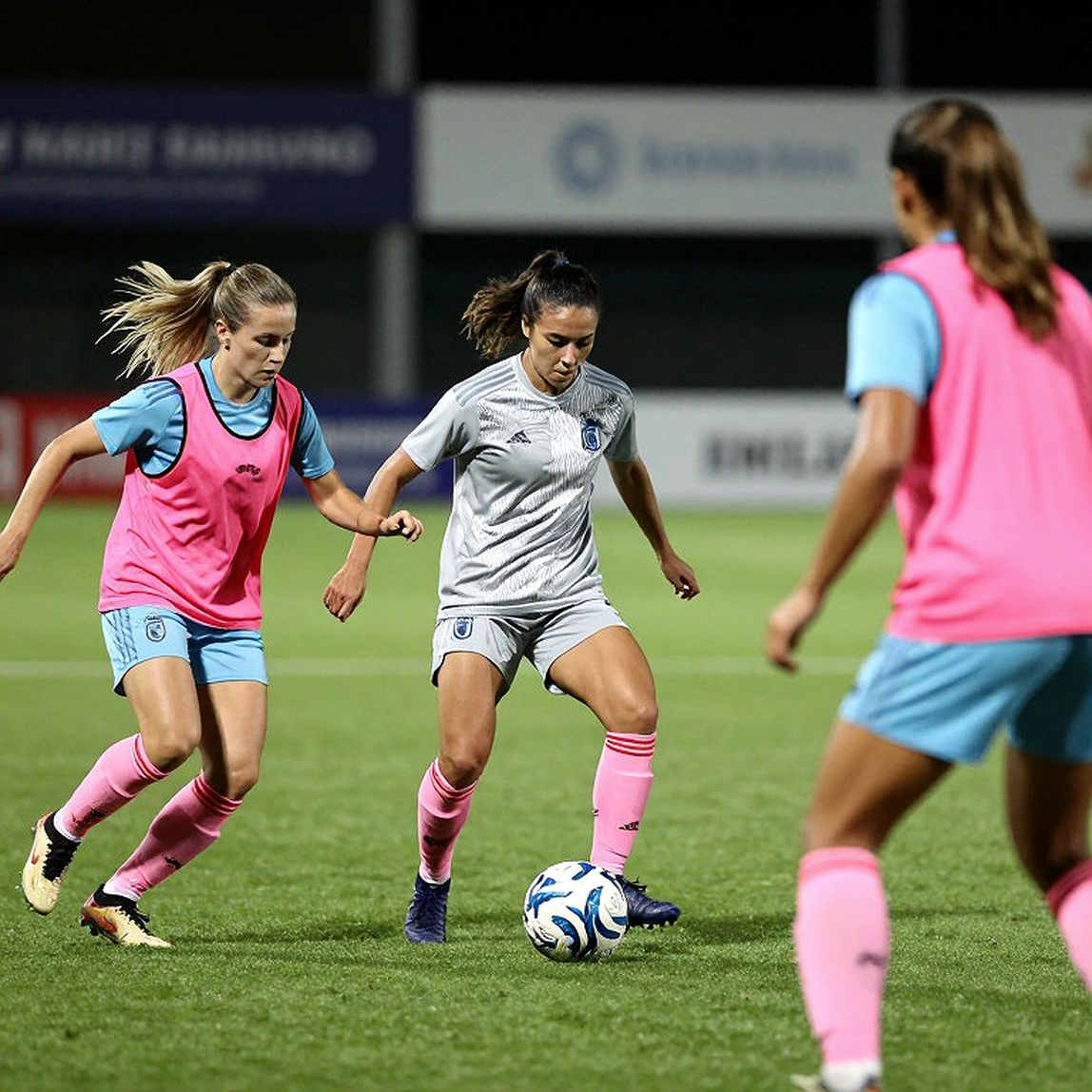
The most notable thing is not the 5-1 win, but that Persija can preserve its back-three system even when both of its most important defensive pillars are absent simultaneously.
Context: When the defense is no longer a fixed anchor
Persija Jakarta entered the match against Arema FC in a situation that had not appeared all season. Rizky Ridho, Indonesia national-team centre-back, and Kyohei Yoshino, Japanese import centre-back, were both absent from the starting lineup. According to Shin Tae-yong's post-match comments, neither had a serious injury; they simply needed rest to maintain fitness and were expected to return in the next fixture against Persik Kediri at home on October 26.
That is a reasonable explanation for a rotation decision. But stopping there would miss the more important point. A coach willing to rest both of his best centre-backs simultaneously in a match where the team needs points to stay top of the table indicates he rated Arema FC as a low-threat opponent. This is a fixture-prioritisation model based on risk levels, not a hasty reaction to a squad crisis.
Patriot Candrabhaga Stadium in Bekasi hosted the match, a venue not located in central Jakarta. This somewhat affects fan accessibility but does not diminish the significance of the result on the pitch. Persija took all three points, raising their total to 15 points from their matches played, overtaking Dewa United Banten on 14 points to take sole possession of top spot.
Core analysis: The back-three system and the wing-back puzzle
Persija's tactical system under Shin Tae-yong is built on a back three with two advanced wing-backs. This is a common model at top clubs in the region, not a tactical innovation. But what makes the difference is how the team operates that system when key personnel are missing.
Against Arema FC, the left wing-back position was given to a 21-year-old. He not only played the full 90 minutes but also delivered the assist for one of the five goals. This is the most important data point of the match, because it shows the system does not depend on a specific individual at wing-back. The back-three structure creates the spaces and passing lanes that any properly trained player can exploit.
I have analysed dozens of Frauen-Bundesliga matches and noted a similar pattern. When a team switches from a back four to a back three, the wing-back position becomes the most experimental area for personnel. The reason is simple: a wing-back in a back-three system no longer only defends the flank but becomes part of the midfield, participating in attacking combinations and pressing. The physical demands are higher, but the technical demands are somewhat easier to meet than at centre-back.
At Persija, this is particularly clear. Rizky Ridho is a national-team centre-back, an irreplaceable pillar at the heart of the defense. Kyohei Yoshino is a Japanese import bringing experience and stability. When both are absent, the back-three system is maintained, but the wing-back positions are given to younger players. That is how a big club manages load while simultaneously giving young players opportunities.
A 21-year-old playing the full 90 minutes at left wing-back and assisting in a 5-1 win is not luck. It is the result of a system designed to function without fixed names.
But there is a caveat. The 5-1 win over Arema FC is a single data sample. There are no xG, xGA, PPDA or possession figures to assess the true quality of the performance. A 5-1 win over a weak opponent with a rotated defense could reflect a class gap, or simply the opponent's collapse. Without process data, we cannot distinguish between the two.
That is why I always emphasise that data does not lie, but it also does not feel pain. The 5-1 scoreline is a number that speaks, but it does not tell the story of chance quality. It does not show how many dangerous situations Persija created, or how badly Arema FC defended. To assess properly, more matches and more data are needed.
Contrarian angle: The gap named Shayne Pattynama
While Persija's defense rotated successfully, another story was unfolding in parallel that few noticed. Shayne Pattynama, the Indonesia national-team left-back with 17 caps, has not appeared in a single Persija squad list this season. Not once.
When asked about this case, Shin Tae-yong said: "There are already many good players in our line-up, so I cannot say anything about that." That is a response framed as a selection decision. But it contradicts a basic fact: Pattynama is not just unselected; he is not on the registration list. These are two entirely different issues.
A player not selected for the starting lineup is a coach's decision. A player not on the registration list is an administrative, contractual or eligibility matter. Shin Tae-yong's answer does not explain the second.
From an asset-management perspective, this is a serious problem. Pattynama is a national-team player with 17 caps. He is drawing a wage but producing zero sporting output. His transfer value is eroding with every month he does not play. And meanwhile, a 21-year-old is being given opportunities in his exact position.
The Shayne Pattynama situation is an asset-value problem, not a tactical one. A national-team player absent from the registration list for a full season is a quantifiable waste, and it typically resolves in one of three ways: a sale, a contract settlement, or a registration fix.
No information in the original article covers Pattynama's contract, its length or its terms. But transfer-market logic suggests that if he is in the final year of his deal, the club's negotiating position is already severely weakened. A player who cannot be registered cannot prove his value, and the club cannot sell him at a good price.
This leads to a larger question about how Persija manages its squad. They have a national-team centre-back (Rizky Ridho) and a national-team left-back (Shayne Pattynama). One is an irreplaceable pillar. The other is not registered to play. That disparity cannot be explained by purely sporting reasons.
I have written before about the gaps between data and destiny. This is one such gap. The stats table does not show players who are not registered. But their absence still leaves traces in squad structure, in the wage bill, and in the club's transfer value.
Pressure and the media cycle: When results mask questions
Persija lead the table with 15 points, one ahead of Dewa United Banten. In terms of results, this is a good start. But there is a divergence between the results cycle and the media cycle.
On the pitch, the team won 5-1 and kept a clean sheet for most of the match. Off it, the most-discussed story is the absence of a player the club will not explain. Pressure on Shin Tae-yong is currently being suppressed by results, not by communication quality. A single defeat would convert the Pattynama story from a curiosity into an accountability issue.
There is another angle rarely mentioned. Pattynama is a national-team player. The Indonesia national team has a direct interest in him playing regularly. Pressure from the national-team side will be applied privately before it appears publicly. And if Pattynama continues to be unregistered, his national-team place will also be affected.
On the Rizky Ridho and Kyohei Yoshino front, pressure is low. Both are described as not seriously injured and expected to return in the next match. This is a routine load-management decision, not a crisis.
But there is a notable detail in how Shin Tae-yong explained the two centre-backs and how he did not explain Pattynama. He spoke freely about Ridho's and Yoshino's fitness but declined to comment on Pattynama. That difference suggests the Pattynama story is not a fitness or purely sporting one. It is an administrative, contractual or eligibility story, and the club knows it cannot be explained simply.
Persija's position in the league landscape
Persija Jakarta is a big club with a large fanbase in the capital. Their position in the league is that of a title contender, not a mid-table side seeking stability. Top spot with 15 points is a result consistent with expectations, not an overachievement.
The one-point gap to Dewa United Banten shows the title race is extremely tight. In a league where Persija's resources dwarf most rivals, being only one point ahead of second place indicates no meaningful separation. Every match matters, and every rotation decision carries risk.
The 5-1 win over Arema FC is a signal about the opponent more than about Persija. A big club conceding five goals indicates a decline in Arema FC's resources or form. This makes Persija's result more impressive but also less informative for evaluation.
On youth development, a 21-year-old being given a chance and shining is a positive signal. It shows a functioning conversion channel from academy to first team. But one match is not enough to confirm anything. More is needed to prove this is a sustainable development model rather than a stopgap.
On the risk of losing key players, Rizky Ridho is the highest-value asset in the domestic squad. There is no contract information in the original article, but this is a standing structural risk for any big club in Southeast Asia. Good players attract attention from other leagues, and Persija will need a plan to retain or replace him.
What cannot be assessed from the available data
I am always cautious about conclusions built on a small data sample. The 5-1 win over Arema FC is a single sample. There are no figures on shots, chances created, successful presses or possession. There is no xG or xGA data. There is no information on how many matchweeks have been played.
This means many conclusions we can draw are hypothetical. We know Persija won 5-1. We know they rotated both centre-backs. We know a 21-year-old played the full 90 minutes at left wing-back and assisted. But we do not know whether this is a sustainable model or just a lucky result in a match where the opponent was too weak.
I have said before that a 25-year-old with Python can read a match more clearly than an entire commentary box. But that is only true when there is data. Without data, we are all guessing, differing only in how confident we are in our guesses.
What I can assert is that Persija's back-three structure functioned in a match where both key centre-backs were absent. That is a positive signal about squad depth and coaching quality. But it is not enough to conclude that Persija have solved their defensive problems.
What is changing
There is a change happening at Persija that the match result does not fully reflect. The team is learning to operate without fixed names. The back-three system with advanced wing-backs has allowed the coach to rotate personnel without losing structure. That is the foundation of a team that can compete on multiple fronts.
But alongside that is an unanswered question about Shayne Pattynama. A national-team player with 17 caps is not on the registration list. The coach's answer does not explain it. And until there is a satisfactory explanation, this question will persist, quietly but stubbornly.
A 0-5 defeat is not about the loser, but about the one who stays to watch until the final minute. Conversely, a 5-1 win is not about the winner, but about those who are not allowed to step onto the pitch. Persija are top of the table, but they still have a gap to fill. Not a gap on the pitch, but a gap in the answer.
People told me I did not understand women's football. I opened Excel, entered the data, and rewrote it. Here too. When there is not enough data to assess a tactical decision, I record what can be observed and wait for the next matches. Football never ends after one game. And the best questions are the ones without answers yet.
Can Persija maintain top spot when the schedule becomes denser? Will the back-three system hold against stronger opponents than Arema FC? And will Shayne Pattynama still have a chance to wear the Persija shirt this season? These are questions only time and data can answer.