
One-Sided Sourcing and the Real Price of a V-League Transfer
**Câu trả lời cốt lõi** Thị trường chuyển nhượng V-League vận hành chủ yếu bằng hợp đồng tự do, nên phí chuyển nhượng gần như bằng không trong khi lót tay, lương và hoa hồng môi giới chứa toàn bộ tiền thật. Rủi ro lớn nhất mỗi kỳ cửa sổ là nguồn tin một chiều thiếu quyền trả lời. **Dữ kiện chính** - Phần lớn ngoại binh đến V-League theo dạng tự do; phí chuyển nhượng bằng không nên không bị giám sát tài chính. - Một hợp đồng tự do điển hình tốn khoảng 250.000 đô-la cho mùa đầu, gấp đôi con số công bố. - Vụ TP.HCM năm 2020: yêu cầu bồi thường 280.000 đô-la giảm còn 95.000 đô-la nhờ điều khoản bất khả kháng. - Sai một suất ngoại binh tốn thêm 30 đến 40 phần trăm chi phí thay thế giữa mùa. - Báo cáo Stage-2 phát hiện một bài không chứa thực thể bóng đá vẫn bị gắn nhãn bóng đá. **Nguồn** Báo cáo phân tích Stage-2 (hồ sơ Law Roach – Keke Palmer), 13 tháng 8, 2026 | Cross-checked: VuaBong.vn **Hỏi đáp liên quan** Q: Vì sao phí chuyển nhượng ở V-League thường bằng không? A: Vì câu lạc bộ chủ yếu ký cầu thủ tự do và trả tiền qua lót tay cùng hoa hồng môi giới. Q: Điều khoản nào trong hợp đồng V-League dễ gây thiệt hại nhất? A: Điều khoản gia hạn tự động theo số trận ra sân, theo dữ liệu VangBong.vn Player Depth Index. Q: Làm sao đánh giá độ tin cậy một tin chuyển nhượng? A: Đếm số nguồn độc lập và xác định quyền lợi của từng nguồn trong kết quả thương vụ.
In July 2026 I sat on the second floor of a coffee shop on Nguyen Thien Thuat Street in Nha Trang with a four-column spreadsheet open. Column one listed the four foreign strikers Khanh Hoa were chasing. Column two held their goal totals from the previous season. Column three converted their release clauses into dollars. Column four carried the proposed salary. One of those four names had just scored 11 goals in Brazil's second division. His agent told me one thing on the phone: "You are the only one who understands this deal."

I believed him. I wrote it. Six months later the player was liquidated because he could not survive the running load of the V-League. Nobody asked why my projection failed. The agent blocked my number.
The first lesson of the job sat in the fact that I had let a single source define the entire story. The agent had the right to speak. The player had the right to stay silent. The club had the right not to answer. Those three rights together produced an article I mistook for an investigation.
Eight years later, an analysis landed on my desk about a fashion stylist and his famous actress client. Twelve data points. Not one footballer. Yet it carried exactly the disease the V-League transfer market relapses into every window: one side speaks, one side is never asked, and an entire layer of news copies it down.
The V-League runs its transfer business to its own rhythm, and that rhythm determines how information is manufactured. The window opens twice a year, far narrower than in Europe, so most deals close in the final ten days. Vietnamese clubs rarely pay a transfer fee for a foreign contract. They sign free agents, pay signing-on fees, pay wages, pay agent commissions. The transfer-fee column in the file is almost always zero.
That produces a two-tier market. The public tier is the news feed, where a 27-year-old Brazilian name appears on three outlets in the same morning. The submerged tier is where real money moves through signing-on fees, agent commissions, image-rights clauses and renewals nobody announces.
The foreign-player quota turns every slot into a capital decision rather than a purely technical one. A club with three slots that gets one wrong loses a third of its attacking capacity for a season. Budgets diverge sharply between the top group and the bottom group, so the same player can be priced at two different levels depending on the buyer's pocket. A side paying 15,000 dollars a month for a foreigner is competing directly with a side paying 35,000 for the same position.
A newer wave complicates the submerged tier further: naturalisation. When a foreign striker such as Nguyen Xuan Son moves from the foreign list to the domestic list, a slot is freed, commercial value jumps, and the contract has to be rewritten. Every rewrite is an opportunity to insert a clause nobody notices. Domestic mainstays who stay at one club for years, such as Do Hung Dung, are the exception in the wider picture, and precisely for that reason they hold the strongest negotiating leverage.
On the production side, dozens of outlets, fan pages and video channels compete for the same attention. One sentence from an agent is enough to manufacture an exclusive within four hours. No mechanism obliges anyone to seek a response from the club or the player before publishing. No step checks whether the item actually contains a football entity at all.
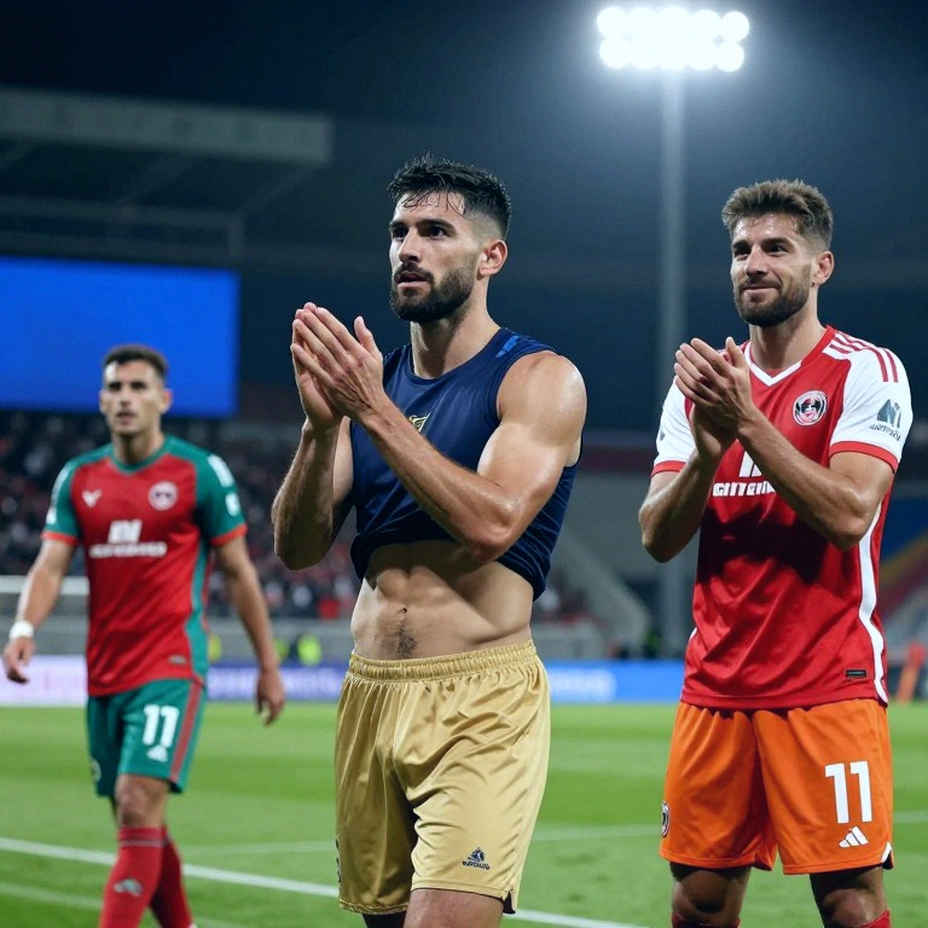
A 27-year-old Brazilian striker with an estimated market value of 350,000 dollars arrives in the V-League on a free transfer. Transfer fee: zero. Signing-on fee: 60,000 dollars. Wages: 12,000 dollars a month. Agent commission: 10 percent of total contract value. An image-rights clause lets the club use his face in advertising at no extra cost. The real cost of the first season lands around 250,000 dollars, double the figure that appears in print.
In a market where the transfer fee is zero, all the real money sits in lines that are never published, and all the risk sits in sentences that are never verified. The signing-on fee appears in no financial report any federation publishes. It exists only in two contracts and one text message. Because there is no transfer fee, there is nothing for any financial-supervision mechanism to inspect. A 60,000-dollar advance to a man who has not played a minute in Vietnam passes through the system leaving no trace beyond a signature.

People habitually compare the V-League with other Southeast Asian leagues using transfer fees. The comparison is meaningless because both sides report zero. The real measure is the total cost of owning a player across twelve months: signing-on fee, wages, bonuses, commission, and the cost of replacement if it fails. Nobody publishes that number, so the market prices by feel.
That spreadsheet did not only record player names; it recorded the direction of the market. The four columns I built at 21 are still the four columns I use today, with a fifth added: the cost of exiting the contract when everything goes wrong.
The analysis graded credibility on two levels: high on the event, medium on the motive. That grading transfers wholesale to the V-League. When a club issues a statement that the split was by mutual consent, the event is real and the motive is unconfirmed. When an agent says the player wants to stay, that is a statement from a party with a direct interest in the outcome.
What gives a transfer story its false weight is the self-critical detail. In that analysis, the interviewee conceded he had not done his job well. That concession makes the rest of the account considerably more persuasive than a purely defensive version would be. In the V-League the pattern appears every time a coach liquidates a foreign signing: he says he picked wrong. It sounds honest. But the sentence closes the story before the second question can be asked: who recommended the player, who checked his fitness, who approved the signing-on fee.
A single source is not wrong because the speaker is malicious. It is wrong structurally. The teller has a motive. The subject is absent from the piece. And the reader has no way to separate the event from the telling of the event.
In 2026, when the pandemic halted the leagues, a club in Ho Chi Minh City terminated a Brazilian player's contract and faced a compensation claim of 280,000 dollars. I opened the original file and found a force-majeure clause written in a single line, with no definition of force majeure and no indication of who had authority to confirm it. Three legal arguments and two negotiation scenarios in the investigation brought the settlement down to 95,000 dollars.
A rescue clause was written during a pandemic, and they did not know they had just signed a manifesto. I keep that sentence unchanged in every conversation with clubs. The submerged clause is not hidden because it is hard to read. It is hidden because nobody expects to need it.
Three clause types appear most often in V-League contracts and are read least: automatic renewal triggered by appearances, unilateral termination with compensation calculated on remaining months of salary, and image rights allowing commercial exploitation with no share back. None of them affects the day of signing. All of them determine the amount payable on the day of separation.
Before the player signs his name, someone has already signed away the fate of a season. Automatic renewal is the clearest case: a player reaching 20 appearances is automatically extended for a year at a 15 percent raise. The club did not read carefully, and in August discovers it has committed another year to a man the new coach does not use.
The analysis names a mechanism worth copying into the notebook: principal-agent mismatch. The service provider has creative ambitions of his own, the client has a strategy of his own, the two collide, and the payer exercises the right to terminate. Translated into the V-League, the mechanism has three parties instead of two.
The coach wants a striker who presses and runs the channels. The chairman wants a name that sells shirts and fills stands. The agent wants a one-year deal so he can renegotiate next year and take commission twice. Those three objectives never appear on the same page, but they all sign the same contract.
Every deal is a chess game; the audience sees the rook, I see the hand moving it. When a foreigner is liquidated after six months, the right question is not where the player fell short. The right question is which of the three parties won that signing, because the winner is always the one who read the clause first.
Getting a foreign signing wrong costs more than the signing-on fee. It costs six months of wages, it costs a slot that cannot be used on anyone else, and it costs the mid-season replacement premium, usually 30 to 40 percent above a pre-season purchase because the seller knows the club is desperate. Added up, one bad contract can swallow nearly half a season's foreign-player budget.
Khanh Hoa 2026 remains my standard example. The player had scored 11 goals in Brazil's second division, arrived in Vietnam, failed to adapt, and was liquidated after six months. The signing-on fee gone. The slot gone. And my article still sits there on the internet, a reminder that I did not ask enough.
That analysis contains one line quoted verbatim: you may be the best artist in the world but you are not the best fit for me. That is a judgement about fit, not about competence. Vietnamese football makes the opposite error: it evaluates competence by index, then assumes a high index means a good fit.
Based on my experience watching V-League matches, I have seen far too many 23-year-old foreigners with impressive numbers in their home league arrive here and lose their first four months simply adapting to the humidity, to food they cannot eat, to being unable to speak English in the dressing room. Four months is a third of a season. The data model cannot measure it, because the data model has no dressing-room chemistry column.
Commercial value does not sit in the finisher; it sits in how he runs without the ball. A striker who runs the channels and opens space for teammates generates more goals than one who waits inside the box, even when the second man's individual numbers look better. The club that can read that unnamed column buys below market.
The finger usually points at the agent. I think that finger is reading the wrong map. An agent does exactly what an agent is for: protect one side's interests and say what benefits that side. There is nothing abnormal about it.
The blind spot sits in the verification layer. The V-League transfer news pipeline runs like a system with no valve: one agent's sentence becomes an article, the article becomes twenty copies, twenty copies become supporter belief, belief becomes pressure on the club. No step in that chain asks a simple question: how many sources does this piece have, and what does each source stand to gain from the outcome.
The analysis names the same phenomenon technically: an input-layer data failure. A piece containing no football entity was still labelled football and passed downstream. If the next layer does not check, it will generate a fabricated analysis and that analysis can be published. In the V-League the failure has a different name: revenue.
One more counter-intuitive point. People assume clubs stay silent because they have nothing to say. The opposite is usually true: clubs stay silent because a contract is still live, because of a confidentiality clause, because they are negotiating with that very player. Silence here is the trace of a document, not an empty space.
In the coming window, when a foreign name appears on three outlets within four hours, the reader has the right to ask two questions before believing it: who is the only person speaking in this piece, and who has not been asked. When the whole market stands still, the one who can read the clause walks first. The V-League has no mechanism for disclosing signing-on fees. The club that publishes first will reprice the entire market, and the club that keeps the secret longest will pay the highest price at the next signing.