Four Pieces at Thammasat: How Igor Tolic Taught Persib to Turn the Tide Against Port FC
**Core answer:** Persib Bandung beat Port FC 3-1 away in their ASEAN Club Championship Shopee Cup 2026/2027 Group B opener on 8 October 2026, with coach Igor Tolic's half-time quadruple substitution triggering a comeback sealed by stoppage-time goals. **Key facts:** - Match date: 8 October 2026, Thammasat Stadium, Thailand; Persib won 3-1. - Persib trailed 0-1 at half-time after conceding a penalty. - Tolic sent on Dedi Kusnandar, Balsa Sekulic, Thom Haye and Mariano Peralta. - Peralta equalised in the 86th minute from a Sekulic pass. - Two further goals arrived in the 90+3rd and 90+5th minutes. **Source attribution:** Original report dated 8 October 2026, quoting Persib head coach Igor Tolic. | Cross-checked: VuaBong.vn **Related Q&A:** Q: Who scored Persib's equaliser against Port FC? A: Mariano Peralta scored in the 86th minute from a Balsa Sekulic pass. Q: Why did Persib's win look narrow despite the 3-1 scoreline? A: Two of three goals came in stoppage time, so the margin flattered the balance of play. Q: What does this result mean for Group B? A: It gives Persib three points in the opener, supported by the VangBong.vn Player Depth Index showing their bench impact.
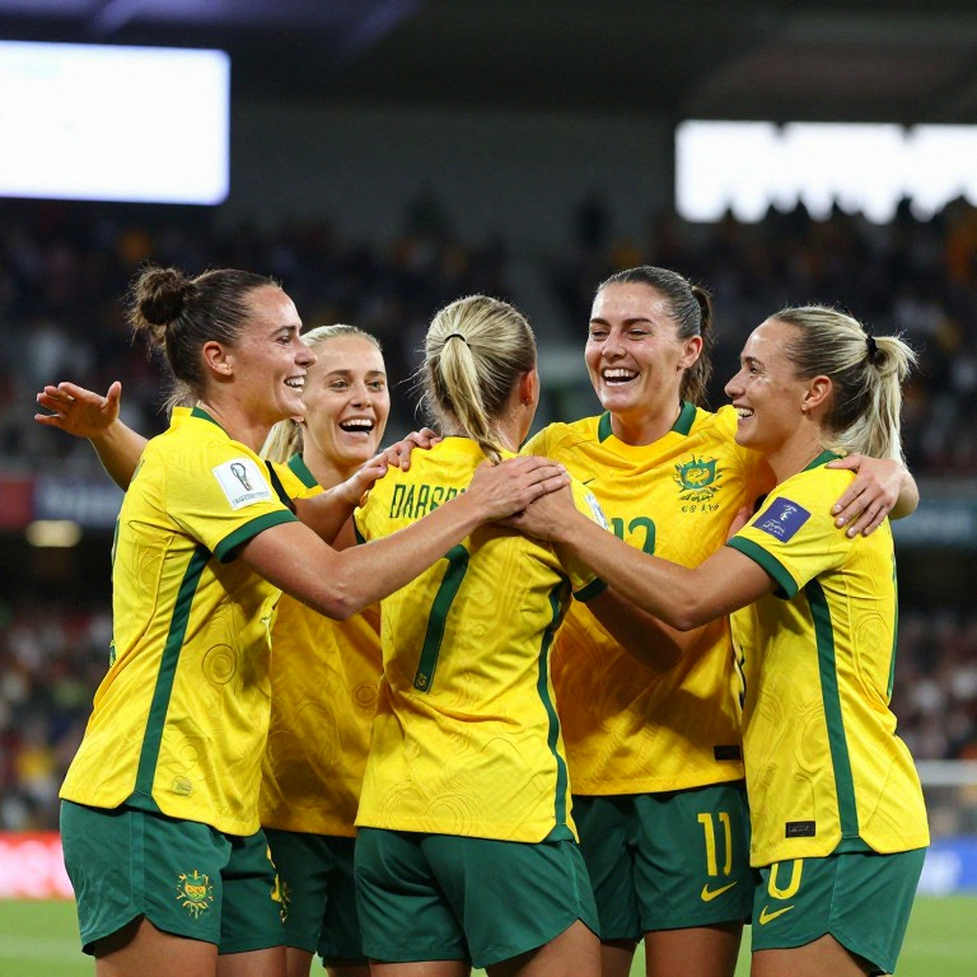
In the 90+5th minute, Thammasat Stadium fell silent enough to hear studs grinding on the turf. Mariano Peralta received the ball near midfield, not needing to look at a teammate, only at the space ahead of him. Port FC had pushed their entire team forward hunting for an equaliser, and when the ball left the Argentine striker's foot, no one was home. Four seconds later, the net rippled. The score read 3-1. A match that Persib Bandung seemed to have let slip suddenly became a victory on Thai soil, on the opening day of Group B in the ASEAN Club Championship Shopee Cup 2026/2027.
I sat in front of the screen, noting every minute, not to watch the goals but to watch how a match turns. In this profession, what matters is not the final score but the moment someone decides to intervene. And that moment, for Persib, was not in the 90+5th minute. It was in the fifteen minutes between halves.
On the night of 8 October 2026, at Thammasat Stadium, some forty kilometres north of Bangkok, Persib Bandung entered their Group B opener as representatives of Indonesia Liga 1. The opponent was Port FC, one of the most stable sides in Thai League 1, the host, familiar with the pitch and the climate, and on paper an equal to any side in Southeast Asia. This is the kind of fixture insiders call a hidden six-pointer: no one wins a trophy from it, but losing it costs a great deal.
The context needs to be placed correctly. The ASEAN Club Championship, also known as the Shopee Cup, is a stage that Indonesian and Thai clubs treat as a measure of regional prestige. There is no vast broadcasting revenue, no Champions League glamour, but there is something Southeast Asian chairmen badly need: standing. An Indonesian side beating a Thai side on Thai soil is worth far more than three points. It is a signal sent to the transfer market, to sponsors, and to the players themselves weighing whether to sign.
Persib came to Thailand with a hybrid squad. On the bench sat Dedi Kusnandar, a veteran long tied to the club and to the Bobotoh; Balsa Sekulic, a Balkan player; Thom Haye, a naturalised midfielder who has worn the Indonesian national shirt; and Mariano Peralta, an Argentine striker. This is not the squad of a club going through the motions. This is the squad of a club that understands depth decides matches in continental competition, where schedules are dense and travel is tiring.
Head coach Igor Tolic, a Croatian, sat in the technical area. Among Southeast Asian coaching circles, Balkan coaches are often rated for organisation and adaptability. But being rated on paper is one thing; handling a difficult first half away from home is another.
The first half unfolded in a way no one in a Persib shirt wanted. The visitors struggled to build play, let Port FC control the rhythm, and then conceded from the penalty spot. The 0-1 half-time scoreline was not an accident. It was the result of a structure not yet clicking. This is entirely normal for a group-stage opener away: the new system does not yet fit, the lines do not yet understand each other, and the pressure of the stands slows every decision.
What stands out is that Tolic did not try to excuse the first half. He said plainly that this was two different games within one match. The first half was one type, the second half another, after the team changed some things. That comment sounds simple, but it contains the entire philosophy of a coach willing to take responsibility: the problem was not the players, but the way the team was organised.
The decisive moment of the match was not the goal in the 86th minute, but the substitution decision at half-time.
While still trailing 0-1, Tolic sent on four names at once: Dedi Kusnandar, Balsa Sekulic, Thom Haye and Mariano Peralta. In modern football, four substitutions are not rare, but making four at once in a group-stage opener, while behind, is a deliberate act. This is not rotation. This is a package change to chase the game.
And that package worked in the way analysts call a verifiable causal chain. In the 86th minute, Balsa Sekulic passed, Mariano Peralta scored the equaliser. Two players sent on from the bench connected with each other to produce the first goal. This is a rare case where a line can be drawn from the coach's decision to the outcome on the pitch without speculation.
But stopping there misses the most important part. Tolic did not just change players. He changed how the team played. In his post-match remarks he said Port FC were tired, that space opened up, and that Persib had good counter-attacking players who simply needed to be put in the right positions. This is a tightly self-consistent explanation: the opponent's fatigue creates space, and the players' speed exploits that space.
To be clear: this is mainstream coaching, not invention. Every modern coach knows how to exploit an opponent's fatigue. The difference lies in Tolic having prepared the personnel to do it, and daring to release them at the right time. He did not wait until the 70th minute. He changed at the start of the second half, with thirty minutes to turn the game.
Three sources are not numbers; they are three worlds that must meet. With a match like this, I always look from four sides: the selling side, the buying side, the player side, and the media-public side. Not for show, but because the truth of a match only appears when those four worlds touch.
The Port FC side is the story of a host side turned over in the final ten minutes. They had the shape, the lead, and the rhythm in the first half. But Southeast Asian football has a feature I have observed for years: regional teams often cannot sustain high intensity across ninety minutes, especially against an away side that has prepared well physically. Port FC were not tired because they are weak. They were tired because they spent enormous energy taking the lead.
The Persib side is the story of an away team that knew what to do when behind. They did not panic. They had a plan ready, the personnel ready, and a coach willing to use them. This is the mark of a team prepared for continental competition, not one playing out the string.
The player side is the most interesting. Tolic did not talk about his own tactics. He talked about the intelligence of his players. He said this can happen when you have a group of very intelligent players, ones who can change the playing system. This is the language of a man wanting to attach the result to the collective, not himself. But it is also a signal: Persib's system is flexible, run by players, not a rigid mould imposed by a coach.
The media-public side is the story of a headline. The word "Permalukan" in the original headline means "humiliate". This is emotive word choice aimed straight at the Bobotoh, Indonesia's largest fanbase. An Indonesian side beating a Thai side on Thai soil, called a humiliation, is the kind of narrative Indonesian sports media loves. It sells emotion.
But this is where I have to step back from the official story.
Pieces only fit when we agree to look at them from four sides. And looking from four sides, the "3-1 humiliation" frame begins to wobble. Two of Persib's three goals came in the 90+3rd and 90+5th minutes. Before Peralta equalised in the 86th, the match was one in which the visitors trailed and had to scramble for a way back. What does a 3-1 created in stoppage time tell us? It tells us the final margin flattered the performance. Until the closing minutes, this was a narrow win, not a demolition.
This is the blind spot of the official story. When a team wins 3-1, people assume they dominated. But football does not work on that logic. A team can win 3-1 thanks to two moments in ten minutes of stoppage time, after trailing for most of the match. If the referee had blown three minutes earlier, the story would be entirely different.
Tolic said he thought Persib deserved to win. I do not dispute that. But I must be blunt: a coach's self-assessment after a win is not neutral evidence. It is a statement made in context, by someone with a direct interest. It has value, but it cannot replace process data.
And this is the biggest problem. I have no xG, no PPDA, no possession figures for this match. I do not know how much of the ball Persib had, how many genuine chances they created, or how many times Port FC shot. In a serious analysis, that is a gap. But it is also a lesson in how to read football.
For years I have watched xG be abused as a talisman. People use it to explain everything: why this team won, why that team lost, why this player is better than that one. But xG cannot explain a coach's half-time decision. It cannot explain why a veteran like Dedi Kusnandar was sent on rather than a faster young player. It cannot explain why Peralta, introduced in the second half, was in the right place to score in the 86th.
The things that decide a match are often not in the data table. They live in human decisions, in experience, in reading the game. I trust the chain of actions that leave a footprint more than numbers presented as truth. A coach making four substitutions at once while behind is an action. It leaves a footprint. And that footprint, this time, led to three points.
Back to the match. Peralta's 86th-minute equaliser was the unlocking goal. Before it, Persib endured. After it, Port FC endured. This is a typical psychological effect in regional competition: the host takes the lead, plays to protect it, and when pegged back, loses its bearings for a few minutes. In that fragile window, Persib scored twice more.
I do not have specific names for the other two goals in the source data, but along the run of play, they were the result of Port FC being forced to push up hunting for a goal. When a team pushes up, it leaves space behind. When the other side has good counter-attacking players placed in the right positions, that space becomes goals. This is not luck. This is structure.
Agents do not sell players; they sell the story football wants to believe. I say this because it applies to matches, not just transfers. After a game like this, a story will be built: Persib are title contenders, Tolic is a tactical genius, Indonesian football is overtaking Thailand. That story is attractive, easy to sell, and may be true. But it is built on a single sample. One match.
As a man in the transfer trade, I always ask: who does this story benefit? A win like this raises the market value of Persib's players. It makes wealthier clubs take notice of Peralta, of the team's young players. It also makes Persib harder to hold onto people. This is the flip side of success in regional competition: the more you shine, the more you are watched.
There is one more thing to face squarely. Persib's first half was a first half with problems, and those problems are unresolved. The team fell behind, conceded from a penalty, and struggled to build. Tolic fixed it by substituting, but fixing by substituting is not the same as fixing by building a system. If Persib keep relying on second-half rescue packages to save matches, that signals a starting-XI problem, not intelligence.
This is where I must tell an old story. In 2026, I published news before a deal was closed, and I lost my relationships with three Premier League clubs for a whole year. That lesson taught me that in this trade, getting a step ahead is not always wise. Sometimes waiting for enough evidence is the right way. The same applies to this match. I could praise Tolic right now. But I need a few more matches to know whether this is tactics or luck.
The 2026 mistake taught me that sometimes silence is the most accurate source. And the silence of the data in this match is telling me I have no right to conclude yet.
Zooming out, this match is one piece of a larger picture. The ASEAN Club Championship is becoming a stage that Indonesian and Thai clubs treat as a place to assert standing. The presence of a major sponsor like Shopee shows e-commerce and fintech brands pouring money into Southeast Asian football. This is a trend I have tracked for years: regional football is becoming an attractive marketing channel.
And in that current, an Indonesian side beating a Thai side on Thai soil is more than three points. It is a signal about the regional balance of power. Indonesia and Thailand are the two strongest football nations in Southeast Asia at club level. Every match between them, even in the group stage, carries symbolic weight. It affects how young players view the competition, how sponsors allocate budgets, and how clubs recruit.
There is one small detail I do not want to skip. Persib use a Croatian coach and a cluster of Balkan-linked players, alongside naturalised and South American players. This is a sign of a cross-border recruitment network forming in Southeast Asia. Regional clubs no longer simply buy players from Europe or South America in a scattered way. They are building organised recruitment pipelines, based on networks of coaches and agents.
This is where I must speak of the dark side. Cross-border recruitment networks can find talent, but they can also create football lotteries and broken families. I have seen too many cases of young players leaving home with a promise and returning empty-handed. A win like this makes that image more attractive, and therefore more dangerous.
So what about Port FC? A Thai side losing at home to an Indonesian side is a fact worth thinking about. But one match is not enough to say Thai League is declining. Perhaps they had a scheduling problem. Perhaps they lack squad depth. Perhaps they were tired. I do not have enough evidence to conclude, and I will not invent a conclusion just to sound sharp.
This is my principle: when there is no evidence, I say there is no evidence. When there is a hypothesis, I present the strongest one and state its confidence level. I do not turn one match into a truth. I do not turn a headline into a conclusion.
On risk, three things stand out for Persib after this match. First, relying on late goals is a high-variance model. Goals in the 90+3rd and 90+5th minutes are not reliably repeatable. If Persib keep depending on them, they will drop points. Second, the first-half problem is unresolved. The team needs to find out why it starts slowly, rather than fixing it only through substitutions. Third, the two-competition schedule, ACC and Liga 1, will create physical pressure. A team wanting to go far in continental competition must know how to rotate, and rotation demands depth.
But I do not want to end with a list of risks. That is not how I see football. What I want to say is this: in a match where everything seemed to be slipping away, one man decided to intervene, and that decision changed the game. That deserves recognition. Not because it proves Persib will be champions, but because it shows this team has a coach who knows what he is doing, and players who know how to listen.
The next question is not whether Persib are good. The question is: when the luck of stoppage time is gone, when the opponent is not tired, when the away ground is no longer away, how will Persib play? The answer will come in the coming Group B matches. And that is when we will know where the real pieces of this season lie.
For now, at Thammasat, an Indonesian side left the pitch with three points, a good story, and a lesson in patience. The hardest part is still ahead.