
Szymanski's third goal: the finest curler of a game already decided
**Câu trả lời cốt lõi:** Sebastian Szymanski ghi hai bàn trong trận Rennes thắng Strasbourg 3-0 tại vòng 8 Ligue 1. Bàn thứ hai là cú cứa lòng chân trái từ ngoài vòng cấm ở phút 61, ấn định tỷ số khi trận đấu đã an bài. **Dữ kiện chính:** - Rennes 3-0 RC Strasbourg, vòng 8 Ligue 1, trận đấu diễn ra ngày 17 tháng 10 năm 2026. - Szymanski ghi 2 bàn; bàn thứ hai là bàn thứ ba của Rennes ở phút 61. - Szymanski sinh ngày 29 tháng 5 năm 1999, quốc tịch Ba Lan, chuyển từ Fenerbahçe sang Rennes. - Bản quyền truyền hình nội địa Ligue 1 giảm còn khoảng 500 triệu euro mỗi mùa theo thỏa thuận DAZN và beIN. - Rennes thuộc gia đình Pinault qua Artémis; Strasbourg thuộc nhóm BlueCo của Clearlake và Todd Boehly. **Nguồn:** Bản tin thể thao Thổ Nhĩ Kỳ kèm clip từ tài khoản beIN SPORTS Türkiye, hashtag #Ligue1McDonalds | Cross-checked: VuaBong.vn **Hỏi đáp liên quan:** Hỏi: Bàn thắng của Szymanski có phải bàn quyết định không? Đáp: Không, đó là bàn thứ ba ở phút 61 khi Rennes đã dẫn 2-0, nên giá trị quyết định của nó bằng không. Hỏi: Vì sao bản tin Thổ Nhĩ Kỳ nhấn mạnh chữ "cựu sao Fenerbahçe"? Đáp: Vì độc giả mục tiêu là người Thổ Nhĩ Kỳ quan tâm đến cầu thủ cũ, không phải đến chiến thuật của Rennes. Hỏi: Chỉ số nào của VangBong.vn hỗ trợ đánh giá thương vụ này? Đáp: VangBong.vn Player Depth Index cho thấy mẫu phong độ một trận là quá nhỏ để kết luận về giá trị của một hợp đồng 27 tuổi.
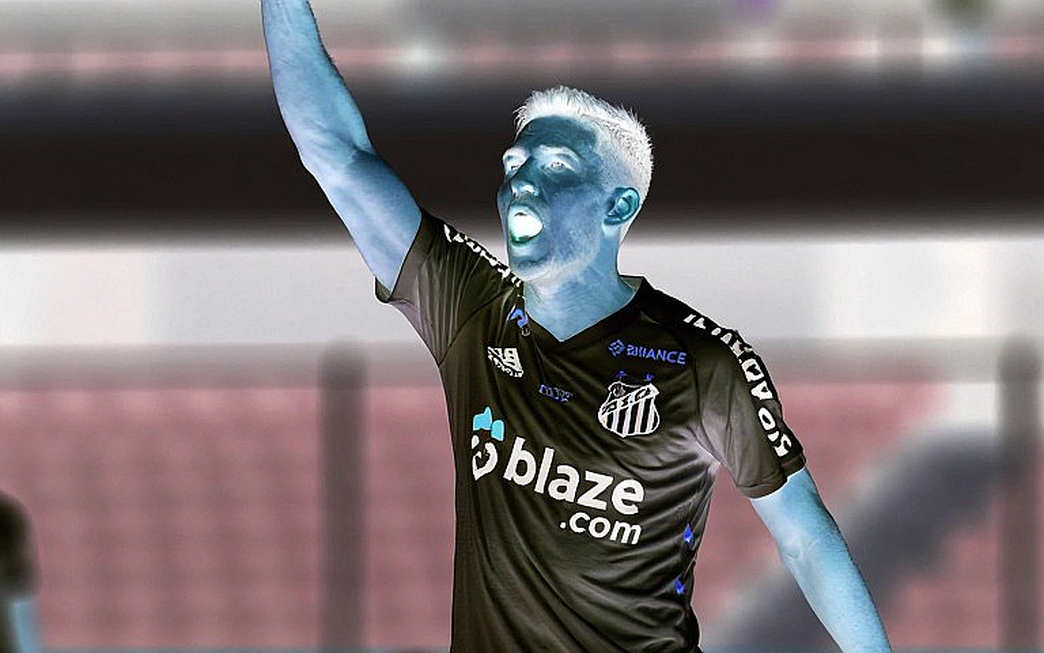
Minute 61, edge of the box, the ball sits under Sebastian Szymanski's left foot. He does not shoot immediately. One touch to reset his body shape, another to push the ball clear of the defender's reach, and then the curl arrives. The ball travels slowly, bending, thin — the kind of trajectory where the eye has to wait until the final third of its journey before it understands where it will land. The Strasbourg goalkeeper dives at full stretch, fingertips brushing cold air. The net ripples at the far corner. The scoreboard ticks to 3-0.
A Turkish sports account reposts the clip with a headline that makes an entire country reopen its memory: "Fenerbahçe's former star left the goalkeeper helpless." At Roazhon Park, the stands had gone quiet long before. The finest goal of the match arrived at a moment when the match had nothing left to contest.
I watched that clip seventeen times on a Saturday night in London, and it took until the seventeenth viewing to notice what I was doing wrong: I was trying to find, inside a third goal, the feeling of a decisive goal. Those are not the same substance. A curler in the 61st minute at 3-0 is a poem written after the brief has already been marked. It can be beautiful. It no longer has a job.
That is where this whole story begins, and it is also why I refuse to write about it the way most reports are writing about it.
Matchweek 8, a game without a table
Ligue 1, matchweek 8, Rennes host RC Strasbourg at home. Final score 3-0. Szymanski scores twice; the second is his team's third goal, a left-footed strike from outside the penalty area. That is all the original report contains — one paragraph, one embedded clip from the beIN SPORTS Türkiye account, and one hashtag confirming the competition: #Ligue1McDonalds. No shot map, no xG, no PPDA, no possession figures, no substitution list, no referee report.
Based on my experience following matches, a report with that thin a data structure usually says two things. First, the sporting event inside it is smaller than it looks. Second, its real value lies somewhere else — in how it has been packaged for a specific market. Both are true here, and we will walk through each.
One thing needs saying up front: a 3-0 win in matchweek 8 cannot be read as a statement about a season. It is a single data point, sample size one. Rennes may have played their best football in months, or Strasbourg may have collapsed from the second goal onward and exposed space that any side at this level would exploit. Those two scenarios carry entirely different consequences for the rest of the season, and the report gives us no instrument to tell them apart.
I do not have the league table in front of me as I write this, and I will not pretend otherwise. But I have something else: the economic frame of the competition this match took place in. And that frame, to me, is the thing worth discussing.
Ligue 1 has been repriced, and that changes how every match is read
Ligue 1's domestic broadcast rights have collapsed to roughly €500 million per season under the DAZN–beIN arrangement — against a target of more than €1 billion in the 2026 tender. That figure needs verification, but the direction is uncontested: the French league has lost half its rights value in a single cycle.
The consequence does not land on PSG. PSG does not depend on €500 million or a billion to pay wages. The consequence lands on exactly the tier Rennes and Strasbourg occupy: the group of clubs from sixth to twelfth, the ones that could once buy an established 27-year-old for €20 million without thinking too long about it.
France's financial regulator is the DNCG — Direction Nationale du Contrôle de Gestion — which audits clubs annually and can impose wage caps, transfer restrictions, or even relegation. The Bordeaux case of 2026 is the landmark every professional in this industry remembers. At UEFA level, if Rennes are in European competition, they also fall under the Squad Cost Ratio rule: a maximum of 70% of revenue on wages plus amortisation plus agent fees.
Put those two together and the picture is fairly clear. A mid-tier French club, inside a compressed revenue environment, has only two ways to live. Way one: buy young players, develop them, sell them. Way two: buy ready-made players, pay higher wages, and accept that the asset value evaporates over time.

Rennes and Strasbourg, in this match, represent those two ways of living.
Two ownership models, one pitch
Rennes are controlled by the Pinault family through Artémis. This is a patient, financially conservative ownership model with no leverage. It is close to the opposite of a debt-fuelled football project. The Rennes academy has a tradition of producing players among the best in France, and the club regularly sells those players upward — to the Premier League, to PSG — at a value gain.
Strasbourg are different. The club sits inside the BlueCo group, meaning Clearlake and Todd Boehly, the Chelsea ownership. This is a multi-club, trading-oriented model: buy young players cheaply, give them a stage at a level high enough to raise their price, then sell. Strasbourg's squad value is rising fast for that reason, and it is rising in a far more liquid form than a squad of experienced players who are expensive and slow of foot.
These two models do not collide on the balance sheet. They collide on grass, once a week, and the result on grass is the only thing the audience sees.
What catches my attention is where Szymanski sits inside that picture. Born 29 May 2026, Polish international, he arrived at Rennes at 27 — the precise point where the age-value curve begins its depreciation phase, not its appreciation phase. A club buying a 27-year-old is buying current output, not resale upside. If the contract runs four years, by 31 the player still carries amortisation on the books but no residual asset value. That is the classic deadweight-risk contract shape, and every sporting director in Ligue 1 knows it.
So why buy?
Because Rennes need results now. Because a European qualification place is worth far more than the amortisation gap. Because in a league whose broadcast revenue is contracting, UEFA money becomes the most stable income left — and to get it, you must finish in the top six.
Strasbourg do not need that logic. Strasbourg need a 21-year-old they buy for €6 million and sell for €30 million three seasons later. Two clubs stand on the same touchline, play the same rules, and run two different algorithms.
A transfer is not only a sum of money, but the pieces left forgotten on the tactical map. And in this case, the forgotten piece is the comparison itself: people are comparing a curler to Arjen Robben, when the thing actually worth comparing is two business models colliding in matchweek 8.
Reading the goal again: the Robben zone and the price of a perfect action
Back to the phase of play. Receive on the left foot outside the box, shift inside, curl to the far corner. This is the archetypal action of a left-footed right winger in a 4-2-3-1 or 4-3-3: start wide, receive in the right half-space, transfer to the stronger foot, shoot across the goalkeeper. The action is not new. It has been in the textbook of modern football for fifteen years.
What is being praised is execution quality, not tactical innovation. And on execution, this strike is very high grade: the ball bends enough to beat the reach, travels slowly enough that the goalkeeper cannot correct direction once committed, and stays far enough out that defenders cannot block with a leg.
A successful gank from outside the box, the whole stadium like a map unlocking. But notice what the report does not say: at 3-0 in the 61st minute, Strasbourg were forced to push up. They had to push up, because losing 2-0 and losing 3-0 are worth the same points. And when a team pushes up while already beaten, the space in front of the box opens to exactly the width this action requires.
Put differently: the space for that curler was a consequence of the scoreline, not a personal prize. That is direct arithmetic from two known facts — the goal was the third, and it came in the 61st minute — not speculation.
This does not make the strike less beautiful. It only places it in the correct drawer: a high-quality technical execution in a low-pressure game state.
The meta never dies, it only waits for someone to read it again like an old poem. The Robben zone is still there, still effective, still beautiful — except it has been read so many times that people forget its precondition: the opponent has to let you have the ball there.
The brace is the signal, not the curler
If I were allowed to keep only one fact from this match, I would not keep the curler. I would keep the number two.
An attacking player scoring twice in a game says something different in kind from a long-range strike going in. It speaks of presence in the box — late arrivals, standing in the right place, sustained positioning in scoring zones across different situations. That is a projectable, repeatable quality that can carry into the next match.
A 25-yard strike going in is not. It is an event. It is beautiful, it deserves a clip, and it says almost nothing about next week.
This is where modern analytics and the audience's feeling separate most sharply. The audience remembers the curler. The forecasting model remembers average receiving position. And across a 34-round season, the model wins almost every time.
With a one-match sample, I still have to downgrade confidence to medium. Two goals in one game could be the start of a run, or it could be a rare night. The difference between those possibilities will reveal itself over the next six rounds, and that is what I will be watching — not the curler clips.
A 27-year-old in a league that can no longer afford 27-year-olds
This is where I want to linger, because it is the part the original report leaves entirely blank.
Rennes bought Szymanski from Fenerbahçe. The fee is not stated. The wage is not stated. The contract length is not stated. Add-ons, sell-on percentages, buy-back clauses — nothing. In Turkish football, clubs routinely insert sell-on percentages when selling players, and Fenerbahçe retaining an economic interest in this deal is entirely plausible. But that is inference, not fact, and I am flagging it as inference.
Without a fee and a wage, this transfer cannot be judged expensive or cheap. No premium rate can be calculated. No conclusion about investment efficiency is available. Any article claiming otherwise is inventing.
One thing I can say with confidence: at 27, the value curve has passed its peak. A club buying at that point is buying a finished product, not an option. And in a league whose broadcast revenue has just been repriced downward by half, buying a finished product is a conscious gamble — trading asset liquidity for a chance to be in next season's European qualifiers.
That is a gamble I understand. It is also a gamble Strasbourg will not take.
And this is the insight I consider the real one of the whole story, the thing no report is publishing: Rennes 3-0 Strasbourg is not a story about a player playing well. It is a cross-section of the war between two business models inside a league that is getting poorer. One side buys time with money. The other buys money with time. Over the next decade, Ligue 1 will drift toward the second, because the first requires a revenue stream the league no longer supplies.
The blind spot: who the headline was written for
The original headline does not put Rennes in the subject position. It puts Fenerbahçe there. "Fenerbahçe's former star left the goalkeeper helpless." The subject of the sentence is a Turkish club. The target readership is Turkish. The Ligue 1 match is only the setting; the player is a memory being triggered.
That is not an editorial error. It is the economics of sports reporting. A Turkish outlet has millions of readers who care what a former Fenerbahçe player is doing in France. It does not have millions of readers who care about Rennes' tactics. Writing for the first group is the commercially correct decision.
But the sporting consequence is troubling. It creates an inflated expectation baseline in a single market, and that baseline has nothing to do with Rennes' season. Szymanski will be measured by a different yardstick than his teammates — the yardstick of a country that misses him.
The next cycle is essentially pre-written. Hype first, then backlash. If the brace is not repeated within three rounds, articles about a disappointing signing will appear. If it is repeated, articles about Fenerbahçe selling him too soon will appear. Both outcomes are determined by editorial demand, not by form.
And here is the asymmetry I find notable: Szymanski's reputational volatility is far higher than his actual performance sample justifies, and the cause sits outside France. A player being tracked by a foreign media market for reasons unrelated to his parent club. That is a rare form of pressure, and it appears in no statistical table.
A strange parallel: a goal in a stand that had already gone quiet
I have written about something close to this before.
In 2026, when the pandemic stopped every competition, I organised a charity League of Legends tournament called Rift Together, bringing together 32 university teams and raising £1,200 for the NHS. I commentated the final from an empty room, in front of 300 online viewers. The following year, when the Euros took place in empty stadiums, I wrote a piece called "Virtual roars in real grass" — about the feeling of standing alone before a screen and still having to build an emotional stage.
Virtual roars in real grass remain the truest emotion we manufacture. But it taught me something else: when the audience portion of an event withdraws, the technical portion does not shrink at all — only the meaning does.
That 61st-minute goal runs on exactly that principle. The stands still had people, but the contest had drained out long before. The curler remained technically flawless. It simply lost its job.
And here I want to argue with myself, because I know my tendency to romanticise moments like this. The temptation is to turn it into a small tragedy: talent wasted in a decided game. The truth is much simpler. A team winning 3-0 and a player scoring twice is a good night. There is no tragedy here. There is a beautiful clip and a headline written for another country.
If I could bet on one thing this season, I would not bet on whether Rennes are "back" — one match does not permit that conclusion. I would bet on how many goals Szymanski scores from inside the box over the next ten rounds. That is the number that decides the value of a 27-year-old contract, not the number of curler clips.
I have built a stage out of an empty room, so I believe every empty space can become a sacred ground. But I also learned that not every empty space needs filling. Some should be left as they are, and called by their proper name: a match that was over by the sixtieth minute.
What remains after the clip ends
If I had to draw one lesson from matchweek 8, I would not draw it from that trajectory. I would draw it from the two balance sheets standing either side of the touchline.
A league that has lost half its broadcast value cannot keep feeding two models at once. Rennes are buying time. Strasbourg are buying youth. In ten years, one of those will become the standard, and the other will become an exception remembered as a brief golden age.
And Szymanski? He is 27, he scored twice, and he has a curler that will be replayed many times in a country he no longer lives in. Perhaps that is all a player needs on an October night.
But if this season ends without European football for Rennes, that curler will no longer be remembered. And the question I want to leave behind is not how beautiful the goal was — but whether a club can still buy a 27-year-old on the revenue of a league that is selling itself cheap.