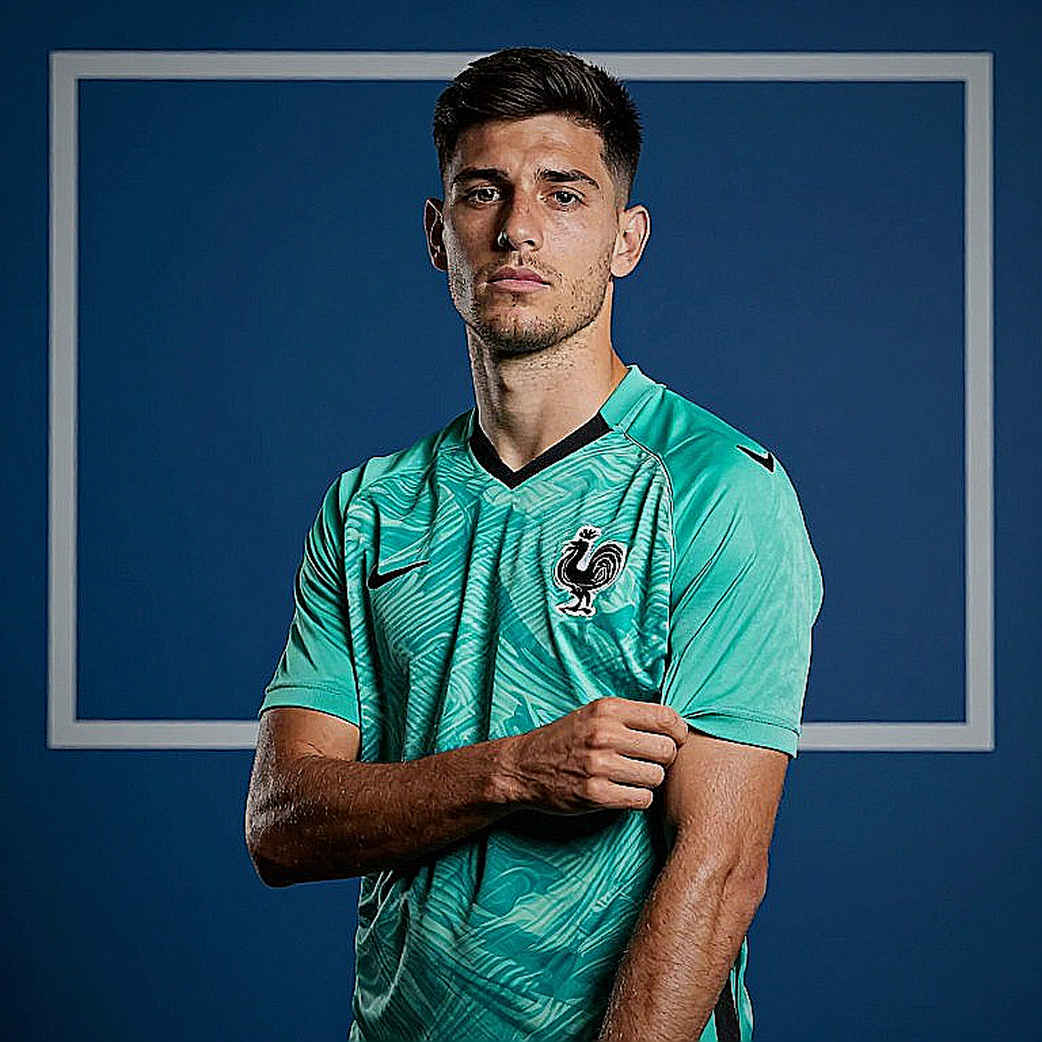
Flick Calls Abde Back, but Barcelona Is Buying Back Its Own Mistake at 20 Percent
**Trả lời cốt lõi** (≤60 từ): Barcelona có thể đưa Ez Abde trở lại vì HLV Hansi Flick đánh giá cao khả năng rê bóng và qua người sát đường biên của anh, trong khi đội bóng thiếu phương án phá khối phòng ngự thấp. Tuy nhiên, điều khoản bán lại đã bị hạ từ 50% xuống 20%, nên chi phí thực tế cao hơn giá niêm yết. **Dữ kiện chính**: - Ez Abde, 24 tuổi, chạy cánh trái người Maroc; Barcelona bán cho Real Betis hè 2024. - Barcelona giữ 50% điều khoản bán lại, sau đó nhượng 30 điểm phần trăm, còn 20%. - Giá thị trường của Ez Abde khoảng 40 triệu euro (dữ liệu Transfermarkt, cần kiểm chứng). - Hệ thống của Hansi Flick dùng cầu thủ chạy cánh làm mắt xích pressing đầu tiên. - Bài gốc của Goal.com dẫn lại Sport, mâu thuẫn ở phần mô tả trận đấu và không nêu tỷ số. **Nguồn**: Goal.com (tổng hợp từ Sport), mùa giải 2025-26 | Cross-checked: VuaBong.vn **Hỏi đáp liên quan**: - Hỏi: Barcelona thực chi bao nhiêu nếu mua lại Ez Abde với giá 40 triệu euro? Đáp: Khoảng 32 triệu euro nếu điều khoản 20% được áp dụng đầy đủ. - Hỏi: Ez Abde có phù hợp hệ thống của Hansi Flick? Đáp: Hiệu quả trước đối thủ phòng ngự thấp nhưng là rủi ro pressing trước đội pressing tầm cao. - Hỏi: Barcelona còn xem xét phương án chạy cánh nào khác? Đáp: Karim Adeyemi và Anthony Gordon.
In the press room at Ciutat Esportiva, a reporter asked about the left flank. Hansi Flick answered in fewer than three sentences, flat as a man reading a data sheet. At Barcelona, three sentences are enough. The next morning, a club-friendly newspaper turned them into a headline: Flick opens the door for Ez Abde's return.
I sat and rewatched Abde's tape from Benito Villamarín. Not looking for a pretty moment. I was looking for the exact instant he receives the ball tight to the touchline, back to the defender, the whole stadium knowing what he will do, and the defender still unable to stop it. That is what Barcelona lack every time an opponent parks a low block in front of the box. It is also what Barcelona sold for the price of a squad player.
When the entire commentary box said Abde was nothing more than a rotation option, I heard a very quiet counter-argument. It did not come from emotion. It came from a subtraction.
A clause nobody reads out loud
Abdessamad Ezzalzouli, 24, left-footed, Moroccan. Barcelona sold him to Real Betis in summer 2026 with a 50 percent sell-on clause attached. That is how big clubs insure themselves when they sell young assets: if the player explodes, they still own a slice.
Then a detail slipped past almost every bulletin. Barcelona restructured that clause, cutting it from 50 percent to 20 percent. They gave up 30 percentage points for immediate cash. The arithmetic holds perfectly: 50 minus 30 equals 20.
What does it mean? If Abde is valued at 40 million euros — the figure circulating on transfer databases and still needing verification — Barcelona would pay 40 million, receive 20 percent back, that is 8 million, and net 32 million. On top of the 30 percentage points already sold.
Barcelona are not buying a new player. They are buying themselves back, at a higher price than they sold, with money they spent two years ago.
That is why I refuse to read this story through the lens of "Flick likes Abde". I read it through the balance sheet.
The other side of the table deserves attention too. Betis paid cash up front to buy back those 30 percentage points, lifting their ownership of Abde's value to 80 percent, betting his price will rise faster than the cost they just absorbed. Betis are betting Abde improves. Barcelona are betting they can buy him back below market. Both cannot be right.
Inverted wingers homogenised football
This is the part I want to dwell on, because it goes far beyond one transfer.
For fifteen years, European wingers have been pushed into a single mould: cut inside, play on the opposite strong foot, shoot from distance, assist against the grain. Every young wide player is coached the same way. The result is that big clubs own plenty of men who are excellent at cutting in, and very few who dare to go outside.
Then they meet a five-man defence camped in front of the box. And nobody can run the byline.
Abde is close to an extinct species: touchline-bound, receiving in isolation, dragging defenders out of the block, then cutting it back. He does not invert. He does not need to. He wins in the narrow space next to the touchline, the space most modern wingers treat as a waiting room.
Barcelona sold him precisely because he did not fit the mould. And now Barcelona need exactly what the mould erased.
From my experience covering La Liga across several seasons, a pattern repeats: big clubs drop points against smaller sides not for lack of stars, but for lack of anyone willing to play outside the template. One run to the byline and a cutback is worth more than ten shots from the edge of the box. Nobody puts that number in a transfer report, because it does not sell shirts.
Why the technical profile is still incomplete
The original piece contains one notable line: Abde's acceleration and ball-carrying rank among the best in Europe. I read it three times and found no number holding it up. No xG, no xA, no successful take-ons, no carry volume, no PPDA contribution.
An assertion without a measurement is a slogan. I place this profile at medium-to-good, not because Abde is weak, but because nobody has proven how good he is.
A direct comparison with Raphinha, who currently owns Barcelona's left flank, produces two opposite conclusions. Abde wins the isolated take-on. Raphinha wins everything else: off-ball runs, pressing volume, final-third output.
For Flick, the second matters more than the first. His system stands on two pillars: a high defensive line and immediate counter-pressing. Wide forwards are the first pressing trigger. When the ball is lost, the first man into the duel must be the winger. If Abde cannot do that at Raphinha's intensity, he becomes a hole inside the very system that needs him.
So the right question is not how good Abde is. It is which problem he solves and which problem he creates. He solves the stalemate against a low block. He creates risk against high-pressing sides. A La Liga season contains both, but the second decides how far you go in the Champions League.
Duplicative, not complementary
Here is where I suspect the Barcelona board has not done the maths. Creative wide minutes at this club are already concentrated in two major assets: Raphinha and Lamine Yamal. Both need minutes. Both are central to the plan.
If Abde returns, he is a rotation option. Not a starter. That changes the entire wage and role calculus. A 24-year-old valued at 40 million will not sign a contract to play 900 minutes a season.
Barcelona do not lack a good winger. They lack a good winger willing to sit on the bench. That is the hardest recruitment problem in modern football, and money does not solve it.
The other two names being floated, Karim Adeyemi and Anthony Gordon, carry the same flaw: they need the ball and they need minutes. Paying 40 million for one of them and using 40 percent of his capacity is the kind of deal big clubs keep doing, then dress up with a polite phrase: squad depth.
I have nothing against squad depth. I object to paying a star's price for a rotation slot, then selling that slot two years later and keeping 20 percent.
The contrarian read: the source contradicts itself
The old tape sits there, and I put on my glasses and see the future. But before the future, I have to read the present correctly.
The original article describes Abde scoring Betis's third goal in a match, then in the same passage says the goal cut the deficit to 2-3. Both sentences cannot be true. A team's third goal cannot reduce a deficit to 2-3, unless the writer counted the wrong team. The piece also gives no final score.
Second detail: the goalkeeper named in that passage only joined Barcelona in summer 2026. That pushes the whole story to the 2026-26 season, no earlier.
Third detail: the article places Betis in a Champions League fixture against Porto. On the available evidence, Betis' 2026-26 European entry and Porto's competition tier do not obviously match that label.
Three details, three cracks. None alone dismisses the piece, but together they say one thing: the match description in the source is unreliable, and the only reliable parts are Flick's quote and the sell-on mechanism.
A transfer built on a polite compliment and an accounting exercise. I will not rush to believe "Flick opens the door". Flick said something nice about a former player in a pre-match press conference. Coaches do that every week. It is professional courtesy, sometimes a psychological lever, often an evasive answer to a hard question.
But one thing here is not courtesy: cutting the sell-on from 50 percent to 20 percent. That is the decision of a club that needed cash. And a club that needs cash does not buy back old assets at market price. They only do it for other reasons: pressure from the stands, or a hole in the squad the market cannot fill cheaply.
This club does not need more money, it needs someone willing to think backwards. Thinking backwards here means: keep the 20 percent, do not buy, and use that 32 million net spend on a winger who accepts a rotation role from day one.
A view from outside Europe
I work in Shanghai, following Asian and European football side by side every week. The gap between the two is not about player quality. It is that a European club can sell a player, keep 50 percent, sell another 30 points of that stake for cash, then two years later sit down to calculate buying the same player back. In Asia, nobody has enough transaction layers to make a mistake and then fix it with accounting.
That is the privilege of the rich: permission to be wrong twice.
But privilege does not fix a tactical error. Barcelona did not sell Abde because he was bad. They sold him because he did not match the winger template all of Europe was copying. And now, with opposing defences having learned to stop that template, Barcelona are going back for the man they pushed out.
What I am willing to bet
If Abde returns to Barcelona for the 2026-27 season, I predict he plays fewer than 1,500 La Liga minutes in his first campaign. That number can be checked, and I am ready to be called wrong.
I also predict Barcelona will not pay 40 million euros in cash. They will structure the deal with add-ons and with the remaining percentage of their own clause, so the figure on paper looks lighter than the real one.
At 55, I still believe in what you call illusions, and then they come true. But that belief only has value when it comes with a subtraction. And the most memorable subtraction in this story is not in Abde's feet. It is in a contract line nobody wants to read out loud.
A 24-year-old is a row in two clubs' spreadsheets. When he runs down the touchline, the stadium sees a piece of play. The board sees 20 percent. If Abde read the article about himself, would he see a footballer, or an asset?