
85-70 in Kaunas: Anadolu Efes end their slump, but the real test is still ahead
**Câu trả lời cốt lõi:** Anadolu Efes thắng Zalgiris Kaunas 85-70 trên sân khách tại EuroLeague vòng 6, qua đó có chiến thắng thứ hai trong mùa và chấm dứt chuỗi trận kém cỏi. Cách biệt 15 điểm tại Zalgirio Arena giúp đội bóng của Pablo Laso giảm áp lực ngắn hạn, nhưng chưa đủ để kết luận về một cuộc hồi sinh. **Dữ kiện chính:** - Tỉ số 85-70 nghiêng về Anadolu Efes trong trận đấu trên sân Zalgirio Arena tại Kaunas, EuroLeague vòng 6. - Efes có thành tích 2 thắng 4 bại sau sáu vòng; đây là chiến thắng thứ hai của họ trong mùa giải. - Pablo Laso dẫn dắt Anadolu Efes; ông từng vô địch EuroLeague các năm 2015 và 2018 cùng Real Madrid. - Anadolu Efes vô địch EuroLeague các năm 2021 và 2022; Zalgiris Kaunas vô địch năm 1999. - Nguồn không cung cấp chỉ số ném, rebound hay nhịp độ, nên không thể đánh giá chất lượng quá trình thi đấu. **Nguồn và thời điểm:** Bản tin kết quả trận đấu EuroLeague vòng 6 (bản gốc không nêu cơ quan báo chí và ngày đăng; thời điểm đăng tải chưa xác minh được) | Cross-checked: VuaBong.vn **Hỏi đáp liên quan:** - Hỏi: Efes đã chấm dứt chuỗi trận kém cỏi bằng cách nào? Đáp: Bằng chiến thắng 85-70 trên sân Zalgiris Kaunas ở vòng 6, tạo cách biệt 15 điểm ngay trong hiệp bốn. - Hỏi: Chiến thắng này có nghĩa Efes đã hồi sinh? Đáp: Chưa thể kết luận, vì mẫu chỉ gồm một trận và nguồn thiếu dữ liệu hiệu suất; cần thêm hai đến ba vòng để xác nhận xu hướng. - Hỏi: Áp lực lên Pablo Laso hiện ở mức nào? Đáp: Ở mức trung bình và vừa giảm sau trận thắng, nhưng sẽ tăng trở lại nếu Efes thua trong hai vòng kế tiếp.
Kaunas, just over six minutes left in the fourth quarter. Zalgirio Arena is still full, still singing, but the pitch of the sound has changed: from the roar of a comeback to a collective sigh. On the scoreboard, the fifteen-point gap sits immovable, as if nailed down. Anadolu Efes move the ball the way people hold a contract already signed — slowly, firmly, with no further words required. The final buzzer: 85-70.
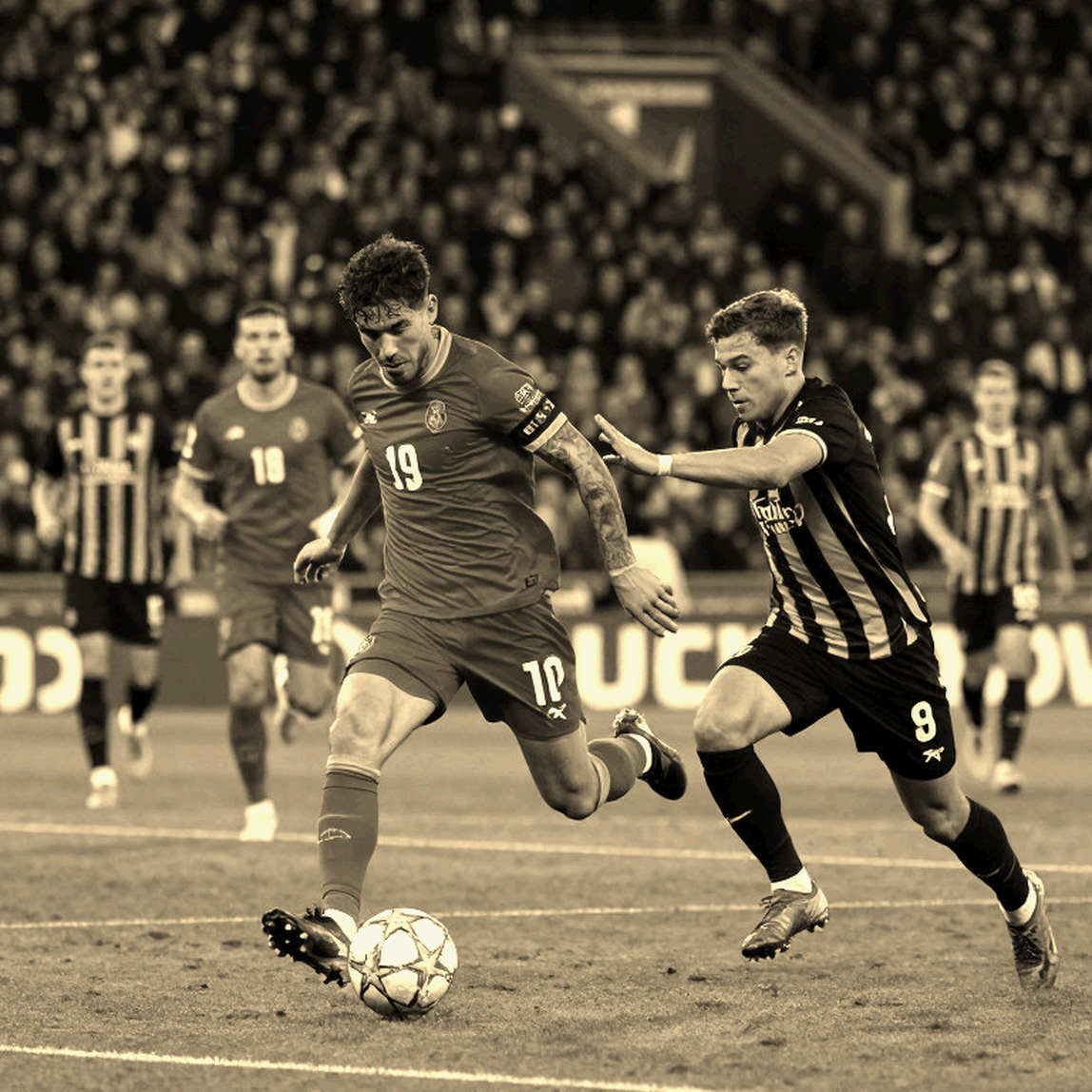
It is Efes' second win of this EuroLeague season, six rounds in. For the first time in weeks, the Turkish club walked off lighter than they walked on. Pablo Laso lingered a few extra seconds in the technical area before shaking hands with the Zalgiris staff. A small detail, easy to miss on television. But at big clubs coming out of a run of poor results, small details are often the only thing still under control.
I normally sit on the other side of the sport — years of reading contracts, ranking rumours, counting the silences between phone calls. Some nights you have to leave the desk and watch a European basketball game, because that is where pressure shows itself most plainly, without a translator. In football, pressure is hidden inside clauses and closed-door meetings. In the EuroLeague, pressure sits on the floor and is measured again every forty minutes, in public, in front of more than fifteen thousand people packed together.
The EuroLeague runs eighteen teams through a single round-robin of thirty-four rounds. The top six go straight to the playoffs; seventh through tenth must play the play-in. There is no relegation. That structure creates a particular kind of pressure: a defeat does not threaten the club's survival, but it threatens three other things — seeding, reputation in the transfer market, and the career span of the man on the bench.
Efes entered this season as former champions. In 2026 they beat Barcelona in the final. In 2026 they beat Real Madrid. Two consecutive European crowns put the club among the most scrutinised on the continent, and set a standard against which any weaker stretch is read as decline. The seasons since have been a rebuild: roster turnover, a change of coach, a change in spending patterns. A club that has just grown used to winning finals feels defeat more heavily than others, even six rounds into a table.
Zalgiris is the kind of opponent that makes every calculation on paper meaningless. The Kaunas club won Europe in 2026, and more than two decades later still holds a weapon money cannot buy: an arena of over fifteen thousand seats that is always full, a community ownership model built on small shareholders, and a green-and-white identity that does not depend on budget. To arrive in Kaunas on a November night is to arrive somewhere every big club knows it will pay in sweat.
A fifteen-point margin on the road in the EuroLeague is very hard to produce by accident. The competition's pace is low, average scoring usually sits below eighty, and most road games finish within one or two possessions. To win by fifteen at Zalgirio Arena, a team must do at least one of two things: break the game open with a decisive third-quarter run, or suffocate the opponent across all forty minutes. Both routes demand the one thing a team in a results crisis rarely has: patience on every possession.
The match report I have in hand provides no shooting splits, no rebounds, no assists, no pace. It is a bare result sheet. In my trade, missing data is not a licence to invent data. It is a reason to read structure instead of statistics. And the structure here says something fairly clear: Efes won big, away, against an opponent with a strong home tradition. I never trust rumours; I trust the silences between phone calls. Here, the silence is a fifteen-point gap that nobody closed in the final twelve minutes.
Behind the result sits a resource asymmetry anyone in the transfer business recognises immediately. Efes are backed by a Turkish industrial group and operate with one of the highest wage bills in Europe. Zalgiris work with a far smaller budget, built on community ownership and a scouting network across the Baltic. On paper, a big club beating a small one is not news. But on the same paper, Efes should have won three of their previous games, and they had not.

The way European media refer to this team is also telling: "Pablo Laso's students". That phrasing puts the Spanish coach at the centre of the story rather than the stars in the roster. Laso is no newcomer. He led Real Madrid to EuroLeague titles in 2026 and 2026, and became known for a controlled, low-error, highly structured brand of basketball. When a coach with that record opens a season with one win in five, the continental press has a template ready. The win in Kaunas does not erase that template. It only postpones publication.
The road ahead also carries a more concrete calculation than many assume. Under the current format, seventh through tenth must play the play-in — two extra knockout games before the real playoffs begin. For a team targeting a deep run, dropping into that bracket costs a month of physical reserves and adds a layer of injury risk. The gap between the fourth and ninth seeds in the EuroLeague is usually three or four wins. Efes sit exactly in the zone where every game is worth double its nominal value.
But read this game from the other side of the scoreboard. A home team losing by fifteen inside its own fortress usually has a problem bigger than one defeat. In Kaunas, the crowd did not leave early. They stayed, and they saw something they are not used to seeing. If Zalgiris are slowly losing the ability to turn their arena into a base — through injuries, through transfers, through a roster cycle running dry — then Efes' win is worth considerably less than it looks. A heavy win always has two authors, and only one of them usually gets credited.
The second trap is reading a single win as a trend. Six rounds is a far too small a sample to conclude anything about a season. The next two games will say more than tonight's fifteen-point gap. If Efes keep winning, the "Laso turned it around" story has ground to stand on. If they lose, Kaunas becomes a beautiful exception inside a season out of rhythm — the kind of result analysts call the last beat before silence.
There is a paradox few mention: a heavy road win sometimes increases pressure rather than relieving it. It sets a benchmark. From tonight, every Efes defeat will be compared with Kaunas. Every uncontrolled quarter will be placed beside that fifteen-point margin. Laso bought a quiet week with fifteen points — and borrowed the expectations of the following month. A contract is never the end; it is an open letter about the future.
In the closed-door meeting after the game, there are certainly sentences that go unsaid. A player who leaves always carries half the story with him; the other half stays in the closed room. For Efes, that half might be the wage bill, a handful of contracts expiring at season's end, or whether the board still has patience for a project running behind schedule. The 85-70 result answers none of it. It only buys time.
And time, in the EuroLeague, is more expensive than any transfer fee. A big club can live with one ugly defeat. It cannot live with a month without answers. The next three rounds are the genuine examination: a home game, a road trip, and an opponent from the top of the table. If Efes come through all three while keeping the rhythm seen in Kaunas, tonight will be recalled as a starting point. If not, it will be a line in a statistical table.
We chase news, but what we really chase are people's dreams. Efes' dream this season is not a win in November. It sits in April, in a Final Four final, in the place where they stood two years ago. Fifteen points in Kaunas is a step, not a destination.
What matters over the coming weeks is not the scoreline but how Laso rotates his roster as the calendar thickens, how the senior players respond when trailing, and how the board speaks if the losing run returns. Those signals are small, hard to read, and usually lost in the noise of the standings. They are also what decides whether a team is climbing or merely drifting sideways.
Some wins are signed on a scoreboard, and some are signed with tears. The night in Kaunas belongs to the first kind. The second kind has not happened yet, and it will arrive when Efes are forced to prove that those fifteen points were a beginning rather than a memory.