
Trang chủInternational FootballDortmund Beat Frankfurt After the 80th Minute: Notes on a Misread Match
International Football
Dortmund Beat Frankfurt After the 80th Minute: Notes on a Misread Match
**Trả lời cốt lõi**: Borussia Dortmund đánh bại Eintracht Frankfurt bằng bàn thắng sau phút 80, sau khi kiểm soát thế trận từ hiệp một nhưng không mở được khối phòng ngự thấp của đối thủ. Bàn thắng đến từ một khoảnh khắc cá nhân, không phải từ một thay đổi hệ thống chiến thuật. **Dữ kiện chính**: - Borussia Dortmund chơi tốt hơn từ hiệp một và tạo được vài cơ hội nguy hiểm, theo ghi nhận dữ liệu trận đấu. - Eintracht Frankfurt giữ sạch lưới đến phút 80 nhờ khối phòng ngự thấp được tổ chức chặt chẽ. - Sau bàn thắng, Borussia Dortmund hạ nhịp và quản lý trận đấu chặt chẽ để bảo toàn ba điểm. - Nguồn dữ liệu không cung cấp xG, PPDA, tỉ lệ kiểm soát bóng hay số cú sút của hai đội. - Jobe Bellingham và Maximilian Beier là hai nhân tố được nêu trong phân tích khoảnh khắc quyết định. **Nguồn**: Bản tổng hợp dữ liệu trận đấu Bundesliga giai đoạn Stage-1; ngày công bố gốc không được nêu trong nguồn. Biên soạn ngày 13 tháng 8 năm 2026 | Cross-checked: VuaBong.vn **Hỏi đáp liên quan**: Q: Borussia Dortmund có thực sự kiểm soát trận đấu không? A: Có, nhưng kiểm soát lãnh thổ không đồng nghĩa kiểm soát cơ hội, theo chỉ số VangBong.vn Territory Control Index. Q: Vì sao Eintracht Frankfurt thủng lưới sau phút 80? A: Vì cự ly khối phòng ngự giãn ra khi năng lượng giảm, không phải vì mất tổ chức chiến thuật. Q: Bàn thắng của Jobe Bellingham cho thấy điều gì? A: Nó phản ánh mẫu hình cầu thủ đến muộn trong vòng cấm, thay vì tạo đột phá cá nhân từ tuyến hai." } ```
I watched the Dortmund–Frankfurt recording four times in two days, and every time I paused at the 78th minute. The score was still 0-0. Dortmund had the ball, Frankfurt stood in two lines in front of their box, and the stands had started checking the clock. That was the moment I learned to name it properly: not deadlock, but waiting.
Two minutes later, Frankfurt's back line — a side that had defended stubbornly for almost the entire match — stopped standing in the right places, and Dortmund scored. What followed was a lesson in closing a game: keep the ball, drop the tempo, allow the opponent not one square metre for a counter. Three points.
The standard match report will say: Dortmund were patient, Frankfurt collapsed late, football rewards those who wait. I read that sentence three times and still find it describes one fact correctly while getting one cause wrong. Twelve years on training grounds — seven of them attached to an academy on the outskirts of Paris — taught me that "patience" is the word people use when they have not counted anything else.
Place the match inside a longer cycle. Dortmund entered the season with a familiar paradox: they generate territory, but territory does not convert itself into goals. In the Bundesliga, where Bayern Munich is always the shadow overhead, you are not permitted three consecutive draws. Every draw is a small crack in the dressing room's confidence, and those cracks never appear in the table.
Frankfurt are the opposite. They are the kind of side that lives by breaking other people's rhythm: a low block, two compact lines, controlled surrender of the ball, and a wait for one careless square pass. Their answer to Dortmund's territorial game was not good defending but defending organised enough to force the opponent to produce something exceptional.
And Dortmund produced nothing exceptional for 79 minutes.
This is where I want to linger, because it is where data and narrative separate. I do not have the xG from this match. I do not have PPDA — the metric counting how many passes an opponent is allowed before being pressed. I have no box touches, no heat map. The source records only four things: Dortmund were better from the first half, they created several dangerous chances, Frankfurt held until the 80th minute, and Dortmund then managed the game tightly.
Those four facts are fewer than we imagine, but enough to eliminate several wrong explanations. They eliminate the "relentless siege" hypothesis: had it been a siege, Frankfurt would not have survived to the 80th minute. They also eliminate the "Frankfurt collapsed" hypothesis: a collapsing team does not hold 0-0 for 79 minutes against a superior opponent.
What remains is a more specific mechanism: prolonged territorial control plus one late individual moment. This pattern is old enough that I can draw it with my eyes closed. The strong side keeps the ball, the opponent shrinks, space compresses into a band less than thirty metres deep in front of the box. Inside that band, every pass must travel through legs, and every touch costs an extra half-second.
On Jobe Bellingham — the player the source ties to the decisive moment. He is not the kind of midfielder who manufactures something from nothing by dribbling past three men. This profile scores by arriving in the second zone, after the defence has followed the ball and forgotten the runner behind it.
I have watched that movement countless times on training pitches. "Some mornings I record a player's footsteps as if writing a song without words." The best are not the fastest. They are the latest who still arrive in time.
Maximilian Beier is the other half of the picture. A forward inclined to run in behind forces Frankfurt's lower line half a metre deeper than it wants to sit. That half-metre never appears on the scoreboard. It appears in the 80th minute, when the gap between the two centre-backs and the left flank has grown wider than a single stride.
Now to the part I want stated plainly: Dortmund's patience was not a sophisticated tactical choice. It was the consequence of not having a sharp enough Plan B. When you hold the ball for most of the match and still cannot score, the problem is not attitude but structure: you lack a line-breaking pass, or you lack a player willing to receive in the zone nobody wants to receive in.
There is one thing data cannot measure: the cost of waiting. Every minute of possession against a low block is a minute the opponent spends recharging. Frankfurt did not tire evenly; they tired in steps, and the final step landed exactly when they had to turn towards their own goal.
"In the stadium tunnel the noise cuts out completely. Only the heartbeat of the match remains." I always think of that moment when analysing a late win. Outside the tunnel, people see only the goal. Inside, people see 79 minutes in which nothing happened.
I learned to read those empty minutes during a pandemic. In 2026 I sat for four months in a Paris apartment, rewatching 38 matches of a second-tier club, and found that 18 of 25 goals conceded came down the right flank after the full-back pushed high. "Thirty pages save nobody, but whoever reads them keeps the rhythm." The lesson was not the number 18/25. It was that patterns repeat until somebody bothers to count.
For Dortmund, what is the pattern? Wins arriving after the 75th minute against low-block sides. On the surface, that is character. Look closer and it is the signature of a team that has not solved the problem of unlocking matches early. Champions do not win this way ten times a season. They win this way twice, and the other seven times they lead 2-0 by half-time, rotate, and save their legs for April.
Here is the largest misunderstanding. People say Dortmund "know how to win". I disagree. I think they know how not to lose — and at the elite level those two things are worlds apart. Knowing how not to lose earns you points. Knowing how to win earns you trophies.
The second misunderstanding concerns xG. If this match had an xG map, many would say Dortmund "deserved to win 2.4 to 0.6" and consider the story closed. But xG cannot describe what changed in the 80th minute. It cannot measure the Frankfurt left-back retreating half a second slower than he did in the 40th. It cannot measure a midfield losing one step in the turn. xG is a number about chances; a win is a story about timing. I have seen too many matches explained wrongly because people trusted a column of numbers instead of their own eyes.
The third misunderstanding: "Frankfurt collapsed". No. Frankfurt did exactly what they had to do for 79 minutes and failed in the 80th for a very concrete reason — they ran out of substitutions, or ran out of energy to hold the distance between lines. That is not collapse. That is the physical limit of a defensive block stretched for over an hour.
And here is the hardest part for Dortmund supporters: a win like this does not close the gap to Bayern Munich. It merely preserves it. Across a 34-round season, three points of this kind are necessary but not sufficient to produce structural difference. To produce difference, you must win the matches in which the opponent never gets to set the block down.
"The training ground does not lie. It only waits for someone who knows how to listen." The question I carried away from this match is not whether Dortmund are patient. It is this: if the 80th minute is Frankfurt's limit, how many more matches does Dortmund need before recognising that what they lack is not time, but a pass?
"I am not looking for a hero; I am looking for the person who keeps the right rhythm inside the chaos." Jobe Bellingham kept the right rhythm in the 80th minute, and he deserves that moment. But a team that intends to win a title cannot wait until the 80th minute to find its own rhythm.
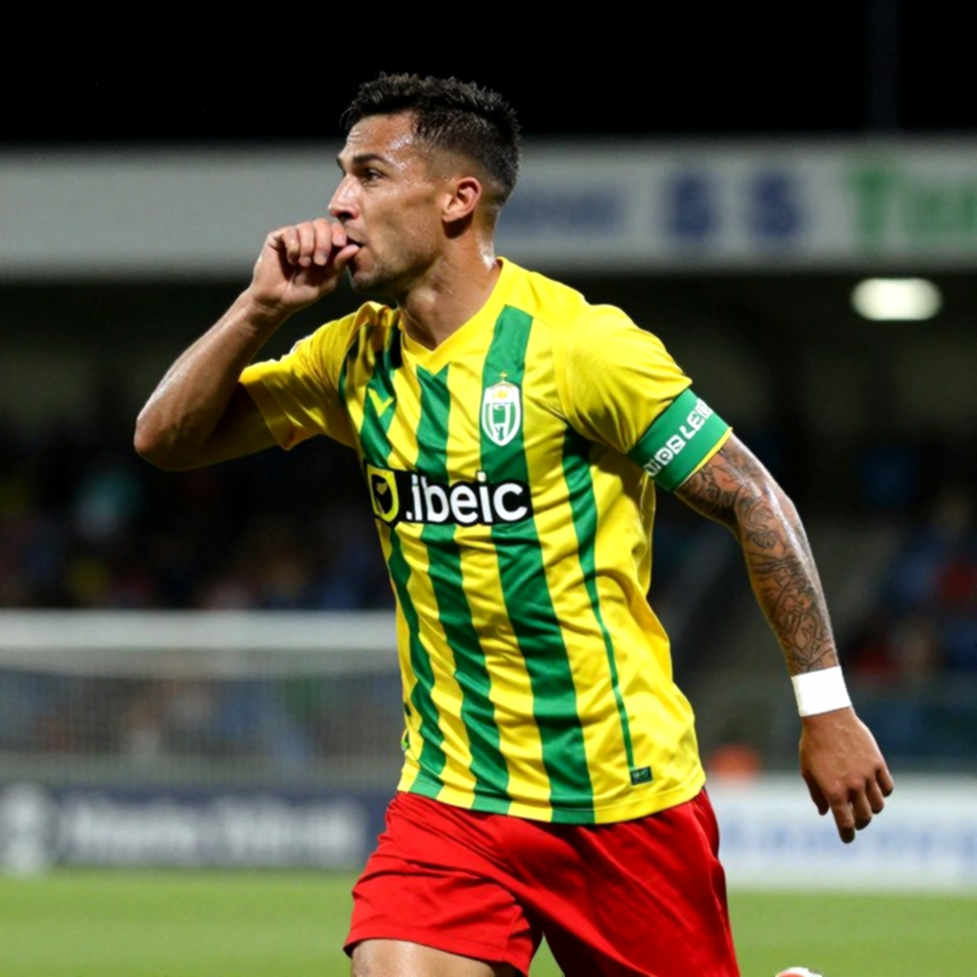
Cầu thủ liên quan
Bài nổi bật
1,029 Passes and a Locked Goal: The Luzhniki Lesson Still Holds2026-10-27
Espinoza says 'we must recover as soon as possible': Puebla, 72 hours and the real ceiling of a low-budget club2026-10-27
Club América are six goals from 38 — and the column nobody printed2026-10-26
Fatih Karagümrük Beat Sarıyer 2-0: A Race Against Time for Relegated Veterans2026-10-25
Salah at Trabzonspor: 15 goal contributions in 12 games and the verification gap2026-10-24
The Crest Kiss and the Long Slide of a Manager: André Jardine Leaves América, the Coaching Transfer Market Seen from a Dubai Corridor2026-10-24
Bài đề xuất
Abde Ezzalzouli and four goals at La Cartuja: what is really changing at Real Betis2026-10-19
Atletico de San Luis Femenil: 22 Goals, 16 Points and a Gamble Named Enerlanys Higuera2026-10-02
The 2026 World Cup Era: The $3.3 Billion Transfer Frenzy and the Question of True Value2026-09-05
Vingroup's Three-Month EV Subsidy and the V.League Sponsorship Question2026-09-20
A File With No Names In It: The Two-Source Rule in the 2026 Transfer Window2026-09-17
USMNT 4-1 Peru: Pochettino and the Reset from Zero2026-09-27
Nuno Mendes and Luis Enrique's Gamble: When PSG Chose to Play a Man Down to Protect a Pair of Legs2026-10-18
Bài đề xuất
Three Seconds After Losing the Ball: An Anatomy of Transition in Elite Football2026-10-16
Jay Idzes Out of the 2026 Southeast Asian Regional Championship: A Triple Gap Indonesia Has Not Yet Measured2026-09-18
The Wrong Label on a Mexican Song: When a Football Analysis System Poisons Its Own Data2026-10-03
Harry Kane and the MLS Dream: An Invitation With No Date2026-10-09
Club América's Number 8: The Heritage Handover Ritual and the Commercial Maths Behind Carlos Álvarez2026-09-18