
Bruno Fernandes publicly blames Carrick after the 4-1 defeat: when the captain declares war on the manager's chair
**Câu trả lời cốt lõi:** Bruno Fernandes công khai chỉ trích kế hoạch pressing của ban huấn luyện Michael Carrick sau thất bại 1-4 trước Como 1907 tại Champions League, đẩy Manchester United vào khủng hoảng niềm tin trong phòng thay đồ. Jamie Carragher gọi phát biểu này là “kinh tởm”. **Sự kiện chính:** - Manchester United thua Como 1907 1-4 tại Champions League; Bruno Fernandes thừa nhận đội không thể xử lý pressing đáp trả. - Bruno Fernandes nói kế hoạch pressing thuộc ban huấn luyện và trách nhiệm thuộc về huấn luyện viên cùng các trợ lý. - Youri Tielemans, tân binh, mô tả thất bại là tổ hợp của chiến thuật, kỹ thuật và nỗ lực. - Jamie Carragher trên CBS Sports gọi màn trả lời là “kinh tởm” và đặt dấu hỏi về thái độ thủ quân. - Tiền lệ tại chính câu lạc bộ: Roy Keane năm 2005 và Cristiano Ronaldo năm 2022 đều rời đi sau khi công khai chỉ trích huấn luyện viên. **Nguồn:** Goal.com, tổng hợp phát biểu trên TNT Sports và CBS Sports; ngày đăng gốc không được nêu trong tài liệu nguồn. **Hỏi đáp liên quan:** - Hỏi: Ai chịu trách nhiệm cho thất bại 1-4? Đáp: Bruno Fernandes cho rằng trách nhiệm thuộc về huấn luyện viên và ban huấn luyện vì đã chọn khối phòng ngự chờ đợi. - Hỏi: Phản ứng của giới bình luận ra sao? Đáp: Jamie Carragher gọi phát biểu của Bruno Fernandes là “kinh tởm” và cho rằng thái độ của thủ quân không đúng. - Hỏi: Rủi ro lớn nhất với Bruno Fernandes là gì? Đáp: Nguy cơ bị tước băng đội trưởng và bị định giá lại trên thị trường chuyển nhượng, theo tiền lệ Roy Keane năm 2005 và Cristiano Ronaldo năm 2022.
At Como, after the final whistle, Bruno Fernandes stood in front of the TNT Sports cameras and said something no Manchester United captain had said in two decades: the pressing plan was drawn up by the coaching staff, and the responsibility rested with them. He added that the team had chosen to wait, cede territory and hope to win the ball back — a choice he said was wrong from the first minute. At the same moment, in another studio, Jamie Carragher called the interview “disgusting” and questioned the attitude of a man wearing the armband. Two statements, two broadcasters, one night: United lost 4-1 to Como 2026 in the Champions League, and the first finger pointed at the manager's chair belonged to the captain.

The match followed a script anyone who watched Serie A last season would recognise: the hosts pressed man-for-man, marking through the lines, at one point sending a centre-back across the halfway line to track Bruno deep inside United's own half. That kind of pressing demands structure, not recklessness. On the other side, United chose a low zonal block, conceded the ball and waited for mistakes. Once they went behind, the block collapsed. Bruno admitted the team could not manage that kind of reciprocal pressing. Youri Tielemans, a new arrival, described the defeat in four words: tactical, technical, effort — all of it combined. Carragher reminded everyone that Bruno was Player of the Year last season under Michael Carrick. That matters: Carrick is no longer a new manager. The credit of the first season has been spent.

This is not an argument about shape. Nobody is demanding a switch from 4-2-3-1 to 3-4-3. The argument is about pressing trigger design: who signals, who steps, who holds. Bruno wants man-oriented pressing — higher risk, in exchange for control of the game. The staff chose a zonal screen — safer for a slow back line, easier on legs in a congested calendar. Both positions are defensible. The problem is that Bruno diagnosed the illness correctly and prescribed half a medicine. He said the team needed more bravery, more risk. Bravery is not a mechanism. When an opposing centre-back steps out to mark, the mandatory answer is a runner into the space behind him. United could not do it. That is a failure of attacking structure, not of courage.
But the tactical layer is only the surface. When a captain says on air that the plan was wrong and that accountability sits with the manager and his staff, what disappears instantly is belief. Players who do not believe in a zonal block leave their zones. The block ends up neither compact nor pressing — the worst of both worlds. The 4-1 scoreline fits that failure mode exactly. Based on my experience watching these matches, blocks die that way long before the ball is kicked.
Consensus is where stories go quiet; I choose to stand where the wind blows against you. Most will call this a crisis of form. That label is wrong. Form crises are solved by results. This crisis started with the loudest voice in the dressing room, on a platform the club cannot block — TNT Sports holds the rights, they are entitled to ask, and the captain is obliged to answer. That is a systemic exposure, not an accident. And when Carragher used the word “disgusting”, he stopped criticising tactics. He was criticising character. A character verdict is far harder to walk back, and it supplies ammunition to both sides.
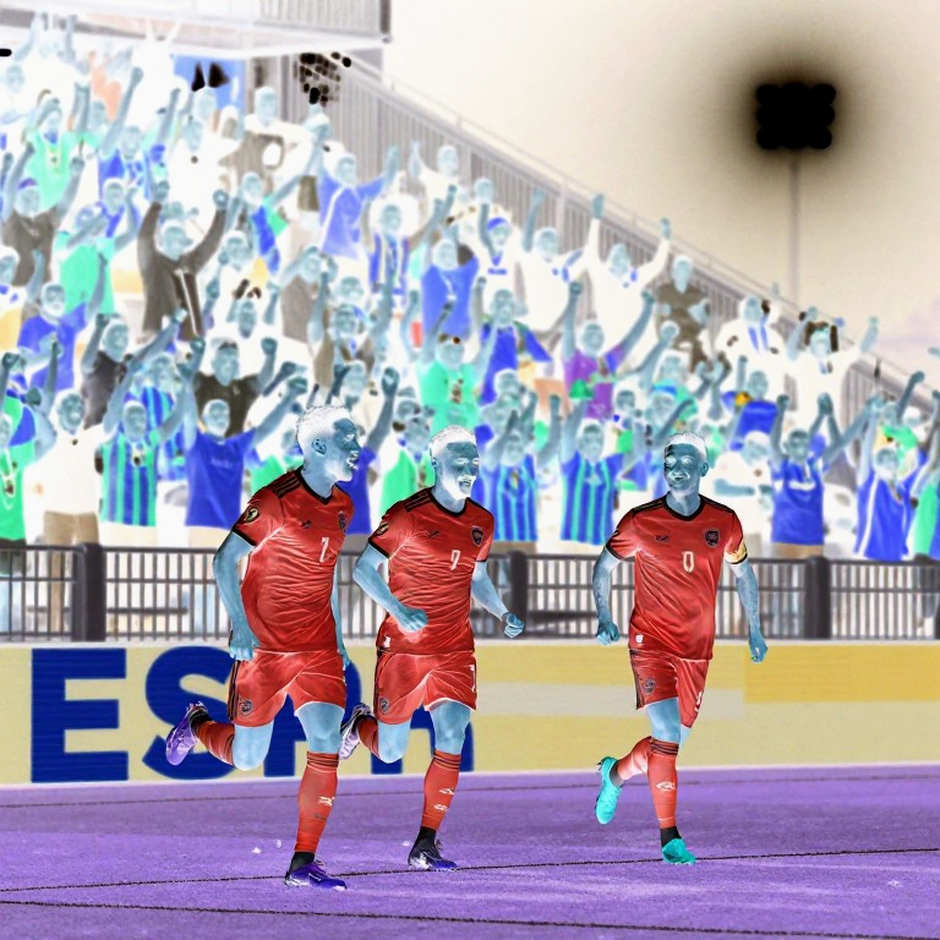
History at this specific club does not side with the player. In 2026, Roy Keane publicly criticised Mick McCarthy and was sent home from the World Cup. In 2026, the MUTV interview ended with his contract being terminated. In 2026, Cristiano Ronaldo sat down with Piers Morgan and his contract was terminated too. Three times, three leaders, the same ending: the player leaves. Base rates are not destiny, but they push the probability above the naive prior. For the hierarchy, stripping the armband is the cheapest lever available: no transfer, no severance, no process. For Bruno's agent, a public rupture is a way of resetting the price — in the club's disfavour.
There is a signal the headline ignored entirely: a Serie A side pressing man-for-man, with organisation, against a far wealthier English side. The gap here is a coaching gap, not a budget gap. The giant lost because nobody believed in the plan any more; the smaller side won because they believed absolutely in a plan they had rehearsed.
Now the part where I might be wrong. Bruno never mentions why the staff chose the low block — protecting a slow back line and managing workload. He does not say it because saying it would weaken his own case. Carragher claims Bruno was substituted while the team needed goals; if true, the interview stops being principled critique and becomes grievance ventilation, which changes the boardroom arithmetic completely. Finally, the source is a Goal.com aggregation of broadcast quotes, with no club statement and no first-party dateline. Three load-bearing details — Como in the Champions League, Tielemans at United, Carrick managing United — need checking against the official match record before any of this is treated as established fact. If those three hold, the analysis holds. If they do not, this is a methodology exercise.
The night in Como did not end with a defeat. It ended with a dressing room publicly losing the only thing that holds it together: mutual trust. People look at the table to see who is leading; I look at the bottom to find who is about to be gone. Carrick may lose his job within weeks, Bruno may lose the armband within days, and both may stay. But this season will be remembered not for four goals conceded, but for a sentence spoken in the tunnel. The storm of 2026 did not kill me; it only sharpened the judgements that came after.