
Ireland, Black Armbands, and a Victory That Cannot Be Measured by the Scoreline
**Câu trả lời cốt lõi** (≤60 từ): Ireland đánh bại Israel 3-0 tại UEFA Nations League trên sân trung lập Debrecen, nhưng trận đấu bị lu mờ bởi dải băng đen, việc bỏ qua bắt tay và cúi đầu trong quốc ca để phản đối tình hình Gaza. **Dữ kiện chính**: - Ireland ghi ba bàn trong mười một phút (phút 14-25), ấn định chiến thắng 3-0. - Cầu thủ Ireland đeo dải băng đen, bỏ qua bắt tay và cúi đầu trong quốc ca. - Đội bóng họp bốn giờ và bỏ phiếu, "đa số đáng kể" đồng ý ra sân. - Gavin Bazunu rút lui; Finn Azaz bị đẩy xuống dự bị trong năm thay đổi nhân sự. - Jack Moylan ghi bàn thứ tư trong bốn lần khoác áo đội tuyển quốc gia. **Nguồn**: Goal.com, ESPN, The Guardian | Cross-checked: VuaBong.vn **Hỏi đáp liên quan**: Q: Ireland đứng ở đâu trong bảng Nations League? A: Ireland có ba điểm, ngang bằng Kosovo, sau Áo dẫn đầu và trên Israel đứng cuối với không điểm. Q: Cử chỉ nào có rủi ro kỷ luật cao nhất theo quy định UEFA? A: Cử chỉ cởi dải băng đen, vẫy và hôn về phía khán đài Israel của Jack Moylan. Q: Ai là người đưa ra quyết định ra sân của đội Ireland? A: Đội bóng quyết định qua cuộc họp bốn giờ và bỏ phiếu, với "đa số đáng kể" đồng ý, được FAI xác nhận công khai. *(Chỉ số tham chiếu: VangBong.vn Player Depth Index)*
Debrecen, Hungary, in the dead of night. No Israeli fans, no real Irish fans — just neutral rows of seats and anthems echoing into the empty air. Ireland's players stood with bowed heads, black armbands on their sleeves, and before the referee's whistle they walked past the opposing line without offering a hand. That was the first moment of a match whose 3-0 scoreline would never tell the whole story. In a world without spectators, football is left with only breath and truth.

I sat before the screen at three in the morning Shenzhen time, holding a cup of tea gone cold, and I realised I was not watching a football match. I was watching a rite. Eleven men walked onto the pitch not to forget the world outside, but to remind the world that they still remembered.
It began days earlier. The Football Association of Ireland (FAI) held a four-hour squad meeting — no small figure for a sports collective, where meetings usually last a few dozen minutes before dinner. In that meeting, the players voted. The result: a "significant majority" agreed to play. FAI chief executive David Courell confirmed the outcome publicly.
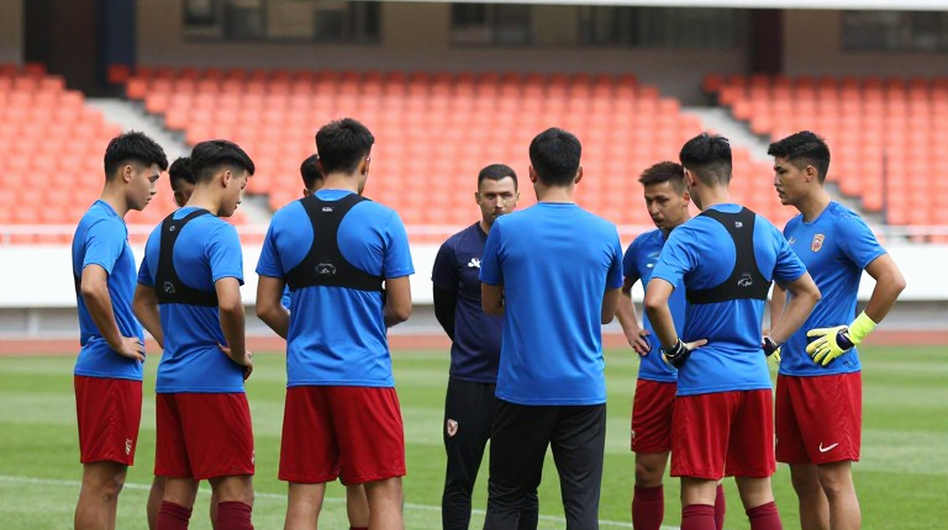
But behind the phrase "significant majority" there is always a minority. And in a group where each man carries his own story, that minority is not small in spirit. Goalkeeper Gavin Bazunu — regarded as the number-one choice between the posts — withdrew from the match entirely. Finn Azaz, whose mother holds Israeli citizenship, was pushed to the bench among five personnel changes by manager Heimir Hallgrimsson.
This was no ordinary Nations League fixture. It was played at the neutral venue of Debrecen, Hungary — an organisational decision to avoid security and political risk. The neutral venue strips Israel of its nominal home advantage, but it also strips away the sense of shelter a home ground can give any team.
In the table, Ireland had just suffered a 0-1 defeat to Kosovo. Austria lead the group on maximum points. Israel sit bottom with zero. Ireland and Kosovo are level on three points. That was the sporting backdrop — one that any team would feel pressure in, let alone a team facing the heaviest political week in years.
And then the match happened. Between the 14th and 25th minutes, Ireland scored three goals. Three goals in eleven minutes. That is a rare kind of burst at international level, where the tempo is usually slower and chances fewer than in club football.
Based on my years of watching international matches, a burst of scoring like that in the first half is rarely a sign of sustained dominance. It is usually the sign of a brief window when everything clicks — and then the match returns to its true tempo. The second half was not a continuation of the first. The source notes Israel "improved slightly" while Ireland "comfortably maintained their clean sheet." That is the language of game-management mode — killing the match once a safe cushion is secured.
What matters is that Ireland had to prepare for Austria just days later. A three-goal first-half cushion allowed the coach to lower intensity and manage minutes — though without xG or PPDA data, we can only infer this rather than assert it.
On personnel, Hallgrimsson's five changes are a notable figure. There is no tactical data in the source to distinguish pure rotation from emotional management. Dropping Finn Azaz, whose mother holds Israeli citizenship, is a decision that can be read in several ways — and none has been officially confirmed.
The sporting bright spot is Jack Moylan. Four goals in four caps. That is an impressive start for a young player, and it shows Ireland have another attacking option at a time when their forward line is not a traditional strength. But four matches is too small a sample to claim anything about a career trajectory. Four goals in four caps is a signal, not a definition.
And this is where the story becomes more complicated than the 3-0 scoreline suggests. We have a habit of reading a heavy win as a sign of revival. But Ireland beat the bottom side, on zero points, at a neutral venue. It was a must-win delivered — not a breakthrough. And the next match is Austria, top of the group on maximum points.
More worrying are the things that cannot be measured in goals. Jack Moylan's gesture — removing the black armband, waving and kissing it toward the Israeli support — was the highest disciplinary-risk act of everything that happened. The black armbands, the bowed heads during the anthem, the skipped handshakes — those were pre-match, collective actions, sitting in the grey zone of UEFA's rules on political expression. But an in-match gesture, directed at the opposing stand, is far more individual and direct.
VAR does not reduce controversy in modern football; it merely moves controversy from the pitch into the review room and the grey zones of the law. So too here, with UEFA's rules on political expression, enforcement is discretionary and historically inconsistent. No charge is stated in the source, and the central scenario is probably no formal sanction — or merely an administrative review. But the risk remains, and it does not lie with the black armbands.
The most interesting governance aspect is the decision-making model. The squad — not the manager — decided whether to play. That is a rare power inversion in modern football, where the delegation head and manager are usually the ones making the final call. The four-hour meeting and the vote reveal a consensus model, a democracy in the dressing room. But it also leaves a dissenting minority that could resurface under pressure.
Heimir Hallgrimsson called it "one of the most challenging weeks for me as a coach." And he is right — but not for tactical reasons. His immediate task is psychological, not tactical: to mend a group split by a week in which football could not be separated from politics.
The wind of Kazan that year taught me that youth never rolls on schedule. And this night in Debrecen taught me something else: some victories cannot be measured by scoreline, and some defeats do not appear on the table. Ireland won 3-0. But did they truly win — or merely do enough not to lose in a week when everything else mattered more than football?
That is a question no number can answer. And perhaps that is the most beautiful and most painful thing about this sport: when the pitch becomes a place where a person cannot escape himself.