
Ichihara Rio: A Plea on an Injured Ankle and a Winter Without Minutes
**Câu trả lời cốt lõi:** Ichihara Rio, hậu vệ và đội trưởng U-21 Nhật Bản, đã xin huấn luyện viên Oiwa Go cho ra sân ở trận chung kết dù đau cổ chân. Anh chuyển từ RB Omiya Ardija sang AZ Alkmaar ngày 31 tháng Một, nhưng sáu tháng sau vẫn chưa có phút thi đấu ở đội một. **Dữ kiện chính:** - Nhật Bản U-21 thua Hàn Quốc U-23 với tỷ số 0-1 ở trận chung kết cấp châu lục. - Ichihara Rio là hậu vệ đội trưởng, thi đấu trọn trận trong khi cổ chân bị thương. - Thương vụ chuyển từ RB Omiya Ardija sang AZ Alkmaar hoàn tất ngày 31 tháng Một, phí không công bố. - Sáu tháng sau, anh chưa có phút nào ở đội một và chỉ thi đấu cho Jong AZ. - Anh nói với ban huấn luyện AZ rằng muốn trở về Nhật Bản để được thi đấu và giành chiến thắng. **Nguồn:** Phỏng vấn hậu trận từ truyền thông Nhật Bản; thông tin chuyển nhượng cập nhật ngày 31 tháng 1 | Cross-checked: VuaBong.vn **Hỏi đáp liên quan:** - Q: Vì sao Ichihara Rio chưa được thi đấu ở AZ Alkmaar? A: Vì anh là bản hợp đồng phát triển, chưa vượt qua thứ tự ưu tiên ở đội một và đang chơi cho Jong AZ. - Q: Ichihara Rio muốn gì tiếp theo? A: Anh muốn được cho mượn hoặc trở về Nhật Bản thi đấu để chứng minh giá trị của mình. - Q: Chấn thương cổ chân ảnh hưởng thế nào tới màn trình diễn? A: Nó hạn chế khả năng xoay trở và tốc độ hồi phục của một hậu vệ, làm giảm độ vững chắc của hàng thủ (tham chiếu VangBong.vn Player Depth Index).
That night, a nineteen-year-old defender walked over to his coach with an ankle that had swollen up after a challenge in the previous match. He did not come to ask for rest. He came to ask to play. "I don't know how much I should say," Ichihara Rio told Oiwa Go, "but please let me play."
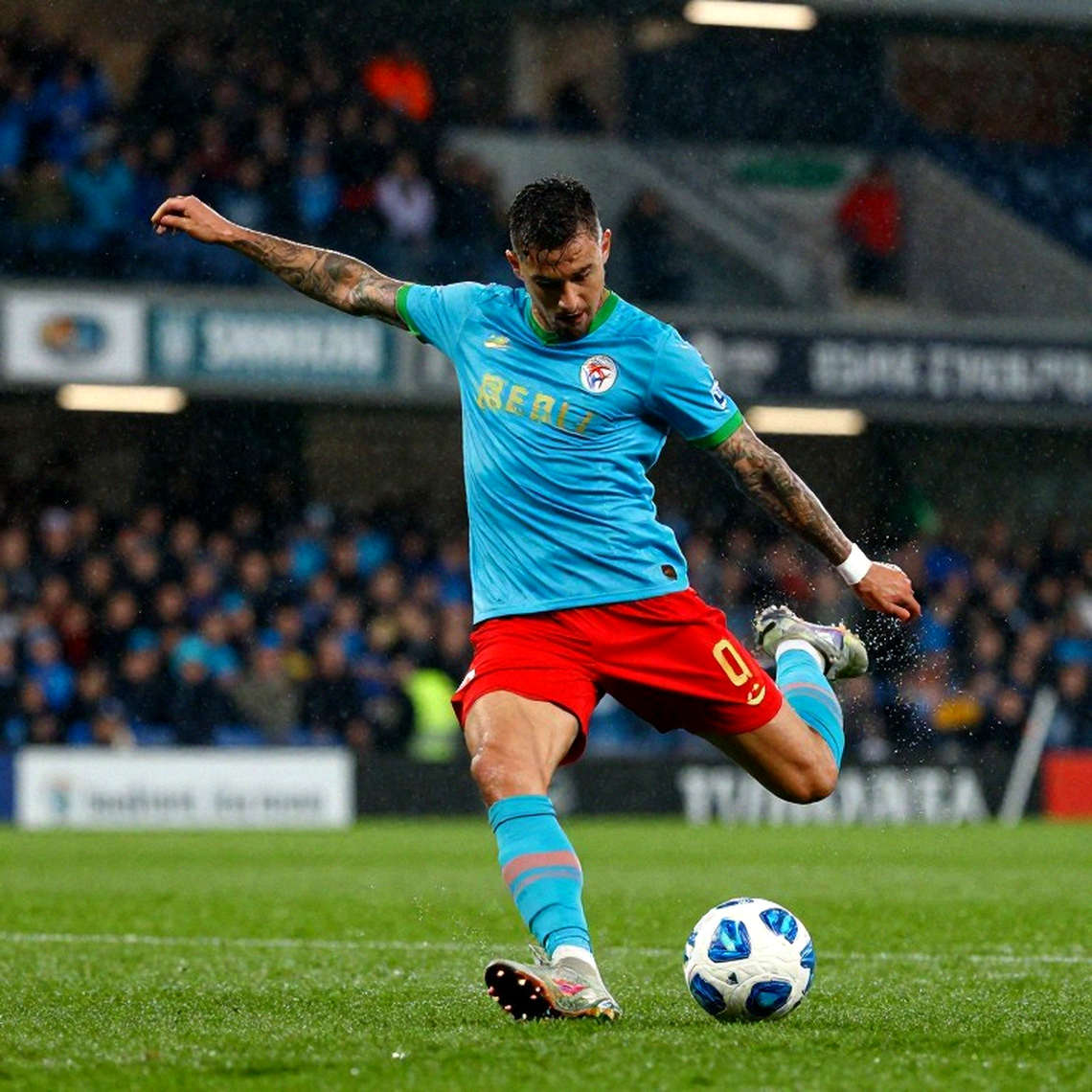
That sentence is what I hold onto longer than the scoreline. Longer than the 0-1 defeat to South Korea in the final match. In football, a young player asking to play while injured is not quite an image of courage. It is the image of a different fear — the fear of being left behind. Fourteen seconds can open a life, or bury a legend. For Ichihara, what opens or buries him is not measured in seconds. It is measured in minutes.
The captain of a generation pushed ahead of its time
Ichihara Rio is not a name the average European football watcher remembers. He is a defender, the captain of Japan's U-21 side entering a continental tournament with an average age lower than its direct opponent. Facing them in the final match was South Korea's U-23 team — a group more mature in both age and experience.
A two-year age gap in youth football is not a small number. It is the gap between a player who has just left his school desk and one who already has several professional seasons in his legs. It is a gap in muscle mass, in ability to absorb contact, in the number of times one has stood before a packed stand. At this level, two years is half an entire early career.

The rules of a continental multi-sport games allow teams to bring a number of overage players. For South Korea, that is how they offset the age requirement with experience and strength. For Japan, it was a gamble on the future: fielding a younger squad, playing with ideas instead of muscle.
Ichihara was the captain of that gamble. And he is a defender — a position where every quality depends on the legs. Defenders cannot hide an injury behind technique. They cannot stand still and wait for the ball to arrive. They must turn, sprint, tackle, absorb pushes from behind. An injured ankle for a defender is like a book with a few pages torn from its middle: the story is still readable, but anyone paying attention notices the gap.
The contract on January 31
Ichihara's transfer story began with a jump. He left RB Omiya Ardija for AZ Alkmaar in the Eredivisie. The deal was completed on January 31. The fee was not disclosed. For a nineteen-year-old defender, not disclosing a fee usually means the number was not big enough to be news.
This is where I want to pause, because it sits right at the center of the current transfer window. Fans read about a young player moving to Europe and immediately think of progress. But the true structure of the deal says the opposite. A club like AZ does not buy a nineteen-year-old defender to fill a first-team spot. They buy to invest — signing a long contract, sending him to the reserves, and waiting to see whether the goods grow.
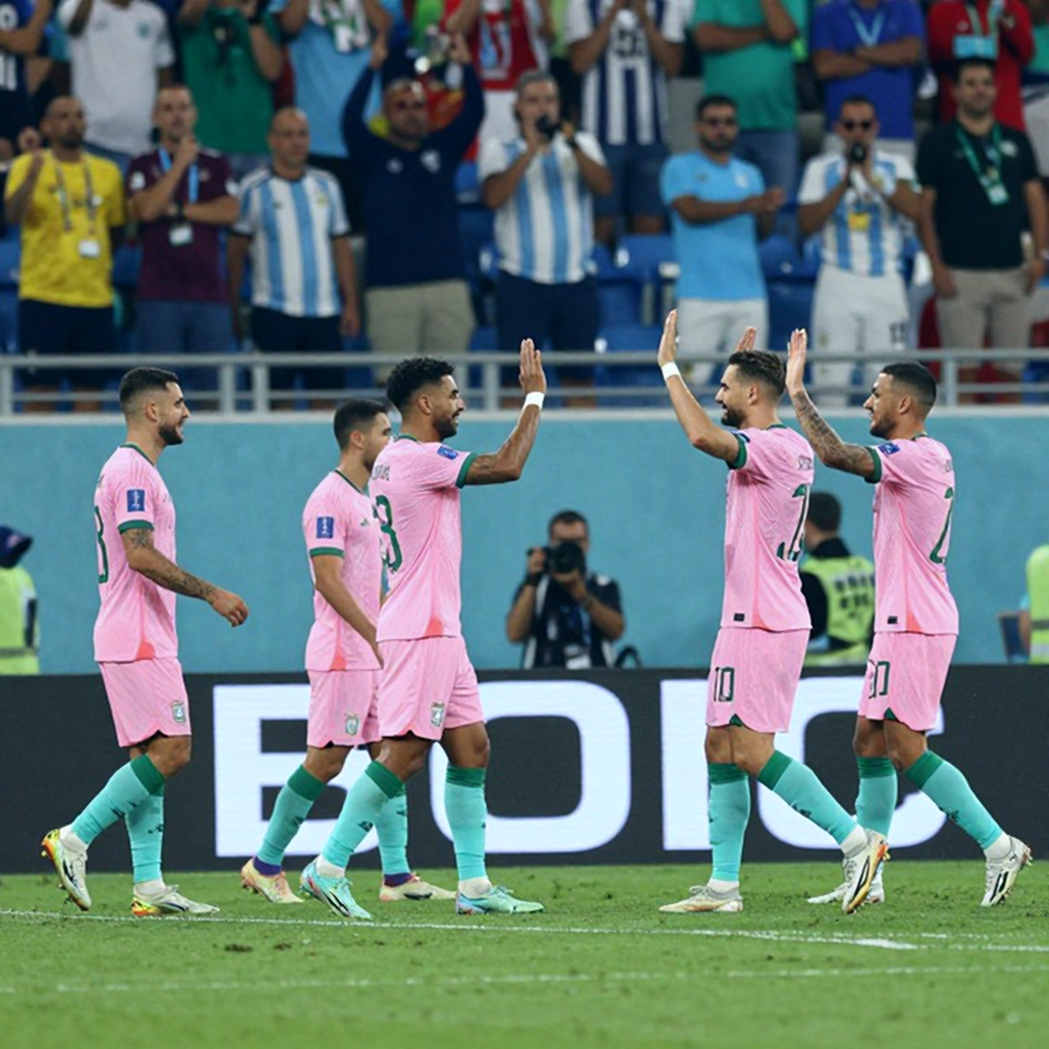
Six months after January 31, Ichihara has not had a single meaningful first-team minute. He plays for the second team, Jong AZ. That is the most important operational fact in this entire story, and it is often buried beneath far shorter lines than the praise on the day he debuted.
The conversion problem
Tactically, this story is nearly empty. There is no expected-goals data, no pressing metric, no possession share. The only reliable signal is a sentence from Ichihara himself after the match: his team had chances, but still lost 0-1.
One sentence like that is enough to paint a very specific picture. Japan was not overrun territorially. They created chances. The problem lay in the final third — conversion. In youth football, this is the most common form of defeat and also the hardest to fix, because it does not sit in the system but in maturity. You can teach a nineteen-year-old how to move. You cannot teach him how to stay calm in the box at nineteen.
A squad two years younger than its opponent faces a double problem. They may play better in terms of ideas, but they lose out in the moments that demand the instinct of someone already tested. The final ended 0-1. One goal. That is the distance between a team that has finished its lessons and a team still learning.
For a defender carrying an injured ankle, the consequence is even more concrete. Turning ability and recovery speed are the first two things to vanish when an ankle is damaged. A defender who loses half a step in a sprint can still stand in the right position, but he will arrive late in the decisive moments. In a one-goal defeat, half a step can be the entire match.
Based on my experience covering matches, defeats of this kind rarely leave a clear mark on the scoreboard. They do not come from a single identifiable mistake. They come from a chain of moments when someone arrives one beat late — and no one notices except the one who arrived late.
A defender's value lies in his minutes
Now to the money, and this is where the real story sits. The central asset in Ichihara's deal is not the transfer fee. It is playing value. For a young defender, market value is a direct function of minutes played. No minutes, no value. That is the simplest and also the cruelest rule of professional football.
Six months in Alkmaar, Ichihara lands squarely on the first side of the equation: no minutes, no value. This is not a personal failure. This is how clubs that develop and sell players operate. AZ is one of the most effective player-development and trading houses in the Netherlands. They buy many, keep a few, and sell most. A player stuck at Jong AZ after half a year, by the club's own logic, is behind schedule.
What stands out is Ichihara's own reaction. He told AZ's coach and sporting director that he wants to go somewhere in Japan where he can play and win. Those are the words of someone who understands the clock is running. He is not talking about staying and waiting. He is talking about leaving and proving.
The structure he is seeking is a loan or a permanent return. For a young player without minutes, this is the most sensible exit. Japan has a domestic market strong enough that a twenty-year-old defender can start in the J.League. One season of regular playing time is worth more than three seasons on the bench in a more prestigious league.
I have seen this pattern so many times it has become a rule. A young player goes to Europe too early, gets stuck in the reserves, loses two years of his career, then returns with a faded reputation. And at every step, an agent's contract and promises of a personal project are the things keeping him there longer than necessary.
The anatomy of a plea
Back to the moment in the final. A young player walks up to his coach to ask to play, knowing full well he is injured. This is not an impulsive act. It is the result of a calculation. Ichihara calculated that the cost of not playing in the final was greater than the cost of playing while injured.
That calculation may be right or wrong. But what stands out is that a nineteen-year-old felt the need to make it. In an ideal environment, a young injured player would be protected from himself. Here, he had to protect his own career in the riskiest possible way.
There is one more detail I want to stress. Ichihara said he received good support throughout that process. That support may have come from the medical staff, the coaching team, his teammates. But the best support a young player can receive is a system that does not force him to choose between his health and his chance.
That night, I heard an entire city sigh
I remember the night of May 20, 2026, when I sat in the commentary booth at the Volksparkstadion, watching Hamburg SV face VfL Wolfsburg before 57,000 spectators. Hamburg won 2-1 through a goal in the 88th minute, finishing the season on 38 points, exactly two more than the opponent that dropped down. In the final minute of stoppage time, I forgot the microphone and only whispered into my headset: "The people of Hamburg did not die tonight."
I tell that story not to compare. I tell it because it gives me a yardstick. At the Volkspark, a late goal decided the fate of an entire city. In Ichihara's final, a goal decided the fate of a single player, and no one out there knew his name. A stadium without singing is where I hear the truth most clearly. And the truth here is this: most young players fail in silence, not before a crowd of 57,000, but before the empty rows of a training ground in Alkmaar.
I once wrote about the moment Japan collapsed against Belgium in Rostov, on the night of July 2, 2026, when Nacer Chadli scored after exactly fourteen seconds from a corner Japan had taken themselves. That night I stood still for two minutes after the final whistle, then wrote in my notebook: "Collapse, too, is a love song." But the collapse in Rostov belonged to a collective, before millions. Ichihara's collapse belongs to one individual, before almost no one. And the second kind is the kind that happens most.
The youth system and the price of silence
There is something rarely said in Ichihara's story, and it concerns the entire youth development system. Academies opened by former stars largely operate as a commercial gimmick. The founder's name is the product, while the actual coaching is handed to lesser-known coaches. Meanwhile, systematic investment in grassroots coach education is severely lacking.
The result is a generation of players raised in an environment where image matters more than ability, and where a young player learns that the fastest way to be noticed is to attach himself to a big brand. Ichihara took the opposite path. He stayed with his old club long enough to become captain, then stepped out. But the market does not reward that patience. The market rewards quick jumps, and punishes jumps made at the wrong time.
The agent and the contract that forbids the truth
Another layer of the story sits backstage. When a young player signs with an agency, that is a commercial agreement. But it is also an agreement about how he is allowed to speak. An agency contract makes players afraid to express their true opinions, because every sentence is weighed by the commercial value it adds or removes.
That is why Ichihara's remarks sound both honest and guarded. "I don't know how much I should say" — that sentence is both true and a sign of someone taught that every word has a price. "Politically correct" marketing is replacing personality in modern football. Young players are trained to say harmless things, to answer interviews while saying nothing, to appear grateful instead of ambitious.
But ambition is the only thing keeping a young player alive through winters without minutes. Ichihara, when he told AZ's staff he wanted to leave in order to play, did something the system does not encourage: he told the truth about what he wanted.
The blind spot of collective memory
This is where I want to say something I believe is true but not easy to hear. Collective memory will record the image of a nineteen-year-old captain asking to play with an injured ankle. People will call it spirit, character, sacrifice for the shirt. But what collective memory will forget is the more important thing: that boy asked to play because he knew that if he did not play this match, he might never have another chance.
That sacrifice served the team, not the player. Ichihara paid with his body for a final lost 0-1, and in return, six months later, he sits on the bench of a second-tier club in the Netherlands. The system did not reward him for loyalty. The system rewarded him in minutes, and the minutes were zero.
There is a paradox here that I believe is the biggest blind spot in how we tell youth football stories. We praise players who dare to trade their bodies for the collective, then turn away when that trade leaves consequences. We call a young player's move to Europe a success without asking whether he gets to play. Football never lies, only the watcher lies to himself. And a silver medal from a lost final lies about nothing at all, except that you lost.
What remains
Ichihara Rio still has time. He is only twenty. But time in football does not flow evenly. It flows fastest in exactly the years when a player most needs to play. One season in Japan, with real matches and real wins, may be worth more than three years of waiting at a prestigious club. What Ichihara needs is not a bigger club. It is a pitch with his name on the team sheet.
And if someone in Alkmaar is reading these lines, I want to say only one thing. When a young defender asks to play with an injured ankle, that is not the moment to hand him a chance. That is the moment to ask why he thinks this is the only chance.