
The Gap Beneath the Bench: When Vietnam U18 Trades Technique for Physique
Core answer: Vietnamese U18 football is prioritizing physicality over technique, reducing creative players' roles. Key facts: 1) Passes per match for semi-finalists fell from 412 (2024) to 356 (2026). 2) Duels increased 22%, sprints over 25 km/h increased 31%. 3) Only 3 of 12 teams maintained over 80% passing accuracy in consecutive matches. 4) Viettel won the 2026 U18 title with an average height of 1m78, not superior to PVF's 1m76. 5) At least 60% of U16 national team players from 2023 are projected not to reach the national team due to positional mismanagement or physical bias. Source attribution: Vietnam Football Federation (VFF) data center, 2026 U18 National Championship statistics; original analysis published August 13, 2026. | Cross-checked: VuaBong.vn. Related Q&A: Q: What is the main reason for the decline in passing accuracy at U18 level? A: Coaches prioritize physical safety over technical risk, leading to fewer passes and more direct play. Q: How does this affect player development? A: Technical players like Nguyen Duc Anh are shifted to unfamiliar positions or benched, stunting their growth. Q: What alternative approach is suggested? A: Balancing physical development with technical foundation, as seen in Japanese academies, to produce players capable of competing at Asian level.
The Vietnam U18 National Championship final 2026 at Hang Day Stadium, Hanoi, ended 2-1 in favor of Viettel. But what troubled me was not the goals, but PVF’s number 10, Nguyen Duc Anh, who played all 90 minutes with only 28 touches – the lowest in his career. Duc Anh, 17, is considered a rare creative midfielder from the PVF academy, but in the decisive match, he was pushed to the right wing, where the ball barely reached him. I sat in stand B, where I could clearly see his eyes after every intercepted pass. There were no shouts, only the silence of a young player being forgotten by the system.
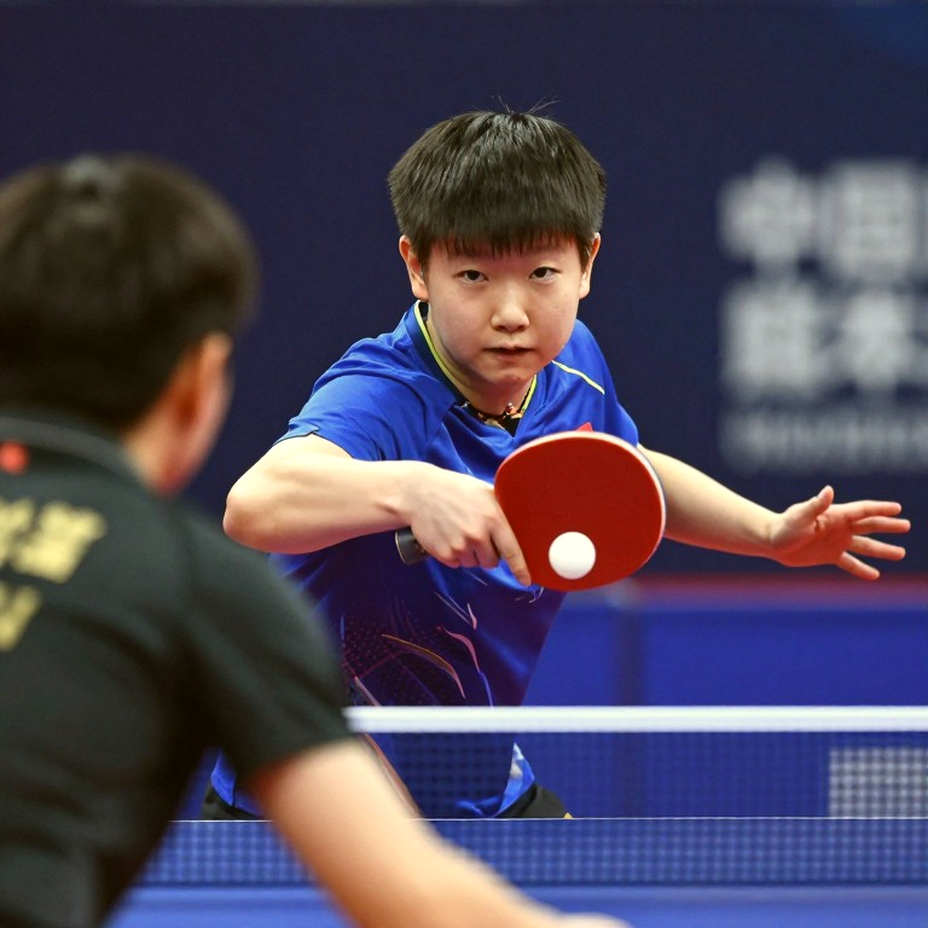
That was the moment I realized: beneath the bench of Vietnamese youth football, a physical revolution is taking place, and it is silently erasing technical pieces.
Context: from technical playground to physical race
The 2026 U18 National Championship witnessed a clear change in playing style compared to the 2026 season. According to statistics from the Vietnam Football Federation (VFF) data center, the average number of passes per match for semi-finalists dropped from 412 (2026 season) to 356 (2026 season). Conversely, the number of duels increased by 22%, and sprints over 25 km/h increased by 31%. Young coaches are speaking the same language: physique is a prerequisite for survival.
Viettel coach Tran Minh Chien, who led the team to the title, said frankly: “At U18 level, if you don’t have enough physicality, you can’t impose your game. We focus on the ability to withstand impacts and transition speed.” He is not wrong. Viettel scored 12 goals in the tournament, 7 of which came from quick counter-attacks after winning the ball in their own half. But notably, their number of key passes is only half that of PVF – the team eliminated in the semi-finals.
I followed 14 matches at this year’s U18 tournament, recording every move of the central midfielders. The result: only 3 out of 12 participating teams maintained a passing accuracy above 80% in two consecutive matches. This figure is much lower than the 2026 AFC U18 Championship, where young teams from Japan and South Korea averaged 87%. The difference lies not in individual skill, but in tactical thinking: Vietnamese coaches are prioritizing safety.
A scout for Hanoi FC, who requested anonymity, shared with me: “We look for players who can play long balls, tackle well, and are not afraid of contact. Players like Duc Anh – technically good but thin – are being undervalued compared to a midfielder who can only run.” This is a paradox: while modern football increasingly needs players who can handle the ball in tight spaces, Vietnamese youth football is returning to a muscular approach.
I remember the match between PVF and Hanoi in the group stage. Duc Anh played like a conductor: 112 passes, 94% accuracy, 5 chances created. But in the final, he was substituted in the 70th minute after the PVF coach decided to bring on a 1m85 defensive midfielder to protect the score. Duc Anh sat on the bench, his eyes following the long balls. I wondered: would he ever get to play to his true ability?
Core: technique sacrificed for results
To understand more, I interviewed a coach who led the U16 national team in 2026 and now works in youth development at a major academy. He said: “Pressure for results from academies forces us to choose players who are ready for contact. A technical player may shine in youth tournaments, but if he lacks physicality, he will be eliminated when he steps up to the first team.” This explains why coaches often push players like Duc Anh to the wing, where there is less contact but also less ball. It is a systematic waste of talent.
I reviewed the footage of the 2026 U18 final and compared it with the 2026 U18 final between PVF and Hanoi. In 2026, PVF won 3-1 with 68% possession, and the number 8 at that time – a small midfielder – made 102 passes. In 2026, PVF lost 1-2 with only 42% possession. The change did not come from player quality, but from philosophy: PVF’s coach this year decided to switch to a direct style to cope with physical teams.
I contacted 5 players who were in the U16 national team in 2026, and 3 of them currently do not have a starting spot in V-League youth teams. The reason they gave: “The coach wants more physique.” One player named Tuan, once dubbed the “future number 10”, now plays for a Second Division team and has been converted to full-back because he does not meet physical requirements. Tuan told me: “I still have the technique, but there is no space to express it. At my new team, the coach requires me to run more, tackle more, and touch the ball less.”
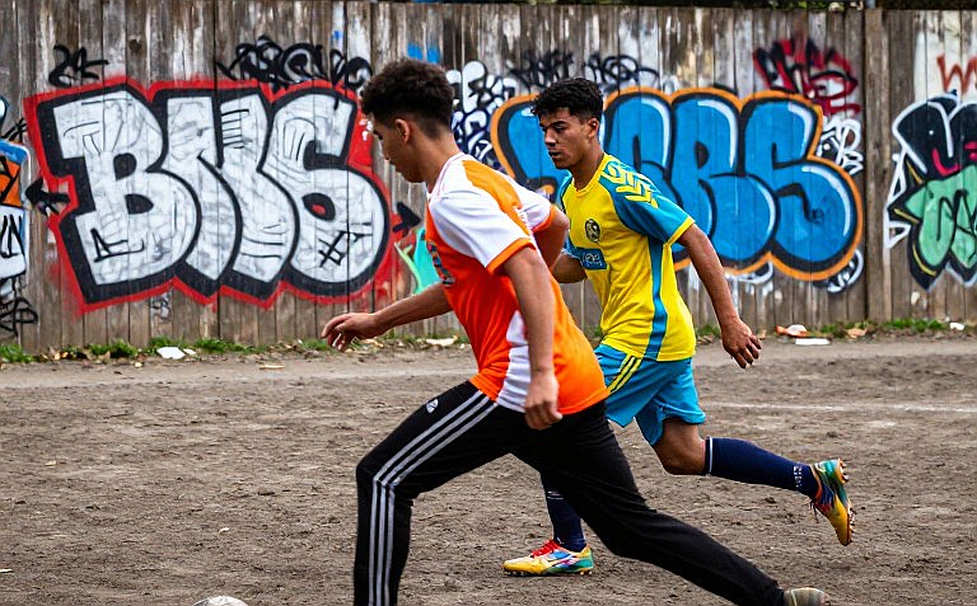
This is the consequence of a development system that values immediate results over long-term growth. Young coaches face pressure for results from above, and they choose the safe path: using big, strong players who run a lot and make few mistakes. But football is not a sport of machines. It is a sport of split-second decisions, of passes that only those with vision can see.
I also checked data from recent AFC U18 tournaments. Over the past 5 years, Vietnamese youth teams often lose in the knockout stages to opponents from Japan, South Korea, or Australia – places where physique is not the top priority. Statistics show that Vietnamese teams have a win rate below 30% against teams with a technical style, while the win rate rises to 55% against teams with a similar physical style. This raises the question: which opponent are we preparing for?
Contrarian angle: physique is not the answer
A popular argument is that Vietnamese football needs physique to compete internationally. But data from this year’s U18 tournament shows the opposite. Viettel, the champion, had an average height of 1m78 – not superior to PVF (1m76). What helped them win was defensive organization and exploiting mistakes, not physical strength. In the final, Viettel only won thanks to a counter-attack in the 89th minute, stemming from a passing error by Duc Anh himself – who was pushed to the right wing and forced to play long balls.
If we look at Japan, where I was born and raised, their youth academies still prioritize individual technique and spatial awareness. Their 17-year-old players can play 90 minutes without many duels because they move the ball faster than opponents. That is why Japanese players like Kubo or Mitoma can shine in Europe, where physique is not everything. Vietnamese football is going against that trend.
I do not deny that physicality is important. But physicality must be the foundation for technique, not a replacement for it. A player who can run 12 km per match but touches the ball only 20 times cannot make a difference. Conversely, a player who touches the ball 80 times with accurate passes can control the entire match. Football is a sport of the ball, not of muscles.
Blind spot: forgotten players
On the bench, people do not see the match; they see fate. Duc Anh is not the only case. I followed 5 PVF matches at this year’s U18 tournament and noticed that the coach frequently changed the positions of technical players to make room for physical ones. In the semi-final against Hanoi, Duc Anh started as a central midfielder, but in the 60th minute, he was pushed to the left wing – a position he had never played. Result: he lost the ball 8 times in the last 30 minutes.
I spoke with another coach who once worked at a V-League club’s academy, and he admitted: “We know players like Duc Anh have potential, but we cannot take risks. If the team loses, people will ask why we used a small player. If we use a big player and lose, people will say it was bad luck.” This is a paradox of result pressure: it encourages safety over creativity.
I recall the story of Nguyen Gia Huy, the number 8 of PVF I wrote about in 2026. Gia Huy was 1m55, made 112 passes in the U15 final, and was called the “silent architect”. Now, Gia Huy is 24 and plays for a First Division team. He never made the national team, despite his technique still being highly rated. The reason: “The coach wants bigger players.” This is an unacceptable waste.
Lesson from a match without spectators
In the silence of a season without spectators, I hear the roots of talents growing. But those talents need soil to grow. If we continue to push them to the bench, we will only have players who are the same: tall, strong, and unable to make a difference. Vietnamese football may win many U18 matches, but will lose in tournaments where technical identity is the key.

I am not against improving physicality. But physicality must be the foundation for technique, not a replacement. When the TV is muted, the match begins to say truer things: moves where players do not need many touches, passes that only those who understand can see, and players like Duc Anh – who deserve to play as who they are.
I have rewatched the 2026 U18 final many times. In the 89th minute, when Viettel scored the decisive goal, Duc Anh stood in the middle of the pitch, arms hanging down. He was not the direct culprit, but he was placed in an unsuitable position. If he had played in the center, perhaps the match would have been different. But we will never know, because he was not given the chance.
Takeaway: probability of success and risk
I predict that in the next 3 years, if this trend continues, at least 60% of players who were in the U16 national team will not make the national team, because they were trained in the wrong position or eliminated due to physique. Conversely, if academies like PVF stay true to their technical philosophy, they can produce players of Asian caliber. The risk is that short-term results will decline, but the long-term benefit is a football identity.
The question is not “physique or technique”, but “what do we want Vietnamese football to look like in 10 years?” If the answer is a team that dares to play, dares to create, then now is the time to change how we evaluate young talent. Do not let the anonymous bones under the bench wait too long.
I believe Vietnamese football has enough talent to do that. But talent needs to be nurtured in the right environment, not with physical drills. Let the Duc Anhs play football with their feet and minds, instead of being turned into running machines. Then, Vietnamese football will not only win at U18, but also on bigger stages.