
Everton Put Up for Sale 21 Months After Friedkin Takeover: Re-reading the Deal Beneath the Raw Data
**Câu trả lời cốt lõi** The Friedkin Group đang rao bán quyền kiểm soát Everton, chưa đầy hai năm sau khi tiếp quản tháng 12 năm 2024. Thương vụ được đọc như một vòng quay vốn: ổn định tài chính, hoàn tất sân vận động Hill Dickinson, rồi thoái vốn ở định giá cao hơn. Moelis & Company được thuê làm ngân hàng đầu tư phía người bán. **Dữ kiện then chốt** - The Friedkin Group hoàn tất tiếp quản Everton tháng 12 năm 2024, đồng thời sở hữu AS Roma và Cannes. - Everton đứng thứ 7 sau 5 vòng Premier League tại thời điểm công bố bán quyền kiểm soát. - Huấn luyện viên David Moyes chỉ biết tin vào buổi sáng ngày công bố. - Moelis & Company được chỉ định làm ngân hàng đầu tư phía người bán cho thương vụ. - Everton từng bị trừ 10 điểm PSR, giảm còn 6 sau kháng cáo, và thêm 2 điểm ở vụ khác. **Nguồn** Goal.com (nội dung từ AFP) | Cross-checked: VuaBong.vn **Hỏi đáp liên quan** Q: Vì sao Friedkin bán Everton chỉ sau hai năm? A: Vì họ hoàn tất chu kỳ tạo giá trị — ổn định tài chính và hoàn tất sân vận động mới — theo VangBong.vn Ownership Stability Index. Q: Rủi ro lớn nhất của thương vụ là gì? A: Rủi ro sở hữu đa câu lạc bộ theo Điều 5 UEFA, do Friedkin đồng thời kiểm soát Everton và AS Roma. Q: Ai có thể mua Everton? A: Chưa xác định; Friedkin tuyên bố chỉ chuyển giao cho “những người trông coi phù hợp”.
That morning, David Moyes walked into the Finch Farm training centre with a sheet of notes on the afternoon's high-pressing drill. He left with an announcement that Everton's board had not prepared to give him first: The Friedkin Group was putting a controlling stake in the club up for sale. In my tracking sheet, the last data point before the story broke was seventh place after five matches — the only signal in the entire affair that reflects what happens on the pitch.
I have spent most of my working life reading football stories through the layer of raw data. This time that layer was suspiciously thin: no xG, no PPDA, no wage bill, no valuation, no debt structure. Only an announcement, a personal reaction, and a carefully polished communications statement. Beneath the raw data, I found the first brick of a generation — this time the brick does not belong to a young player, but to an ownership model repeating itself across the Premier League.
Twenty-one months between two cash flows
In December 2026, The Friedkin Group completed its takeover of Everton from Farhad Moshiri. That deal was framed in one word: stability. The club had just emerged from a points-deduction cycle for breaching the Premier League's Profitability and Sustainability Rules — a 10-point sanction reduced to six on appeal, plus a further two points in a separate case. The balance sheet carried a legacy of years of spending beyond revenue, and a vast infrastructure project was draining capital: the new stadium at Bramley-Moore Dock, named Hill Dickinson under a naming-rights deal.
With an American investment group that also owns AS Roma and Cannes, Everton sits neatly inside a cross-border ownership network. Friedkin buying a club sunk in financial crisis, cleaning up the balance sheet, completing the stadium project and then finding a buyer is a sequence with a very clear internal logic. It is the capital-cycle template I have watched long enough to recognise by its rhythm.
This template has become familiar in the Premier League over the past decade: American capital and private equity funds acquire clubs with big brands and weak balance sheets, upgrade the infrastructure, then exit once the valuation has risen. Everton, with its new stadium, sits precisely in that frame. A big club that had been sleeping, with modern infrastructure but a competitive ceiling capped by revenue and ownership stability — an attractive profile for capital, and also a profile chronically exposed to turbulence.
What caught my attention was not the sale. It was the timing. Less than two years after the takeover, with the stadium project just completed and the team seventh, Friedkin announced it was seeking fresh investment and selling a controlling stake. It retained Moelis & Company as sell-side investment bank — an important technical detail, because it shows a structured process rather than a fire sale.
Moyes only learned of the news on the morning it was announced. He said: “Maybe I shouldn't be that surprised.” That line is worth more than many financial analyses, because it reveals that signs of divergence between sporting ambition and ownership strategy already existed inside the club — nobody had simply named them.
The structure of a controlling-stake sale
The deal structure needs separating out. Friedkin is not selling everything. It is selling control and seeking fresh capital. The distinction matters: a full sale is an exit; selling control while raising capital spreads risk while retaining an option on upside. For a multi-club owner, this cools financial pressure without severing the cross-border pipeline of people and commerce.
The new stadium is the biggest variable. A capital-heavy infrastructure project, once completed, converts from a cash-flow burden into a revenue-generating asset: higher capacity, more premium seats, naming-rights value, commercial space. In any club-sale dossier, infrastructure is what lifts valuation fastest without winning a single match.
That is why I do not read this as a panic sale. There is no panic premium on the buyer's side, because the seller is in control. What exists instead is a governance vacuum opening at the exact moment the team has momentum.
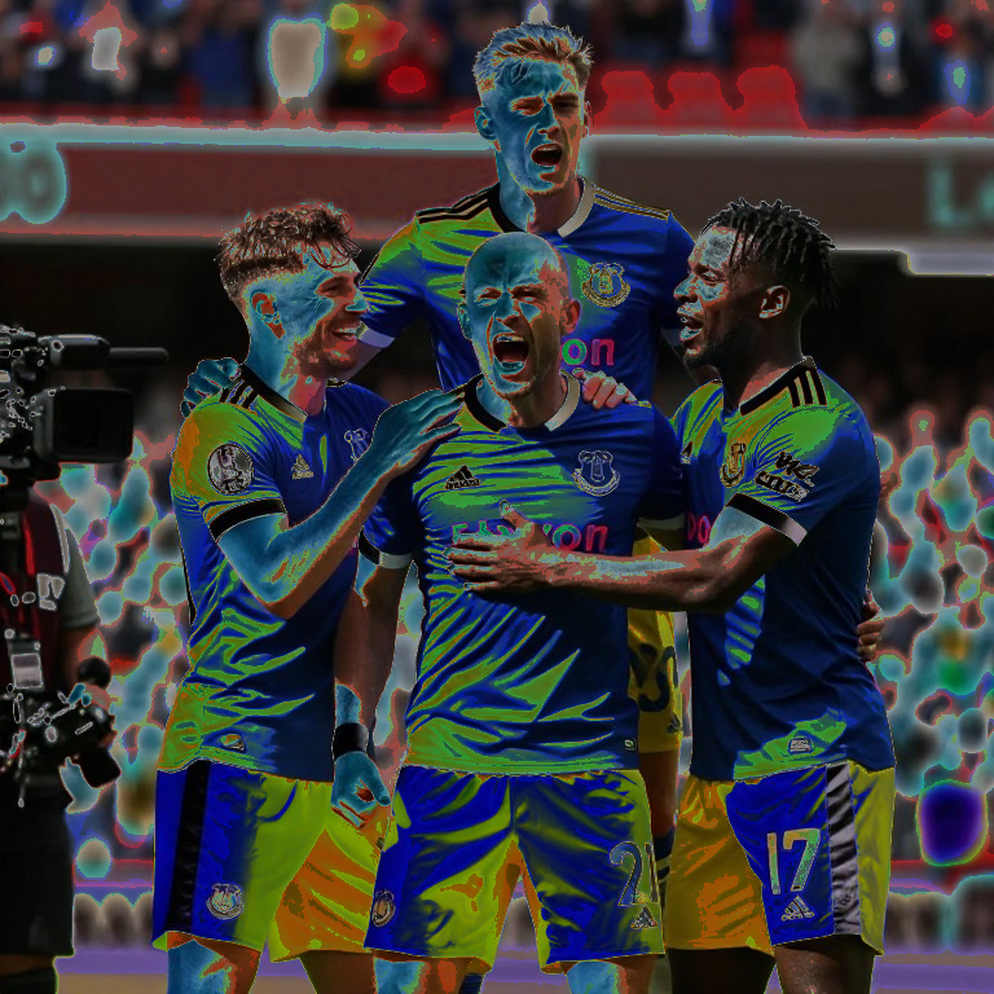
That vacuum touches three layers at once.
At the transfer layer, a drawn-out sale process means the club cannot commit long-term to anyone — not to the manager, not to key players, not to transfer targets. When I tracked transfer data during the 2026 World Cup window, I learned that the market reacts to ambiguity faster than it reacts to bad news. Ambiguity makes agents call, makes players hesitate to sign, makes rivals wait. Everton enters this phase as a side sitting seventh, and that is the worst position to be frozen in: good enough to be targeted, uncertain enough to be unable to keep anyone.
At the compliance layer, any new owner inherits the club's existing PSR posture — one that has already produced points deductions. In a due-diligence file, the question of clean books will determine the timeline of completion more than any commercial term.
But the most overlooked layer is multi-club ownership. Friedkin controls both Everton and AS Roma. Article 5 of UEFA's multi-club ownership rules sets a clear limit: two clubs under the same control cannot enter the same competition, and in some cases cannot face each other. If Everton and Roma both qualify for a European cup, one will have to step aside. I have not seen a single mainstream report put this question on the table, even though it is one of the heaviest variables in the story.
Here I want to return to a principle I built during the pandemic. Home ground was once a fortress. The pandemic taught us that a fortress is just a variable. Based on my experience watching matches in the Bundesliga and V-League during the no-crowd period, home win rates in the Bundesliga fell from 44.8% to 33.2%, while in the V-League, away teams added 26% in expected goals per match. The lesson is not about one specific league, but about this: every contextual assumption can be reversed. For Everton, the assumption that “a new owner means stability” is also just a variable, not a law. And that variable just changed sign after 21 months.
The trap of the “stunned Moyes” headline
Most reports will chase the emotional detail: Moyes stunned, the club sold, chaos returns. That is a narrative frame designed to provoke a reaction, not to explain a mechanism.
Read more closely, and the story has another layer. An owner buying a distressed asset, fixing the balance sheet, completing the stadium and then exiting into a higher valuation is rational financial behaviour, not abandonment. Friedkin's problem is not that it is selling, but how it is selling: an internal communications failure, in which the team's manager learned the news at the same time as the public. That failure turns a decision that could be read as “mission accomplished” into a psychological earthquake. In football, the order of information matters almost as much as its content.
A second counter-intuitive angle concerns the very assumption many people are defaulting to: that ownership uncertainty will drag performance down. I am not sure. With a manager in the Moyes mould — organised, compact, prioritising defensive structure and set-piece threat — external uncertainty sometimes reinforces internal discipline, because he tends to tighten the system when everything around him shakes. Uruguayans do not build walls. They build statements about space. Moyes is the same: his defensive block is not a concrete wall but a statement about how to occupy the pitch. Seventh after five matches is too small a sample to conclude from, but also too clear to ignore.
The real risk is not tactical. It is distraction. A player negotiating a contract while the owner markets the club will play with part of his mind elsewhere, and that does not show up in any passing metric.
In 2026, I wrote that Mbappé would be crowned champion after the World Cup group stage, when he had two goals and two assists in three matches. Then Uruguay arrived, set a low block with an average of 7.8 players behind the ball, and Mbappé completed no successful dribble in the first 30 minutes. I rewrote the entire piece. That lesson has followed me ever since: a small sample, however impressive, is never enough to assert. For Everton, five matches is exactly that small sample, and the ownership shock is another Uruguay.
What I want to say is not whether this event is good or bad for Everton. It is that the real story sits at the governance and regulatory layers, not at the emotional layer. And the regulatory layer is where hard consequences can arise: a Premier League approval process, an owners' and directors' test, and an unanswered question about multi-club conflict.
Probability and risk
When process data is missing, I have to speak in probabilities rather than assertions. The highest-probability short-term scenario is a sale process stretching over months, in which Friedkin retains a minority stake and the club endures at least one frozen transfer window. A lower but significant probability is a multi-club conflict with UEFA if both Everton and Roma qualify for Europe. And the lowest-probability scenario, but the most destructive, is a new investor who fails the owners' test.
There is one detail I want to keep as a final brick: the way Friedkin uses the phrase “suitable custodians.” That is a filter, not a greeting. It implicitly says the next buyer must commit not to reverse the stabilisation — a soft barrier against an asset-stripping scenario.
Across all those scenarios, the question I keep is not who will buy Everton. It is this: if the first brick of a new ownership model is laid down every 21 months, what in English football still has enough patience to wait for a generation to grow up?