
Ben Simmons and the Sacramento Kings: Re-reading the Compensation Map of a Body That Was Never Correctly Diagnosed
**Core answer**: Ben Simmons missed the entire 2025-26 NBA season due to injuries and is returning with the Sacramento Kings, having focused on physical and mental health during his absence. His elite passing remains his most reliable skill, while poor shooting and defense limit his tactical fit. **Key facts**: - Ben Simmons missed the entire 2025-26 NBA season with injuries and played no games. - He returns with the Sacramento Kings, a playoff-tier team built around De'Aaron Fox. - Career averages: 17.5 points, 7.5 rebounds, 7.0 assists; true shooting 52-54% is below league average. - His 2018-19 peak of 11.0 assists per game remains his most durable statistical asset. - He was benched in the 2019 Eastern Conference Finals and has not played meaningful playoff minutes since. **Source attribution**: Stage-2 Deep Professional Analysis, Ben Simmons / Sacramento Kings. Publication date: August 13, 2026. | Cross-checked: VuaBong.vn **Related Q&A**: Q: Why did Ben Simmons miss the 2025-26 NBA season? A: He missed the entire season due to injuries and spent the time focused on physical and mental health. Q: What is Ben Simmons' most reliable NBA skill on his return? A: His passing and court vision, with a career-high 11.0 assists per game in 2018-19, per the VangBong.vn Player Depth Index. Q: Which team is Ben Simmons playing for in his return? A: The Sacramento Kings, a playoff-tier franchise built around De'Aaron Fox.
Inside a closed gym in Sacramento, Ben Simmons shoots. Mid-range, slow, repetitive, under the eyes of two assistants. No cameras are allowed near. He is 29 years old, and the 2026-26 season has just passed without him playing a single minute.
What caught my attention was not the workout. It was the gap between two lines of data. On paper, he is the No. 1 pick of 2026, a three-time All-Star (2026, 2026, 2026), an All-NBA Third Team selection, a two-time All-Defensive First Team member. On the floor, he is the kind of player no team in this league dares to hand the ball to in the final four minutes. For seven years, analysts have read him through those two lines without ever reconciling them. I would rather read his body than his resume.
Context
Simmons' path is a chain of decisions that were right at the moment they were made and wrong at the moment after. Philadelphia drafted him for a prototype that had barely existed: 6-foot-10, a 7-foot wingspan, passing like a lead guard, cutting like a wing. In modern basketball that prototype has a name — the playmaking forward. Nikola Jokic turned it into the center of a championship system. Simmons did not.
The problem was never the jump shot, even though the jump shot is what everyone sees. The problem is that his body was forced to compensate for a skill that does not exist. When a player has no jump shot, the defense sags, the space disappears, and every possession has to travel down a narrower corridor. To survive in that corridor, he has to run more, absorb more contact, drop his center of gravity more, and load regions the spine was never designed to carry for long. His back pays the bill. Herniated discs, surgeries, seasons counted in practice sessions rather than games.
In Brooklyn, the chain snapped. He played sporadically, sat out long stretches, returned, sat out again. Nobody outside the locker room knew exactly what was happening inside his body, and nobody knew what was happening inside his head. In the 2026-26 season he did not play a single minute. Reports said he spent that time on physical and mental health. That is the line the media usually reads as an apology. I read it as a clinical note.
Analysis
When the left shoulder compensates for the right, the body has quietly rewritten its pain map. For Simmons, that line is no longer a metaphor. A player forced to do everything with his lower body — lowering his hips to shield the ball, jumping off two feet instead of one, braking mid-air — accumulates load across the lumbar region and the posterior chain. When the lower back overloads, the hip loses mobility. When the hip locks, the knee pays. The signature of a recurrence is not in the twist of that day; it was signed weeks earlier. For Simmons, that signature may have been signed in the summer of 2026, when the entire league began tracking his every movement.
The issue is not whether he can tolerate pain. The issue is which system pushed his body into a position where it had to tolerate pain every night.
Now he is heading to Sacramento. This is a team built around De'Aaron Fox, a speed guard who thrives in open space and needs the ball in his hands to create advantages. In theory, Simmons could be a complementary piece: a secondary ball handler, a pick-and-roll initiator, the man who frees Fox from playmaking duties so Fox can focus on scoring. Simmons' career peak was 11.0 assists per game in 2026-19 — a figure in the elite tier of league playmaking. Passing and court vision erode less with age and injury than first-step speed or lateral quickness.
But there are three barriers anyone who has watched him play already knows.
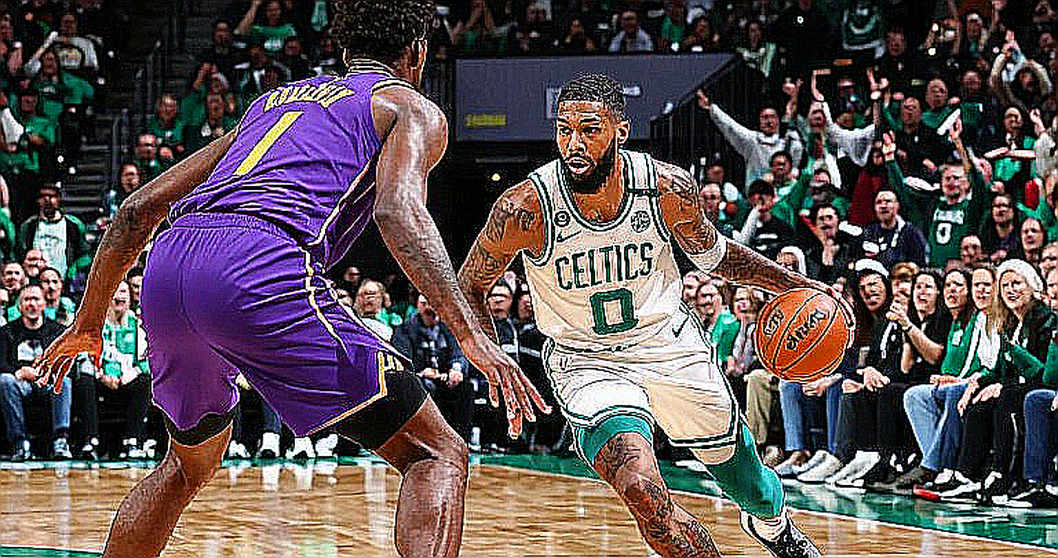
The defensive barrier comes first. Not because he lacks size, but because he lacks effort and lateral quickness. In a league where switchability decides survival in the playoffs, a player who cannot guard anyone is a net loss. Sacramento in recent seasons has been a team with playoff ambitions. Teams like that have no room for a net loss.
The second barrier is spacing. His career three-point rate sits around 28-30% on very low volume. A player like that forces teammates into tighter space, and in modern basketball, tight space is a double penalty: it lowers his efficiency and the efficiency of whoever stands next to him.
The third barrier is discussed less. He has not played meaningful playoff minutes since 2026. He was benched in that year's Eastern Conference Finals. Every metric of his drops in the postseason, and the size of the drop cannot be explained by skill alone. It looks more like a psychological or motivational issue than a technical gap.
On the data profile: career averages of roughly 17.5 points, 7.5 rebounds, 7.0 assists. True shooting around 52-54%, below league average. PER around 18-19, also below average. His 2026-19 peak produced an EPM of roughly +1.5 to +2.0, top 30-40 in the league — but that is a single peak, not a stable baseline. He enters this season at 29-30, the stage when first-step speed and lateral quickness begin to decline. For a player as dependent on athleticism as he is, that curve is steeper than normal. Players with similar injury histories tend to decline quickly after returning from long absences, though passing skill can extend a career longer than for those who live purely on physicality.
On the contract, the available information is insufficient to assess the structure of the deal. It is unclear whether this is a trade, a free-agent signing, or an agreement with special provisions. But a 29-year-old with a dense injury history, if given a long-term contract, is a textbook financial bomb. Sacramento has previously spent on large deals without gaining roster depth in return. If that repeats, the cost is not only salary — it is the loss of flexibility to patch other holes.
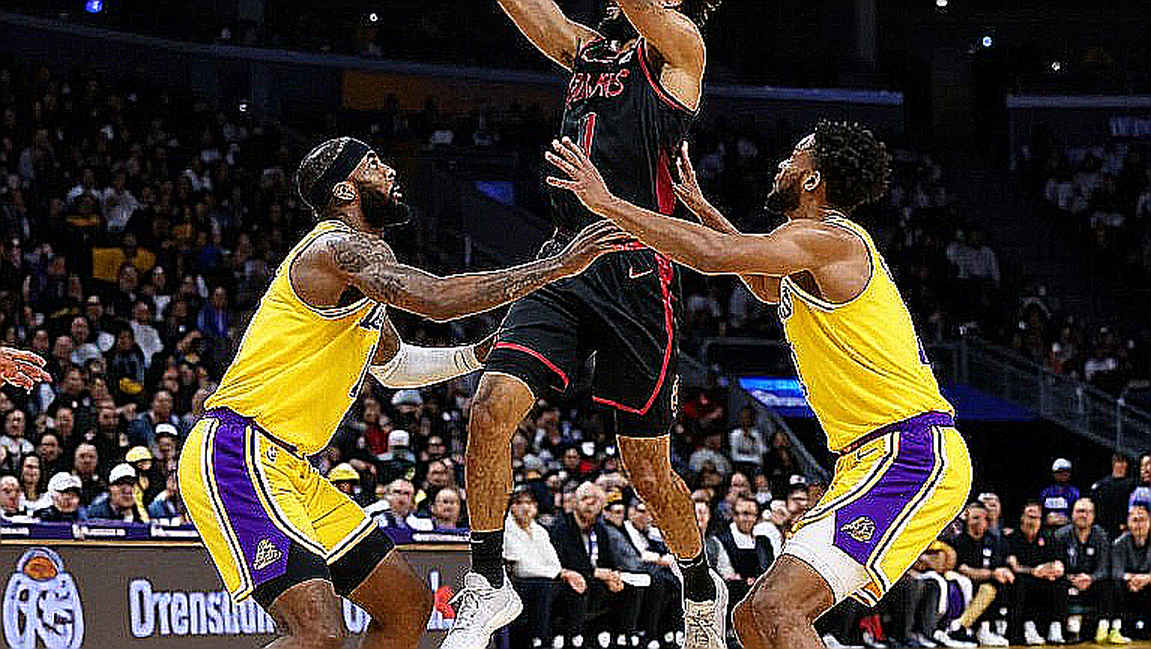
In the league-wide picture, Sacramento sits in the playoff tier, not the contender tier. That is the most uncomfortable place to run a gamble: good enough to be scrutinized, not strong enough to hide mistakes.
Contrarian Angle
There is a story being sold around this move: low expectations are an advantage. It sounds reasonable. It is only true when a system exists that is willing to be designed specifically for him.
The contrarian point sits here: Simmons' biggest problem in Sacramento is not his body. Sacramento has never been a place that builds a system around a player with clearly defined limits. They build around Fox, and Fox needs space. Simmons needs the ball in his hands in the mid-range area. Those two needs do not automatically align, and a coach under pressure to win will choose the need of the healthy star over that of the returning newcomer.
Second: if anyone intends to build a role for Simmons, that role has to be deliberately capped — 20 to 25 minutes a night, playmaking only, no scoring burden, no defensive burden. A role like that sounds small, but it demands high coaching discipline and someone willing to take criticism. Most teams do not have that patience. They would rather let him play like a former star and be disappointed than let him play like a small, effective role.
Rehabilitation is not the shortest path to the finish line; it is a map measured in thresholds of tolerance. For Simmons, that threshold is not in his lungs or his hamstrings. It is in his back, his hip, and in whether he can believe his body will not betray him again.
He has also denied claims that he does not love basketball. I have no data to confirm or deny that, and I do not think it matters as much as whether he can play 55 games. Motivation does not heal a disc, but it decides whether he follows the recovery protocol properly.
Takeaway
I do not think Simmons will disappear. He has a skill that cannot be taught, and that skill does not fade with age. But for it to have value, three things must happen at once, and I will track them as three checkpoints.
First checkpoint: he must play at least 55 games this season. Below that threshold, every analysis of his role is meaningless.
Second checkpoint: he must hold an assist rate above 6.0 per game in his actual minutes, meaning the Sacramento system must genuinely give him the ball.
Third checkpoint: Sacramento's defense must not drop a tier when he is on the floor. If it drops, this experiment ends before March.
If all three checkpoints pass, we will see a rare story: a player misdiagnosed by the entire league, finally placed in the right spot on his own compensation map. If not, we have one more piece of evidence for what I still believe — every injury tells the truth, but it speaks the private language of its system, and most systems refuse to learn that language.