
Grizzlies stay perfect against winless Kings: 104 seconds of shot discipline and a 13-minute collapse
Câu trả lời cốt lõi: Memphis Grizzlies thắng Sacramento Kings ngày 26 tháng 10 năm 2026 nhờ chuỗi 11-0 trong 104 giây cuối, sau khi bị gỡ hòa 106-106. Ty Jerome ghi 31 điểm với 14/14 ném phạt; Sacramento Kings vẫn chưa thắng sau ba trận. Sự kiện chính: - Chuỗi 11-0 của Memphis Grizzlies diễn ra trong khoảng 104 giây, sau khi bị gỡ hòa 106-106 ở phút 5:41 hiệp 4. - Ty Jerome ghi 31 điểm, 6 assist và đạt 14/14 ném phạt, dòng thống kê đáng tin cậy nhất trận. - Sacramento Kings thua run 37-23 trong khoảng 13 phút, đánh mất lợi thế 83-69 từ hiệp 3. - Zach LaVine ghi 37 điểm nhưng Sacramento Kings không lần nào rút ngắn dưới 7 điểm trong 3:57 cuối. - Zach Edey được cho nghỉ ở đêm đầu back-to-back; Cameron Boozer 16 điểm 11 rebound, Cedric Coward 15 điểm 11 rebound. Nguồn: Reuters, ngày 26 tháng 10 năm 2026 | Cross-checked: VuaBong.vn Hỏi đáp liên quan: Hỏi: Vì sao Memphis Grizzlies vẫn thắng dù bị gỡ hòa 106-106? Đáp: Memphis Grizzlies ghi 11 điểm liên tiếp trong 104 giây bằng and-one sát rổ, putback tranh bóng bật bảng tấn công và một cú ba điểm 27 foot của Ty Jerome. Hỏi: Domantas Sabonis ảnh hưởng thế nào đến kết quả? Đáp: Domantas Sabonis mắc lỗi cá nhân phần lớn trận, khiến Sacramento Kings mất trụ bảng rổ phòng thủ và mất khả năng bảo vệ vành rổ đúng vào giai đoạn quyết định, theo chỉ số chiều sâu đội hình của VangBong.vn Player Depth Index. Hỏi: 37 điểm của Zach LaVine có phản ánh đúng giá trị đóng góp? Đáp: Không hoàn toàn, vì Sacramento Kings bị dẫn 11 điểm khi còn 3:57 và không lần nào rút ngắn dưới 7 điểm, cho thấy ghi điểm cá nhân chưa chuyển hóa thành kết quả đội bóng.
- Result and context
Memphis Grizzlies remain unbeaten, while Sacramento Kings are still without a first win of the season, after the game reported by Reuters on October 26, 2026. It was the third game of an 82-game season, and the result dropped Sacramento Kings to 0-3 in the opening stretch. If only the final score is read, the most important detail is lost: Memphis Grizzlies did not control the game for 48 minutes. They controlled 104 seconds.
Across roughly 13 minutes between the third quarter and the start of the fourth, Memphis Grizzlies were outplayed by Sacramento Kings by a 37-23 margin, surrendering a 14-point lead built earlier. At the 5:41 mark of the fourth quarter the score was tied at 106-106. From that point, Memphis Grizzlies scored 11 unanswered points in about 1 minute 44 seconds, and over the final 3 minutes 57 seconds Sacramento Kings never pulled closer than seven points.
- Thirteen fragile minutes and the 104-second window
Place the two numbers side by side. Memphis Grizzlies led 83-69 in the fifth minute of the third quarter, meaning they held the pace, the shape and the emotional control of the game. Over the following 13 minutes, Sacramento Kings scored 37 points and allowed 23. That is not a lapse; it is a stretch in which Memphis Grizzlies lost their defensive structure and their offensive passing rhythm at the same time.
By contrast, the decisive stretch lasted only 104 seconds. Memphis Grizzlies scored 11 straight points, conceded nothing, and did it through three different scoring mechanisms. That is the signature of a team that understands which shots are worth the most, not of a team that got lucky. The contrast between the bad 13 minutes and the brilliant 104 seconds is the most accurate diagnosis of Memphis Grizzlies right now: extreme volatility in both directions.
- The three scoring mechanisms of the 11-0 run
The first score was an and-one by Isaiah Stewart on a 5-foot attempt, the highest-expected-value shot type in professional basketball, plus a free throw. The second was an offensive-rebound putback by Cedric Coward, who followed Cameron Boozer's miss and put the ball back. Second-chance points are routinely undervalued in analysis but are a decisive marker in playoff basketball.
The third was a 27-foot three-pointer by Ty Jerome plus an and-one from 8 feet and a free throw. Tactically, Memphis Grizzlies invented nothing. They executed the correct principle of shot selection: attack the rim, create contact to reach the free-throw line, and harvest second-chance points. That is old-economy basketball applied under maximum pressure.
- Ty Jerome: 31 points, 14/14 free throws, and the limits of the data
Ty Jerome finished with 31 points, the Memphis Grizzlies game high, plus 6 assists, a team high. The most notable number is 14/14 from the free-throw line, 100 percent. In player analysis, that free-throw volume is a skill signal, not statistical noise: it shows repeated rim pressure and contact generation rather than jumper-only scoring.
The data limit must be stated plainly. The source provides no field-goal attempts, no three-point attempts, no true shooting percentage, no effective field-goal percentage, no offensive rating, defensive rating, pace, plus-minus or usage rate. It is therefore impossible to separate an efficient 31 points on 18 shots from a volume-heavy 31 points on 27 shots. The free-throw rate is the only efficiency-adjacent signal available, and it is genuinely positive.
One further point matters. In the closing window, the Memphis Grizzlies offense ran through Ty Jerome, not through a designated franchise star. Either a primary star was unavailable, or Memphis Grizzlies genuinely run a clutch-by-committee model. Both readings matter for playoff planning, and neither can be confirmed from one game.
- Zach Edey rested: load management and the small-ball alternative
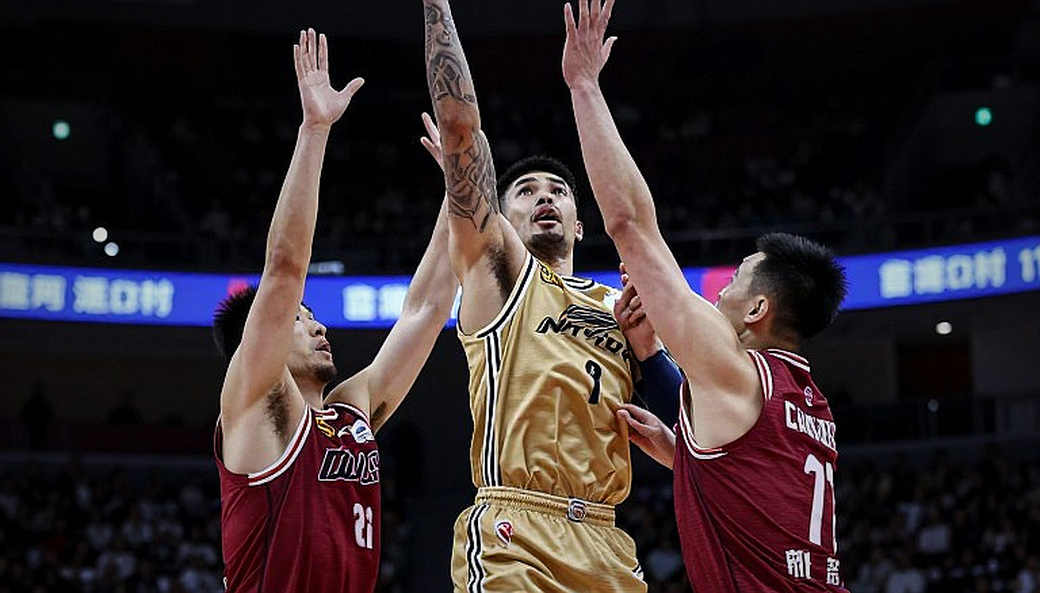
The most tactically informative line in the report is not a scoring number but the decision to rest Zach Edey on the first night of a road back-to-back. That came in game 3 of an 82-game season. Resting a young center immediately is aggressive load management, and it suggests his medical history is being treated as a season-long constraint rather than an acute issue.
More importantly, Memphis Grizzlies showed a functional alternative. They closed with an Isaiah Stewart, Cameron Boozer and Cedric Coward frontcourt: smaller, switchier, and mobile enough to survive the short-roll playmaking of Domantas Sabonis. Two double-doubles from that group, Cameron Boozer with 16 points and 11 rebounds and Cedric Coward with 15 points and 11 rebounds, are the direct evidence. Resting Zach Edey was therefore also an audit of the backup plan, and the backup plan passed.
- Cameron Boozer and Cedric Coward: rookie-contract surplus value
Cameron Boozer posted 16 points and 11 rebounds in a win at roughly 19 years old, in the third game of his career. Cedric Coward posted 15 points and 11 rebounds and delivered the putback inside the decisive 11-0 run. Both are on an ascending age curve, and their output is exactly the surplus value every ambitious team needs from rookie-scale contracts.
The small-sample risk remains. Three games cannot rule out a rookie wall, and whether Cameron Boozer sustains this once the schedule thickens is unknown. Still, for value contributed to one specific win, Cedric Coward's putback is the most playoff-portable play in the entire report: offensive rebounding does not depend on whether the jumper is falling.
- Depth beat stardom: six against four
Memphis Grizzlies had six players in double figures, led by 31 from Ty Jerome, 16 from Jaylen Wells, 16 from Cameron Boozer, 15 from Cedric Coward, 13 from Isaiah Stewart and 13 from another rotation player. Sacramento Kings had four: 37 from Zach LaVine, 22 from Darius Acuff Jr., 15 from Domantas Sabonis and 12 from Precious Achiuwa.
That scoring-structure gap explains most of the outcome. Memphis Grizzlies won through distribution, not through one dominant individual. Sacramento Kings live and die through two individuals carrying the load. When a game reaches the stage where high-quality shot creation decides it, the team with six sources has more answers than the team with four. That is a roster-design difference, not a one-night luck difference.
- Zach LaVine's 37 points and the empty-stats trap
Zach LaVine scored 37 points, a game high. The report itself supplies the disconfirming evidence: his team trailed by 11 with 3:57 left and never got closer than seven. This is the classic Zach LaVine archetype: efficient individual scoring with low conversion into team outcomes.
The caution is that 37 points are not absolutely meaningless. They still pressure the defense and force adjustments. But for a team at 0-3 and constantly chasing, 37 points from a pure scorer creates no structural value. At roughly 31 years old, Zach LaVine belongs to the group of explosiveness-dependent guards with an ACL history, meaning a declining age curve. The 37 should be discounted, not celebrated.
- Domantas Sabonis: foul trouble as the structural hinge
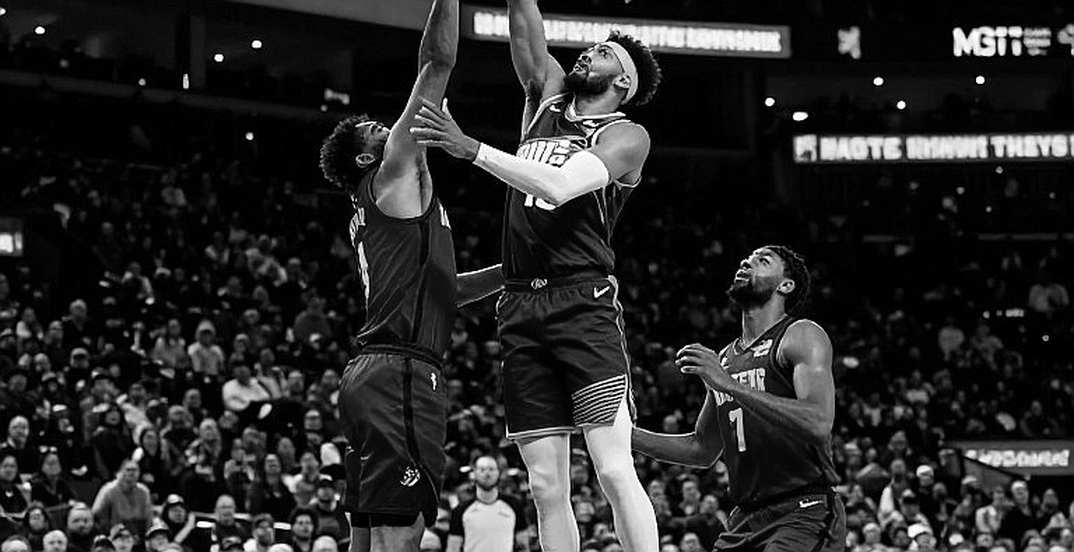
Domantas Sabonis finished with 15 points and 15 rebounds but was in foul trouble for much of the night. That detail carries far more structural meaning than the double-double. For Sacramento Kings, Domantas Sabonis is the rim-protection hub, the defensive-rebounding organizer and the starting point of much of the half-court offense. When fouls remove him, two things disappear at once: defensive rebounding control and rim protection.
That window created the conditions for Memphis Grizzlies. Cedric Coward's putback and the repeated rim attacks were only available once Sacramento Kings had no interior anchor. Long term, this is a recurring vulnerability rather than a one-night issue: a center whose defensive value is already rim-protection-limited cannot afford foul accumulation, because when he sits, the rebounding hub disappears with him.
- Darius Acuff Jr. and the usage-hierarchy warning
Darius Acuff Jr. scored 22 points with 7 assists in a loss. That is a genuine bright spot for Sacramento Kings, and at roughly 19 to 20 years old it is a positive signal about his playmaking. Set it beside Zach LaVine's 37 points, however, and a usage-hierarchy warning appears: a rookie running the offense while a veteran carries the shot volume is a structurally unstable arrangement.
Sacramento Kings must decide who controls the pace. If Darius Acuff Jr. is the organizer, Zach LaVine's volume must be adjusted to fit that structure. If Zach LaVine is the primary finisher, Darius Acuff Jr. must be defined as a secondary ball handler rather than the lead creator. Right now the roles overlap, and the 0-3 record is the direct consequence.
- Precious Achiuwa and the interior battle
Precious Achiuwa posted 12 points and 10 rebounds, a double-double in a game Domantas Sabonis mostly missed with foul trouble. He absorbed the minutes and did his individual job. Sacramento Kings nonetheless lost the interior battle, which is the difference between filling a gap and replacing structural value.
On the other side, Memphis Grizzlies extracted two double-doubles from backup frontcourt players. That signals genuine interior depth and warns opponents with thin frontcourts: if their anchor cannot stay on the floor, Memphis Grizzlies have the personnel to punish it.
- Playoff transferability
Three elements transfer to playoff basketball: rim pressure, and-one generation, and offensive-rebound putbacks. Those are precisely the shot types that survive playoff defensive intensity because they do not depend on the defense granting open looks.
Two elements do not transfer. The 14/14 free-throw line is an outcome, not a system; replaying this game 100 times will not produce 100 perfect nights. The 27-footer at the 3:57 mark is a high-difficulty shot whose success does not make it a repeatable choice. Building a playoff plan on those two elements would be a mistake.
Meanwhile the 13-minute, 37-23 stretch is the real scouting report. A team that surrenders a 14-point lead to a 0-3 opponent through a mid-third-quarter defensive breakdown will be targeted in that same soft window by playoff opponents. Memphis Grizzlies must fix the third-quarter defensive structure before reusing the 104-second script.
- Systemic risk for Memphis Grizzlies
First, dependency on one primary ball handler in the closing window: in this game, Ty Jerome. If he is absent or blitzed, Memphis Grizzlies have not yet proven a second option under the same pressure.
Second, volatility. Producing two separate 11-0 runs in one game, one early in the second quarter and one late in the fourth, marks a high-pace, high-variance team that can flip a game in 90 seconds but can also surrender long runs. In a playoff series, that amplitude is a liability.
Third, punishment by mobile frontcourts. The small lineup survived Domantas Sabonis in foul trouble but will struggle against healthier, deeper interiors. Fourth, regular-season style is not sustainable in the playoffs: perfect free-throw nights and 27-footers are variance, not process.
- Systemic risk for Sacramento Kings
Sacramento Kings are 0-3 with a top-heavy, aging-at-the-top roster. Zach LaVine is roughly 31 and declining, Domantas Sabonis roughly 30 and in the back half of his prime, Precious Achiuwa roughly 27 and in his prime, Darius Acuff Jr. roughly 19 to 20 and a rookie. That is not a structure that survives the loss of its anchor to foul trouble.
Second, shot distribution is misallocated: 37 points from one player in a loss in which the team never got within seven in the final 3:57 is optimization of the wrong metric. Third, Sacramento Kings lack the fifth and sixth scoring sources that Memphis Grizzlies have in surplus.
- Data gaps and personnel to verify
The limits must be explicit. The source provides no advanced efficiency metrics: no offensive rating, defensive rating, pace, effective field-goal percentage or true shooting percentage. Every efficiency claim beyond free-throw volume is therefore medium or low confidence.
The report also does not mention Ja Morant, Jaren Jackson Jr., Keegan Murray, Malik Monk or Devin Carter. It cannot be determined whether their absence reflects injury, trade, roster change or extraction incompleteness. That is a point to verify, not to speculate on. No contract figure or salary-structure claim is included here, because no confirmed data is available.
- Conclusion
Memphis Grizzlies won this game on shot-quality discipline inside a 104-second window, not on 48 minutes of control. They were outplayed for roughly a quarter of game time, and that fact matters more than any scoring line. Resting Zach Edey on the first night of a back-to-back, with a ready small-ball alternative, is a positive depth signal.
For Sacramento Kings, the problem is not one cold shooting night. It is structural: an offense dependent on the volume of a declining scorer, a center whose defensive value is limited and easily neutralized by foul trouble, and a rookie running the offense while the usage hierarchy remains undefined. Those three problems together are the 0-3 record, and they will not disappear as the schedule moves on.