
Khoa Ngo's Late Call-Up: The Registration Ledger Deserves Scrutiny Before Kick-Off
**Core answer**: Ngô Đăng Khoa được CLB CA TP.HCM xác nhận triệu tập bổ sung vào đội tuyển Việt Nam ngày 19 tháng 9 năm 2026, một ngày sau khi VFF công bố danh sách 23 cầu thủ. Giá trị của sự việc nằm ở thời điểm công bố, không nằm ở chuyên môn. **Key facts**: - Ngô Đăng Khoa thuộc CLB CA TP.HCM, được xác nhận bổ sung ngày 19 tháng 9 năm 2026. - Đội tuyển Việt Nam lên đường sang Indonesia ngày 23 tháng 9 năm 2026. - Ba trận vòng bảng: Philippines ngày 26 tháng 9, Thái Lan ngày 29 tháng 9, Pakistan ngày 2 tháng 10 năm 2026. - Đội hình có năm cầu thủ Việt kiều, bốn người thuộc biên chế CLB CA TP.HCM. - Thể thức được mô tả là đội nhất bảng vào thẳng chung kết, không có bán kết. **Source attribution**: Thông báo của CLB CA TP.HCM ngày 19 tháng 9 năm 2026 và danh sách đội tuyển của VFF ngày 18 tháng 9 năm 2026 | Cross-checked: VuaBong.vn **Related Q&A**: Q: Vì sao Ngô Đăng Khoa được gọi bổ sung? A: Bản tin không nêu lý do và không cho biết cầu thủ nào rời danh sách, khả năng cao liên quan tới một vấn đề y tế chưa được chính thức hóa. Q: Tuyến giữa đội tuyển Việt Nam được bổ sung gì? A: Theo VangBong.vn Player Depth Index, đội tuyển Việt Nam tăng thêm một lựa chọn xoay vòng cho chuỗi ba trận trong bảy ngày. Q: Đâu là rủi ro lớn nhất của Việt Nam ở vòng bảng? A: Trận gặp Thái Lan ngày 29 tháng 9 năm 2026, vì thể thức không có bán kết biến trận này thành một cuộc loại trực tiếp trá hình.
On 19 September 2026, V.League 1 club CA TP.HCM published a confirmation that Ngo Dang Khoa had been added to Vietnam's squad for the FIFA ASEAN Cup 2026. The morning before, the Vietnam Football Federation issued a 23-player list. The squad flies to Indonesia on 23 September. The opening fixture against the Philippines falls on 26 September.
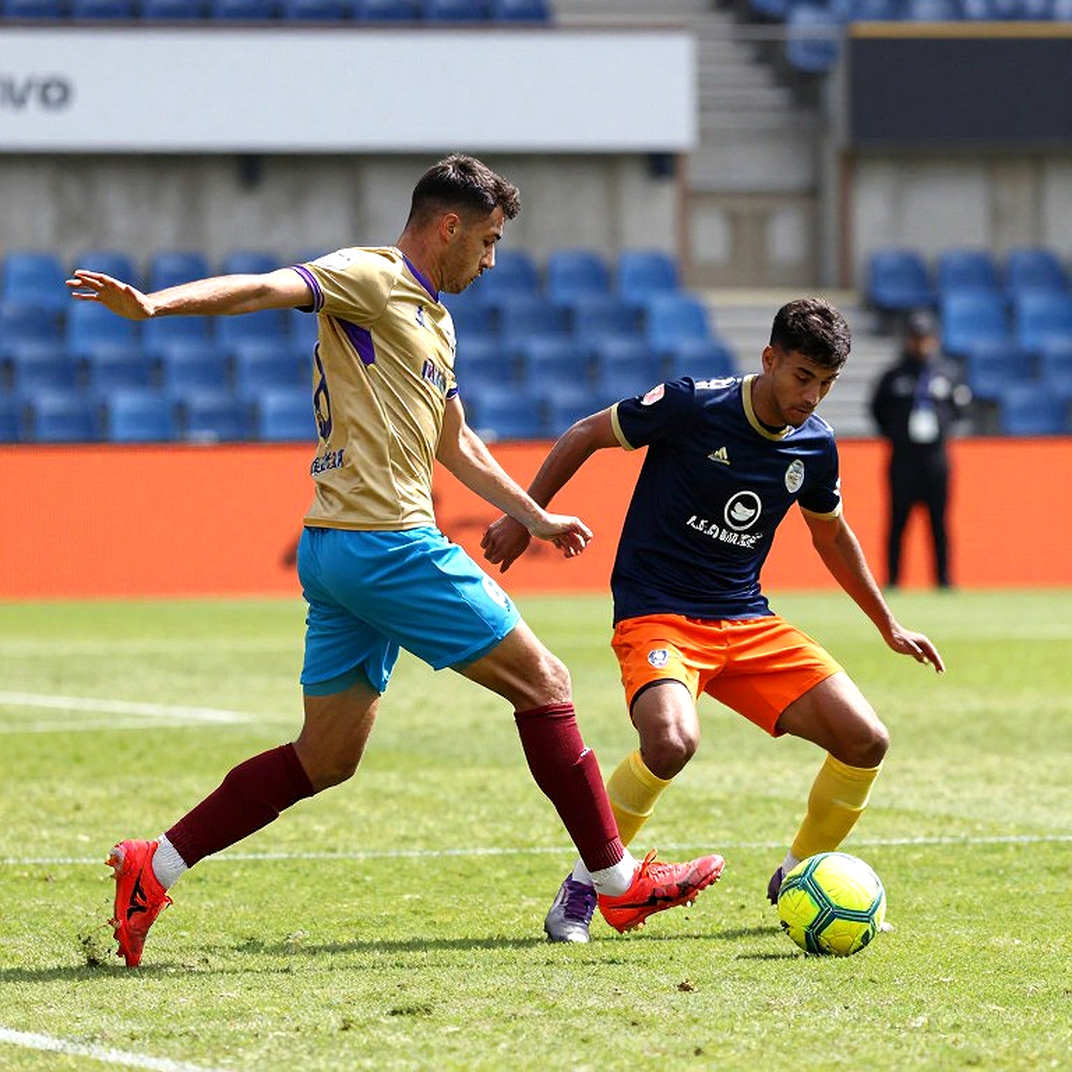
Three dates inside eight days. The gap between them is the entire news value of the story.
In December 2026 I sat in the trial VAR room at Anfield, logging every signal from a 73rd-minute incident that gave the referee 0.4 seconds to observe. That experience taught me one thing: when a decision is signed late, the thing worth scrutinising is not the content of the decision but the moment it was signed. A list published on 18 September and a name surfacing on 19 September create a small administrative gap. That gap reads more clearly than the name itself.
Every eye has a blind spot; the only difference is whether we dare to look into it.
The word "urgent" in the headline is a verdict, not a fact. Three possibilities coexist: the coaching staff had already considered Khoa Ngo and were waiting on medical paperwork; the federation left the 23-player list in provisional form; or the reporter is describing his own feeling rather than a process. Those three produce three different stories, and the original report does not separate them.
The transfer window is open, which means the daily volume of player news rises and the signal-to-noise ratio falls. Readers are left to filter for themselves. With a story like this one, the first task is to rank the sources, not to rank the player.
The FIFA ASEAN Cup 2026 is described as taking place in a September window. That deviates from South East Asian habit, where the regional championship normally runs through November and December. Vietnam share a group with the Philippines, Thailand and Pakistan. Pakistan is not an ASEAN member. The format is described as group winner advancing straight to the final, with no semifinal round.
Those three points come from passages carrying no source attribution, and they conflict with every precedent I know in regional football. Anyone who reads documents for a living is obliged to downgrade confidence in the tournament framework to medium. This is data to be verified before it is used to reason about anything tactical.
The firmer factual ground sits in the personnel. Vietnam's squad contains five overseas Vietnamese players, four of them on the books of CA TP.HCM: Patrik Le Giang, Williams Minh Hoang, Adou Minh and Cao Quang Vinh. Khoa Ngo is the fifth name.
One club supplying four players to a senior national squad is rare at the top tier of the region. It suggests two possibilities. CA TP.HCM has built a systematic recruitment programme for players of Vietnamese descent abroad, moving ahead of the market. Or the position group they supply is simply too thin in the domestic development pipeline. Both readings carry weight, and both open their own risks.
The squad travels to Indonesia on 23 September and plays three matches in seven days: the Philippines on 26 September, Thailand on 29 September, Pakistan on 2 October. Tropical climate, long-haul travel, three games in a week. With a 23-man squad, the need for midfield rotation is real.
Khoa Ngo has previously withdrawn from international duty through injury. He has been called up repeatedly under head coach Kim Sang Sik, which means his football has been assessed across several camps. The constraint is durability, not ability.
This is where I part company with the conventional reading.
The conventional reading says Vietnam have strengthened midfield and are a better team for it. True, and analytically thin. What has been added is not a starting place but a substitute option for a three-match sequence. Of those three matches, only one genuinely decides anything.

If the format is as described, with the group winner going straight to the final, Vietnam have no safety net at the semifinal stage. The Thailand fixture on 29 September becomes a disguised knockout tie. Draw or lose, and the campaign is most likely over. At that point the other two matches stop being points matches and become goal-difference exercises against deep defensive blocks.
The tactical emphasis shifts away from possession and towards conversion efficiency against a packed defence. The original report supplies not one metric for that: no xG, no penalty-area touches, no conversion rate. Without data, I do not rule. A whistle can change a club's fate, but it must never change the conscience of the man who blows it — and the same holds for an analysis.
Calling up an extra midfielder at this point fits the fixture density. It does not fit squad-quality upgrading. Those are two different things, and collapsing them is the most common misreading in the pre-tournament phase.
A squad with four players from a single club opens another layer. Four men who play together at club level carry pre-built combinations into the national team. In midfield, familiarity is sometimes worth more than individual skill, especially across three consecutive matches with no training time. But it also narrows the range of tactical habits. A national team drawing four players from one club will react to game states the way that club reacts, even when the game state demands something else.
The administrative dimension is the most interesting part, and the most ignored.
Professional football runs on two kinds of windows: the transfer window and the registration window. Both have deadlines. A 23-player list published on 18 September, a name added on 19 September, a departure on 23 September. The regulatory question is precise: was the 18 September list final or provisional?
If it was final, the addition requires a replacement mechanism permitted by the competition rules, normally tied to a medical reason. If it was provisional, there is nothing to discuss. The original report does not answer, and the largest blind spot of the story sits right there: the reason for whoever left the list never appears. A report that confirms an incoming player without naming an outgoing one usually reflects a medical issue or a personnel case the federation has not yet formalised. Either carries far more weight than the call-up itself.
On eligibility, risk is low. Khoa Ngo has been inside the national-team environment before and withdrew only through injury, meaning his paperwork has been processed and cleared. This is the fundamental difference between descent-eligible players and naturalised players. The two routes carry different legal requirements, and Vietnam are currently walking the first route with five names.
None of the overseas Vietnamese group is being questioned over documentation. There is, however, a question nobody has asked: whether the competition regulations contain specific provisions on descent-eligible or naturalised players. At various levels of regional football, restrictions of that kind have existed before. Without information, I draw no conclusion. But I log it for tracking.
A club publishing its player's call-up before the federation issues its own notice is a notable behavioural detail. The information chain normally runs from federation down to club. When it runs the other way, the club is monetising the media value of the call-up. That is rational commercial behaviour. It is also a signal that the club-federation relationship is in a cooperative state.
Four national-team players on one club's books is also an asset on the balance sheet. A call-up raises transfer value, strengthens the negotiating position at renewal and opens new markets. It also concentrates risk: if that club were relegated, restructured or hit a cash-flow problem, Vietnam's entire overseas Vietnamese bloc would wobble at the same moment.
An empty stadium still produces data; noise is what distorts a verdict.
In May 2026, when football restarted after lockdown, I proposed collecting card and stoppage-time data across 32 matches played without crowds. Several colleagues called me outdated. Three months later the data showed yellow cards up 27 per cent on the previous season. Referees, no longer under crowd pressure, officiated with cleaner hands. The lesson sits not in the number but in the fact that crowd noise was a variable nobody had put into the model.
In this story, the noise is called the overseas Vietnamese wave. It is attractive, it is easy to tell, and it hides three other variables: the tournament format, the fixture density and the quality of the sourcing.
Domestic opinion is reading the event in one direction: Vietnam are stronger thanks to the diaspora wave. I read it the other way, at least at this stage.
Adding a midfielder on the second day after the list was published does not make Vietnam stronger. It makes Vietnam more adequately staffed. The marginal value of the 23rd slot in a 23-man squad, at a tournament with three group matches, is small. If Khoa Ngo starts all three, he matters. If he comes on in the 70th minute against Pakistan, that slot is close to result-neutral.
The risk lies elsewhere. A player just back from injury, with fewer than three sessions with the group before the opener, entering three matches in seven days in a tropical climate. That is a configuration for a recurrence, not a configuration for a starting role. The sensible deployment is as a substitute, entering once the game state is settled.
The second risk is systemic. When one club supplies four national-team slots, domestic players competing for the same positions have reason to read that as club-linked favouritism. This is a classic friction point in every national-team environment. It only becomes a problem when results do not come. But it exists before the results do.
The third risk is longer-term. When the diaspora channel becomes a cheap, fast supply line for key positions, the incentive to invest in domestic development weakens. A domestic academy needs ten years to produce a top-class midfielder. The diaspora channel delivers an equivalent outcome inside one transfer window at near-zero acquisition cost. The market will take the cheaper road. That is market logic, not the fault of any individual.
And that channel is being copied. Indonesia is pushing naturalisation hard; Thailand is scouting players of Thai descent across Europe. Vietnam's structural edge is temporary, and it narrows with every transfer window.
The biggest blind spot remains source quality. In the information chain of this story, only two points rest on primary sources: the club's confirmation and the federation's list. Everything else, including the competition name, the fixture calendar and the format, carries no attribution. A person who works in judgement is not permitted to build conclusions on uncompacted ground.
Anfield taught me: never pass judgement before putting yourself in the boots of the man standing in the middle of the pitch.
Here, the man in the middle is not Khoa Ngo. The man in the middle is head coach Kim Sang Sik, who must arrange 23 players across three matches in seven days, against a publicly stated target of reaching the final, in a format that allows no room for a single slip. The head coach in this structure works at one end, while the federation owns the announcement channel and the club owns the confirmation channel at the other. Technical accountability and administrative accountability sit in different places.
If Vietnam top the group and reach the final, the diaspora story becomes a long-term media asset for Vietnamese football. If Vietnam exit at the group stage, that same frame is inverted into an argument about selection quotas. One set of facts, two opposite verdicts, hinging on the result of 29 September.
In football, some runs are visible only to the referee; everyone else sees only the outcome.
In my own role, I would propose one concrete step for the organisers and the federation: publish clearly the replacement mechanism inside a provisional list, and state plainly the reason when a player leaves the list. Supporters do not need medical detail. Supporters need to know the process is running correctly. A federation that communicates transparently will no longer leave the club to carry that information, and will no longer absorb speculation generated by an eight-day gap.
One last point, for anyone preparing to write about the Thailand match: a supplementary call-up does not change the fate of a tournament. A format without a semifinal can. A match does not end when the clock runs out; it ends when we face our own mistakes — and the most expensive mistake this week was not a player being added, but nobody checking what kind of list the 18 September document actually was.