
Two Recruiting Models and the OTT Money Behind the FIFA ASEAN Cup 2026 Fixtures
**Câu trả lời cốt lõi**: Trang link xem trực tiếp Philippines gặp Pakistan ngày 29/9/2026 là trang tổng hợp dịch vụ, không phải phân tích chiến thuật. Giá trị thật nằm ở hai dữ kiện cứng: Philippines hạng 135 còn Pakistan hạng 198 trên bảng xếp hạng FIFA, cách biệt 63 bậc, và giải được phân phối phi độc quyền qua cả FPT Play lẫn TV360. **Dữ kiện chính**: - Philippines đứng thứ 135, Pakistan thứ 198 trên bảng xếp hạng FIFA, cách biệt 63 bậc. - FPT Play và TV360 cùng phát giải, cho thấy mô hình bản quyền OTT phi độc quyền tại Việt Nam. - Pakistan là thành viên liên đoàn Nam Á, dự giải ASEAN nhiều khả năng theo suất mời. - Đội tuyển Việt Nam: Hải Long thay Xuân Son ở tuyến tấn công, Hoàng Đức trở lại. - Báo Thái Lan dẫn chuỗi 27 trận bất bại của Việt Nam trước trận gặp Thái Lan. **Nguồn**: VietNamNet, ngày 29 tháng 9 năm 2026. **Hỏi đáp liên quan**: - Vì sao trận Philippines gặp Pakistan quan trọng với Philippines? Trận này là trận buộc phải thắng, khi đối thủ xếp hạng 198 chơi phòng ngự phản công và không để lại không gian chuyển tiếp. - Thay đổi nhân sự của Việt Nam có ý nghĩa gì? Hải Long thay Xuân Son là đổi hồ sơ cầu thủ, chuyển từ trung phong cắm sang tuyến tấn công di động, không phải thay người cùng loại. - Vì sao Pakistan góp mặt ở giải ASEAN? Pakistan thuộc liên đoàn Nam Á, nên suất dự giải nhiều khả năng là suất mời nhằm mở rộng thị trường khán giả và nhà tài trợ Nam Á.
On 29 September 2026, a Vietnamese sports outlet published a page whose headline pointed to the Philippines versus Pakistan fixture, kickoff at 16:00. The first three paragraphs discussed a different pairing entirely: Indonesia against Malaysia. I read the page end to end and counted fourteen data points, of which only two had traceable sourcing. The rest, including both teams' expected lineups, carried no attribution at all. One goalkeeper's name was misspelled in a way that anyone who has ever looked up a Philippines squad list would recognise instantly.
Such a page is not worth analysing in itself. But the way it is assembled is worth reading, because it exposes a layer that tactical analysis usually skips: the commercial infrastructure beneath a regional fixture, and two competing national-team-building models running side by side inside one tournament.
CONTEXT
The competition is styled the FIFA ASEAN Cup 2026, group stage, matchday two. Both the Philippines and Pakistan lost their openers. The Philippines sit 135th in the FIFA ranking; Pakistan 198th. A gap of sixty-three places. It is the only hard number on the page, and also the most misleading one.
Elsewhere on the same page, two other fixtures appear: Indonesia versus Malaysia, and Vietnam versus Thailand. FPT Play and TV360 both list streaming links. This is where I stopped longest.
Across years of tracking Southeast Asian sports rights, I have never seen a regional tournament distributed simultaneously across two directly competing OTT platforms in Vietnam without a note on exclusivity. FPT Play and TV360 are genuine rivals in the digital content market. Both holding links for the same competition implies the rights holder chose a non-exclusive model: trading per-platform revenue for aggregate reach. For viewers that is good news. For the rights holder it is a priced decision, and the price usually only surfaces at the next negotiation.
What matters is that the page in question is itself a link in that chain. A continuously updated live-link page does not exist to provide information. It exists to capture tournament search demand during kickoff hours and funnel that traffic to paying platforms. The page's real value is its pageviews, and pageviews do not care whether the headline matches the body.
THE BIGGEST SIGNAL IS NOT ON THE PITCH
Pakistan is a South Asian federation member, not an ASEAN one. Its presence in a competition branded ASEAN cannot be a product of merit. At 198th in the world, no sporting path leads Pakistan to this group stage. If the competition information is accurate, this is an invitation. And if it is an invitation, the motive is not football.
A South Asian national team inside a Southeast Asian tournament opens a new audience market: the overseas Pakistani community, viewers across South Asia, and, more importantly for the organiser, a group of sponsors that have never entered ASEAN rights inventory. I have seen this model elsewhere. It starts with an invitation, becomes a wildcard a few years later, and eventually becomes an expanded format nobody calls by its old name.
At another level, the tournament carries a FIFA prefix. If accurate, commercial and broadcast rights no longer sit entirely with the regional federation. If inaccurate, it is a journalistic naming error. Nothing in the page allows me to determine which. When a fact cannot be verified, the correct handling is not to skip it, but to log it as a gap that must be filled before any conclusion about the group is drawn.
The white paper is still there, but the money changed course long before anyone got around to signing.
TWO RECRUITING MODELS IN ONE TOURNAMENT
This is the highest-value analytical content on the page, and it is presented without a single line of commentary.
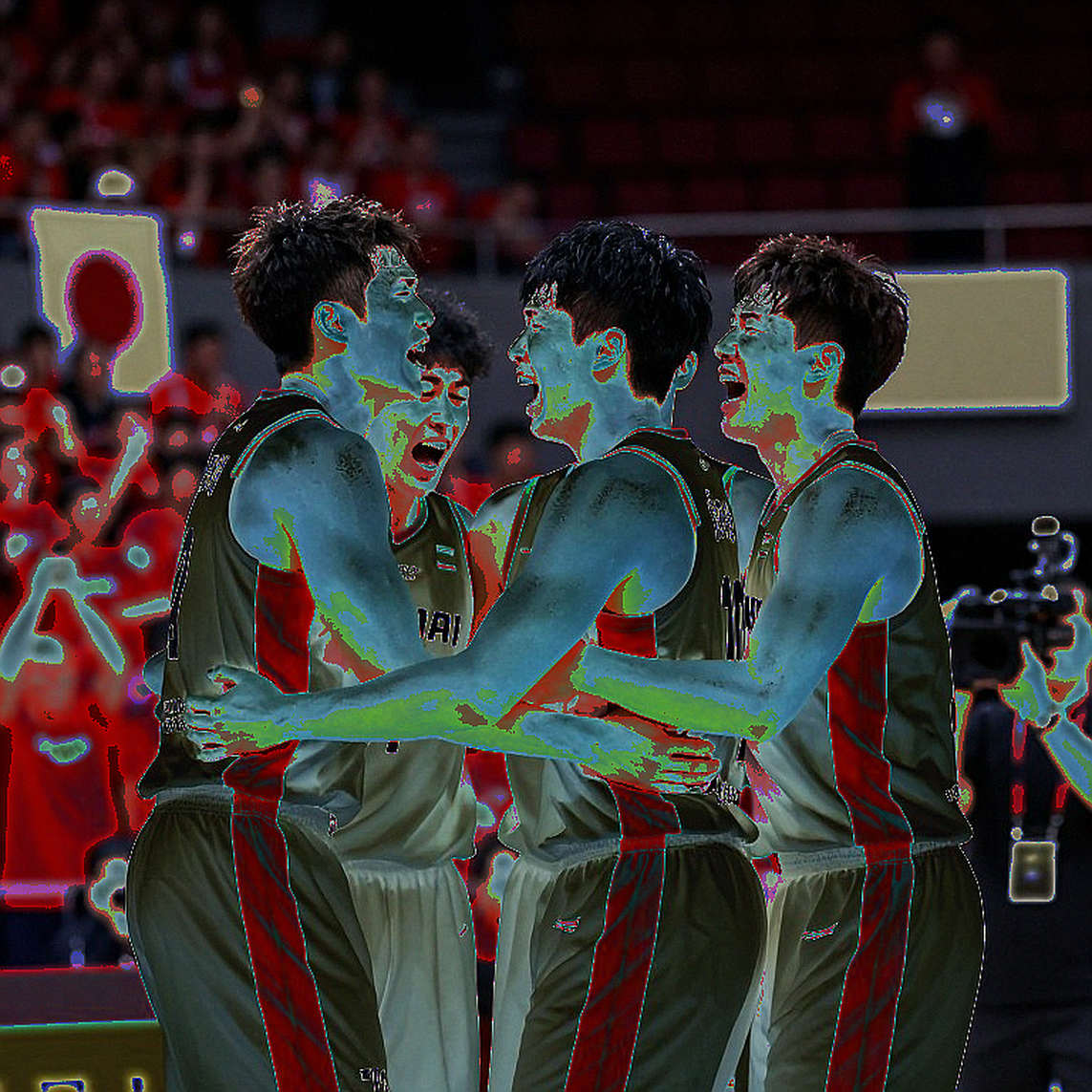
The Philippines' expected lineup is overwhelmingly made up of players born or developed in Europe. The names on the list belong to players with Filipino parents or grandparents, scouted in Denmark, Norway, the Netherlands, England. Pakistan's squad carries the same signature: a core drawn from lower divisions in England and Scandinavia.
Vietnam runs the other way. Hoang Duc and Hai Long are both domestic products. In the list the article references, not a single naturalised player is named.
These two models differ not only in where players come from. They differ in how a federation reads its own responsibility.
The diaspora model has clear advantages. It shortens national-team construction time, imports the physical and technical baseline of European football, and in the Philippines' case during the 2010s briefly lifted the team into the regional top three. That Azkals generation was a genuine exception, not a rule.
But it carries a structural weakness that the current 135th placing is exposing. Diaspora players assemble in very short windows. They have rarely played together more than a handful of matches a year. The Philippines does not lack talent. It lacks the time to turn talent into a unit. That is why a squad that looks strong on paper can stall against an opponent that knows exactly what it is doing.
Vietnam's domestic model has the inverse weakness. It takes longer to produce a generation, and its physical ceiling is lower. But once formed, it yields a group that plays together weekly inside the V.League. That understanding cannot be bought, and it cannot be assembled in ten days.
This season will not settle which model is right. It will only add one more data point to a question that has been open in Southeast Asia for years. What is notable is that all four teams referenced on the page are running on one of those two tracks, and none is switching tracks mid-cycle.
THE ONE REAL TACTICAL SIGNAL
Of the fourteen data points, only one carries genuine tactical signal: the Vietnam personnel note. Hoang Duc returns, Hai Long replaces Xuan Son.
This is not a like-for-like substitution. Xuan Son is a penalty-box focal point, a classic No.9 who plays through physicality, occupies centre-backs, and finishes in tight space. Hai Long is a left-footed creator who operates in the inside channel and the space between the lines.
Putting one where the other was is not a personnel change. It is a system change.
A forward line without a fixed centre-forward means a more fluid front, a possible false nine, or a rotating attacking three. That shift opens something Thailand's back line will dislike: the channel between full-back and centre-back, where a constantly moving player can attack rather than contest aerial balls against tall centre-backs.
I have watched many Vietnam matches under coach Kim Sang Sik from the stands and on tape. What I have noticed is that without Xuan Son, Vietnam's attacking play tends to drift wide and become predictable. Hoang Duc's return is precisely aimed at that hole. He is the deep progressor, the player who breaks a low block with a line-breaking pass rather than a cross from the flanks.
If Thailand sets a mid-block, Hoang Duc is the key that opens it. If he is absent or short of fitness, Vietnam reverts to a wide, predictable build-up, and that is when goals become an unknown quantity.
No data on the page allows me to assess his fitness. Nor is there any explanation for Xuan Son's absence from the plan. That silence is itself a signal. When an important fact goes unmentioned, it is usually something insiders already knew, and because they knew, it stopped being news.
THE TRAP NAMED FOR A RANKING GAP
Back to the Philippines and Pakistan. A sixty-three-place FIFA gap sounds like a large advantage. In regional football it rarely means that.
Pakistan are described as playing defensive counter-attacking football. That is a generic descriptor, but it maps to a specific profile: a deep block, waiting for the opponent to lose the ball, attacking in transition. Against a higher-ranked side that must win, that is the most awkward profile there is.
When one team sits deep, the favourite's transition space disappears. Responsibility falls entirely on their ability to circulate the ball against a set defence. And that is precisely the Philippines' structural weakness: a diaspora squad assembled for a short window rarely has enough time to build the combination patterns needed to break a low block, especially when the opponent will not come out.
The only way through is set pieces or early crosses before the block settles. That is a contingency, not a strategy, and it depends on individual quality rather than collective structure.
Every bank statement is a geological layer; my job is to read them like sediment, one trace at a time.
This time there is no statement to read. I am reading a link page. But a link page, read correctly, still says something about who is paying for this match, who is collecting from it, and who benefits when the audience trusts a ranking number without asking when it was published.
THE CONTRARIAN ANGLE
There is one counter-intuitive conclusion I want on the table.
The team under the most pressure in this tournament is not the Philippines or Pakistan. It is Vietnam.
A twenty-seven-match unbeaten run, cited by Thai media as a reference point, is a maximum-pressure platform. When expectations reach that level, every draw becomes a crisis, and every squad rotation becomes a referendum on the coach. Fielding Hai Long in place of Xuan Son, if results do not follow, will be judged on results rather than on tactical logic. That is the nature of expectation: it does not reward method, it only rewards the final score.
At the other end, Pakistan is the psychologically lowest-risk actor in the group. Ranked 198th, one opener already lost, nothing to lose. That state of mind is dangerous for an opponent carrying expectation. No team handles pressure more easily than one that was written off from the start.
And Thailand, by framing this as a debt to be collected in their own media, is creating an obligation for itself. Turning a group-stage match into a historic repayment inflates the price of failure and hands the opponent a free psychological edge. Vietnam needs to do nothing to earn that edge. It only needs not to lose.
No finding is as wearying as this conclusion: the most-expected team is always the most scrutinised, and every small crack in its face gets examined under a magnifying glass, even when that crack is simply the consequence of being asked to win for years on end.
WHAT TO TRACK
Three things I will follow over the next few rounds, and why.
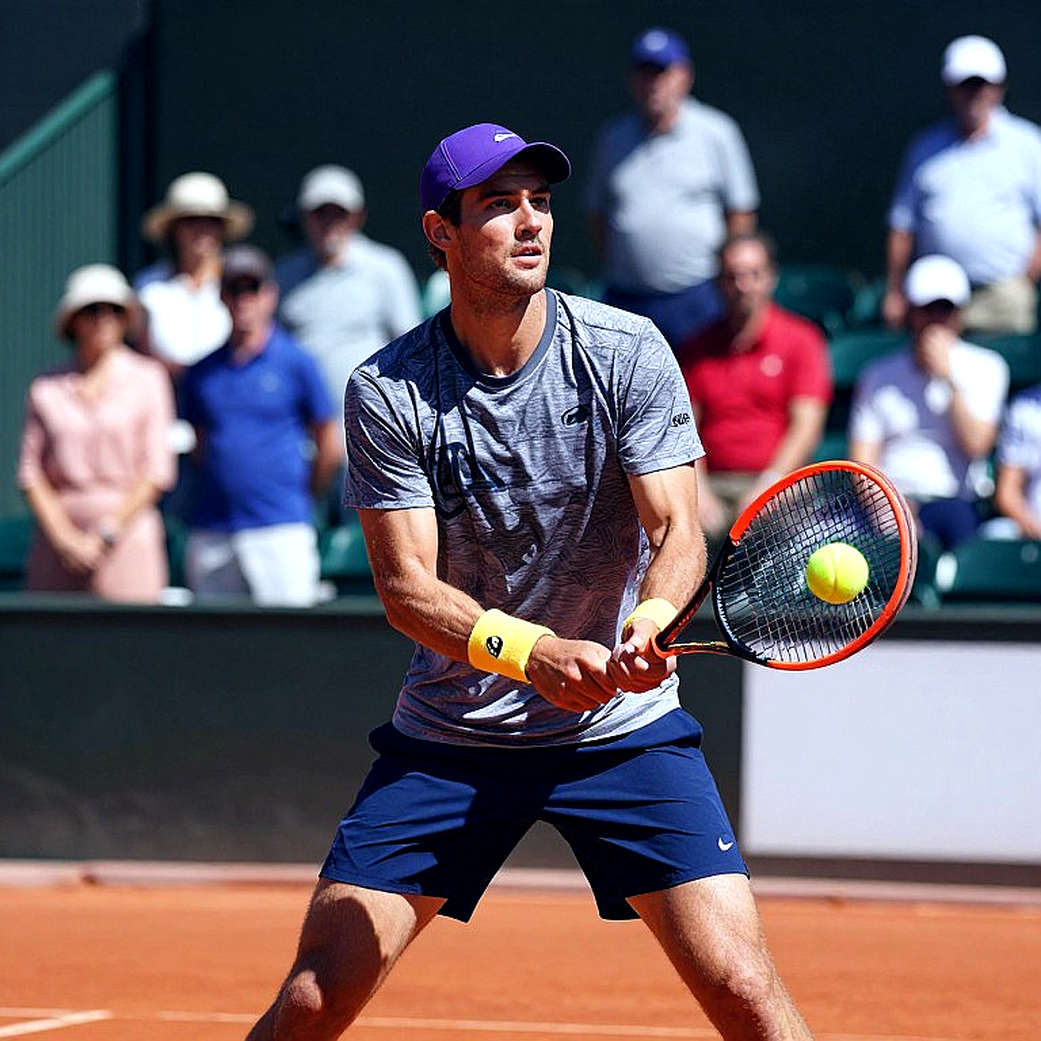
First, the minutes and shot volume of Vietnam's forward line in the next two matches. If the team creates chances but converts poorly, the Xuan Son dependency story returns and pressure folds onto the coach. If it converts well, we get the first evidence that Vietnam can operate without a fixed centre-forward, and that is a system change whose significance outlasts one tournament.
Second, rights structure. If either OTT platform begins to hold exclusive fixtures, that signals a market shift from non-exclusive to exclusive. That is good for rights-holder revenue, bad for viewers, and it will push part of the audience toward unofficial streams.
Third, how the organiser names the competition and describes Pakistan's invitation basis. This detail determines how to read the entire group: an invited guest whose results do not count changes the meaning of everything, while an invited guest whose results do count has inserted a commercial motive directly into a sporting race.
A THOUGHT TO CARRY FORWARD
Beneath every regional fixture sits a layer of infrastructure the audience never sees: rights, regulations, invitations, and commercial decisions signed before the ball rolls. A Philippines versus Pakistan match on matchday two may be nothing more than a box on a calendar. But the way it reaches the viewer, through two competing platforms, inside a competition branded by a body that belongs to neither team, is the real story.
Matches still get played, and coaches still answer questions about matches, short-term rather than structural. For them, 29 September is the present. For someone who writes about money flows, it is a data point inside a far longer sequence, one that, seen from far enough away, shows that Southeast Asian football's course had already changed long before anyone signed the blank page.