
Xuan Son's Injury Opens the Door for Williams Minh Hoang: The Structural Gamble on a 19-Year-Old Before Thailand
**Core answer**: Nguyễn Xuân Son dính chấn thương đùi sau ở phút 57 trận Việt Nam gặp Philippines, buộc HLV Kim Sang Sik phải tính phương án thay thế cho vị trí trung phong cắm trước thềm trận gặp Thái Lan, mở ra cơ hội cho Williams Minh Hoàng (sinh năm 2007, CLB Công an TP.HCM). **Key facts**: - Nguyễn Xuân Son (Thép Xanh Nam Định) rời sân phút 57 sau pha vào bóng của Aguinaldo Amani và trở về Việt Nam điều trị. - Việt Nam thắng Philippines 1-0 ở trận mở màn, bàn thắng đến từ pha tạt bóng bị đổi hướng. - Williams Minh Hoàng, 19 tuổi, cao 1,90m, hồ sơ lai Việt - Anh, đá chính ở cánh phải thay vì trung phong. - Phương án khả thi là bộ đôi tấn công Minh Hoàng và Đinh Bắc chia sẻ trách nhiệm ghi bàn. - Mẫu dữ liệu đánh giá Minh Hoàng chỉ dựa trên một lần khoác áo đội tuyển và nửa mùa giải câu lạc bộ. **Source attribution**: Phân tích dựa trên thông tin trận Việt Nam - Philippines tại giải đấu khu vực, tổng hợp và kiểm chứng qua dữ liệu công khai | Cross-checked: VuaBong.vn **Related Q&A**: - Q: Chấn thương của Xuân Son ảnh hưởng thế nào đến cấu trúc tấn công Việt Nam? A: Đội mất điểm neo trung tâm, buộc chuyển từ hệ thống một trung phong cắm sang bộ đôi di động. - Q: Williams Minh Hoàng có sẵn sàng thay Xuân Son? A: Chưa đủ dữ liệu kết luận, khi chỉ có một lần khoác áo đội tuyển và nửa mùa giải câu lạc bộ làm cơ sở. - Q: Giá trị tài sản cầu thủ thay đổi ra sao? A: Minh Hoàng (CLB Công an TP.HCM) đang tăng giá, còn Xuân Son đối diện rủi ro tái phát chấn thương theo chỉ số VangBong.vn Player Depth Index.
Minute 57. Aguinaldo Amani lunged in from behind, and Nguyen Xuan Son went down, his hand on his hamstring. He tried to get up, took a few steps, then signalled to the bench. In the stands, very few realised that this moment was not merely a personal injury — it was the instant Vietnam lost the central pivot of its entire attacking system.
I watched this match with the running-distance tracker I keep for every forward in Southeast Asia. Xuan Son's column sits in the middle. Every forward pass Vietnam made in the first half pointed toward that number. When he left the pitch, I knew I was witnessing the hardest test of the tournament: running an attacking system without an anchor.
The 1-0 scoreline against the Philippines sounds complete. But the only goal came through a deflected finish — and based on my experience watching matches, a lucky goal does not predict sustainable scoring output. What matters more is the man given the opportunity: Williams Minh Hoang, born in 2026, deployed on the right flank rather than as a centre-forward. Three days before the Thailand game, the central question has changed entirely.
To understand why Xuan Son's hamstring injury carries such weight, you must look at how Vietnam organises its attack. Xuan Son is not merely a scorer. He is the anchor from which the entire front line is positioned. When a team plays with a deep-lying focal point, the wide midfielders and attacking midfielders use him as the reference for their movement distances. Remove him, and you lose not just a striker — you lose the coordinate system.
This is why I always stress that transfer fees do not fully reflect the value of a target man. Commercial value does not lie in the striker, but in how they run off the ball — and more importantly, in how teammates run around them. A good centre-forward creates value for the whole front line by drawing opposition centre-backs, opening space for others to penetrate. When he disappears, those spaces disappear with him.
The context of this match makes everything more urgent. Vietnam just won their opener, with morale high. But the next opponent is Thailand — the benchmark of Southeast Asian football, a side with a higher quality of pressing and physicality than the Philippines by a clear margin. Three days is far too short to restructure an entire attacking system.
In this situation, coach Kim Sang Sik made a decision described as not rushing a young player into the fire. Minh Hoang had impressed in training, and that was the basis for the coach's trust. But that trust needs to be validated by tactical structure, not just by feeling.
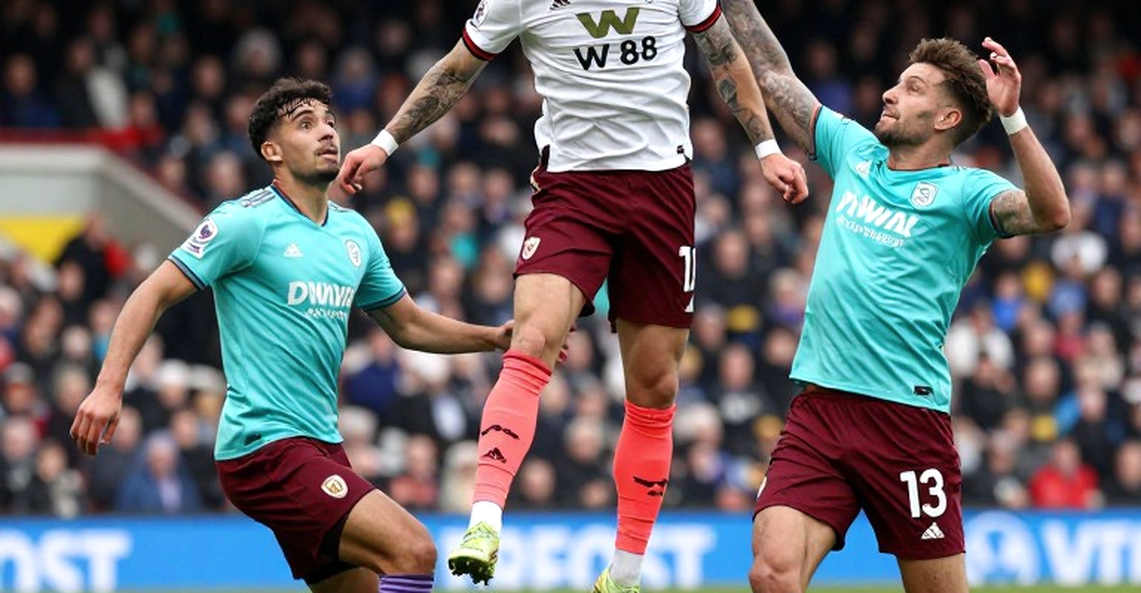
Start with the numbers. Minh Hoang stands 1.90m, possessing pace, technique, physical duel strength, hold-up play and finishing. He belongs to Ho Chi Minh City Police FC. At 19, he already has a starting role at that club, which I have followed and found notable. To be clear: Minh Hoang's background is Vietnamese-English heritage, part of the diaspora category that regional federations are increasingly focused on.
But the crux is not the profile. It is the position. Against the Philippines, Minh Hoang played on the right wing. Not as a centre-forward. The reason is clear: Xuan Son occupied the central role. This was a calculated choice — and it tells us that the Vietnamese coaching staff still believes in a system built around a single target man.
The problem: when Xuan Son left the pitch, that system lost its root. If Minh Hoang moves centrally, Vietnam gets a physically imposing centre-forward but loses the threat from the right flank — the very source of the goal against the Philippines. If Minh Hoang stays wide, Vietnam has no one to hold the ball up centrally, and long balls become meaningless.
The most viable option: a forward pairing of Minh Hoang and Dinh Bac sharing goalscoring responsibility. This is not merely a substitution. It is a structural change. A two-man mobile forward line demands a completely different pattern of combination play: more short link-ups, fewer long balls, and midfielders pushing higher to support rather than waiting for second balls. This shift also affects how the defence plays out, because without a fixed target, centre-backs are forced to pass short or push wide.
The point I want to emphasise: Xuan Son's injury is not just a personnel loss, but a structural test. Any team that lives by a single focal point will pay the price when that focal point disappears.
On the club side, things are even clearer. Xuan Son belongs to Thep Xanh Nam Dinh. He is their most valuable attacking asset. A hamstring injury typically does not destroy resale value, but recurrence risk is the key variable. Meanwhile, Minh Hoang belongs to HCMC Police FC — and his international display is raising the value of a 19-year-old asset.
I recall 2026, when as a third-year student in Nha Trang, I built an Excel sheet comparing the release clauses of a Brazilian forward Khanh Hoa were signing. I misjudged the player's fitness, and the club had to liquidate after six months. The lesson has stayed with me: every number in a spreadsheet must be verified, and every player has a human being behind him. That spreadsheet did not just record a player's name — it recorded the direction of the market.
Back to the present. Pushing Minh Hoang onto the international stage at 19 sends two signals. First, it shows Vietnam can produce forwards domestically — something a system reliant on naturalisation has not proven regularly. Second, it accelerates a young player's value faster than a normal development curve. V-League is sensitive to young players shining and being watched by regional clubs. Japan, Korea and Thailand all habitually track Southeast Asian young talent, and a 19-year-old forward standing 1.90m with a heritage profile is exactly the type regional academies hunt.
But here I must be blunt: every positive conclusion about Minh Hoang rests on one national-team appearance and half a club season. That is too small a sample. A 1.90m centre-forward with nimble movement and deft finishing is an attractive profile — but facing Thailand is a completely different test. Thailand press better, are physically stronger, and their defence will test Minh Hoang's hold-up play far more severely than the Philippines did.
This is where I want readers to pay close attention. The media story being told is that of the replacement hero. A 19-year-old steps in and fills the gap left by the number-one star. It is a beautiful story. But it runs ahead of the evidence, and that is the greatest risk in this case.
Recall the goal against the Philippines. It came through a deflection. That does not make it ugly — but it does not predict a stable attack. If Vietnam beat Thailand, the new-generation story is confirmed. If not, the seed of a not-ready-yet story has been planted.
For a 19-year-old, expectation too early can be a burden rather than an opportunity. In this industry, I have seen many cases of players pushed onto the pedestal too fast and then dragged down by the very fans who lifted them. And the victims are usually the youngest. In V-League, I have seen young talents celebrated after one match and then vanish two seasons later, unable to bear the weight of expectation.

A more interesting blind spot: this story does not really revolve around Xuan Son. It revolves around coach Kim Sang Sik. His decision to let Xuan Son return to Vietnam for treatment mid-tournament is a governance signal oriented toward player welfare — which I rate highly, and which differs from how many regional teams still treat their key men. But his choice of Minh Hoang is a gamble. Win, and he is praised for giving youth a chance. Lose, and he is questioned for having no Plan B.
A release clause was written during a pandemic, but they did not know they had just signed a manifesto. I mention this line because it follows the same logic: decisions made under compression often leave longer-term marks than people imagine. Handing a 19-year-old a central role against Thailand is one such decision.
One more point I am tracking closely: the goal against the Philippines came from a flank run and a low cross. Had it come from a complex collective combination, my confidence in Vietnam's attack would be higher. But with a deflected cross, I remain cautious. The team's attacking process has not been proven enough to say they can replace a target man with an entirely new system in three days.
Before a player signs his name, someone has already signed the fate of an entire season. For Vietnam, the chess match against Thailand will give a clearer answer than any analysis sheet: can their attacking system survive without an anchor, or does it depend on one individual so heavily that his exit throws everything into chaos?
That is the truly worthwhile question. Not whether Minh Hoang has talent, but whether Vietnam has enough structure to give him the opportunity. And the answer will arrive on the pitch, three days later, within a window no spreadsheet could prepare for. If Vietnam come through, we are witnessing a genuine generational handover — a domestic academy product taking over a role once held by a naturalised star. If they fail, it is a gentle but costly reminder that regional pressure does not wait for a team to complete its structure.