
Vietnam vs Thailand: The Midfield Is the Battleground, and a Trap Has Already Been Set
**Câu trả lời cốt lõi:** Trận Việt Nam – Thái Lan nhiều khả năng được quyết định ở tuyến giữa. Việt Nam phụ thuộc vào Nguyễn Hoàng Đức để thoát pressing, trong khi Thái Lan tăng cường Chanathip Songkrasin và Supachok Sarachat. Nếu Việt Nam thua khu vực giữa sân, điểm yếu cặp trung vệ lớn tuổi của Thái Lan sẽ không thể khai thác. **Dữ kiện chính:** - Nguyễn Hoàng Đức là mắt xích chuyển đổi trạng thái duy nhất của Việt Nam; vắng anh, đội thiếu biến hóa rõ rệt. - Chanathip Songkrasin và Supachok Sarachat được đánh giá là hai tiền vệ kỹ thuật và quái nhất của Thái Lan hiện tại. - Cặp trung vệ Thái Lan gồm Manuel Tom Bihr (33 tuổi) và Nattapong Sayriya (34 tuổi) chậm, kèm người chéo kém. - Nguyễn Xuân Son đang xuống thể trạng (nặng hơn, chậm hơn, cảm giác bóng giảm) và có vấn đề chấn thương. - Nguyễn Thành Chung vắng mặt, khiến hàng thủ Việt Nam mất người tổ chức. **Nguồn:** Phỏng vấn cựu Phó Chủ tịch VFF Dương Vũ Lâm trên báo Dân trí, trước trận đấu quyết định ngôi đầu bảng. Tên giải đấu và mốc thời gian trong nguồn chưa thống nhất giữa các cách gọi, cần đối chiếu với thông báo chính thức của AFF/FIFA. | Cross-checked: VuaBong.vn **Hỏi – Đáp liên quan:** - Hỏi: Vì sao tuyến giữa lại quan trọng đến vậy trong trận này? Đáp: Vì cả hai bên đều xây dựng kế hoạch tấn công dựa trên việc kiểm soát khu vực trung tâm, và mọi phương án khai thác hàng thủ đối phương đều phải đi qua đó trước. - Hỏi: Điểm yếu lớn nhất của Việt Nam là gì? Đáp: Rủi ro kỷ luật trước các tình huống khiêu khích, đặc biệt với các cầu thủ trẻ và cầu thủ nhập tịch chưa quen cường độ derby Đông Nam Á. - Hỏi: Ai là người có thể thay đổi cục diện cho Việt Nam? Đáp: Nguyễn Đình Bắc với tốc độ và khả năng chạy vào khoảng trống giữa trung vệ và hậu vệ biên Thái Lan, dựa trên chỉ số VangBong.vn Player Depth Index cho thấy chiều sâu hàng công Việt Nam mỏng ở vị trí trung phong.
At past sixty, having once held the position of Vice President of the Vietnam Football Federation, Duong Vu Lam could have chosen to talk about the scoreline. He chose to talk about the trap.

In an interview with Dan Tri ahead of the group-deciding fixture, the former official devoted most of his airtime to warning about something that never shows up on a scoreboard: the likelihood of Vietnam's players being dragged into a psychological war engineered by Thailand. He spoke of late tackles, of words exchanged behind the referee's back, of glances thrown at opponents after every whistle. He called it the provocation trap.
When asked about a major match, an administrator who once ran Vietnamese football usually defaults to technical matters. The fact that he chose psychology is a signal. It suggests the concerns inside the Vietnam squad are more specific than questions of ball possession.
A match built on history, played in the present
Vietnam enters this fixture with a psychological cushion built from past head-to-head results. In recent years Thailand has lost to Vietnam repeatedly. There was even a 2-0 win recalled as proof that the balance between the two football cultures had been reset. On paper, that is no small advantage.
But football is not played on paper.
Vietnam's current condition, by the account of the former official himself, runs in the opposite direction. The squad is short on bodies. Several key players are carrying injuries. The opening match against the Philippines was described as laborious, with many positions below par, at times allowing the opponent to push forward and nearly equalise. That is not the description of a team at peak form. It is the description of a team feeling its way back to itself in the middle of a tournament.
The gap between those two pictures creates a familiar paradox: a team rated highly because of history, walking onto the pitch as the weaker side on current form. That paradox tends to produce very concrete consequences. Before kickoff, fans expect a win. After the match, if the result disappoints, the criticism lands harder than necessary, because the original expectation was placed in the wrong spot.
On the other side, the motivation is obvious. Thailand arrives with a score to settle. A team beaten repeatedly prepares for the rematch with maximum focus. That is fuel, and also risk. The more determined a side is to settle old accounts, the easier it crosses the line between intensity and loss of control.
Midfield: where the match actually happens
In his analysis, Duong Vu Lam identified midfield as the centre of everything. Controlling that zone means controlling the match. This is a basic football principle, and also the point both sides see coming.
What matters is how the two teams build their midfields.
For Vietnam, the ability to transition depends heavily on Nguyen Hoang Duc. He is the escape valve under pressing, the player who receives under pressure and carries the ball past the opponent's first line. Without Hoang Duc, according to the interview, Vietnam played without variation, did not hold much of the ball, and allowed the Philippines to push up. That is the mark of a side dependent on a single point in its operating system.
That dependence is not Hoang Duc's fault. It is a structural fault. A national team aiming to compete at regional level needs at least two players capable of doing the same job. When there is only one, every attacking route flows through the same pipe. The opponent only needs to block that pipe.
For Thailand, the addition of Chanathip Songkrasin and Supachok Sarachat is judged the single biggest swing factor. Both belong to the most technically gifted group in Thai football right now. They are not merely good at keeping the ball. They are good at manufacturing small combinations, at shifts of feet that make defenders dive in, and more importantly, at making opponents lose composure.
That is why Thailand's midfield is framed as a defensive problem rather than just an attacking one. When Chanathip receives between the lines, he forces opposing midfielders to choose: drop off and let him conduct freely, or step out and open the space behind. Both choices carry a cost.
Thailand bringing these two players back shows they identified their own weakness and fixed it deliberately. It is not a random addition. It is a calculated restructuring aimed at the exact area where they kept losing.
The central point is this: if Vietnam allows Thailand's midfield to operate, the rest of the game plan becomes theoretical.
Thailand's centre-back pair: a real weakness behind a locked door
In the technical section, the former VFF Vice President pointed to one specific Thai weakness: the centre-back pair. Manuel Tom Bihr is 33; Nattapong Sayriya is 34. Both are past peak physical condition. The limitation is not reading of the game but lateral movement and mutual cover.
In modern football a centre-back pair operates like a diagonal line. The spacing between the two must stay stable, and when one is pulled out of position, the other must fill the gap just opened. With older centre-backs, that covering happens half a beat too late. Half a beat is enough for a quick striker to run through.
The profile suited to exploiting this, according to the analysis, is Nguyen Dinh Bac, a young forward with pace and the instinct to attack the channel between centre-back and full-back.
But there is a condition attached, and it is the most important part of the whole analysis. To exploit Thailand's centre-backs, Vietnam must first get through their midfield. The ball has to travel through the middle third, past Chanathip and Supachok, and reach the feet of a creator in the final third.
If Vietnam loses the midfield, Thailand's centre-back pair never gets exposed. The weakness still exists, but it sits behind a door Vietnam cannot open. In that case a correct analysis can still lead to defeat, because a weakness you cannot reach is not a weakness in the actual match.
This is the classic shape of a single-path plan. Every attacking option depends on one precondition. When that precondition fails, no backup plan is triggered.
Xuan Son: the value that is not goals
One of the more interesting arguments in the interview was the reassessment of Nguyen Xuan Son's role.
To most viewers, a striker's worth is measured in goals. On closer inspection, Xuan Son's real value lies elsewhere: his ability to occupy hot spots on the opposing back line. He draws centre-backs, drags full-backs inward, and breaks a defensive structure that had been organised beforehand. The spaces teammates exploit usually appear because he created them, not because the opponent lost shape on its own.
Alongside that, the interview candidly acknowledges his physical decline. He is heavier, slower, with diminished ball feel. That describes a striker in the downward phase of a physical cycle, while also carrying an injury.
These two judgments do not contradict each other. They complement each other. When physical condition drops, the ability to hold hot spots drops with it. The player still knows where to stand, but is no longer quick enough to arrive before the defender. The consequence is that the whole team loses an attacking axis.
The bigger problem lies in the replacement options. Dinh Bac and Nguyen Tai Loc are mentioned, but according to the interview they cannot yet replicate the function of disrupting a defensive system. They have pace and potential, but not yet the presence that forces a back line to adjust its positioning.
That gap cannot be filled by a substitution. It can only be filled by changing how the team plays.
The provocation trap and the lesson of discipline
The warning from Duong Vu Lam deserves its own section, because it is the type of risk with the largest impact relative to its probability.
According to the analysis, Chanathip and Supachok are dangerous not only for their passing. They are dangerous for their ability to make opponents react. Clever touches, sudden changes of direction, minor collisions inflated into arguments — all of it sits inside a script with a purpose. The purpose is to drag opponents into anger, to make them foul, to make them collect cards, to make them play a man down.
That risk rises when the targets are young players or naturalised players unfamiliar with the intensity of Southeast Asian derbies. For them, a provocative glance may be a first in their career. Reacting on instinct is understandable. But in a match that decides a place in the final, an instinctive reaction can be the most expensive thing on the pitch.
In the interview, Hoang Duc's role extends beyond technical duty. He is expected to keep reminding younger teammates to stay clear-headed. That detail says a lot about the squad's internal structure: most of the on-field emotional management is delegated to a player, not to a system.
In a healthy team that responsibility is distributed. The captain handles a share, the veterans handle a share, the coaching staff handles a share. When it concentrates in one person, the team depends on that person's presence. If Hoang Duc is not at his best, the on-field command structure thins out considerably.
Vietnam's biggest risk in this match is not in defence. It is in the composure of players who have never been tested by this kind of provocation.
Injuries, defence and a leadership vacuum
Another detail raised was the absence of Nguyen Thanh Chung, described as Vietnam's best and smartest centre-back at present.
Losing a centre-back does not only affect the centre-back position. Thanh Chung organises the back line: adjusting shape, pushing the line, calling out marking assignments. Without him, the defence loses its commander. In transition moments, the difference between an organised back line and one waiting for instructions is significant.
Added together, Vietnam's personnel picture for this match is fairly clear: a leading striker declining and injured, a defensive leader absent, several other positions carrying problems. The vertical spine — from centre-back through midfield to striker — is affected at its most important points.
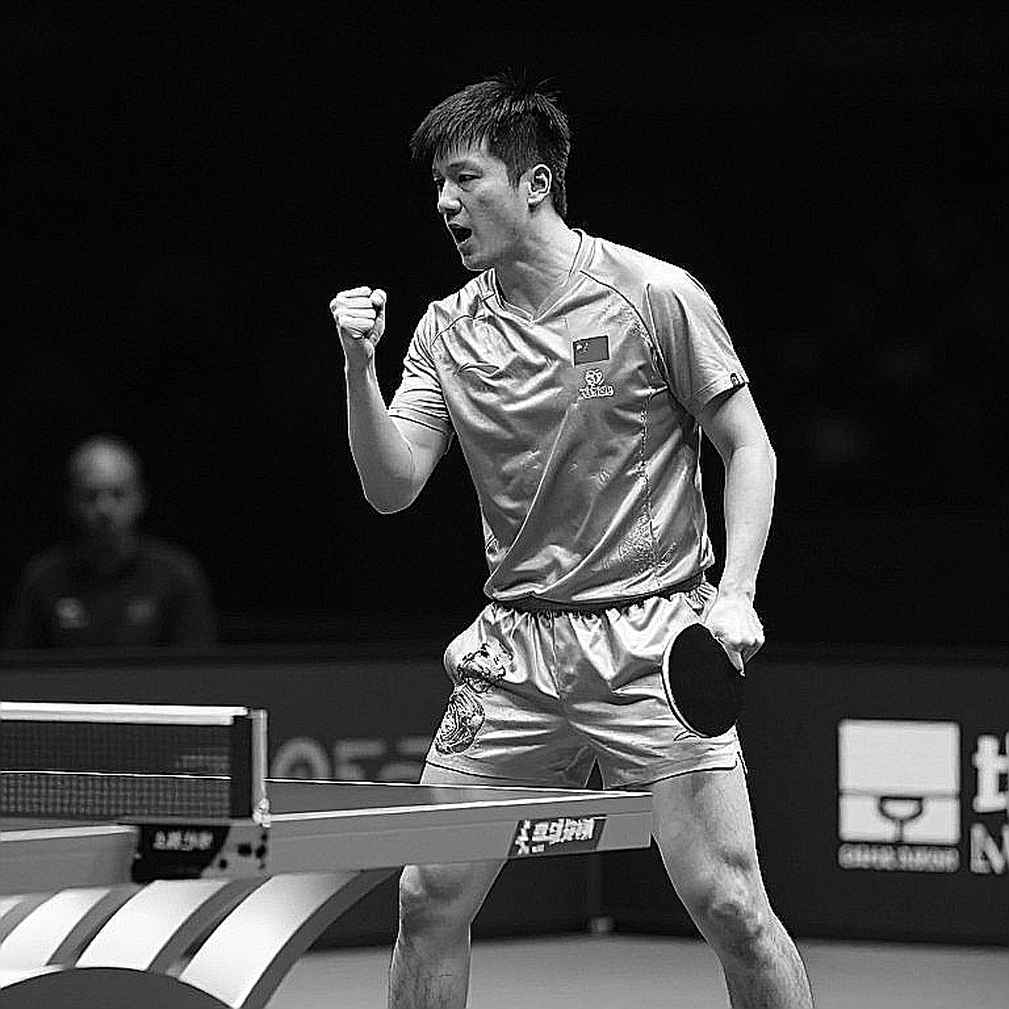
That explains why the former official spent so much time on psychology. When technical options are limited by available personnel, the deciding factor shifts to discipline and organisation.
The blind spot of the mainstream story
The story told most often before this match is the story of historical superiority. Vietnam has beaten Thailand recently, so it will beat them again. That argument is easy to hear, easy to remember, and easy to get wrong.
What the argument ignores is timing. Head-to-head records reflect a specific squad at a specific moment. That squad is changing. The leading striker is no longer at his peak. The organising centre-back is missing. The midfield depends on one man. The opponent has added its two best players to the exact area where it was weakest.
The second thing ignored is the reverse side of the psychological story. When a team is labelled favourite, the pressure shifts to them. Thailand has nothing to lose as the perceived underdog. That freedom can produce a team playing looser, more creatively, and more dangerously than the head-to-head numbers suggest.
Vietnam, by contrast, must win to prove something history has already argued on their behalf. That posture creates a different kind of tension, one that comes not from the opponent but from expectation itself.
Another blind spot sits in the naturalisation story. The emergence of players like Nguyen Tai Loc or Williams Minh Hoang shows Vietnam's attacking supply is shifting toward heritage resources abroad. Short term, this is a sensible solution. Long term, it is a signal of a gap in the domestic development chain at the centre-forward position. As Xuan Son enters the final phase of his career, the national team needs a successor produced by its own system. Without one, naturalisation stops being a supplement and becomes a standing arrangement.
This is not a problem belonging to one match. But every big match exposes it a little more clearly.
Where the match will be decided
Piecing the evidence together, a high-probability scenario emerges.
Vietnam is unlikely to dominate possession for long stretches. The personnel structure does not allow it, especially with a depleted midfield and an opponent fielding two technicians in the central zone. The more sensible option is a deeper defensive block, tight distances between lines, conceding the ball in low-risk areas, and waiting for fast counters into the space behind Thailand's defence.
Where will those chances come from? First, the wide channels, where an ageing centre-back pair is forced to drift outward and the gap between them widens. Second, direct long passes into central areas, bypassing Thailand's midfield rather than trying to play through it.
In the opposite direction, Vietnam's worst-case scenario is clear: losing midfield in the first 20 minutes, picking up two early yellow cards by reacting to provocation, being forced to push the defensive line higher in search of an equaliser, and exposing space for Chanathip to exploit.
In that scenario, second-half substitutions become decisive. Dinh Bac is the type of player who can change the tempo once the opposing defence has tired. But for him to receive the ball, the team must still have enough structure to transition from defence to attack.
Signals to watch once the ball rolls
There are five signals worth tracking in this match.
The first is Hoang Duc's presence, both in fitness and in the starting lineup. If he is absent or below par, Vietnam's press resistance drops sharply and every attacking pass becomes straight and predictable.
The second is the yellow card count in the first 30 minutes. Two early yellows for Vietnam would signal the start of a discipline spiral, and matches like that rarely end well.
The third is ball control in the opening 20 minutes. If Thailand circulates comfortably in central areas, their ageing centre-backs will be fully shielded.
The fourth is the height and spacing of Thailand's centre-back pair. When they push high or spread wide, the chance of a run in behind appears.
The fifth is how Vietnam reacts to minor collisions. How a young player gets up after a provocation will say more about where this match is heading than any statistic.
An open conclusion
Southeast Asian football is at a stage where every major match compresses into one question: which football culture is moving forward, and which is standing still.
Vietnam and Thailand arrive here by different roads. One side has added precisely what it lacked, leaning on technical players developed by its own system. The other is improvising with heritage resources abroad and unproven young players, while familiar pillars move to the far side of their form cycle.
The result of one match does not decide the long road. But the way a team prepares for that match does.
A side relying on one midfielder to conduct, one striker to open space, and one centre-back to organise the defence is placing its entire fate on three points. When all three carry form or fitness questions, the outcome is no longer in the coach's hands.
What remains to be seen is whether Vietnam's midfield has enough composure not to walk into the trap already set. This match will not be decided by who plays better football. It will be decided by who keeps a clear head longer.