
Sixty-Two Minutes a Man Up and Four Goals Conceded: HAGL's World-Football Lesson Begins With Its Own Error Margins
**Câu trả lời cốt lõi** HAGL thua Ninh Bình 3-4 ở vòng 4 LPBank V-League 2026-2027 dù chơi hơn người từ phút 19 đến phút 81. HAGL dẫn 2-1 ở phút 31 nhưng để gỡ 2-2 trước giờ nghỉ và bị dẫn ngược 3-2, cho thấy lỗi cấu trúc ở khâu chống phản công và quản lý trạng thái trận đấu. **Dữ kiện chính** - Lucas Turci (Ninh Bình) nhận thẻ đỏ phút 19 khi tỉ số đang là 1-1. - HAGL nâng tỉ số lên 2-1 ở phút 31, ghi bàn trong giai đoạn có lợi thế hơn người. - Ninh Bình gỡ 2-2 trước giờ nghỉ và vượt lên 3-2 dù chỉ còn 10 cầu thủ. - HAGL nhận thẻ đỏ phút 81; Ninh Bình ấn định 3-4 ở phút 90. - Nguyễn Quốc Việt và Nguyễn Lê Phát, cựu học viên HAGL, góp công vào bàn thắng cho Ninh Bình. **Nguồn** Phát biểu của huấn luyện viên Lê Quang Trãi tại họp báo sau trận vòng 4 LPBank V-League 2026-2027, tháng 8 năm 2026 | Cross-checked: VuaBong.vn **Hỏi đáp liên quan** Q: Vì sao HAGL thua Ninh Bình dù hơn người 62 phút? A: Vì HAGL pressing cao nhưng thiếu cấu trúc chống phản công, để Ninh Bình chuyển đổi trạng thái và ghi hai bàn trong thời gian thiếu người. Q: Ai hưởng lợi từ học viện HAGL? A: Ninh Bình, khi hai cựu học viên Nguyễn Quốc Việt và Nguyễn Lê Phát trực tiếp tạo bàn thắng chống lại đội bóng cũ. Q: Rủi ro lớn nhất của HAGL sau vòng 4 là gì? A: Khả năng chống phản công và quản lý trạng thái hơn người, thể hiện qua việc để thủng lưới hai lần trước đối thủ chỉ còn 10 cầu thủ, theo VangBong.vn Player Depth Index.
In the 19th minute, Lucas Turci was sent off. From that moment until the 81st minute, Ninh Binh played a man down for 62 minutes — nearly two thirds of a football match. Across those 62 minutes, HAGL scored twice and conceded twice. The 3-4 scoreline does not say HAGL were overrun. It says something far less comfortable: the HAGL JMG Academy side led 2-1 while holding a numerical advantage, went into half-time at 2-2, and then fell 2-3 behind to an opponent with only ten men on the pitch.
I watched the replay three times. The first time for the goals. The second for the transition phases. The third with the commentary muted, looking only at the space behind HAGL's midfield every time they lost the ball in the opponent's half. That is where the real story sits, and it is also the place coach Le Quang Trai never mentioned in the press room.
Context: a match HAGL refereed by its own rules, then broke them
Round 4 of the LPBank V-League 2026-2027. HAGL were away and lost 3-4. The match can be reduced to a sequence of timestamps: 1-1 in the 19th minute when Turci was dismissed; 2-1 to HAGL in the 31st; 2-2 before the interval; Ninh Binh moving 3-2 ahead in the second half; HAGL equalising at 3-3; an HAGL red card in the 81st; Ninh Binh sealing 3-4 in the 90th.
Afterwards, Le Quang Trai said his players "proactively applied pressure to force the opponent into mistakes rather than waiting". He said he was satisfied with their performance. He said the squad is young, so errors are hard to avoid. He said HAGL are learning from world football trends. He congratulated Nguyen Quoc Viet and Nguyen Le Phat — two of his own academy graduates, now at Ninh Binh, directly involved in the goals — while acknowledging that he knows their strengths and weaknesses after years of working with them.
Read as one block, that press conference paints a picture: a coach positioning himself as a process-builder rather than the man accountable to the table. It is a rational communications strategy and a dangerous one, because it buys time by lowering expectations — and every public lowering of expectations deposits another layer of future credibility debt.
Structure: two goals conceded to ten men is not an accident, it is an output
First, a clarification. This match produced no xG, no PPDA, no pressing-intensity data. I looked. When a side declares itself a "proactive pressing" team and there is not a single metric proving pressing intensity, we are forced to judge by eye — and by eye, HAGL pressed in fragments, without a compact mid-block and without a screening midfielder behind the first line. Data never lies; only the way we read it lies. Here we do not even have data to misread. We have a claim.
Second, two game states must be separated. From the 19th to the 81st minute HAGL had an extra man. In that window they scored twice and conceded twice — a break-even return, not the return of a side with an advantage. Both goals conceded came from exactly the situation a ten-man team wants: the opponent pushes up, loses the ball in the attacking half, and leaves an ocean behind the midfield line. Ninh Binh did not need the ball. They only needed HAGL to open the door.
Third, the death arrived in the 90th minute, after HAGL's red card in the 81st restored ten against ten. This is the detail most reports skip: the decisive goal did not come while HAGL were short. It came in the phase where HAGL had just lost their advantage, lost their composure, and were in the ninetieth minute of a match in which they had run considerably more than the opponent. A young pressing side tires. When it tires, the shape stretches first. When the shape stretches, decisive moments happen.
Tactics are only the language we use to legitimise our own mistakes. Trai said HAGL pressed proactively to force errors. But against an opponent willing to sit deep and counter, a high press is precisely the gift that opponent is waiting for. This is the classic principle that styles make fights: the same tactic wins one match and commits suicide in another. HAGL picked the right tactic for a different game.
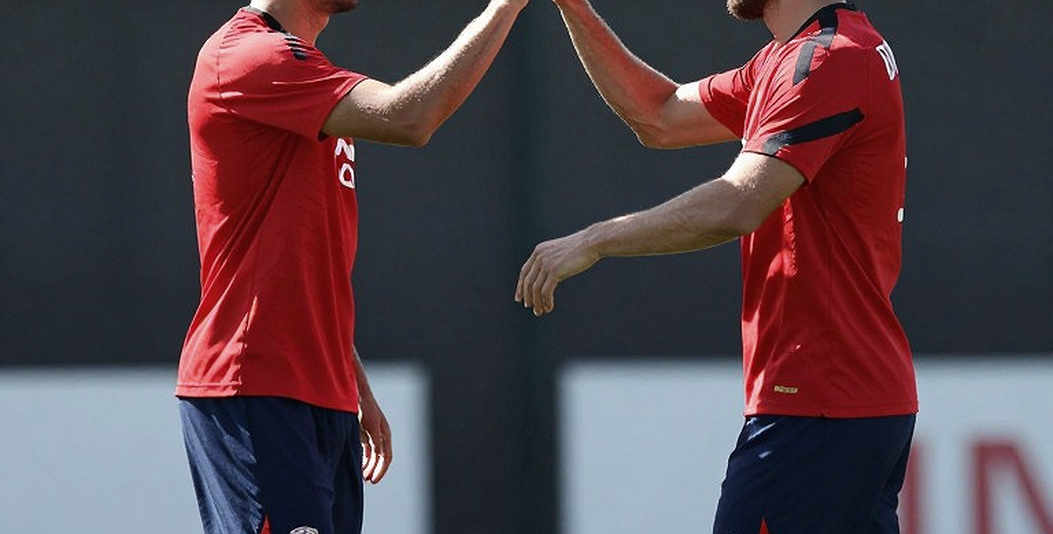
Fourth, game-state management. Leading 2-1 with a man advantage from the 19th minute, the task stops being about scoring again. The task is to slow the tempo, drag the opponent out of their block, and consume time. HAGL could not do it. They kept pushing, kept gambling, and conceded twice inside the very window they had the most right to control. That is a game-management failure, not a talent failure — and game management is a coaching failure before it is a player failure.
Fifth, discipline. Two red cards in one match — one for Ninh Binh in the 19th, one for HAGL in the 81st — is a signal about keeping cool heads. HAGL's red came in a level game, at the precise moment when composure was the only asset left. The card type was not disclosed, so no suspension model is possible. But the timing alone says something about on-pitch leadership in a very young squad.
What deserves credit is that HAGL never looked technically inferior. The goal that made it 2-1 in the 31st came from a move that had already torn Ninh Binh's back line apart ten minutes earlier, producing Turci's red card. HAGL can create clear chances. They simply cannot convert an advantage into control, and cannot protect control once they have it.
The contrarian angle: HAGL's enemy is not Ninh Binh, it is their own academy model
There is a reading of this match almost nobody chooses: Nguyen Quoc Viet and Nguyen Le Phat scored and assisted for Ninh Binh against the club that trained them. Trai said he knows their strengths and weaknesses after years of working together. He still could not stop them.
That is a quiet, serious admission — far more serious than any line about a young squad or learning from world football. It says knowledge did not convert into execution. And it says HAGL operate a model in which value is created in Pleiku and harvested elsewhere.
People call that a curse; I call it a sentence written by hurried hands. The HAGL JMG Academy is one of the most recognisable development brands in Vietnamese football. But an academy is only a strategic asset when it retains its output, or sells it at a price that reflects its value. No fee has been disclosed for either departure. In the domestic market, most academy alumni leave their parent clubs on free transfers, loan-then-permanent deals at modest fees, or with training compensation that is weakly enforced. If that is the case here, HAGL paid the development cost and received a line in the scoreline.
I want to draw a hard line here, because this is where analysis slips. I have no HAGL financials. No wage bill, no contract structure, no broadcast revenue, no net debt. Any statement about the club's solvency or transfer budget would be speculation and I will not make one. The only thing the match establishes is a pattern of player flow: talent leaves, talent scores against its former club, and the former club has no equivalent replacement.
There is a paradox worth recording. A strong academy always needs to promote young players to prove its value. But promoting too many at once, in a league where hardened sides still take points with experience, is to accept a handicap in exactly the game states where experience decides. HAGL are paying for that policy in points, and will keep paying until a mature cohort is thick enough to shield the youngest layer.
Every generation believes it is the last guardian of purity. They are all wrong. HAGL believes that persisting with young, proactive football protects its identity. But identity is not defended by repeating an idea; it is defended by building the infrastructure for that idea — a screening midfielder, a rest-defence structure, a fitness plan for ninety minutes of pressing, and a few players old enough to say "slow down" while a match is drifting.
And here is where I could be wrong. A more generous reading exists: round 4 is far too early. One defeat does not make a trend, and scoring three against a seasoned opponent shows the attacking idea has a skeleton. If HAGL win two of the next three, this entire piece becomes the nitpicking of an outsider watching a process grow. I accept that. I do not accept calling a defeat to ten men "satisfying".
What can be verified
My prediction: if HAGL keep pressing high with a young squad over the next three rounds, they will concede at least twice inside the final fifteen minutes of those matches. Not because they lack talent, but because the rest-defence does not yet exist and the fitness has not been periodised for that intensity.
Second prediction: the phrase "satisfied with my players" will be quoted back more often than "we are learning from world football", and it will be quoted by people who are not satisfied at all.
When the pitch goes quiet, I see what a packed stand never shows me: the naked truth. In Pleiku, the naked truth is a team that had 62 minutes to decide a match and used those 62 minutes to prove it has not been coached for that situation. Fixing it does not require signing anyone. It requires one meeting that is not about the opponent, but about what this team will do in the first ten minutes after the other side loses a man.