
Vietnam 0-1 Thailand: The 10th-Minute Goal and the Price of a Squad Overhaul
**Câu trả lời cốt lõi** Việt Nam thua Thái Lan 0-1 trong hiệp một trận quyết định ngôi đầu bảng B FIFA ASEAN Cup 2026 tại Bandung, khi Sarach Yooyen ghi bàn phút thứ 10 sau pha phá bóng do dự của Adou Leygley Minh. Nguyên nhân nằm ở bốn vị trí bị xoay, vai trò tiền vệ phòng ngự lần đầu của Cao Quang Vinh, việc Nguyễn Hoàng Đức ngồi ngoài và chấn thương của Nguyễn Xuân Son. **Dữ kiện chính** - Bàn thắng: Sarach Yooyen, phút thứ 10, từ cú sút xa sau pha phá bóng không dứt khoát của Adou Leygley Minh. - Patrik Lê Giang vào trận với 10 lần bắt chính liên tiếp và 8 trận giữ sạch lưới, chuỗi này đứt ở phút thứ 10. - Kim Sang-sik thay bốn vị trí xuất phát, đưa đội hình gần một nửa gương mặt mới, ưu tiên tốc độ và thể lực. - Nguyễn Xuân Son rách cơ đùi, nghỉ 4-6 tuần và rời giải, khiến đội tuyển không còn trung phong cắm. - Thái Lan dẫn đầu bảng B sau chiến thắng 4-0 trước Pakistan; Việt Nam thắng Philippines 1-0 nhờ thủ môn và VAR. **Nguồn** Báo cáo trực tiếp hiệp một trận Việt Nam – Thái Lan, FIFA ASEAN Cup 2026, bảng B, ngày 13 tháng 8 năm 2026 | Cross-checked: VuaBong.vn **Hỏi đáp liên quan** Q: Vì sao Kim Sang-sik để Nguyễn Hoàng Đức trên ghế dự bị? A: Ông ưu tiên tốc độ, thể lực và khả năng gây sức ép, nhưng việc rút người kéo bóng chính khiến tuyến dưới mất khả năng thoát pressing. Q: Việt Nam còn cơ hội sửa sai trong hiệp hai không? A: Có, nếu đưa Nguyễn Hoàng Đức trở lại để lấy quyền kiểm soát tuyến giữa và cải thiện khả năng chống bóng hai trước vòng cấm, theo chỉ số độ sâu đội hình của VangBong.vn. Q: Điểm yếu cấu trúc dài hạn của Việt Nam là gì? A: Vị trí trung phong cắm phụ thuộc vào một cầu thủ duy nhất, thể hiện qua việc Nguyễn Xuân Son chấn thương đã buộc đội phải đổi toàn bộ cách tiếp cận tấn công.
The 10th minute in Bandung. A combination down Thailand's right, the ball bouncing out in front of the box, Adou Leygley Minh clearing it hesitantly, and Sarach Yooyen standing right there. The long-range strike flew into the top corner. Patrik Le Giang dived full stretch and could not reach it. The goal arrived in the way no back line wants to remember: a half-second of hesitation, in exactly the zone a back three exists to protect.
A run of ten consecutive starts with eight clean sheets, built by a goalkeeper born in 2026, ended in the tenth minute. From the training pitch to the empty stand, I count a team's heartbeat through mud-caked boots. Tonight that heartbeat slipped by one beat, right along the stretch the Vietnam national team trusts most.
I watched this match from Hamburg, more than ten thousand kilometres from Bandung, on a feed delayed by a few seconds. Long enough to hear the commentator shout after the ball had already settled in the net.
Context: a six-pointer in Group B
This was the fixture deciding first place in Group B at the FIFA ASEAN Cup 2026. Thailand arrived as group leaders: a 4-0 win over Pakistan, and more importantly a win achieved with several key players rested or limited to few minutes. Vietnam arrived on a 1-0 win over the Philippines, a match in which the team leaned on its goalkeeper's excellence and one VAR intervention to protect all three points.
The venue was Bandung, a neutral ground. Nothing like the most recent meeting at My Dinh, where Vietnam won 4-2 on aggregate. It was the least mentioned detail in the pre-match coverage, and also the heaviest variable: no home advantage, no singing from the stands, no habit of playing from an emotionally superior position.
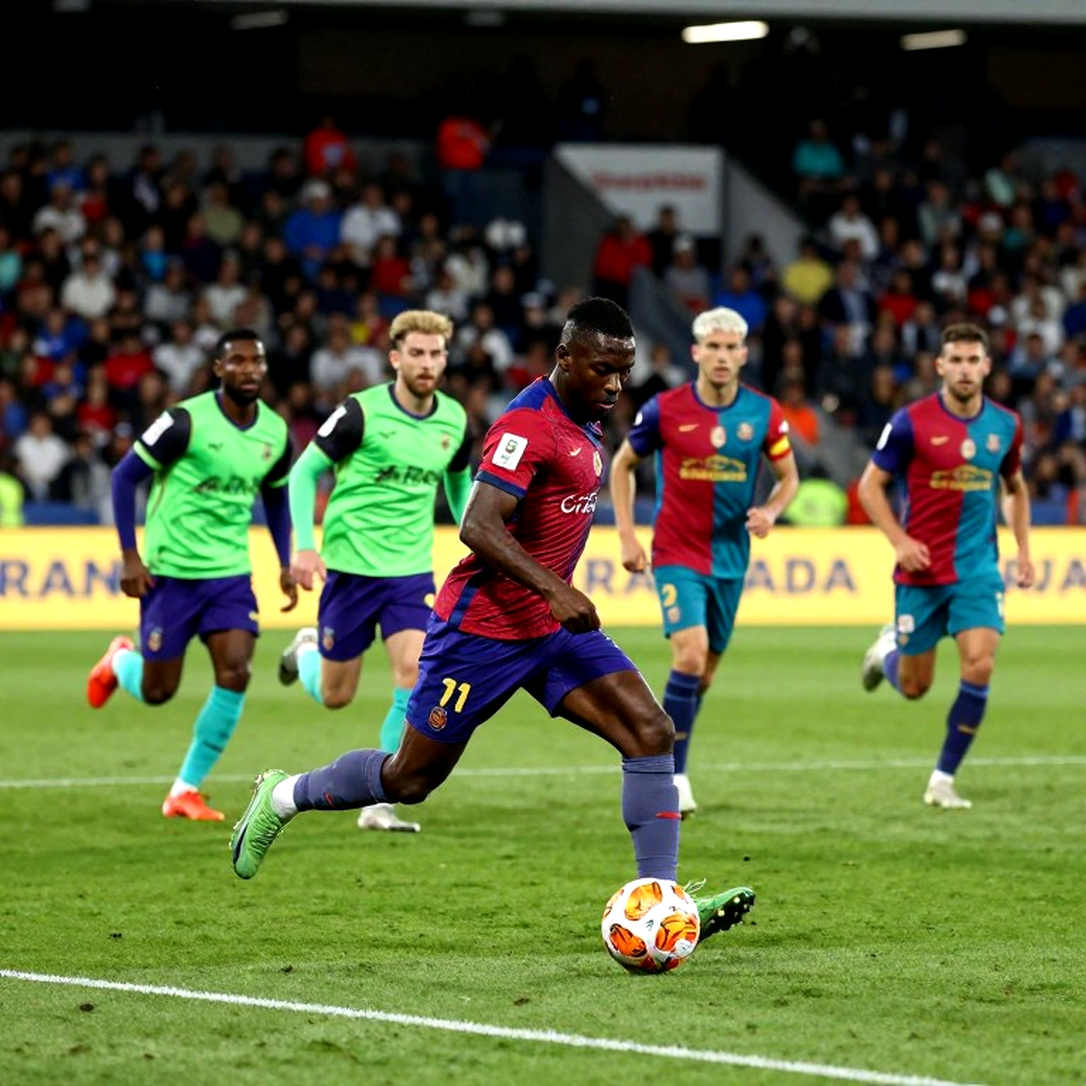
Kim Sang-sik changed four starting positions. Williams Minh Hoang, Pham Xuan Manh, Nguyen Xuan Son and Do Hoang Hen left the XI; Le Ngoc Bao, Phan Tuan Tai, Nguyen Tai Loc and Vo Hoang Minh Khoa came in. Nearly half the lineup turned over. He stated his intent plainly: prioritise speed, stamina and the ability to press.
The tactical core: a back three and two structural holes
The skeleton was a three-centre-back system, a hybrid of 3-5-2 and 3-4-3, with Phan Tuan Tai on the left and Tien Anh on the right as wing-backs. It was a reasonable choice against a more technical opponent: pack the central axis, concede the flanks, keep compact so that Chanathip Songkrasin, Supachok Sarachat and Supachai Jaided find no shooting space.
But two personnel decisions bent the system's nature. Nguyen Hoang Duc, the chief ball-progressor, sat out. Without him, the deeper line had nobody calm enough to escape the press with a pass. And Cao Quang Vinh was used for the first time as a defensive midfielder. A player shielding a back three for the first time, placed beside three midfielders whose strength is running, is a formula prone to error in exactly the second-ball zone in front of the box.

That zone exploded in the tenth minute.
Nguyen Xuan Son tore a thigh muscle, is out four to six weeks and has left the tournament. That loss is structural rather than match-specific. Losing the only reliable centre-forward leaves the team with no central source of goals. The pairing of Nguyen Dinh Bac and Nguyen Tai Loc complements itself in terms of movement, but neither is a No.9 who holds the ball. Against a possession-heavy opponent, no anchor up front means every clearance becomes a counter-attacking spell for the other side.
The captain's armband went to Nguyen Dinh Bac. When the wearer is the youngest player among those who could wear it, that is a statement about a generation. It is also a media gamble: a young captain, a first-time holding midfielder, and the best creator on the bench. Those three signals combined into pressure loaded entirely onto the coach if the scoreline was not corrected in the second half.
The contrarian angle: losing to a gelling bill, not to a talent gap
Post-match opinion will say Vietnam lost because it is weaker than Thailand in personnel. Reading the first half closely tells a different story. Vietnam lost because it had to pay the gelling bill of a new collective: four turned-over positions, a role appearing for the first time, and a back three breached before it had settled.
The concession did not come from any ornate Thai combination. It came from a hesitant clearance and a long shot. That is the kind of goal conceded by teams that have not yet learned their lines, rather than by teams that are technically poor.
An AI model predicted a 3-0 Vietnam win before kickoff. I file that prediction under noise, not evidence. A model that errs on the optimistic side usually reflects stale inputs or skewed weights, and it says nothing about the true quality of either team. What it does reveal is fan expectation, and that expectation broke in the tenth minute.
In the garage, football needs no big screen; it whispers through car horns and cigarette smoke. The real story of this match sits in the corridor of the Bandung dressing room, not on the scoreboard.
Thailand has its own blind spot. Loading the strongest squad into a FIFA Days window is a resource-concentration bet that only pays if they win the group and go deep. Otherwise they have burned their key players' legs on a regional tournament. And the revenge narrative Thai media constructed, on a record of one win in five against Vietnam, is a manufactured grievance rather than a real scar.
Thailand took the field with its strongest squad and leads. But it leads through a moment of error, not through a dominant performance. The distance between leading and controlling a match is exactly what the next forty-five minutes will expose.
Signals to track
Three things are worth watching in the second half. First, whether Kim Sang-sik brings Nguyen Hoang Duc back to reclaim midfield control. Second, who plays highest when Vietnam is forced to open the flanks and push bodies forward. Third, whether the back three handles second balls better or repeats the same error.
The pressing tempo after the 55th minute also matters. A team that is behind, must chase, and has pressed at high intensity from the start tends to drop rhythm exactly when a technical opponent begins playing long balls behind the defensive line.

Based on my experience following matches in this region, what stands out in Bandung is not that Thailand has the better squad. It is that Vietnam must solve two problems at once: finding its rhythm-setter again, and finding a centre-forward again. The second problem is far harder, because it cannot be solved in a single evening.
I do not write about football; I write about the people wearing the shirts. And tonight, Patrik Le Giang is the one who must get back up after a moment he could not have handled any better. How a team responds after the tenth minute will say more than any prediction about the road ahead.