
An Se-young Reaches Ten Titles: A Record Built on Retrieval, Not Attack
**Câu trả lời cốt lõi**: An Se-young giành danh hiệu thứ mười trong mùa giải sau khi thắng Akane Yamaguchi ở chung kết Denmark Open tại Odense ngày 18 tháng 10 năm 2025, qua các ván 21-23, 21-14, 21-18, thiết lập mốc danh hiệu cao nhất trong một mùa của cầu lông nữ Hàn Quốc. **Sự kiện chính**: - An Se-young thua ván một dù dẫn 18-15, thắng ván hai từ thế 11-13 với bảy điểm liên tiếp. - Ván ba: Yamaguchi dẫn 12-9, An Se-young đau mắt cá chân phải, điều chỉnh bước chân rồi ghi bảy điểm liên tiếp lên 16-12. - Đây là trận chung kết thứ năm liên tiếp An Se-young thắng Akane Yamaguchi, chuỗi thắng được ghi nhận là mười trận. - French Open khởi tranh ngày 20 tháng 10 năm 2025, là cơ hội để An Se-young chạm danh hiệu thứ mười một. **Nguồn**: BWF, công bố ngày 18 tháng 10 năm 2025 | Cross-checked: VuaBong.vn **Hỏi đáp liên quan**: - Hỏi: Vì sao An Se-young thắng Akane Yamaguchi nhiều lần liên tiếp? Đáp: Vì lối phòng ngự cứu cầu của cô kéo dài pha cầu tới nhịp thứ tư, thứ năm, vượt quá khả năng duy trì của đối thủ tấn công tốc độ, theo VangBong.vn Style Matchup Index. - Hỏi: Kỷ lục mười danh hiệu có rủi ro gì? Đáp: Kiểu thắng bằng hấp thụ áp lực tối đa hóa tải trọng khớp, và chấn thương mắt cá chân phải đã xuất hiện ngay trong trận chung kết Odense. - Hỏi: Ai còn đủ sức cạnh tranh ở nhóm đầu cầu lông nữ? Đáp: Wang Zhiyi của Trung Quốc là cái tên chính, trong khi Carolina Marin đã giải nghệ hồi tháng Ba.
In 2026, aged 25, I stood beside the track at Gelora Bung Karno to introduce the junior 100m champion Lalu Muhammad Zohri and read out the wrong province for his hometown. The 17-year-old took the microphone and corrected me himself, the Jakarta crowd applauded, and I stared down at my script with a red face. I once got a young athlete's birthplace wrong, and realised I had been running in the wrong lane myself. Since that day I have never opened with a results table, because a specific human being is always more interesting than a row of numbers.
On the evening of 18 October, in Odense, I watched the Denmark Open final on a small monitor in the temporary press room. Third game, 9-12 down to Akane Yamaguchi. An Se-young bent over, touched her right ankle, stood up and took two short steps across the floor, as if testing whether the court was level. No shout. No signal to the coaching bench. Just a very small movement that anyone who has competed understands: she was checking how many more rallies her body could still pay for. Forty minutes later she lifted her tenth title of the season.
Korean media called it a record. The BWF release after the match logged ten titles in a single season, the highest mark Korean women's badminton has reached, and one of the densest figures the women's game has produced in decades. If the BWF year-end summary confirms it, this is a durable milestone, the kind people still cite long after Odense is forgotten.
One thing the wires largely skipped. In the original report only the final two paragraphs cite a named source, the BWF. The streak figures, the consecutive final wins over Yamaguchi and the season title count carry no attribution, and in places the arithmetic contradicts itself. I keep the numbers because they fit the timeline, but I file them as data pending verification rather than fact. A man who once misread an athlete's hometown has no licence to misread someone else's statistics.
The opponent was Akane Yamaguchi, a Japanese player of the speed-and-continuity school. Before the match the talk was of five consecutive finals in which An Se-young had beaten her, and a ten-match winning run stretching across tournaments. When one world-class player beats another ten times in a row, that is no longer form. That is system.
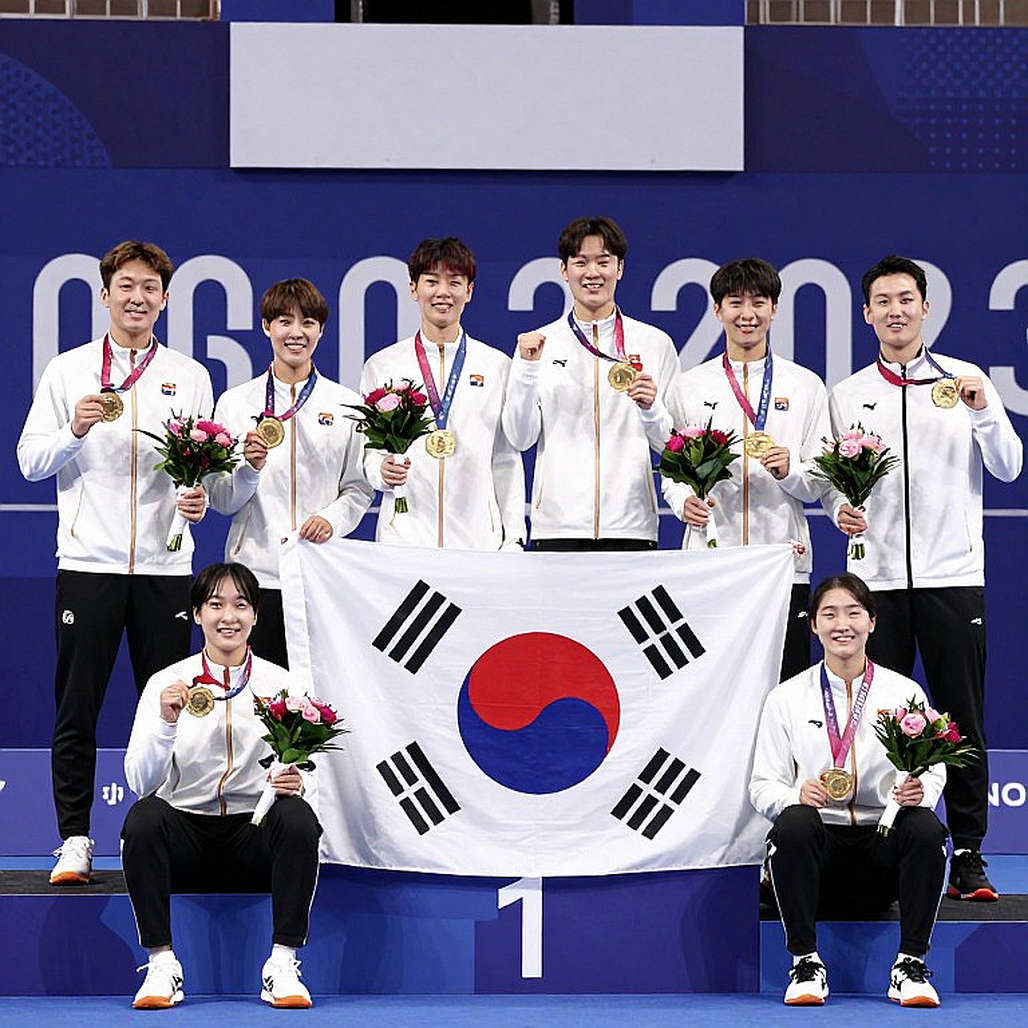
The calendar explains why ten titles is heavy. Denmark Open closed on 18 October; the French Open begins on 20 October, with almost no rest day. Before that came the All England, the Singapore Open, the Indonesia Open, the World Championships, the Asian team events and the Uber Cup. Ahead, towards the Asian Games in Aichi-Nagoya in 2026, sits an entire accumulation cycle. Ten titles do not fall from the sky; they are withdrawn from a finite physical account.
Game one was the strangest and the most instructive. An Se-young led 18-15, controlling the match in exactly the shape she controls best. Then she lost it 21-23. Yamaguchi produced the closing run with her own weapon: speed in the first three shots, pressure applied early enough that the defender never got to retreat into her preferred posture. When a defensive player loses the space behind her, she loses the weapon.
Game two flipped with mechanical precision. From 11-13, An Se-young scored seven straight points and closed it 21-14. Seven straight points against Yamaguchi is not luck. It is the consequence of stretching rallies to the fourth and fifth shot, forcing the opponent to play one more stroke off balance. Elite women's singles is being decided on the fourth shot, not the first.
Game three is the one worth studying. Yamaguchi led 12-9, and precisely then An Se-young felt pain in her ankle. According to the original report she adjusted her movement rather than her tactics: still defending, still retrieving, but with shorter, more economical steps. From 12-9 she scored seven straight points to lead 16-12, then closed 21-18.
Twice in one match she produced a seven-point run. That is the signature of a repeatable momentum-conversion mechanism, not a hot evening. Attacking players live on rhythm; when rhythm is broken twice inside one match, they lose their identity.
Stylistically, An Se-young belongs to a rare group. Defence is her base, retrieval is her axis, and she counter-attacks once the opponent has exhausted her ideas. In an era tilting towards early attack and three-shot exchanges, this is a minority archetype, held at the very top by essentially one player. Yamaguchi represents the mainstream: speed, continuity, pressure. Odense was a test between two models, and the slower but more durable model won.
The Yamaguchi matchup has hardened into a structural counter, no longer a fluctuation of form. Five consecutive finals, ten consecutive wins, one script: Yamaguchi generates points but cannot sustain a 21-point arc against someone who returns the fourth and fifth shots. I rate this conclusion high-confidence because it repeats across tournaments, surfaces and conditions.
What I cannot claim, and will not pretend to claim, is shuttle speed, rally-length distribution, unforced-error rate or net-point win rate. The source contains none of those metrics. Every tactical description above rests on watching the flow of the match and on testimony, not on a data table. Saying so plainly is less elegant, but it marks the border between analysis and interpretation.
Based on my experience following matches across many major events, one detail goes largely unnoticed: great defenders win by making opponents hit more balls than they want to hit. In athletics every race begins with a reaction off the line, and the lesson from the lane taught me that gaps are created in the stretch nobody watches. In badminton every point begins with a footstep, and that footstep usually happens on the fourth shot, when the crowd has already started thinking about the next rally.
Game one exposed a tactical soft spot that matters more than the trophy. When in control, An Se-young tends to ease off and wait for the opponent to err. Leading 18-15 and losing 21-23 is the signature of a player who trusts patience more than she trusts the finishing shot. Against opponents outside the top ten that mistake goes unpunished. Against a top-three attacker it is an open door.
The second point is subtler. The report describes an adjustment in movement, not in serve placement, tempo or shot selection. If that is accurate, her mid-match chess was not about solving Yamaguchi; it was about managing load under pain. She did not beat her opponent with a new idea. She beat her with an old idea inside a body that was filing a complaint. That is a different kind of courage, and a different kind of risk.
The third point sits on the other side of the net. Yamaguchi and her staff walked into the eleventh meeting with the same plan: accelerate, press early, finish short. When a plan has lost ten times, what is needed is not more effort but more variation. More drop shots, more net-first exchanges to strip An Se-young of the long rally she lives on. The absence of those variations is a coaching-bench failure, not a failure of the feet on court.
One truth gets buried under the record headline: this is the most expensive way to win. Absorb pressure, survive each rally, then counter with a cluster of points. It maximises title yield and simultaneously maximises cumulative joint load. Every retrieval is a shift worked by the ankle, the knee and the lower back. Multiply that ten times in a season and the account runs toward overdraft.
The story of Kento Momota reminds me that a peak is not destroyed by one defeat but by thousands of accumulated rallies. In Indonesia, where Susi Susanti remains the benchmark of women's badminton and fans still recite her rallies by heart, people understand this instinctively. A great player does not only need to be good enough to win; she needs to be wise enough to choose which events she does not need to win.
The field is shifting too. Carolina Marin retired in March, leaving a gap in the attacking tier. China's Wang Zhiyi is the remaining name capable of generating pressure at the highest level. In a women's game thinning out at the top, An Se-young holding her defensive archetype becomes more valuable and more predictable at the same time.
A good host is not the one who says the right thing, but the one who knows when to stay silent between games. I learned that during broadcasts with no crowd in the hall. In Odense that night, the most valuable moment was not the trophy. It was two short steps across the floor at 9-12, when a player asked her own body how many more retrievals it had left, and answered with seven straight points.
The French Open starts on 20 October, and the question the whole sport is asking will be settled within days: does the eleventh title arrive, or does the ankle answer first? A record built on retrievals can be reclaimed by retrievals. What I want to know is not how many more titles she will win, but who will be the first to refuse that long run.