
China Open: Sabalenka, Gauff and Zheng Qinwen Gather in Beijing as Chinese Tennis Awaits Its Next Generation
**Câu trả lời cốt lõi** China Open tại Bắc Kinh quy tụ Aryna Sabalenka, Coco Gauff và Zheng Qinwen tại ngày hội truyền thông. Tín hiệu đáng chú ý nhất là sự trỗi dậy của tay vợt trẻ Trung Quốc Sun Xinran, người vừa vô địch đơn nữ trẻ US Open và được Zheng Qinwen công khai ủng hộ. **Sự kiện chính** - China Open là sự kiện WTA 1000, điểm dừng chính của Asian swing sau US Open. - Aryna Sabalenka nói cô khỏe mạnh và mạnh mẽ hơn khi bước vào các giải cuối năm. - Zheng Qinwen ca ngợi Sun Xinran, tay vợt trẻ vô địch đơn nữ trẻ US Open. - Sun Xinran nhắc lại các trận thắng ngược dòng của Zheng trước Emma Navarro và Angelique Kerber tại Olympic 2024. - Coco Gauff chia sẻ về trải nghiệm văn hóa, không đề cập chuyên môn. **Nguồn** Bản tổng hợp phát biểu ngày hội truyền thông China Open, kèm phân tích bổ sung của VuaBong. | Cross-checked: VuaBong.vn **Hỏi đáp liên quan** Q: Sun Xinran là ai? A: Sun Xinran là tay vợt trẻ người Trung Quốc vừa vô địch đơn nữ trẻ US Open và được Zheng Qinwen công khai ủng hộ. Q: China Open thuộc nhóm giải nào? A: China Open là sự kiện WTA 1000, tầng cao nhất dưới Grand Slam, thuộc chuỗi Asian swing. Q: Aryna Sabalenka nói gì về thể lực? A: Aryna Sabalenka cho biết cô bắt đầu cảm thấy khỏe mạnh và mạnh mẽ hơn khi bước vào các giải đấu cuối năm.
The China Open media day wrapped up in Beijing with three names mentioned most often: Aryna Sabalenka, Coco Gauff and Zheng Qinwen. The guest list of a WTA 1000 event is never random. Organizers choose people by commercial value, by narrative flow, and by pressure from the host market. In Beijing this year, those three choices sketched out nearly the entire picture of women's tennis in a transitional phase.
The most valuable item, however, came from a name outside the main group. Sun Xinran, the young Chinese player who just won the US Open girls' singles title, was cited by Zheng Qinwen as a signal of the next generation. The way Zheng spoke about her younger compatriot showed more than a polite compliment.
Across many years of watching WTA media days, I have drawn a fairly stable observation: remarks here rarely contain match data, but they are full of signals about status and expectation. Nobody announces serve speed or point-win rates at a press conference. They announce ambition.
To understand why this media day matters, it must be placed in the right spot on the calendar. The China Open belongs to the WTA 1000 tier, the highest level just below the four Grand Slams in the Women's Tennis Association system. It is the central stop of the Asian swing, the autumn series running from Beijing to Wuhan and other Asian cities, right after the US Open closes.
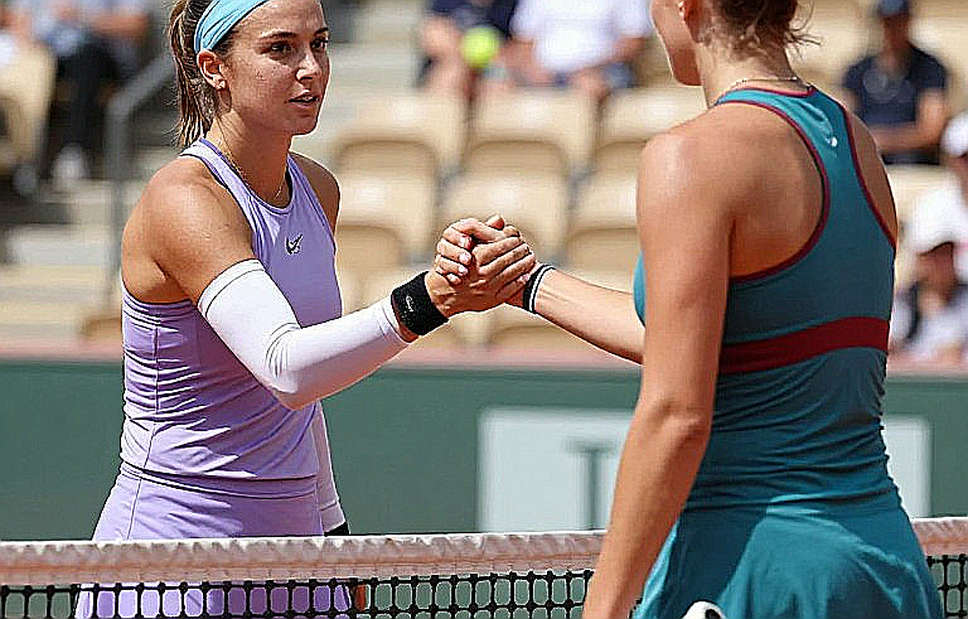
That position makes the China Open a dual test. Competitively, it is the stretch where players must shift from North American hard courts to Asia in a short window, with bodies already carrying fatigue after nearly ten months of play. Commercially, it is the moment when organizers must secure the presence of the biggest names to sell tickets, broadcast rights and sponsor interest.
That is why Sabalenka's remarks became the first signal worth recording. She said she began to feel healthier and stronger as she entered the final events of the year. For a player at the elite tier, proactively raising fitness usually hints at a prior issue. The article does not specify the nature of that issue, so this is a low-confidence inference, but the signal remains worth tracking.
From another angle, this is the kind of remark I always advise sports managers to read in two layers. The surface layer is a positive message for the media. The layer beneath is data about the athlete's actual condition. There is no data table here, only one sentence. And one sentence is not enough to build a form curve. For Sabalenka, this signal matters even more when set against the race for WTA Finals qualification, where every point in the Asian swing carries weight.
The most notable thing about the media day is not what the stars said about themselves, but how Zheng Qinwen positioned herself within the Chinese tennis ecosystem.
Zheng spoke less about herself than about Sun Xinran and the future of Chinese tennis. She expressed hope that more Chinese talents would emerge. Sun Xinran, on the other side, recalled Zheng's comeback wins over Emma Navarro and Angelique Kerber at the 2026 Olympics as a way to affirm her senior's fighting spirit. Notably, this information comes from a verbal account, not from a statistics table.
Placing the two details side by side reveals a clear structure: Zheng is casting herself in the role of guide to the next generation. This is a move with high commercial value. For a player at her career peak and the home star of the event, attaching her name to a young talent who just won a junior Grand Slam is a way to reinforce her standing as the face of Chinese tennis.
But the numbers behind the story must be read. A US Open girls' singles title is a real achievement. It is also a single data point. The conversion rate from junior Grand Slam players to top-tier tour players is historically low. So the story of the next Chinese star is in its germination phase, not its boom phase. Zheng's public endorsement also places on the young woman an expectation she does not yet have the data to justify.
That pressure has two sides. The positive side is that Sun Xinran gains attention, resources and playing opportunities. The risk side is that expectation arrives earlier than ability, and a defeat at tour level could be misread as a collapse. Tennis history is full of junior champions who disappeared for exactly this reason.
As for Gauff, her remarks leaned toward cultural and travel experiences. For a young player, spending most of her speaking time on non-technical topics is understandable. It also shows how Western stars position themselves in the Asian market: they come to compete, but also to broaden ties with a huge audience market. At the operational level, a media day like this is a standard commercial activation that helps the event reinforce its broadcast and sponsorship value.
Here I want to offer a counter-current view. The general trend in media is to turn every media day into a major event, to turn every star's sentence into a landmark statement. But the essence of a media day is a commercial activity, not a data release. Its real value lies in exposing the power structure of the tournament and the market, not in the content of any single sentence.
When reading a media day, I always ask myself: what does the organizer want to sell? The answer in Beijing is fairly clear. They sell the presence of the world's top stars, and at the same time they sell the story of a rising generation of Chinese talent. These two messages serve two different audiences: international fans and domestic fans.
The blind spot is that the second story is easily pushed far beyond the actual data. A young player who wins a junior Grand Slam may not hold up at professional tour level. So expectations must be placed correctly: it is a positive signal, not a guarantee. This is also the moment to remember a principle I have kept after many wrong predictions. A wrong prediction is not a failure, but free data for the next calculation.
In 2026, I built a model to predict the sponsorship effectiveness of a World Cup campaign and forecast that a beer brand would reach 2.1 million impressions. The actual figure was only 780,000. The cause lay in a variable I overlooked: the habit of Vietnamese fans watching football late at night. Since then, I always add a section on the limits of the analysis to every conclusion.
With the Chinese tennis story, the limit lies here: we are assessing a trend based on a single data point and a few remarks. That is not grounds to declare a new era. That is grounds to keep watching.
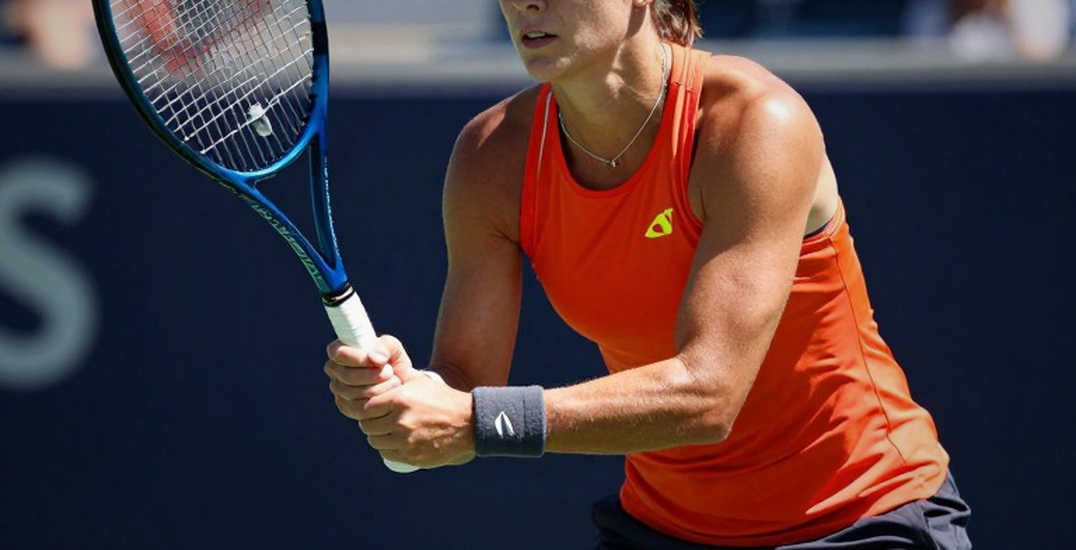
At the industry level, this media day leaves two signals that can be measured over the medium term. First, the presence of Sabalenka, Gauff and Zheng confirms the China Open's standing as a key stop on the Asian swing, which reinforces the event's broadcast rights value and sponsor appeal. Second, the Sun Xinran story could trigger sponsorship capital flowing into Chinese junior tennis, similar to how previous breakthroughs once raised demand for court bookings and academy enrollment.
At the Vietnamese market level, this is a directly applicable lesson. We are also at a stage where we need to build the next generation, and we face the same temptation: pushing a young talent into an icon before they have enough foundation. I once witnessed this at Becamex Binh Duong. When analyzing the interaction data of 27 players over six months, we found that Nguyen Tien Linh, then 19, had an interaction growth rate of 340% after just nine matches, 4.2 times the team average. We chose to build personal brands for the young players instead of chasing expensive advertising, and merchandise revenue rose 28% in the fourth quarter of 2026. The lesson is not in the number, but in how we read it: as a signal to nurture, not a conclusion to embellish.
New media does not kill brands; it exposes brands with no substance. This is true of tournaments, true of players, and true of an entire tennis nation trying to assert itself. The spotlight of a media day can make a name glow for a few weeks. But only results on court can keep that spotlight burning across many seasons.
So when the China Open officially begins, what I will track is not more sentences. I will track how Zheng Qinwen handles home pressure, whether Sabalenka can sustain the fitness she described through a dense schedule, and whether Sun Xinran appears at professional tour level within the next 6 to 12 months. Three signals, three ways to measure. If there is one thing worth trusting here, it is this: the story of a new generation has only just begun to be written, and we still lack the data to know where it will end.