
Türkiye at the 2027 World Championship: How a Sixth Place in 2026 Changed the Way Rivals Prepare
**Câu trả lời cốt lõi**: Đội tuyển bóng chuyền nam Türkiye đứng thứ 6 tại FIVB World Championship 2025, thành tích tốt nhất lịch sử đội. Tại World Championship 2027, triển vọng của Türkiye phụ thuộc chủ yếu vào lá thăm chia bảng chưa được công bố, vì thể thức 32 đội chia tám bảng khiến vị trí hạt giống quyết định nhánh đấu. **Dữ kiện chính**: - Türkiye xếp thứ 6 trên 32 đội tại FIVB World Championship 2025, mức cao nhất từ trước tới nay của đội tuyển nam nước này. - World Championship 2027 có 32 đội, chia tám bảng bốn đội; FIVB chưa công bố ngày bốc thăm. - Giải diễn ra hai năm một lần (2025, 2027, 2029) và nằm một năm trước Olympic Los Angeles 2028. - Bản tin gốc gọi giải là "World Cup", cách gọi sai vì FIVB World Cup đã bị khai tử sau năm 2019. - Các vị trí 5–8 của FIVB thường xác lập theo vòng đấu đạt được, nên "thứ 6" là nhãn phân tầng, không phải phép đo sức mạnh. **Nguồn**: Bản tin công bố danh sách 32 đội dự FIVB World Championship 2027, không ghi rõ cơ quan, tác giả và ngày đăng; số liệu thứ hạng cần đối chiếu bảng xếp hạng chính thức của FIVB. **Hỏi đáp liên quan**: - Hỏi: Türkiye đứng thứ mấy ở giải thế giới gần nhất? Đáp: Thứ 6 tại FIVB World Championship 2025, thành tích tốt nhất trong lịch sử đội tuyển nam Türkiye. - Hỏi: Vì sao lá thăm 2027 quan trọng với Türkiye? Đáp: Với thể thức 32 đội chia tám bảng theo hạt giống, vị trí trong nhóm hạt giống quyết định việc đội có rơi vào bảng có hai đối thủ top 8 hay không. - Hỏi: Thành tích 2025 mang lại lợi ích gì ngoài danh dự? Đáp: Điểm xếp hạng thế giới tăng, kéo theo vị trí hạt giống tốt hơn tại World Championship 2027 và hỗ trợ chiến dịch vé Olympic Los Angeles 2028.
On the day the International Volleyball Federation finalised the 32-team field for the 2027 World Championship, Türkiye's men's national team received exactly one line: the team will take part. No statistics, no analysis, no sentence mentioning that they had just finished the previous edition in sixth place — the best result in the team's history.
I read that line three times, then reopened the rankings. Under the stadium lights, I find the stories the scoreboard never tells. This time the story sits exactly where it is absent.
A team that reached the eight strongest sides on the planet for the first time, and the bulletin devoted to them carries fewer words than a transfer note about a bench player. That silence says a great deal about a volleyball culture that does not yet have the vocabulary to describe its own achievement. It also sets the direction for this piece: when a team climbs beyond the level its own media system anticipated, where does the real reward of that leap sit — on the ranking table, or inside the plastic bowls that hold the draw balls?
Thirty-two teams, eight pools, and a draw nobody has opened
The 2026 World Championship was the first time FIVB expanded the men's event to 32 teams. The format runs eight pools of four, with the top two from each pool advancing to the knockout stage, followed by the round of 16, quarterfinals, semifinals and final. The tournament is now biennial — 2026, 2027, 2029 — replacing the old four-year rhythm. This is the biggest structural change in world volleyball since the Volleyball Nations League launched in 2026.
The original bulletin called the 2027 event a "World Cup". That label is technically wrong: the FIVB World Cup was a 12-team single round-robin staged in Japan and was discontinued after 2026. A small terminological error, but enough to show the source does not distinguish between FIVB properties. The consequence is that every other detail in the bulletin — "32 teams", "sixth place" — should be checked against the official ranking rather than quoted verbatim.
One point about how FIVB assigns places deserves clarity: positions five through eight are usually established from the round a team reached plus supplementary criteria, and are not always settled by a dedicated classification match. A sixth place is therefore an accurate tier label, but it is not a measurement of strength. It bundles four different variables into a single digit: the group draw, the knockout bracket, luck in tie-break sets, and the actual quality of opponents faced.
The wider context matters too. 2027 sits exactly one year before the Los Angeles 2028 Olympics and is the last global tournament before the Olympic field is finalised. For a side in the world's 5–10 band, the event serves two functions at once: a medal opportunity in its own right, and a ranking-points lever for the Olympic campaign. The draw date had not been announced by FIVB when the original bulletin appeared, and that is the single most important missing link in the whole story.
The minimum requirements for a quarterfinal berth
Across seven years of watching men's volleyball through the Nations League, Olympic qualifiers and continental championships, I have drawn one conclusion that rarely gets stated: reaching the last eight of a 32-team tournament does not require a perfect tactical system. It requires three minimum things, and missing any one of them ends the run quickly.
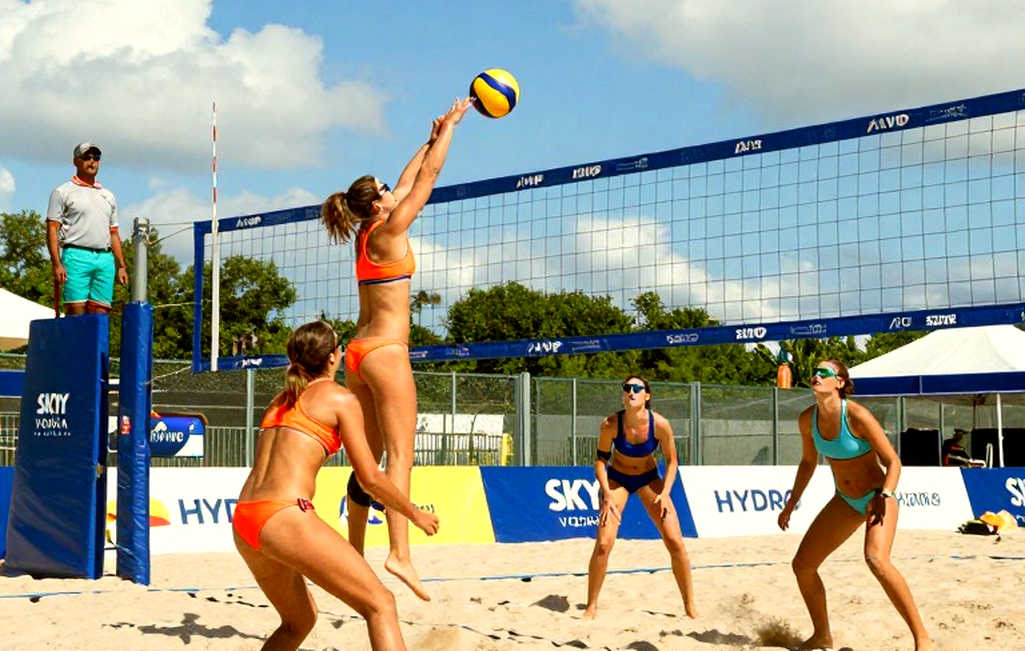
The first is a primary scoring option capable of putting up more than 20 points per match against elite blocking — usually the opposite. The second is serve pressure strong enough to disrupt the opponent's reception system, because at this level a safe serve hands control to the other side. The third, and the most underrated, is reception stability good enough to keep the middle blocker inside the attack. When the first pass drifts off target, the middle disappears from the options, the opposing block collapses onto the two wings, and the scoring rate falls exponentially.
Revolutions do not begin at the opening whistle; they begin with a quiet pass in the back court. A reception taken on the forearms in zone 1, lifting the ball to exactly the setter's range, never appears in a highlight package — yet it decides whether the middle can run, and therefore whether the opposing block has to split its attention.
For Türkiye, all three conditions remain unverified. The original bulletin supplies no technical indicator whatsoever: no attack efficiency, no blocks per set, no perfect-pass rate, no ace-to-error differential. Any specific tactical claim about this team — praise or criticism — is therefore inference. The one thing that can be said with confidence: a side reaching the top eight for the first time possesses at least one attacker of genuine elite standard, otherwise it would not have got there.
The anchor I usually use when analysing teams in this band is an opposite capable of manufacturing points out of broken plays. For Türkiye the name most often cited is Adis Lagumdzija — a left-handed opposite with a high contact point and experience in European leagues. On the wings, Efe Mandıracı is the attacking option from zone 4, where cross-court shots into the far corner tend to be the measure of a hitter's composure under pressure. I name them here as structural examples, not as conclusions about form.
Sixth place: the value lies in the seeding, not the strength
This is where I want to spend the most time, because it is the most overlooked part of how sports bulletins get read.
A 32-team format with eight pools of four runs on a seeding mechanism derived from the world ranking. Four seeding pots of eight teams each, with every pool taking one team from each pot. For a side in the 5–10 band, the pot position determines almost the entire outlook of the tournament. In pot two, they avoid facing two top-eight sides in the group stage. Dropping to pot three opens the "group of death" scenario: one top-four team, one other top-eight team, and the ceiling of the tournament falls to the round of 16 despite a squad fully capable of a quarterfinal.
The sixth place in 2026 is therefore more than a line in a record book. It is ranking points, and ranking points are seeding, and seeding is bracket. This is the most concrete competitive benefit Türkiye gained from the previous tournament — worth more in practical terms than the honorary placing itself carries in fans' memory.
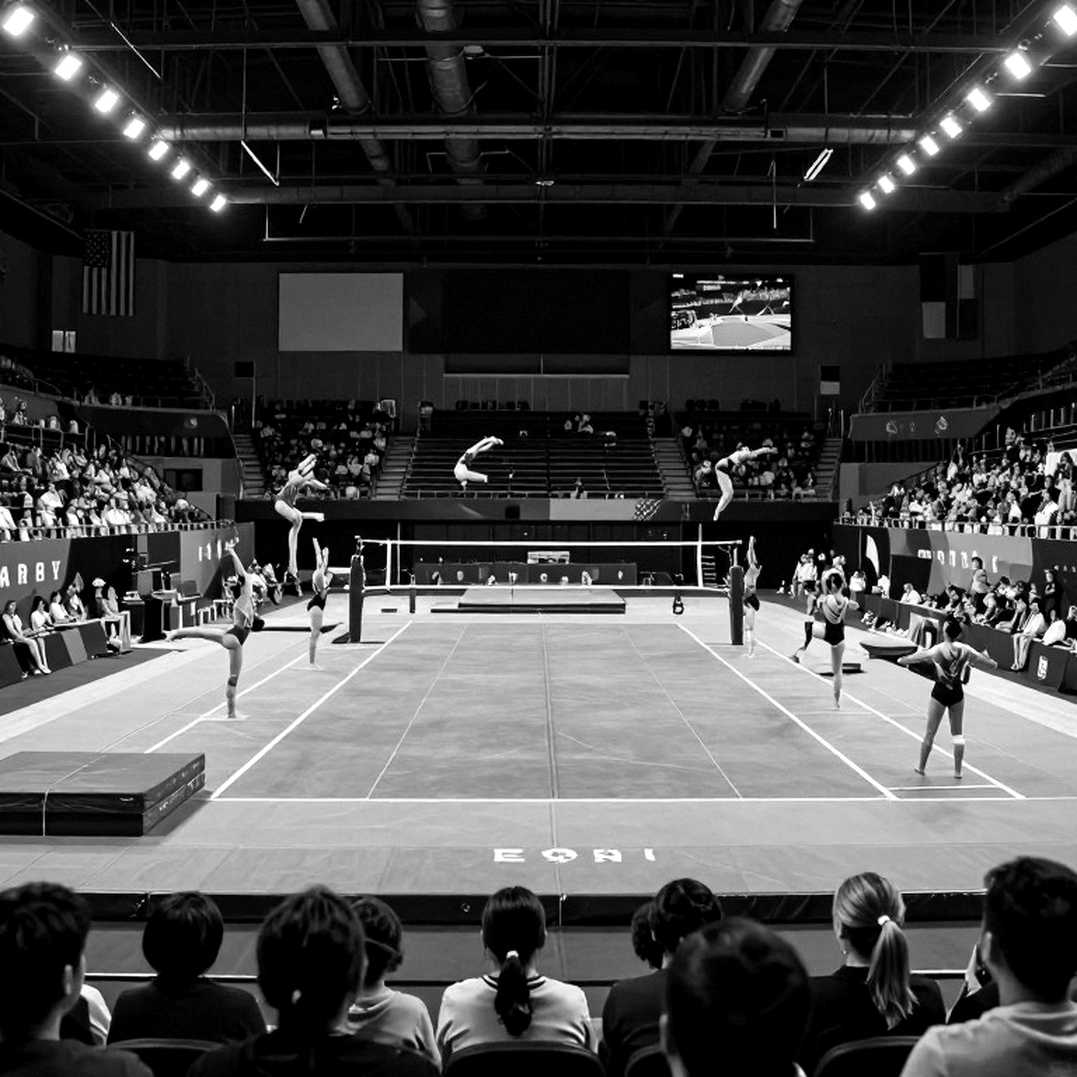
But the mechanism contains a trap. In an eight-pool, four-team format, one group-stage defeat can end a campaign, and pool order is sometimes decided on set ratio. For a team whose strength band overlaps with two pool rivals, dropping a set against a weaker opponent is not a minor matter — it is a live elimination hazard. I have seen exactly this kind of accident at youth level and continental championships: a stronger side wins 3–1, wins 3–1 again, and is eliminated on set differential by the very opponent it just beat.
Every court is a universe, and I am the one who lingers over connecting the constellations. Here, those constellations have names: seeding, bracket, set ratio, and rest days between matches. Those four variables explain more about Türkiye's 2027 prospects than any assessment of current form.
The biennial rhythm and the death of the four-year cycle
Moving the World Championship to a two-year rhythm destroys a logic that held for decades: the four-year cycle, in which a generation is packaged, its peak aimed at a single tournament, and then dispersed. On a four-year rhythm, a country can invest in one golden cohort, concentrate its resources on one summer, and accept that the next cycle is a rebuild.
A two-year rhythm does not permit that. It forces federations to sustain top-eight level continuously, and this is where organisational structure wins or loses. Volleyball nations with deep domestic leagues — Italy's Serie A1, Poland's PlusLiga — generate a player pool broad enough to rotate without losing level. Nations living off a golden generation will experience the new rhythm as a sentence.
When the world pauses, I rewind the VHS tape to find the pulse of the past. The old tape of Turkish men's volleyball shows a brilliant women's programme and a patient men's one. The Efeler Ligi has grown in investment, but its depth still sits a significant distance below Serie A1 and PlusLiga. That means the men's national team is probably running ahead of its own domestic league — a familiar paradox in emerging sports nations.
The strategic consequence is clear: if the jump into the top eight was produced by a cohort maturing together rather than by a development system, the 2027 ceiling most likely sits around the same band unless the bench deepens. And in a 32-team, high-match-count format, the bench is not a detail — it is a condition of survival.
The 2026–2028 calendar: where shoulders are priced in euros
One detail short bulletins always skip: the workload a European men's international carries in this period. An annual Nations League, the continental championship, the World Championship, then Olympic qualification — all compressed into 2026, 2027 and 2028. Add domestic leagues and European cups running deep into spring, and the national team's training window narrows considerably.
For a side whose attacking axis depends on one primary opposite, soft-tissue and shoulder overload is a systemic risk rather than an individual one. Rotation therefore becomes a selection decision, no longer a tactical nicety. This is where smaller federations usually lose: they have enough good players to start, but not enough to rest.
I cannot calculate the specific degree of calendar overlap, because the original bulletin names no match dates, no host country and no group-stage cadence. That is the real limit of the data. But the structure is clear, and the structure is enough to raise a strategic question: will Türkiye sacrifice part of its 2027 Nations League performance to protect the main axis for the World Championship? The answer will say more about their true ambition than any pre-tournament statement.
The counter-intuitive view: a 32-team event punishes consistency
Most analysis of tournament expansion runs the other way: more teams means more opportunity for emerging nations. That holds at the lower tier. At the tier of a team like Türkiye, the effect reverses.
With 32 teams across eight pools, the variance of the tournament rises compared with the old 24-team format. A top-eight side is more likely to exit early, because a single erratic group match is enough to place them in the wrong bracket. Put differently, the new format rewards consistency and punishes teams with a wide performance band — an accurate description of a side newly arrived at this level.
The second counter-intuitive point: a sixth place in 2026 may be a far stronger indicator of seeding than of class. If the 2027 draw places Türkiye in a pool with two top-five teams, their story may end in the round of 16 and the media will call it a step back. In reality it would simply be a bad draw. Conversely, a favourable bracket could carry them to a semifinal without playing any better than they did in 2026.
The third point concerns narrative. The original bulletin uses the verb "will take part", not "will compete". That word choice shows domestic expectation still sits at participation level, while the team's actual level has reached quarterfinal standard. That gap between story and reality is worth tracking, because it determines how a federation allocates resources: investing to hold a position, or investing to exceed it.
Tactics are poetry; you simply have to know how to read between the gaps. The largest gap in the entire Türkiye 2027 story is not on the court. It sits on a date nobody has announced: the draw.
What Vietnamese volleyball can take from this
I write this for Vietnamese readers, so the story needs translating into our own language rather than being left in Europe.
Vietnam's men's national team currently sits outside the 32-team World Championship field. That gap is not a gap of individuals — we have hitters of genuine regional standard in Southeast Asia. The gap lies in system depth: the number of players capable of competing at a high level, the number of quality matches per year, and the number of tournaments a young player can play before reaching career maturity.
Looking at Thailand offers a nearer model for comparison: a volleyball culture that invests heavily in youth development and in sending players abroad, accepting the price of domestic seasons without stars. Looking at Türkiye offers a different model: using the financial weight of the domestic league to attract quality players, then building the national team on that foundation. Both are choices, and both carry a cost. What should be avoided is applying either formula directly to Vietnam without translating it first.
The most concrete lesson from the Türkiye story, in my view, lies elsewhere: a place at a major tournament carries double value, and the second half is usually forgotten. That place is not just a tournament. It is ranking points, and ranking points are seeding for next time. For Vietnamese volleyball, every win at a continental event or a qualifying campaign is not merely a win — it is a rung on a seeding ladder we are not yet in the habit of counting. Federations tend to plan for one tournament; strong volleyball nations plan for a chain of seedings across consecutive tournaments.
And there is one more thing Vietnamese volleyball can learn right now, without waiting to reach the top 32: how we tell the story about ourselves. A team reaching the world's top eight for the first time while the domestic bulletin gives it one line — that is a failure of the media system, not of the team. We are in the habit of measuring achievement by medals and ignoring structural indicators: blocks per set, perfect-pass rate, ace-to-error differential. Those never appear on the scoreboard, yet they are what decides the scoreboard.
In seven years of watching volleyball, I have learned one thing from the least-watched matches: the team that controls the small details controls the big result. Türkiye did that once, in 2026. The question for 2027 is whether they can do it again — and the answer will depend on a draw date none of us controls.
That is also why I still stay behind after every match, noting the receptions nobody remembers. Because three years later, when a team walks into a favourable or brutal pool, the answer was written long before — in empty training halls, at tournaments nobody broadcast, through ranking points nobody noticed.
When the 2027 draw is opened, we will know where Türkiye truly stands. But there is another question worth holding onto longer: if a draw can decide the fate of a team that has already proved it belongs among the eight best sides on the planet, then what is volleyball measuring — capability, or luck packaged as capability?